Deborah Blum – författare
Visar alla böcker från författaren Deborah Blum. Handla med fri frakt och snabb leverans.
17 produkter
17 produkter
Häftad, Engelska, 2019
243 kr
Skickas inom 3-6 vardagar
Häftad, Engelska, 1998
339 kr
Skickas inom 3-6 vardagar
Häftad, Engelska, 2007
339 kr
Skickas inom 3-6 vardagar
Häftad, Engelska, 1996
243 kr
Skickas inom 5-8 vardagar
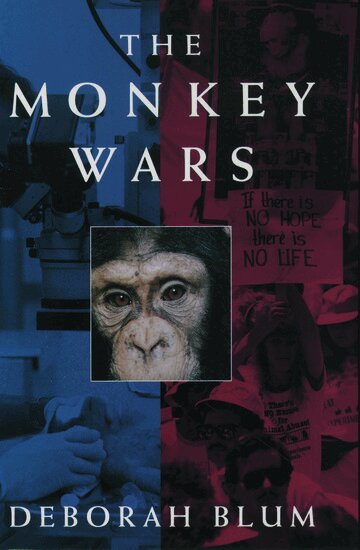
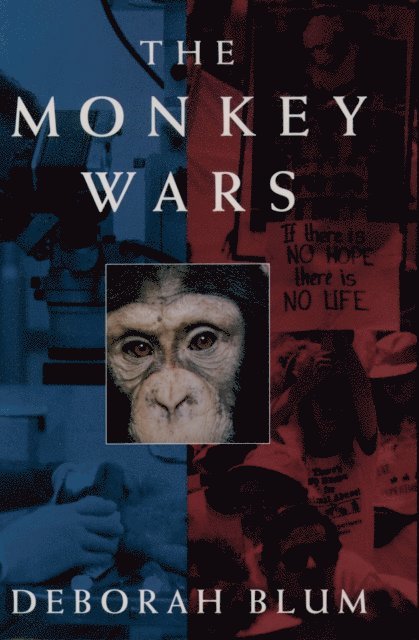
The use of primates in research is an ongoing controversy. We have all benefited from the medical discoveries, yet we have also learned more in recent years about the real intelligence of apes and monkeys. Activists have also uncovered cases of animal cruelty by researchers.The Monkey Wars assesses the often caustic debate over the use of primates in scientific research, and examines the personalities and issues behind the headlines. The author focuses on researchers forced to conduct their work behind barbed wire and alarm systems, animal rights activists ranging from the moderate AWI Institute to the highly radical ALF, and some of the remarkable chimpanzees involved. The research community and its activist critics are invariably portrayed as rival camps locked in a long, bitter, and seemingly intractable political battle. In reality there are people on both sides willing to accept and work within the complex middle. Deborah Blum gives these people a voice
Häftad, Engelska, 2005
345 kr
Skickas inom 5-8 vardagar
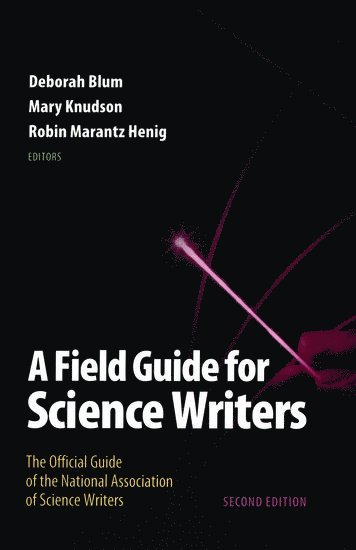
This is the official text for the National Association of Science Writers. In the eight years since the publication of the first edition of A Field Guide for Science Writing, much about the world has changed. Some of the leading issues in today's political marketplace - embryonic stem cell research, global warming, health care reform, space exploration, genetic privacy, germ warfare - are informed by scientific ideas. Never has it been more crucial for the lay public to be scientifically literate. That's where science writers come in. And that's why it's time for an update to the Field Guide, already a staple of science writing graduate programs across the country.The academic community has recently recognized how important it is for writers to become more sophisticated, knowledgeable, and skeptical about what the write. More than 50 institutions now offer training in science writing. In addition mid-career fellowships for science writers are growing, giving journalists the chance to return to major developments, and hope to be part of them with this new edition of the Field Guide.In A Field Guide for Science Writers, 2nd Edition, the editors have assembled contributions from a collections of experienced journalists who are every bit as stellar as the group that contributed to the first edition. In the end, what we have are essays written by the very best in the science writing profession. These wonderful writers have written not only about style, but about content, too. These leaders in the profession describe how they work their way through the information glut to find the gems worth writing about. We also have chapters that provide the tools every good science writer needs: how to use statistics, how to weigh the merits of conflicting studies in scientific literature, how to report about risk. And, untimately, how to write.
Häftad, Engelska, 2022
408 kr
Skickas inom 5-8 vardagar
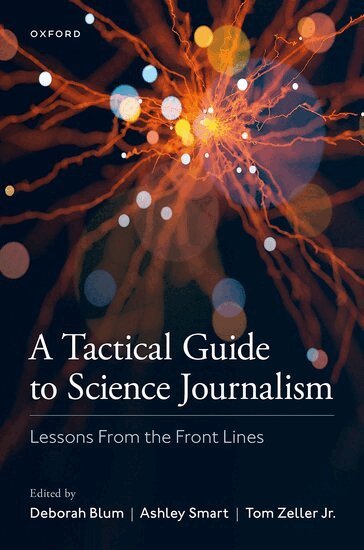
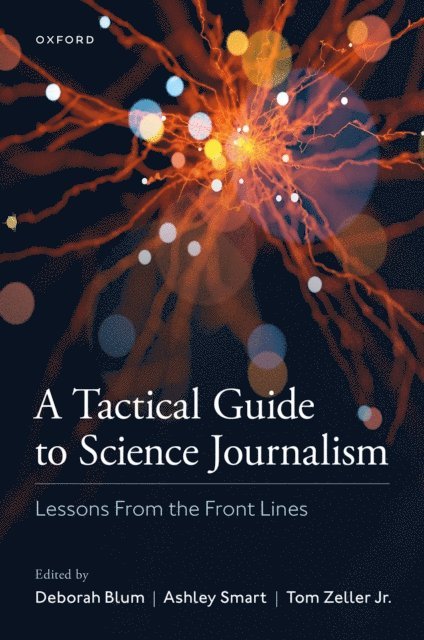
A Tactical Guide to Science Journalism brings together award-winning journalists from around the world to share fascinating tales of science and how it works and to provide guidance into reporting specialties like infectious disease, climate change, astronomy, public health, physics, and statistics. From practical advice on finding sources and distilling complex research subjects for a general audience, to tips on how to cover science in authoritarian regimes, the book serves as an essential survey of the best in science reporting today--and a testament to the importance of independent journalistic inquiry in understanding research and building trust with audiences. Drawing insights from writers based at publications including The New York Times, the BBC, The Washington Post, Science, The New Yorker, National Geographic and more, this guide is designed to help journalists everywhere improve their craft and serve as a valuable resource for those seeking to understand the profession at its best.
E-bok
PDF, Engelska, 2022285 kr
Läs direkt efter köp
A Tactical Guide to Science Journalism brings together award-winning journalists from around the world to share fascinating tales of science and how it works and to provide guidance into reporting specialties like infectious disease, climate change, astronomy, public health, physics, and statistics. From practical advice on finding sources and distilling complex research subjects for a general audience, to tips on how to cover science in authoritarian regimes, the book serves as an essential survey of the best in science reporting today--and a testament to the importance of independent journalistic inquiry in understanding research and building trust with audiences. Drawing insights from writers based at publications including The New York Times, the BBC, The Washington Post, Science, The New Yorker, National Geographic and more, this guide is designed to help journalists everywhere improve their craft and serve as a valuable resource for those seeking to understand the profession at its best.
E-bok
Engelska, 2022275 kr
Läs direkt efter köp
A Tactical Guide to Science Journalism brings together award-winning journalists from around the world to share fascinating tales of science and how it works and to provide guidance into reporting specialties like infectious disease, climate change, astronomy, public health, physics, and statistics. From practical advice on finding sources and distilling complex research subjects for a general audience, to tips on how to cover science in authoritarian regimes, the book serves as an essential survey of the best in science reporting today--and a testament to the importance of independent journalistic inquiry in understanding research and building trust with audiences. Drawing insights from writers based at publications including The New York Times, the BBC, The Washington Post, Science, The New Yorker, National Geographic and more, this guide is designed to help journalists everywhere improve their craft and serve as a valuable resource for those seeking to understand the profession at its best.
E-bok
PDF, Engelska, 2005228 kr
Läs direkt efter köp
This is the official text for the National Association of Science Writers. In the eight years since the publication of the first edition of A Field Guide for Science Writing, much about the world has changed. Some of the leading issues in today''s political marketplace - embryonic stem cell research, global warming, health care reform, space exploration, genetic privacy, germ warfare - are informed by scientific ideas. Never has it been more crucial for the lay public to be scientifically literate. That''s where science writers come in. And that''s why it''s time for an update to the Field Guide, already a staple of science writing graduate programs across the country.The academic community has recently recognized how important it is for writers to become more sophisticated, knowledgeable, and skeptical about what they write. More than 50 institutions now offer training in science writing. In addition mid-career fellowships for science writers are growing, giving journalists the chance to return to major universities for specialized training. We applaud these developments, and hope to be part of them with this new edition of the Field Guide.In A Field Guide for Science Writers, 2nd Edition, the editors have assembled contributions from a collections of experienced journalists who are every bit as stellar as the group that contributed to the first edition. In the end, what we have are essays written by the very best in the science writing profession. These wonderful writers have written not only about style, but about content, too. These leaders in the profession describe how they work their way through the information glut to find the gems worth writing about. We also have chapters that provide the tools every good science writer needs: how to use statistics, how to weigh the merits of conflicting studies in scientific literature, how to report about risk. And, ultimately, how to write.
E-bok
Engelska, 1995261 kr
Läs direkt efter köp
The controversy over the use of primates in research admits of no easy answers. We have all benefited from the medical discoveries of primate research--vaccines for polio, rubella, and hepatitis B are just a few. But we have also learned more in recent years about how intelligent apes and monkeys really are: they can speak to us with sign language, they can even play video games (and are as obsessed with the games as any human teenager). And activists have also uncovered widespread and unnecessarily callous treatment of animals by researchers (in 1982, a Silver Spring lab was charged with 17 counts of animal cruelty). It is a complex issue, made more difficult by the combative stance of both researchers and animal activists. In The Monkey Wars, Deborah Blum gives a human face to this often caustic debate--and an all-but-human face to the subjects of the struggle, the chimpanzees and monkeys themselves. Blum criss-crosses America to show us first hand the issues and personalities involved. She offers a wide-ranging, informative look at animal rights activists, now numbering some twelve million, from the moderate Animal Welfare Institute to the highly radical Animal Liberation Front (a group destructive enough to be placed on the FBI''s terrorist list). And she interviews a wide variety of researchers, many forced to conduct their work protected by barbed wire and alarm systems, men and women for whom death threats and hate mail are common. She takes us to Roger Fouts''s research center in Ellensburg, Washington, where we meet five chimpanzees trained in human sign language, and we visit LEMSIP, a research facility in New York State that has no barbed wire, no alarms--and no protesters chanting outside--because its director, Jan Moor-Jankowski, listens to activists with respect and treats his animals humanely. And along the way, Blum offers us insights into the many side-issues involved: the intense battle to win over school kids fought by both sides, and the danger of transplanting animal organs into humans. "As it stands now," Blum concludes, "the research community and its activist critics are like two different nations, nations locked in a long, bitter, seemingly intractable political standoff....But if you listen hard, there really are people on both sides willing to accept and work within the complex middle. When they can be freely heard, then we will have progressed to another place, beyond this time of hostilities." In The Monkey Wars, Deborah Blum gives these people their voice.
E-bok
Engelska, 2005220 kr
Läs direkt efter köp
This is the official text for the National Association of Science Writers. In the eight years since the publication of the first edition of A Field Guide for Science Writing, much about the world has changed. Some of the leading issues in today''s political marketplace - embryonic stem cell research, global warming, health care reform, space exploration, genetic privacy, germ warfare - are informed by scientific ideas. Never has it been more crucial for the lay public to be scientifically literate. That''s where science writers come in. And that''s why it''s time for an update to the Field Guide, already a staple of science writing graduate programs across the country.The academic community has recently recognized how important it is for writers to become more sophisticated, knowledgeable, and skeptical about what they write. More than 50 institutions now offer training in science writing. In addition mid-career fellowships for science writers are growing, giving journalists the chance to return to major universities for specialized training. We applaud these developments, and hope to be part of them with this new edition of the Field Guide.In A Field Guide for Science Writers, 2nd Edition, the editors have assembled contributions from a collections of experienced journalists who are every bit as stellar as the group that contributed to the first edition. In the end, what we have are essays written by the very best in the science writing profession. These wonderful writers have written not only about style, but about content, too. These leaders in the profession describe how they work their way through the information glut to find the gems worth writing about. We also have chapters that provide the tools every good science writer needs: how to use statistics, how to weigh the merits of conflicting studies in scientific literature, how to report about risk. And, ultimately, how to write.
Häftad, Engelska, 2016
248 kr
Skickas inom 5-8 vardagar
E-bok
Engelska, 2018118 kr
Läs direkt efter köp
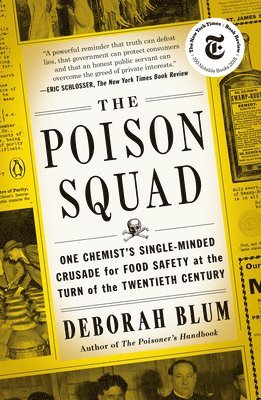
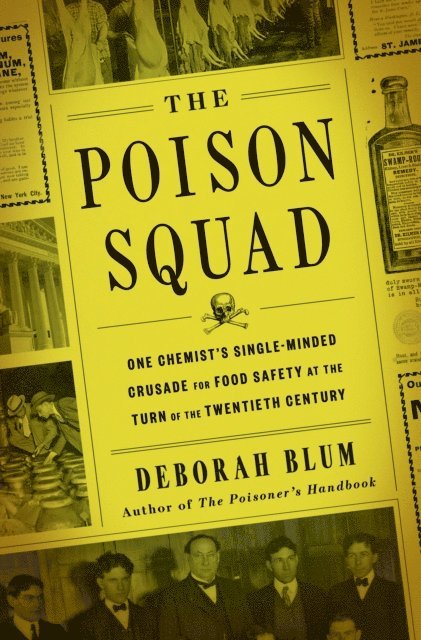
From Pulitzer Prize winner and New York Times-bestselling author Deborah Blum, the dramatic true story of how food was made safe in the United States and the heroes, led by the inimitable Dr. Harvey Washington Wiley, who fought for changeBy the end of nineteenth century, food was dangerous. Lethal, even. "Milk" might contain formaldehyde, most often used to embalm corpses. Decaying meat was preserved with both salicylic acid, a pharmaceutical chemical, and borax, a compound first identified as a cleaning product. This was not by accident; food manufacturers had rushed to embrace the rise of industrial chemistry, and were knowingly selling harmful products. Unchecked by government regulation, basic safety, or even labelling requirements, they put profit before the health of their customers. By some estimates, in New York City alone, thousands of children were killed by "embalmed milk" every year. Citizens--activists, journalists, scientists, and women''s groups--began agitating for change. But even as protective measures were enacted in Europe, American corporations blocked even modest regulations. Then, in 1883, Dr. Harvey Washington Wiley, a chemistry professor from Purdue University, was named chief chemist of the agriculture department, and the agency began methodically investigating food and drink fraud, even conducting shocking human tests on groups of young men who came to be known as, "The Poison Squad." Over the next thirty years, a titanic struggle took place, with the courageous and fascinating Dr. Wiley campaigning indefatigably for food safety and consumer protection. Together with a gallant cast, including the muckraking reporter Upton Sinclair, whose fiction revealed the horrific truth about the Chicago stockyards; Fannie Farmer, then the most famous cookbook author in the country; and Henry J. Heinz, one of the few food producers who actively advocated for pure food, Dr. Wiley changed history. When the landmark 1906 Food and Drug Act was finally passed, it was known across the land, as "Dr. Wiley''s Law." Blum brings to life this timeless and hugely satisfying "David and Goliath" tale with righteous verve and style, driving home the moral imperative of confronting corporate greed and government corruption with a bracing clarity, which speaks resoundingly to the enormous social and political challenges we face today.
Häftad, Engelska, 2014
323 kr
Skickas inom 3-6 vardagar
E-bok
Engelska, 2007133 kr
Läs direkt efter köp
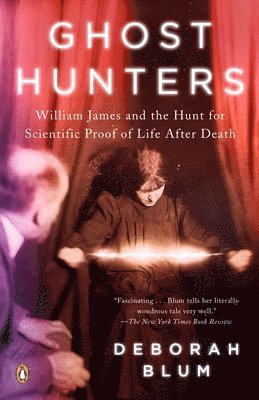
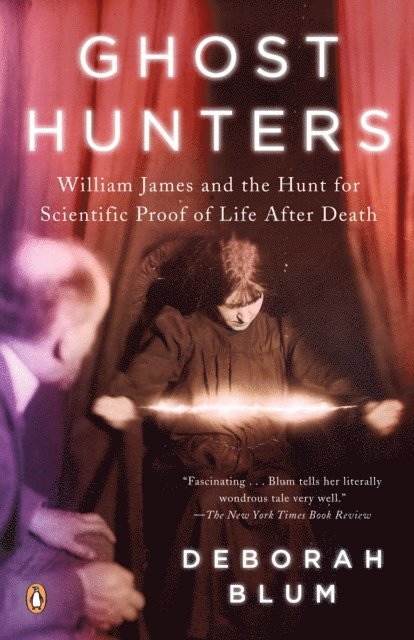
A Pulitzer Prize?winning author tells the amazing story of William James?s quest for empirical evidence of the spirit world What if a world -renowned philosopher and professor of psychiatry at Harvard suddenly announced he believed in ghosts? At the close of the nineteenth century, the illustrious William James led a determined scientific investigation into ?unexplainable? incidences of clairvoyance and ghostly visitations. James and a small group of eminent scientists staked their reputations, their careers, even their sanity on one of the most extraordinary quests ever undertaken: to empirically prove the existence of ghosts, spirits, and psychic phenomena. What they pursued? and what they found?raises questions as fascinating today as they were then.
E-bok
Engelska, 201129 kr
Läs direkt efter köp
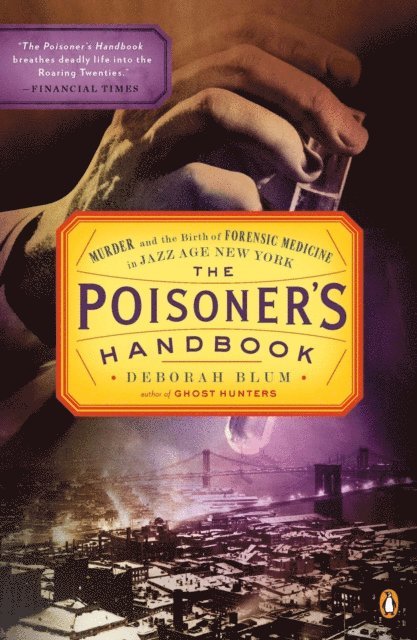
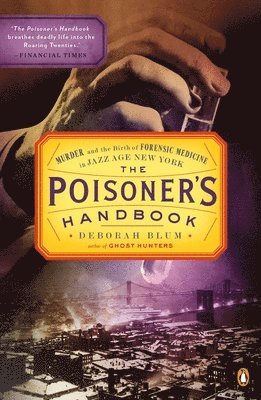
Equal parts true crime, twentieth-century history, and science thriller, The Poisoner''s Handbook is "a vicious, page-turning story that reads more like Raymond Chandler than Madame Curie" (The New York Observer) A fascinating Jazz Age tale of chemistry and detection, poison and murder, The Poisoner''s Handbook is a page-turning account of a forgotten era. In early twentieth-century New York, poisons offered an easy path to the perfect crime. Science had no place in the Tammany Hall-controlled coroner''s office, and corruption ran rampant. However, with the appointment of chief medical examiner Charles Norris in 1918, the poison game changed forever. Together with toxicologist Alexander Gettler, the duo set the justice system on fire with their trailblazing scientific detective work, triumphing over seemingly unbeatable odds to become the pioneers of forensic chemistry and the gatekeepers of justice.In 2014, PBS''s AMERICAN EXPERIENCE released a film based on The Poisoner''s Handbook.
E-bok
Engelska, 199875 kr
Läs direkt efter köp
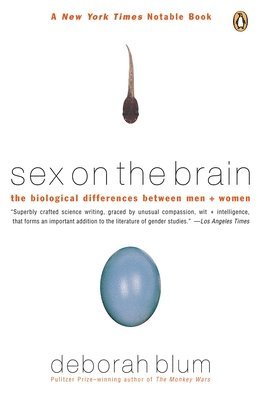
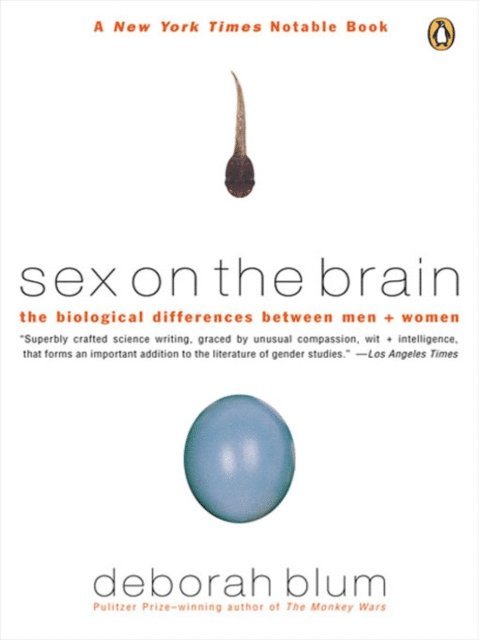
Go beyond the headlines and the hype to get the newest findings in the burgeoning field of gender studies. Drawing on disciplines that include evolutionary science, anthropology, animal behavior, neuroscience, psychology, and endocrinology, Deborah Blum explores matters ranging from the link between immunology and sex to male/female gossip styles. The results are intriguing, startling, and often very amusing. For instance, did you know that. . .? Male testosterone levels drop in happy marriages; scientists speculate that women may use monogamy to control male behavior? Young female children who are in day-care are apt to be more secure than those kept at home; young male children less so? Anthropologists classify Western societies as "mildly polygamous"The Los Angeles Times has called Sex on the Brain "superbly crafted science writing, graced by unusual compassion, wit, and intelligence, that forms an important addition to the literature of gender studies."