Deborah Lyons - Böcker
Visar alla böcker från författaren Deborah Lyons. Handla med fri frakt och snabb leverans.
5 produkter
5 produkter
238 kr
Skickas inom 10-15 vardagar
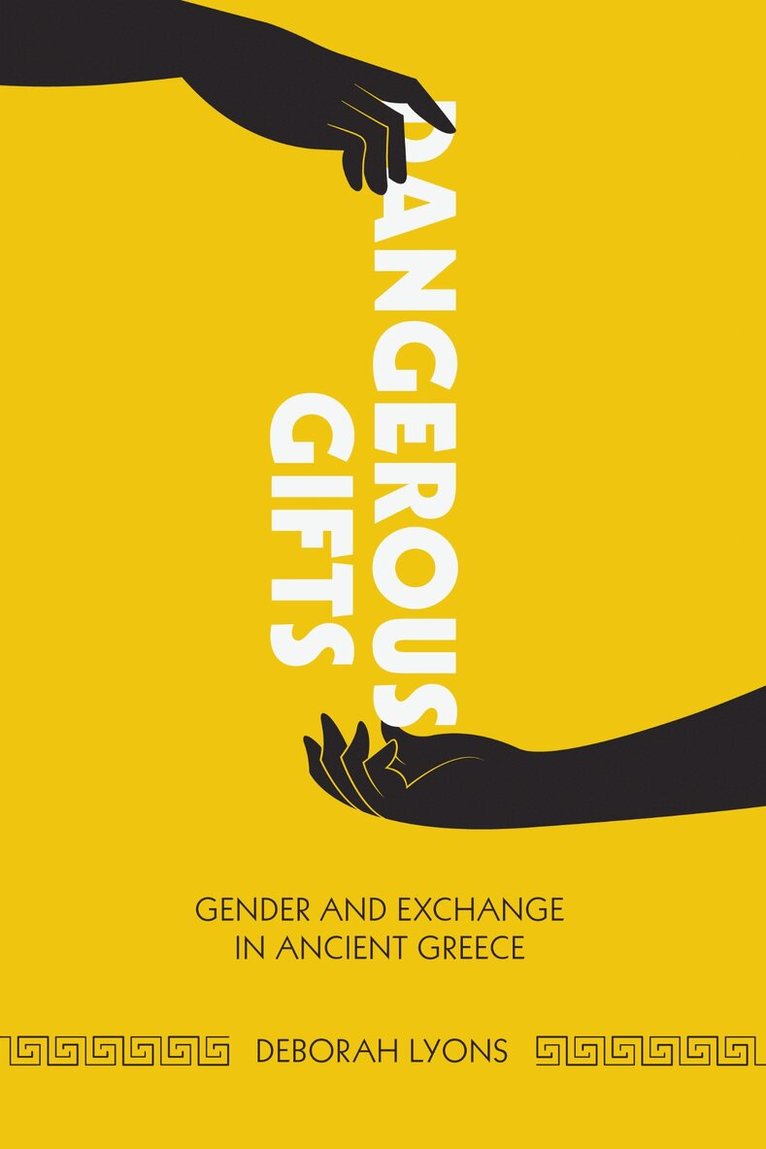
Deianeira sends her husband Herakles a poisoned robe. Eriphyle trades the life of her husband Amphiaraos for a golden necklace. Atreus's wife Aerope gives away the token of his sovereignty, a lamb with a golden fleece, to his brother Thyestes, who has seduced her. Gifts and exchanges always involve a certain risk in any culture, but in the ancient Greek imagination, women and gifts appear to be a particularly deadly combination.This book explores the role of gender in exchange as represented in ancient Greek culture, including Homeric epic and tragedy, non-literary texts, and iconographic and historical evidence of various kinds. Using extensive insights from anthropological work on marriage, kinship, and exchange, as well as ethnographic parallels from other traditional societies, Deborah Lyons probes the gendered division of labor among both gods and mortals, the role of marriage (and its failure) in transforming women from objects to agents of exchange, the equivocal nature of women as exchange-partners, and the importance of the sister-brother bond in understanding the economic and social place of women in ancient Greece. Her findings not only enlarge our understanding of social attitudes and practices in Greek antiquity but also demonstrate the applicability of ethnographic techniques and anthropological theory to the study of ancient societies.
424 kr
Skickas inom 7-10 vardagar
In recent years, the topic of ancient Greek hero cult has been the focus of considerable discussion among classicists. Little attention, however, has been paid to female heroized figures. Here Deborah Lyons argues for the heroine as a distinct category in ancient Greek religious ideology and daily practice. The heroine, she believes, must be located within a network of relations between male and female, mortal and immortal. Using evidence ranging from Homeric epic to Attic vase painting to ancient travel writing, she attempts to re-integrate the feminine into our picture of Greek notions of the hero. According to Lyons, heroines differ from male heroes in several crucial ways, among which is the ability to cross the boundaries between mortal and immortal. She further shows that attention to heroines clarifies fundamental Greek ideas of mortal/immortal relationships. The book first discusses heroines both in relation to heroes and as a separate religious and mythic phenomenon. It examines the cultural meanings of heroines in ritual and representation, their use as examples for mortals, and their typical "biographies."The model of "ritual antagonism," in which two mythic figures represented as hostile share a cult, is ultimately modified through an exploration of the mythic correspondences between the god Dionysos and the heroines surrounding him, and through a rethinking of the relationship between Iphigeneia and Artemis. An appendix, which identifies more than five hundred heroines, rounds out this lively work. Originally published in 1997. The Princeton Legacy Library uses the latest print-on-demand technology to again make available previously out-of-print books from the distinguished backlist of Princeton University Press. These editions preserve the original texts of these important books while presenting them in durable paperback and hardcover editions. The goal of the Princeton Legacy Library is to vastly increase access to the rich scholarly heritage found in the thousands of books published by Princeton University Press since its founding in 1905.
1 914 kr
Skickas inom 3-6 vardagar
In recent years, the topic of ancient Greek hero cult has been the focus of considerable discussion among classicists. Little attention, however, has been paid to female heroized figures. Here Deborah Lyons argues for the heroine as a distinct category in ancient Greek religious ideology and daily practice. The heroine, she believes, must be located within a network of relations between male and female, mortal and immortal. Using evidence ranging from Homeric epic to Attic vase painting to ancient travel writing, she attempts to re-integrate the feminine into our picture of Greek notions of the hero. According to Lyons, heroines differ from male heroes in several crucial ways, among which is the ability to cross the boundaries between mortal and immortal. She further shows that attention to heroines clarifies fundamental Greek ideas of mortal/immortal relationships. The book first discusses heroines both in relation to heroes and as a separate religious and mythic phenomenon. It examines the cultural meanings of heroines in ritual and representation, their use as examples for mortals, and their typical "biographies."The model of "ritual antagonism," in which two mythic figures represented as hostile share a cult, is ultimately modified through an exploration of the mythic correspondences between the god Dionysos and the heroines surrounding him, and through a rethinking of the relationship between Iphigeneia and Artemis. An appendix, which identifies more than five hundred heroines, rounds out this lively work. Originally published in 1997. The Princeton Legacy Library uses the latest print-on-demand technology to again make available previously out-of-print books from the distinguished backlist of Princeton University Press. These editions preserve the original texts of these important books while presenting them in durable paperback and hardcover editions. The goal of the Princeton Legacy Library is to vastly increase access to the rich scholarly heritage found in the thousands of books published by Princeton University Press since its founding in 1905.
687 kr
Skickas inom 7-10 vardagar
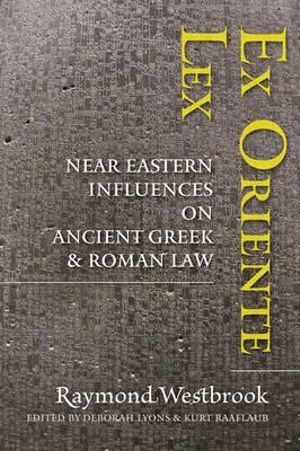
Throughout the twelve essays that appear in Ex Oriente Lex, Raymond Westbrook convincingly argues that the influence of Mesopotamian legal traditions and thought did not stop at the shores of the Mediterranean, but rather had a profound impact on the early laws and legal developments of Greece and Rome as well. He presents readers with tantalizing fragments of early Greek or archaic Roman law which, when placed in the context of the broader Near Eastern tradition, suddenly acquire unexpected new meanings. Before his untimely death in July 2009, Westbrook was regarded as one of the world's leading authorities on ancient legal history. Although his main field was ancient Near Eastern law, he also made important contributions to the study of early Greek and Roman law. In his examination of the relationship between ancient Near Eastern and pre-classical Greek and Roman law, Westbrook sought to demonstrate that the connection between the two legal spheres was not merely theoretical but also concrete. The Near Eastern legal heritage had practical consequences that help us understand puzzling individual cases in the Greek and Roman traditions.His essays provide rich material for further reflection and interdisciplinary discussion about compelling similarities between legal cultures and the continuity of legal traditions over several millennia. Aimed at classicists and ancient historians, as well as biblicists, Egyptologists, Assyriologists, and legal historians, this volume gathers many of Westbrook's most important essays on the legal aspects of Near Eastern cultural influences on the Greco-Roman world, including one new, never-before-published piece. A preface by editors Deborah Lyons and Kurt Raaflaub details the importance of Westbrook's work for the field of classics, while Sophie Demare-Lafont's incisive introduction places Westbrook's ideas within the wider context of ancient law.
336 kr
Skickas inom 3-6 vardagar