

Deborah S. Bernstein - Böcker
Visar alla böcker från författaren Deborah S. Bernstein. Handla med fri frakt och snabb leverans.
3 produkter
3 produkter
1 057 kr
Tillfälligt slut
This book deals with the experience and action of Jewish women in the new Jewish settlement in Palestine (the Yishuv) during the period of Zionist immigration to Palestine, from the last two decades of the nineteenth century until 1948. The wide range of topics concern the experience of East European immigrant women as well as that of traditional Yemenite women, the creative and radical action of the socialist pioneers of the labor movement as well as the liberal feminism of the middle-class women. Though based on scholarly research, this book brings forth women's voices through their private and public writing.

373 kr
Skickas
This book deals with the experience and action of Jewish women in the new Jewish settlement in Palestine (the Yishuv) during the period of Zionist immigration to Palestine, from the last two decades of the nineteenth century until 1948. The wide range of topics concern the experience of East European immigrant women as well as that of traditional Yemenite women, the creative and radical action of the socialist pioneers of the labor movement as well as the liberal feminism of the middle-class women. Though based on scholarly research, this book brings forth women's voices through their private and public writing.
356 kr
Tillfälligt slut
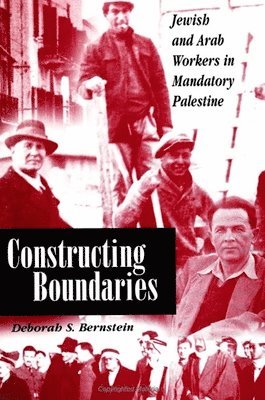
An interdisciplinary study discussing the impact of the national crisis in Mandatory Palestine on relations between Jewish and Arab workers and their respective labor movements.Constructing Boundaries examines the competition, interaction, and impact among Jewish and Arab workers in the labor market of Mandatory Palestine. It is both a labor market study, based on the Split Labor Market Theory, and a case study of the labor market of Haifa, the center of economic development in Mandatory Palestine. Bernstein demonstrates the impact of the pervasive national conflict on the relations between the workers of the two nationalities and between their labor movements. She analyzes the attempts of Jewish workers to construct boundaries between themselves and the Arab workers, and also highlights cases of cooperation between Jewish and Arab workers and of joint class struggle.