Debraj Ray – författare
Visar alla böcker från författaren Debraj Ray. Handla med fri frakt och snabb leverans.
7 produkter
Game-Theoretic Perspective on Coalition Formation
Av Debraj Ray
E-bok, 2007
55 kr
Lägg i varukorg
This is an open access title available under the terms of a CC BY-NC-ND 4.0 International licence. It is free to read at Oxford Scholarship Online and offered as a free PDF download from OUP and selected open access locations. The formation of coalitions to achieve both collaborative and …
A Game-Theoretic Perspective on Coalition Formation
Av Debraj Ray
Inbunden, 2007
1521 kr
Lägg i varukorg
This is an open access title available under the terms of a CC BY-NC-ND 4.0 International licence. It is free to read at Oxford Scholarship Online and offered as a free PDF download from OUP and selected open access locations. The formation of coalitions to achieve both collaborative and …
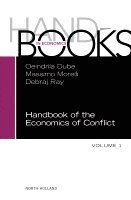
Handbook of the Economics of Conflict
Av Massimo Morelli, Debraj Ray
Inbunden, 2024
1988 kr
Lägg i varukorg
Handbook of the Economics of Conflict highlights new advances in the field, with this new volume presenting interesting chapters written by an international board of authors. Chapters in this release include Conflict Initiation and the Coase Theorem, Misperceptions and the dynamics of conflict, …
Readings in the Theory of Economic Development
Av Dilip Mookherjee, Debraj Ray
Inbunden, 2000
1886 kr
Lägg i varukorg
This collection provides a complete introduction to new ways of thinking about economic development. Emphasizing economic theory, each article has been selected for its theoretical completeness, accessibility and clarity as well as its value as a contribution to the field. A thorough introductory …
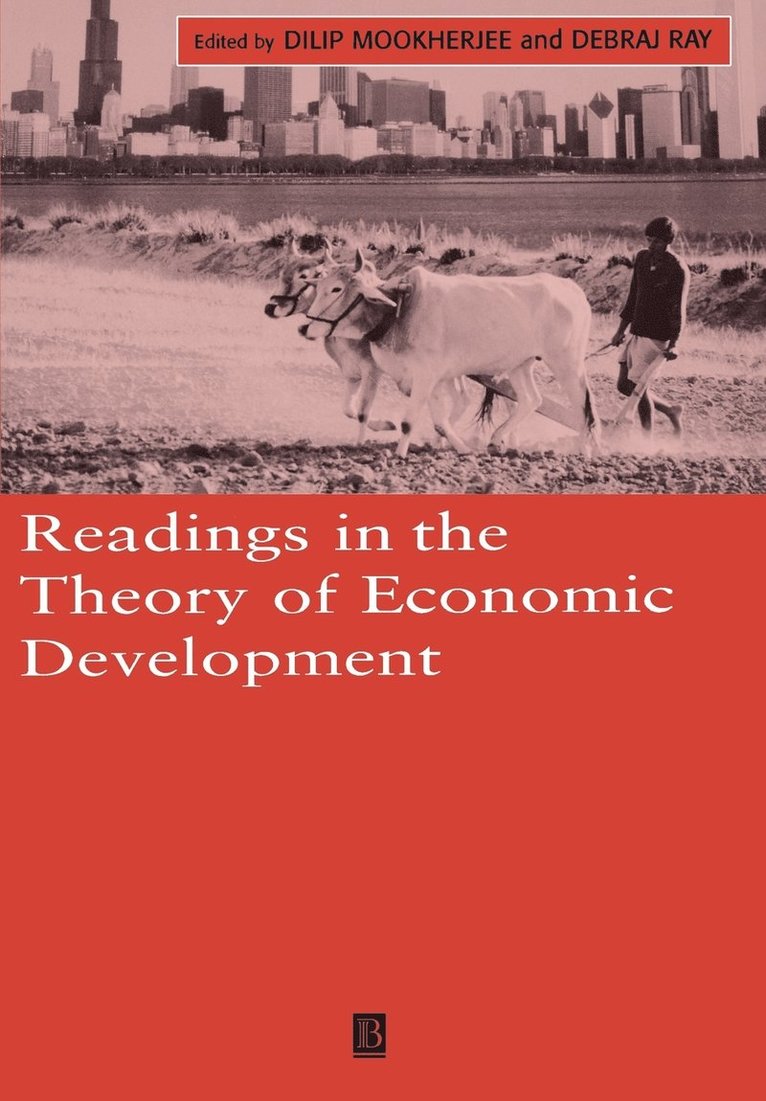
Readings in the Theory of Economic Development
Av Mookherjee, Ray D m. fl.
Häftad, 2000
888 kr
Lägg i varukorg
This collection provides a complete introduction to new ways of thinking about economic development. Emphasizing economic theory, each article has been selected for its theoretical completeness, accessibility and clarity as well as its value as a contribution to the field. A thorough introductory …
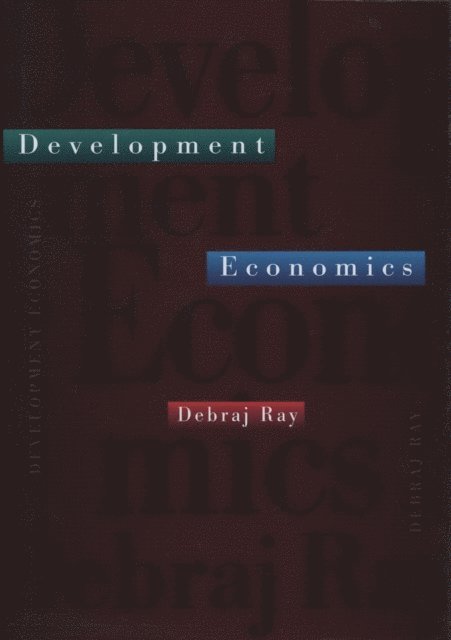
Development Economics
Av Debraj Ray
Inbunden, 1998
839 kr
Lägg i varukorg
If you are instructor in a course that uses Development Economics and wish to have access to the end-of-chapter problems in Development Economics, please e-mail the author at debraj.ray@nyu.edu. For more information, please go to http://www.econ.nyu.edu/user/debraj. If you are a student in the …
Development Economics
Av Debraj Ray
E-bok, 1998
1601 kr
Lägg i varukorg
A landmark textbook on development economics The study of development in low-income countries is attracting more attention around the world than ever before. Yet until now there has been no comprehensive text that incorporates the recent huge strides made in the subject. Development Economics does …