Deena Rymhs - Böcker
Visar alla böcker från författaren Deena Rymhs. Handla med fri frakt och snabb leverans.
4 produkter
4 produkter
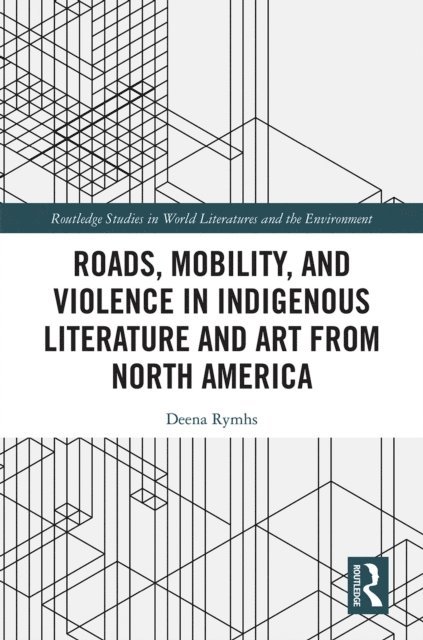
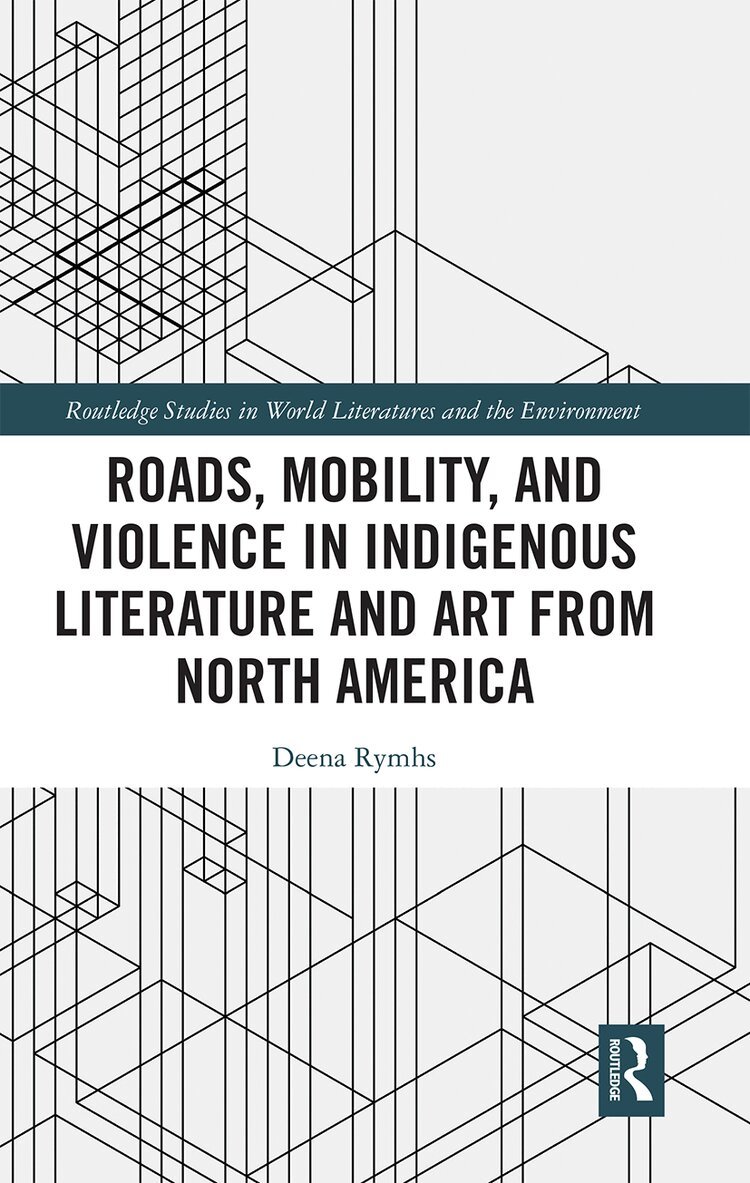
Roads, Mobility, and Violence in Indigenous Literature and Art from North America
Inbunden, Engelska, 2019
2 401 kr
Skickas inom 10-15 vardagar
Roads, Mobility, and Violence in Indigenous Literature and Art from North America explores mobility, spatialized violence, and geographies of activism in a diverse archive of literary and visual art by Indigenous authors and artists. Building on Raymond Williams’s observation that "traffic is not only a technique; it is a form of consciousness and a form of social relations," this book pulls into focus racial, sexual, and environmental violence localized around roads. Reading this archive of texts next to lived struggles over spatial justice, Rymhs argues that roads are spaces of complex signification. For many Indigenous communities, the road has not often been so open. Recent Indigenous writing and visual art explores this tension between mobility and confinement. Drawing primarily on the work of Marie Clements, Tomson Highway, Marilyn Dumont, Leanne Simpson, Richard Van Camp, Kent Monkman, and Louise Erdrich, this volume examines histories of uprooting and violence associated with roads. Along with exploring these fraught histories of mobility, this book emphasizes various ways in which Indigenous communities have transformed roads into sites of political resistance and social memory.
Roads, Mobility, and Violence in Indigenous Literature and Art from North America
Häftad, Engelska, 2020
725 kr
Skickas inom 10-15 vardagar
Roads, Mobility, and Violence in Indigenous Literature and Art from North America explores mobility, spatialized violence, and geographies of activism in a diverse archive of literary and visual art by Indigenous authors and artists. Building on Raymond Williams’s observation that "traffic is not only a technique; it is a form of consciousness and a form of social relations," this book pulls into focus racial, sexual, and environmental violence localized around roads. Reading this archive of texts next to lived struggles over spatial justice, Rymhs argues that roads are spaces of complex signification. For many Indigenous communities, the road has not often been so open. Recent Indigenous writing and visual art explores this tension between mobility and confinement. Drawing primarily on the work of Marie Clements, Tomson Highway, Marilyn Dumont, Leanne Simpson, Richard Van Camp, Kent Monkman, and Louise Erdrich, this volume examines histories of uprooting and violence associated with roads. Along with exploring these fraught histories of mobility, this book emphasizes various ways in which Indigenous communities have transformed roads into sites of political resistance and social memory.
993 kr
Skickas inom 11-20 vardagar
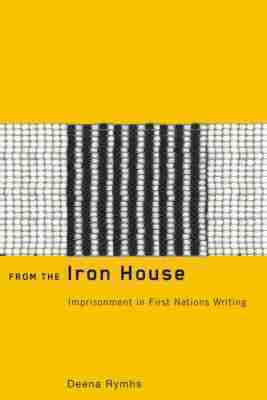
In From the Iron House: Imprisonment in First Nations Writing, Deena Rymhs identifies continuities between the residential school and the prison, offering ways of reading ""the carceral"" - that is, the different ways that incarceration is constituted and articulated in contemporary Aboriginal literature. Addressing the work of writers like Tomson Highway and Basil Johnston along with that of lesser-known authors writing in prison serials and underground publications, this book emphasizes the literary and political strategies these authors use to resist the containment of their institutions. The first part of the book considers a diverse sample of writing from prison serials, prisoners' anthologies, and individual autobiographies, including Stolen Life by Rudy Wiebe and Yvonne Johnson, to show how these works serve as second hearings for their authors - an opportunity to respond to the law's authority over their personal and public identities while making a plea to a wider audience. The second part looks at residential school narratives and shows how the authors construct identities for themselves in ways that defy the institution's control. The interactions between these two bodies of writing - residential school accounts and prison narratives - invite recognition of the ways that guilt is colonially constructed and how these authors use their writing to distance themselves from that guilt. Offering new ways of reading Native writing, From the Iron House is a pioneering study of prison literature in Canada and situates its readings within international criticism of prison writing. Contributing to genre studies and theoretical understandings of life writing, and covering a variety of social topics, this work will be relevant to readers interested in indigenous studies, Canadian cultural studies, postcolonial studies, auto/biography studies, law, and public policy.
509 kr
Skickas inom 11-20 vardagar
In From the Iron House: Imprisonment in First Nations Writing, Deena Rymhs identifies continuities between the residential school and the prison, offering ways of reading ""the carceral"" - that is, the different ways that incarceration is constituted and articulated in contemporary Aboriginal literature. Addressing the work of writers like Tomson Highway and Basil Johnston along with that of lesser-known authors writing in prison serials and underground publications, this book emphasizes the literary and political strategies these authors use to resist the containment of their institutions. The first part of the book considers a diverse sample of writing from prison serials, prisoners' anthologies, and individual autobiographies, including Stolen Life by Rudy Wiebe and Yvonne Johnson, to show how these works serve as second hearings for their authors - an opportunity to respond to the law's authority over their personal and public identities while making a plea to a wider audience. The second part looks at residential school narratives and shows how the authors construct identities for themselves in ways that defy the institution's control. The interactions between these two bodies of writing - residential school accounts and prison narratives - invite recognition of the ways that guilt is colonially constructed and how these authors use their writing to distance themselves from that guilt. Offering new ways of reading Native writing, From the Iron House is a pioneering study of prison literature in Canada and situates its readings within international criticism of prison writing. Contributing to genre studies and theoretical understandings of life writing, and covering a variety of social topics, this work will be relevant to readers interested in indigenous studies, Canadian cultural studies, postcolonial studies, auto/biography studies, law, and public policy.