Deepak Lal - Böcker
Visar alla böcker från författaren Deepak Lal. Handla med fri frakt och snabb leverans.
11 produkter
11 produkter
1 227 kr
Skickas inom 3-6 vardagar
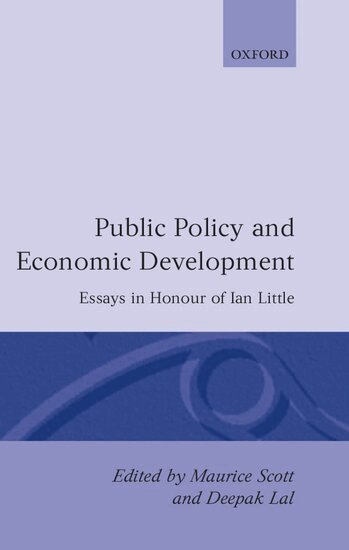
This is a volume of essays in honour of Ian Little, who was Professor of Economics at Oxford until 1975, and whose seminal work in the discipline - notably in the areas of public policy and economic development - spans over 30 years and is still continuing. The authors, all well known economists, provide pointers to help and influence policymakers in areas crucial to the economies of developing countries. Each chapter provides a succinct summing up of the literature, conveying the main ideas in the chosen area in a way that is accessible to the layperson as well as to the professional economist, keeping technical matter to a minimum. The volume as a whole covers issues of concern in both microeconomic and macroeconomic policy. These include: exchange rate policy, trade policy, problems of industrialization, foreign investment, taxation strategies, capital flows, and aspects of the interface between politics and economic policy. The collection begins with a personal memoir by Francis Seton and concludes with a bibliography of Little's published work.
698 kr
Skickas inom 7-10 vardagar
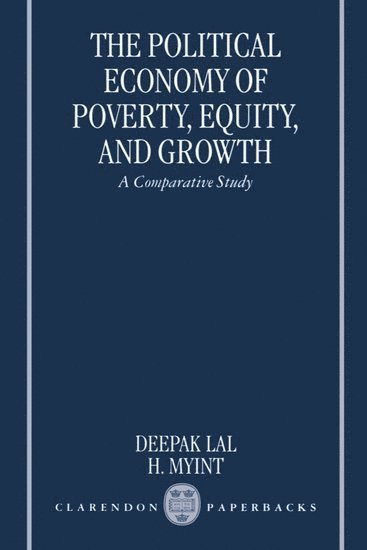
This wide-ranging and innovative book synthesises the findings of a major international study of the political economy of poverty, equity, and growth. It is based primarily on analytical economic histories of 21 developing countries from 1950 to 1985, but also takes account of the wider literature on the subject. The authors take an ambitious interdisciplinary approach to identify patterns in the interplay of initial conditions, instiuttions, interests, and ideas which can help to explain the different growth and poverty alleviation outcomes in the Third World. Three different types of poverty are distinguished, based on their causes, and a more nebulous idea of equityin contrast to egalitarianismis shown to have influenced policy. Since growth is found to be the major means of alleviating mass structural poverty, much of the book is concerned with discovering explanations for policies which are found to be the most important influences on the proximate causes of growth. Lal and Mynt also consider the available evidence on the role of direct transferspublic and privatein alleviating destitution and conjunctural poverty. The Political Economy of Poverty, Equity, and Growth develops a novel framework for the comparative analysis of different growth outcomes. This framework distinguishes between the different relative factor endowments of land, labour, and capital, and between the different organizational structures of pesent versus plantation and mining economies. It also differentiates between the polities of 'autonomous' and 'factional' states in the countries studied, breaking the analysis down into further typological subdivisions and providing important new insights into the differing behaviour of economies that are rich in natural resources and those with abundant labour. These insights constitute a richer explanation for the divergent developmental outcomes in East Asia compared with Latin America and Africa. The evidence collated is used to argue for the continuing relevance of the classical liberal viewpoint on public policies for development, and to show why, even so, nationalist ideologies are likely to be adopted and lead to cycles of interventionism and liberalism. The evidence is also used to provide an explanation for the surprising current worldwide Age of Reform.
2 572 kr
Skickas inom 5-8 vardagar
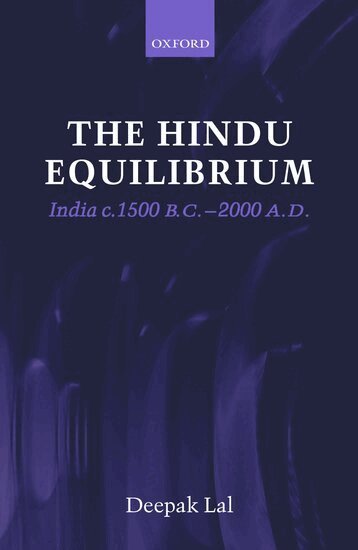
India is an emerging giant. This book explains its long economic stagnation and recent rise by examining its social, political and historical evolution in long term perspective. It explains how its distinct social system based on caste arose and why it still is of importance in its political and social arrangements, despite India's recent move from the plan to market.
414 kr
Skickas inom 5-8 vardagar
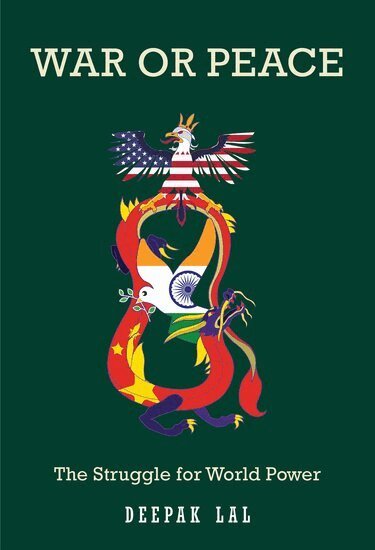
The Pax Americana---the global order established after the collapse of the Soviet Empire---is increasingly being challenged especially by former imperial behemoths China and Russia. There is a growing chorus questioning the so-called 'Washington Consensus' in favour of a 'Beijing Consensus' in economic policy. As the US ceases to be the sole superpower willing and able to maintain a global PAX, today there is an increasing global 'disorder'. This book is a study of the causes and consequences for this disorder, examining alternative claims for a desirable future economic policy.The book argues that the origin of this increasing disorder lie, in part, in the great economic recession of 2008 in the US, which has tarnished the free market based capitalism of the West. It goes on to debate that there are four major imperial systems which are and will be involved in the new 'Great Game' in Eurasia---the US and its European outpost---the EU, China, Russia and India and, potentially, Japan as it seeks to alter its post-war pacifist constitution to act like Britain did for many centuries, as the offshore balancer in the struggle for the mastery of Asia, either as a partner or independent of the US. Their strategic decisions will determine whether we will see a repeat of the past, with another completely unnecessary world war like the First World War, or if they will succeed in eschewing this atavism.
187 kr
Tillfälligt slut
Lal analyses the effects of minimum wages on unemployment and training, and concludes that they increase unemployment and reduce the incentive to acquire skills
255 kr
Skickas inom 5-8 vardagar
This is a classic IEA text, first Published in 1983, but revised and expanded in 1997. Its critique of that type of 'development economics' highly influential in the early 1980s, which the author branded the 'dirigiste dogma', proved extremely controversial in the first few years of the book's life. Professor Lal concluded that the demise of the dogma would be beneficial to the health of 'both economics and the economies of developing countries'. The history of the last twenty years has demonstrated the force of the Lal critique. The dogma in its old form has gone, as Professor Lal shows in a postscript that brings the original text up to date both in terms of statistics and in terms of the history of ideas. Nevertheless, as he warns, dirigiste tendencies have not disappeared, but are emerging in new guises.
Unintended Consequences
The Impact of Factor Endowments, Culture, and Politics on Long-Run Economic Performance
Häftad, Engelska, 2001
331 kr
Tillfälligt slut
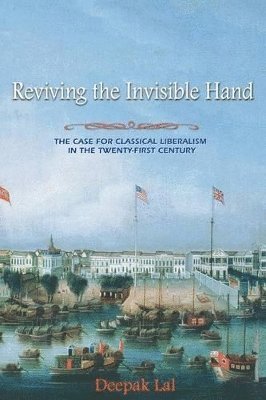
Reviving the Invisible Hand
The Case for Classical Liberalism in the Twenty-first Century
Häftad, Engelska, 2008
390 kr
Skickas inom 7-10 vardagar
Reviving the Invisible Hand is an uncompromising call for a global return to a classical liberal economic order, free of interference from governments and international organizations. Arguing for a revival of the invisible hand of free international trade and global capital, eminent economist Deepak Lal vigorously defends the view that statist attempts to ameliorate the impact of markets threaten global economic progress and stability. And in an unusual move, he not only defends globalization economically, but also answers the cultural and moral objections of antiglobalizers. Taking a broad cross-cultural and interdisciplinary approach, Lal argues that there are two groups opposed to globalization: cultural nationalists who oppose not capitalism but Westernization, and "new dirigistes" who oppose not Westernization but capitalism. In response, Lal contends that capitalism doesn't have to lead to Westernization, as the examples of Japan, China, and India show, and that "new dirigiste" complaints have more to do with the demoralization of their societies than with the capitalist instruments of prosperity.Lal bases his case on a historical account of the rise of capitalism and globalization in the first two liberal international economic orders: the nineteenth-century British, and the post-World War II American. Arguing that the "new dirigisme" is the thin edge of a wedge that could return the world to excessive economic intervention by states and international organizations, Lal does not shrink from controversial stands such as advocating the abolishment of these organizations and defending the existence of child labor in the Third World.
142 kr
Skickas inom 5-8 vardagar
Empires have unfairly gotten a bad name, not least in U.S. domestic politics. This is particularly unfortunate, as the world needs an American pax to provide both global peace and prosperity. The most urgent task in the new imperium is to bring the world of Islam into the modern world, without seeking to alter its soul. In this monograph, Deepak Lal gives reasons to believe the United States should be able to fulfill this imperial task. But is it willing? Given the continuing resonance of Wilsonian moralism in public discourse, Lal is doubtful. There must first be an acceptance in domestic politics that the United States is an imperial power, and then the real debate about how best to use that power can sensibly ensue.
212 kr
Tillfälligt slut
105 kr
Tillfälligt slut