Deepali Singh – författare
Visar alla böcker från författaren Deepali Singh. Handla med fri frakt och snabb leverans.
5 produkter
5 produkter
Inbunden, Engelska, 2026
1 666 kr
Skickas inom 10-15 vardagar
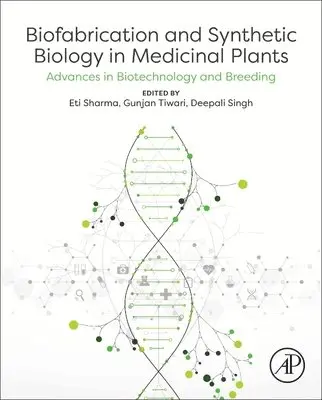
Biofabrication and Synthetic Biology in Medicinal Plants: Advances in Biotechnology and Breeding presents recent technological advances for enhancing medicinal plants as sources of plant-based biopharmaceuticals. It covers biofabrication, synthetic biology, modern biotechnological tools, and innovative breeding strategies tailored for medicinal plant improvement. While these technologies are well established in crop plants, their application in medicinal plants remains underexplored. Medicinal plants are rich sources of therapeutic compounds traditionally used across cultures to treat a wide range of diseases and health conditions. These plants produce diverse bioactive molecules, including terpenoids, flavonoids, alkaloids, and phenolics, many of which exhibit significant pharmacological potential. For centuries, medicinal and aromatic plants have played a vital role in human healthcare and continue to be valued globally. Recent advances in synthetic biology, metabolic engineering, and biotechnology promise to enhance the production, quality, and efficacy of these bioactive compounds, addressing unmet medical needs and contributing to sustainable healthcare. This book compiles insights from leading experts, offering a comprehensive reference for researchers, early-career scientists, students, and professionals working in medicinal plant biotechnology and breeding.. Explores topics from plant extraction and bioactive compound identification to genetic engineering applications in plant-based medicine. Highlights scientific validation of traditional remedies and the use of synthetic biology to improve compound production and efficacy. Includes case studies illustrating real-world applications of synthetic biology in medicinal plants. Identifies opportunities and challenges in applying biotechnology and breeding to lesser-known medicinal and aromatic species
E-bok
Engelska, 20262 370 kr
Läs direkt efter köp
Biofabrication and Synthetic Biology in Medicinal Plants: Advances in Biotechnology and Breeding presents recent technological advances for enhancing medicinal plants as sources of plant-based biopharmaceuticals. It covers biofabrication, synthetic biology, modern biotechnological tools, and innovative breeding strategies tailored for medicinal plant improvement. While these technologies are well established in crop plants, their application in medicinal plants remains underexplored. Medicinal plants are rich sources of therapeutic compounds traditionally used across cultures to treat a wide range of diseases and health conditions. These plants produce diverse bioactive molecules, including terpenoids, flavonoids, alkaloids, and phenolics, many of which exhibit significant pharmacological potential. For centuries, medicinal and aromatic plants have played a vital role in human healthcare and continue to be valued globally. Recent advances in synthetic biology, metabolic engineering, and biotechnology promise to enhance the production, quality, and efficacy of these bioactive compounds, addressing unmet medical needs and contributing to sustainable healthcare. This book compiles insights from leading experts, offering a comprehensive reference for researchers, early-career scientists, students, and professionals working in medicinal plant biotechnology and breeding.* Explores topics from plant extraction and bioactive compound identification to genetic engineering applications in plant-based medicine* Highlights scientific validation of traditional remedies and the use of synthetic biology to improve compound production and efficacy* Includes case studies illustrating real-world applications of synthetic biology in medicinal plants* Identifies opportunities and challenges in applying biotechnology and breeding to lesser-known medicinal and aromatic species
Inbunden, Engelska, 2021
1 851 kr
Skickas inom 10-15 vardagar
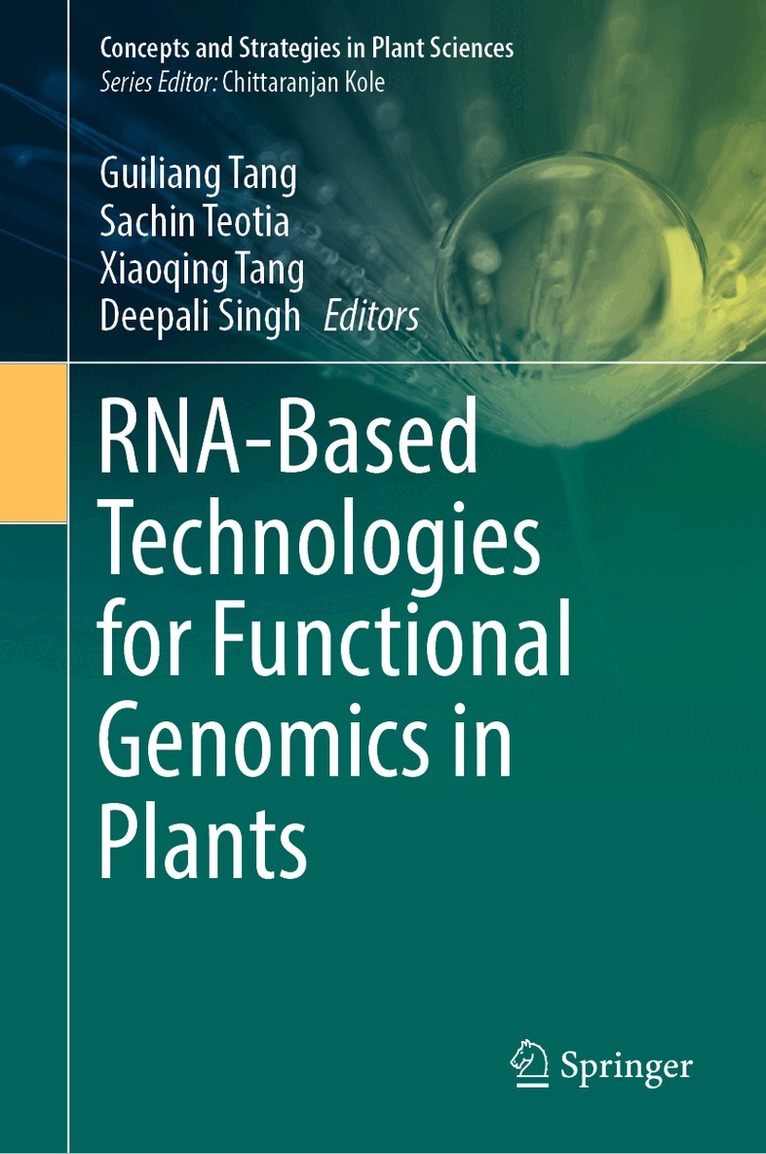
This book offers a unique and comprehensive overview of key RNA-based technologies, as well as their development and applications for the functional genomics of plant coding and non-coding genes. It focuses on the latest as well as classical RNA-based techniques used for studies on small RNAs, long non-coding RNAs and protein-coding genes. These techniques chiefly focus on target mimics (TMs) and short tandem target mimics (STTMs) for small RNAs, and artificial microRNAs (amiRNAs), RNA interference (RNAi) and CRISPR/Cas for genes. Furthermore, the book discusses the latest trends in the field and various modifications of the above-mentioned approaches, and explores how these RNA-based technologies have been developed, applied and validated as essential technologies in plant functional genomics. RNA-based technologies, their mechanisms of action, their advantages and disadvantages, and insights into the further developmentand applications of these technologies in plants are discussed. These techniques will enable the users to functionally characterize genes and small RNAs through silencing, overexpression and editing. Gathering contributions by globally respected experts, the book will appeal to students, teachers and scientists in academia and industry who are interested in horticulture, genetics, pathology, entomology, physiology, molecular genetics and breeding, in vitro culture & genetic engineering, and functional genomics.
E-bok
Engelska, 20212 283 kr
Läs direkt efter köp
This book offers a unique and comprehensive overview of key RNA-based technologies, as well as their development and applications for the functional genomics of plant coding and non-coding genes. It focuses on the latest as well as classical RNA-based techniques used for studies on small RNAs, long non-coding RNAs and protein-coding genes. These techniques chiefly focus on target mimics (TMs) and short tandem target mimics (STTMs) for small RNAs, and artificial microRNAs (amiRNAs), RNA interference (RNAi) and CRISPR/Cas for genes. Furthermore, the book discusses the latest trends in the field and various modifications of the above-mentioned approaches, and explores how these RNA-based technologies have been developed, applied and validated as essential technologies in plant functional genomics. RNA-based technologies, their mechanisms of action, their advantages and disadvantages, and insights into the further developmentand applications of these technologies in plants are discussed. These techniques will enable the users to functionally characterize genes and small RNAs through silencing, overexpression and editing. Gathering contributions by globally respected experts, the book will appeal to students, teachers and scientists in academia and industry who are interested in horticulture, genetics, pathology, entomology, physiology, molecular genetics and breeding, in vitro culture & genetic engineering, and functional genomics.
Häftad, Engelska, 2022
1 851 kr
Skickas inom 10-15 vardagar
This book offers a unique and comprehensive overview of key RNA-based technologies, as well as their development and applications for the functional genomics of plant coding and non-coding genes. It focuses on the latest as well as classical RNA-based techniques used for studies on small RNAs, long non-coding RNAs and protein-coding genes. These techniques chiefly focus on target mimics (TMs) and short tandem target mimics (STTMs) for small RNAs, and artificial microRNAs (amiRNAs), RNA interference (RNAi) and CRISPR/Cas for genes. Furthermore, the book discusses the latest trends in the field and various modifications of the above-mentioned approaches, and explores how these RNA-based technologies have been developed, applied and validated as essential technologies in plant functional genomics. RNA-based technologies, their mechanisms of action, their advantages and disadvantages, and insights into the further developmentand applications of these technologies in plants are discussed. These techniques will enable the users to functionally characterize genes and small RNAs through silencing, overexpression and editing. Gathering contributions by globally respected experts, the book will appeal to students, teachers and scientists in academia and industry who are interested in horticulture, genetics, pathology, entomology, physiology, molecular genetics and breeding, in vitro culture & genetic engineering, and functional genomics.