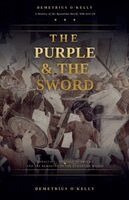
In the autumn of 602 CE, a mutinous Balkan army raised a junior officer named Phocas to the throne of the Eastern Roman Empire. Eight years later, a rebel fleet sailed from the exarchate of Africa, decorated with icons of the Virgin Mary, to take that throne back. What happened in between changed the shape of the medieval world.The Purple and the Sword is the definitive narrative history of the Heraclian revolt — the conspiracy hatched in Carthage, the two-pronged military campaign that seized Egypt and the Mediterranean simultaneously, the betrayal at Constantinople's heart, and the coronation that established a dynasty governing Byzantium for a century. It is also the story of consequences: the Persian war that the revolt helped to escalate, the fall of Jerusalem and the loss of the True Cross, the extraordinary holy war counter-offensive that recovered everything — and the Islamic expansion that undid it within a decade.Drawing on Byzantine, Coptic, Syriac, and Armenian sources, Demetrius O'Kelly weaves military history, political theology, and numismatic strategy into a narrative of singular scope and human depth. From the exarchal palace in Carthage to the deck of a flagship at the Golden Horn, this is the story of how an empire was lost, remade, and permanently transformed by the most consequential decade in its long history.
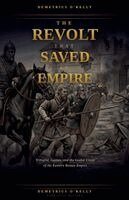
In the spring of 399 CE, a Gothic cavalry commander named Tribigild returned from Constantinople to his provincial garrison in the Phrygian highlands and made a decision that would shake the Eastern Roman Empire to its foundations. His petition for overdue payments and career advancement had been dismissed with the bureaucratic indifference of a court too consumed by factional politics to recognize a dangerous man's legitimate grievances. Within weeks, his Greuthungi cavalry were burning estates across Anatolia, and within months, a crisis that began as a provincial mutiny had become an imperial catastrophe.The Revolt That Saved an Empire traces the two-year crisis of 399–401 CE in full narrative depth — from the Danubian defeat that first brought the Greuthungi to Phrygia, through the political machinations of the eunuch chamberlain Eutropius, to the Gothic occupation of Constantinople itself and the violent popular insurrection that expelled it. At the centre of this story are figures of extraordinary vividness: Gainas, the Gothic general playing a long political game; Chrysostom, the golden-mouthed patriarch who refused both Eutropius his church and Gainas his heresy; Valentinus of Selge, the provincial landowner who nearly ended the revolt alone with rocks and local knowledge; and Fravitta, the pagan Goth who chose Rome when his kinsmen chose otherwise.This is the story of how the Eastern Roman Empire survived its most dangerous internal crisis — and why that survival made all the difference.