Denisa Kostovicova - Böcker
Visar alla böcker från författaren Denisa Kostovicova. Handla med fri frakt och snabb leverans.
8 produkter
8 produkter
608 kr
Skickas inom 10-15 vardagar
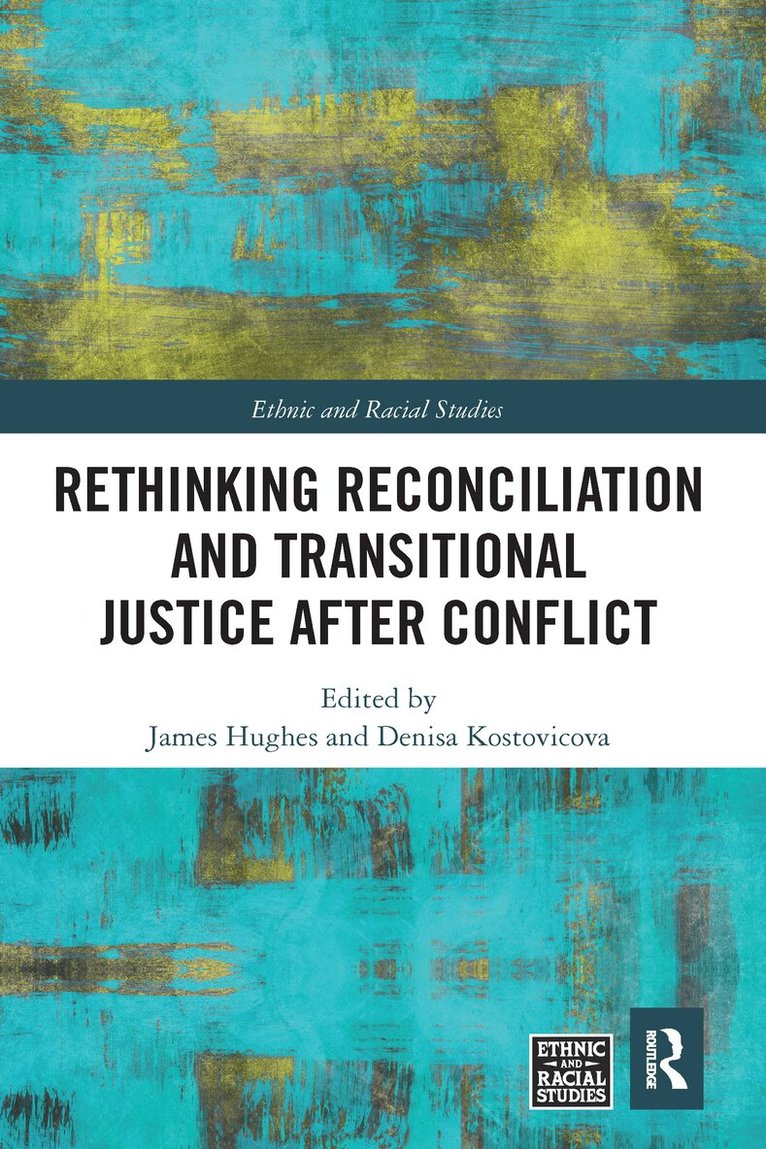
The concepts of reconciliation and transitional justice are inextricably linked in a new body of normative meta-theory underpinned by claims related to their effects in managing the transformation of deeply divided societies to a more stable and more democratic basis. This edited volume is dedicated to a critical re-examination of the key premises on which the debates in this field pivot. The contributions problematise core concepts, such as victimhood, accountability, justice and reconciliation itself; and provide a comparative perspective on the ethnic, ideological, racial and structural divisions to understand their rootedness in local contexts and to evaluate how they shape and constrain moving beyond conflict. With its systematic empirical analysis of a geographic and historic range of conflicts involving ethnic and racial groups, the volume furthers our grasp of contradictions often involved in transitional justice scholarship and practice and how they may undermine the very goals of peace, stability and reconciliation that they seek to promote.This book was originally published as a special issue of Ethnic and Racial Studies.
2 088 kr
Skickas inom 10-15 vardagar
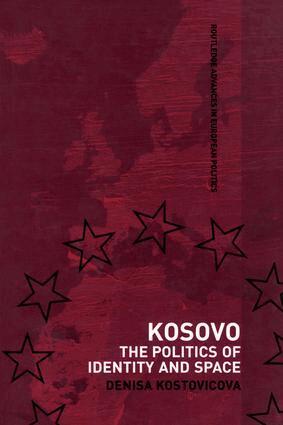
Kosovo: The Politics of Identity and Space explores the Albanian-Serbian confrontation after Slobodan Milosevic's rise to power and the policy of repression in Kosovo through the lens of the Kosovo education system. The argument is woven around the story of imposed ethnic segregation in Kosovo's education, and its impact on the emergence of exclusive notions of nation and homeland among the Serbian and Albanian youth in the 1990s. The book also critically explores the wider context of the Albanian non-violent resistance, including the emergence of the parallel state and its weaknesses. Kosovo: The Politics of Identity and Space not only provides an insight into events that led to the bloodshed in Kosovo in the late 1990s, but also shows that the legacy of segregation is one of the major challenges the international community faces in its efforts to establish an integrated multi-ethnic society in the territory.
2 155 kr
Skickas inom 10-15 vardagar
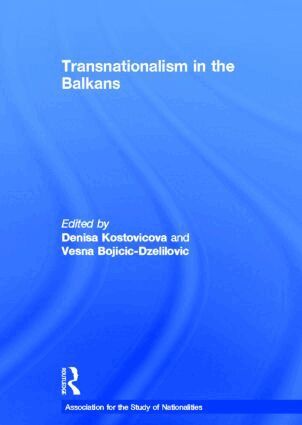
After a decade of exclusive nationalism, violence and isolation of the 1990s, the Balkans has seen the emergence of transnational links between the former ethnic foes. Do these new cross-border links herald the era of inter-ethnic reconciliation in place of the politics of ethnic exclusion? Are they a proof of a successful transition from authoritarianism and war to democracy and peace? Drawing on substantial empirical research by regional specialists, Transnationalism in the Balkans provides a sobering insight into the nature of cross-border links in the region and their implications. Several of the authors show how transnational connections in the context of weak states and new borders in the region have been used by transnational actors – be it in the politics, economics and culture -- to undermine a democratic consolidation and keep the practice of exclusive ethnic politics and identities alive. These findings make a strong case to go beyond the region and put forth a critical argument for rethinking the theories of transition to democracy in the post-Communist and post-conflict setting to incorporate a dimension of globalisation. This book was previously published as a special issue of Ethnopolitics.
2 088 kr
Skickas inom 10-15 vardagar
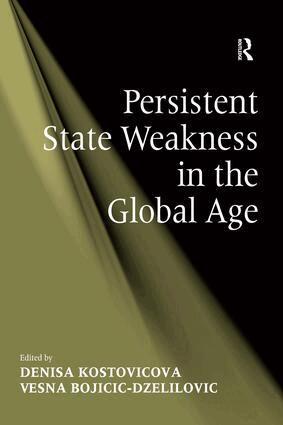
Persistent State Weakness in the Global Age addresses the question of why state weakness in the global era persists. It debunks a common assumption that state weakness is a stop-gap on the path to state failure and state collapse. Informed by a globalization perspective, the book shows how state weakness is frequently self-reproducing and functional. The interplay of global actors, policies and norms is analyzed from the standpoint of their internalization in a weak state through transnational networks. Contributors examine the reproduction of partial and discriminatory rule at the heart of persistent state weakness, drawing on a wide geographical range of case studies including the Middle East, the Balkans, the post-Soviet states and sub-Saharan Africa. The study of state-weakening dynamics related to institutional incapacity, colonial and war legacies, legitimacy gaps, economic informality, democratization and state-building provides an insight into durability and resilience of weak states in the global age.
2 058 kr
Skickas inom 10-15 vardagar
The concepts of reconciliation and transitional justice are inextricably linked in a new body of normative meta-theory underpinned by claims related to their effects in managing the transformation of deeply divided societies to a more stable and more democratic basis. This edited volume is dedicated to a critical re-examination of the key premises on which the debates in this field pivot. The contributions problematise core concepts, such as victimhood, accountability, justice and reconciliation itself; and provide a comparative perspective on the ethnic, ideological, racial and structural divisions to understand their rootedness in local contexts and to evaluate how they shape and constrain moving beyond conflict. With its systematic empirical analysis of a geographic and historic range of conflicts involving ethnic and racial groups, the volume furthers our grasp of contradictions often involved in transitional justice scholarship and practice and how they may undermine the very goals of peace, stability and reconciliation that they seek to promote.This book was originally published as a special issue of Ethnic and Racial Studies.
644 kr
Skickas inom 10-15 vardagar
Kosovo: The Politics of Identity and Space explores the Albanian-Serbian confrontation after Slobodan Milosevic's rise to power and the policy of repression in Kosovo through the lens of the Kosovo education system. The argument is woven around the story of imposed ethnic segregation in Kosovo's education, and its impact on the emergence of exclusive notions of nation and homeland among the Serbian and Albanian youth in the 1990s. The book also critically explores the wider context of the Albanian non-violent resistance, including the emergence of the parallel state and its weaknesses. Kosovo: The Politics of Identity and Space not only provides an insight into events that led to the bloodshed in Kosovo in the late 1990s, but also shows that the legacy of segregation is one of the major challenges the international community faces in its efforts to establish an integrated multi-ethnic society in the territory.
671 kr
Skickas inom 10-15 vardagar
After a decade of exclusive nationalism, violence and isolation of the 1990s, the Balkans has seen the emergence of transnational links between the former ethnic foes. Do these new cross-border links herald the era of inter-ethnic reconciliation in place of the politics of ethnic exclusion? Are they a proof of a successful transition from authoritarianism and war to democracy and peace? Drawing on substantial empirical research by regional specialists, Transnationalism in the Balkans provides a sobering insight into the nature of cross-border links in the region and their implications. Several of the authors show how transnational connections in the context of weak states and new borders in the region have been used by transnational actors – be it in the politics, economics and culture -- to undermine a democratic consolidation and keep the practice of exclusive ethnic politics and identities alive. These findings make a strong case to go beyond the region and put forth a critical argument for rethinking the theories of transition to democracy in the post-Communist and post-conflict setting to incorporate a dimension of globalisation. This book was previously published as a special issue of Ethnopolitics.
567 kr
Skickas inom 10-15 vardagar
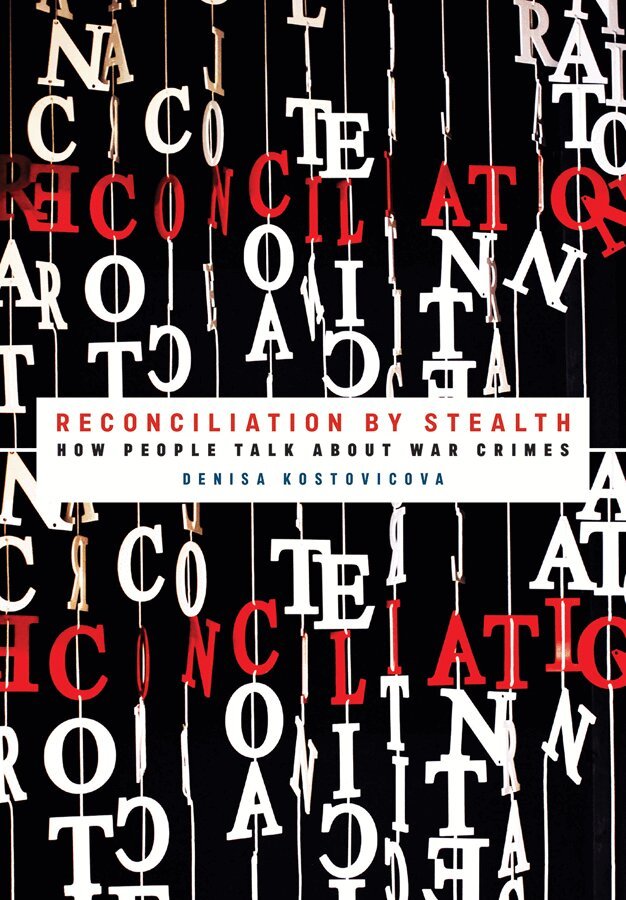
Winner of the ISA Best Book in Human RightsReconciliation by Stealth advances a novel approach to evaluating the effects of transitional justice in postconflict societies. Through her examination of the Balkan conflicts, Denisa Kostovicova asks what happens when former adversaries discuss legacies of violence and atrocity, and whether it is possible to do so without further deepening animosities. Reconciliation by Stealth shifts our attention from what people say about war crimes, to how they deliberate past wrongs. Bringing together theories of democratic deliberation and peacebuilding, Kostovicova demonstrates how people from opposing ethnic groups reconcile through reasoned, respectful, and empathetic deliberation about a difficult legacy. She finds that expression of ethnic difference plays a role in good-quality deliberation across ethnic lines, while revealed intraethnic divisions help deliberators expand moral horizons previously narrowed by conflict. In the process, people forge bonds of solidarity and offset divisive identity politics that bears upon their deliberations.Reconciliation by Stealth shows us the importance of theoretical and methodological innovation in capturing how transitional justice can promote reconciliation, and points to the untapped potential of deliberative problem-solving to repair relationships fractured by conflict.Thanks to generous funding from the London School of Economic and Political Science, the ebook editions of this book are available as Open Access volumes from Cornell Open (cornellpress.cornell.edu/cornell-open) and other repositories.