Dennis Mcnamara - Böcker
Visar alla böcker från författaren Dennis Mcnamara. Handla med fri frakt och snabb leverans.
5 produkter
5 produkter
1 950 kr
Skickas inom 10-15 vardagar
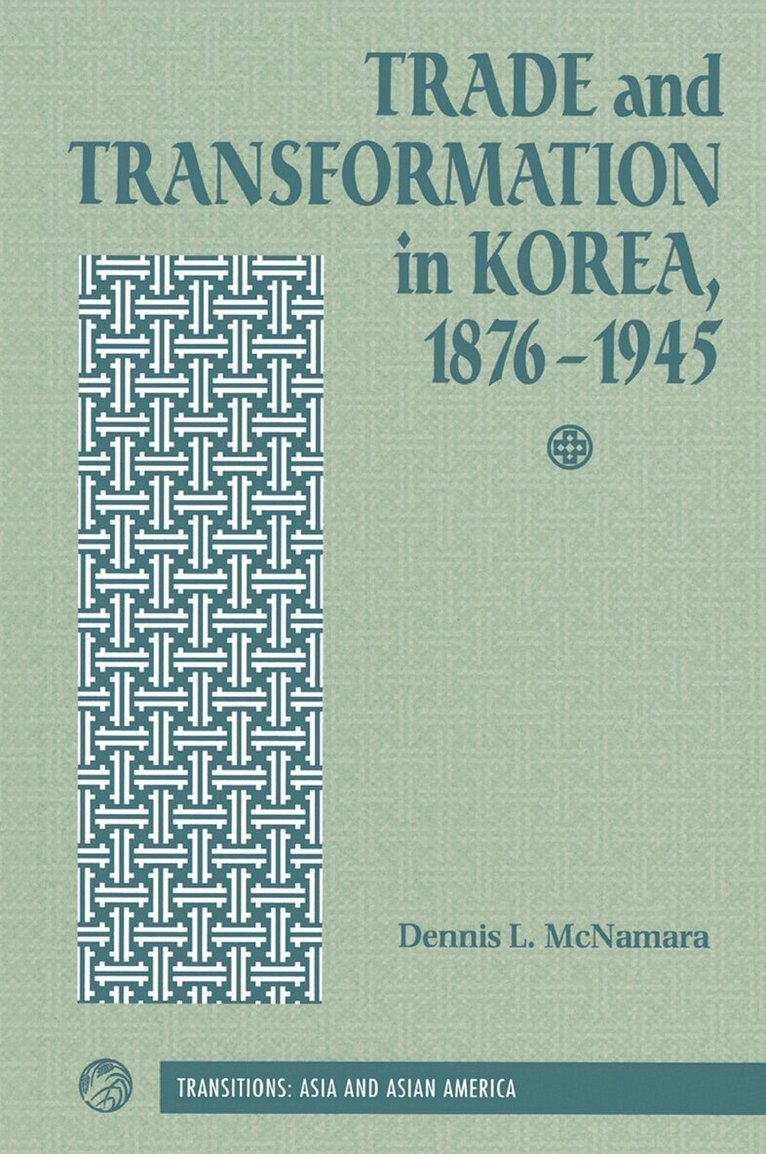
Exploring the interaction among system, state, and society, this book illuminates the social and economic history of late nineteenth- and early twentieth-century colonial Korea. Dennis McNamara argues that transformation within and trade abroad, led by rice exports, spurred Korea's shift from isolation to inclusion in a modern regional system. In h
2 159 kr
Skickas inom 10-15 vardagar
Assessing the roles of capital, labour, and state, McNamara discovers a distinctive style of interest bargaining to bridge uncertainties and foster entrepreneurship. The textile industry serves as a microcosm of the broader social changes of the past five decades. Dramatic transitions from family firms to professional capitalism, from state direction to regulation, and from company unions to industry federations take centre stage. Moving among executives, labour leaders, and state officials, the author charts development across the crucible of contending interests. Stretching from high technology to labour-intensive production, the textile industry offers a new profile of democratization and market liberalization, and recently of globalization and adjustment in the wake of the Asian Financial Crisis.The first comprehensive review of the past and present of a leading sector, the volume offers a new interpretation of society and market in South Korea. Drawing insights from the New Economic Sociology, this study sheds new light on social systems of production in the South Korean Miracle. Contrasts with Thailand and Japan bring the Korean experience of interest contention into a comparative context of Asian capitalism.
2 164 kr
Skickas inom 10-15 vardagar
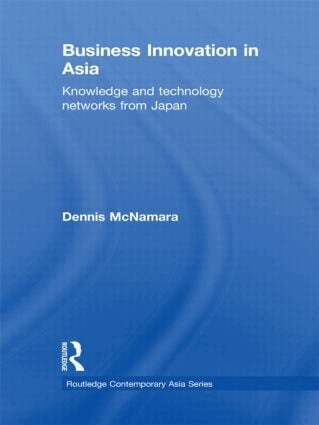
Industrial competition with rising economies, new regional investment from the West, and trade pacts among competitors threaten Japan’s long postwar prominence. Global market dynamics and regional competition prompted the shift from offshore factories to local networks in the last decade. Similar forces are driving the recent formation of regional Nikkei - Japan-affiliated - nodes in major industrial clusters in Asia.The central concept of this volume, "knowledge networks," refers to interactive linkages around nodes of tacit and codified knowledge embedded in Global Value Chains. Through survey evidence and interviews at firms and factories this book reveals the problems facing knowledge transfer, such as persisting difficulties in communication, technology transfer, and indigenous learning in regional nodes of Nikkei Value Chains and the persistence of earlier patterns of hierarchical coordination in information flows despite the shift towards more horizontal network organization. However, a comparison of Nikkei knowledge networks in China, South Korea, and Thailand reveals the possibilities of an interactive learning community in cross-border investment. If Japan can meet the challenge of tapping Asia’s offshore resources for innovation, it will pose a formidable global challenge to Western competitors.
654 kr
Skickas inom 10-15 vardagar
Industrial competition with rising economies, new regional investment from the West, and trade pacts among competitors threaten Japan’s long postwar prominence. Global market dynamics and regional competition prompted the shift from offshore factories to local networks in the last decade. Similar forces are driving the recent formation of regional Nikkei - Japan-affiliated - nodes in major industrial clusters in Asia.The central concept of this volume, "knowledge networks," refers to interactive linkages around nodes of tacit and codified knowledge embedded in Global Value Chains. Through survey evidence and interviews at firms and factories this book reveals the problems facing knowledge transfer, such as persisting difficulties in communication, technology transfer, and indigenous learning in regional nodes of Nikkei Value Chains and the persistence of earlier patterns of hierarchical coordination in information flows despite the shift towards more horizontal network organization. However, a comparison of Nikkei knowledge networks in China, South Korea, and Thailand reveals the possibilities of an interactive learning community in cross-border investment. If Japan can meet the challenge of tapping Asia’s offshore resources for innovation, it will pose a formidable global challenge to Western competitors.
687 kr
Skickas inom 10-15 vardagar
Exploring the interaction among system, state, and society, this book illuminates the social and economic history of late nineteenth- and early twentieth-century colonial Korea. Dennis McNamara argues that transformation within and trade abroad, led by rice exports, spurred Korea's shift from isolation to inclusion in a modern regional system. In his chronicle of the bustling grain export center of Inchon, the author draws an engaging portrait of leading Korean brokers and their efforts to maintain autonomy while cooperating with Japanese grain millers.McNamara argues that Korean precedents of enterprise and guild association, coupled with Japanese colonial patterns of accommodation, fostered the emergence of modern Korean business. By focusing especially on the role of rice brokers and millers as important agents of change, this study advances our understanding of the formation of the Korean business community and offers valuable insights into the trade history of one of the world's leading export nations.