Dennis W. Choi – författare
Visar alla böcker från författaren Dennis W. Choi. Handla med fri frakt och snabb leverans.
6 produkter
6 produkter
Inbunden, Engelska, 2002
3 353 kr
Skickas inom 10-15 vardagar
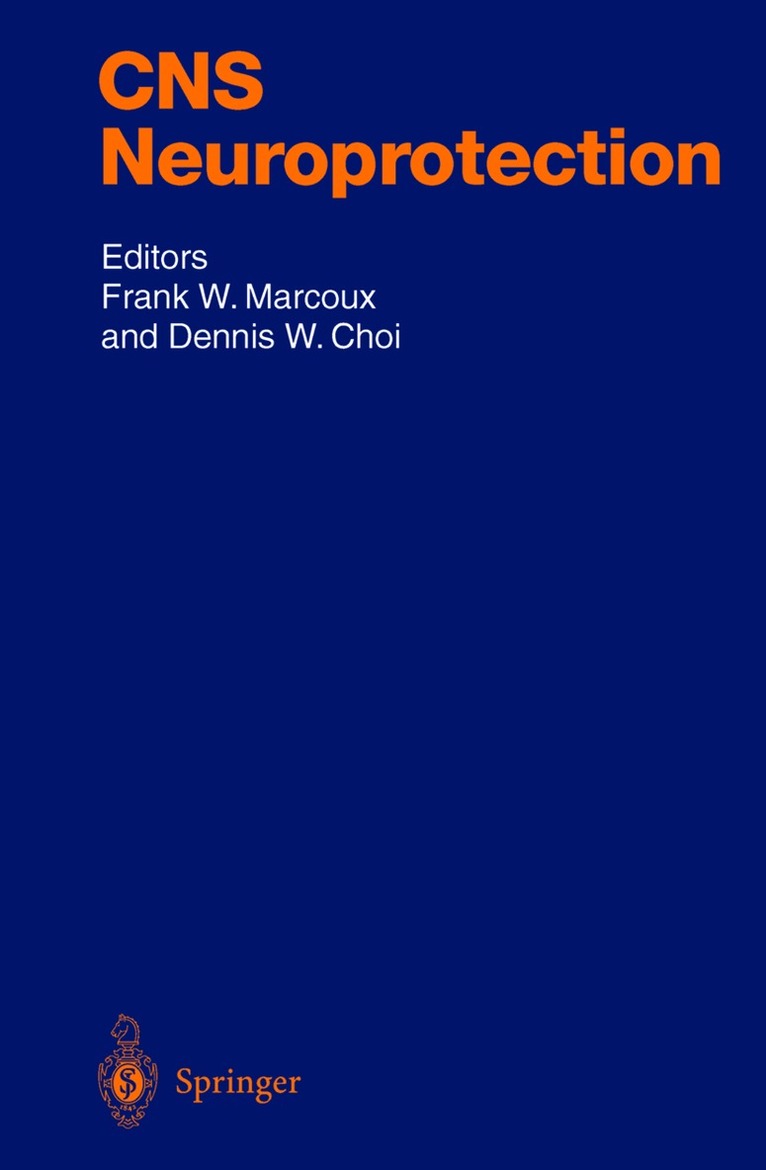
"CNS neuroprotection" was a common subject of papers, symposia, and reviews during the previous "decade of the brain. " Indeed, in recent years, experimental study of putative neuroprotective agents prompted clinical trials of numerous drug candidates in acute and chronic human neurodegenerative conditions. While the outcomes of these trials have not been as successful as initially hoped, these were early explorations, and the pipeline of relevant ideas continues to grow in strength and depth. We predict that early in this new millennium, crippling disorders such as stroke and Alzheimer's disease will be treated effectively by therapeutic neuroprotective strategies. This volume of the Handbook of Experimental Pharmacology titled eNS Neuroprotection provides a pharmacological perspective on currently promis ing neuroprotective approaches, and a clinical perspective on the challenges involved in establishing the efficacy of these approaches through appropriate clinical trials. Section I, "Mechanistic Approaches to CNS Neuroprotection," reviews major injury mechanisms that have formed the basis for many past and present clinical trials conducted around the world. Dr. KIM and colleagues, Washington University School of Medicine, review the status of blocking excitotoxicity as an approach to CNS neuroprotection. Dr. WANG, Pfizer Global Research and Development,Ann Arbor Laboratories, outlines evidence supporting a contri bution of apoptosis to pathological neuronal or glial cell loss. Drs. BECKER and HALLENBECK, University of Washington and the National Institute on Neuro logical Diseases and Stroke, respectively, argue that inhibiting inflammatory pathways in the brain can be neuroprotective. Dr.
Del 155 - Handbook of Experimental Pharmacology
CNS Neuroprotection
Häftad, Engelska, 2010
3 353 kr
Skickas inom 10-15 vardagar
"CNS neuroprotection" was a common subject of papers, symposia, and reviews during the previous "decade of the brain. " Indeed, in recent years, experimental study of putative neuroprotective agents prompted clinical trials of numerous drug candidates in acute and chronic human neurodegenerative conditions. While the outcomes of these trials have not been as successful as initially hoped, these were early explorations, and the pipeline of relevant ideas continues to grow in strength and depth. We predict that early in this new millennium, crippling disorders such as stroke and Alzheimer's disease will be treated effectively by therapeutic neuroprotective strategies. This volume of the Handbook of Experimental Pharmacology titled eNS Neuroprotection provides a pharmacological perspective on currently promis ing neuroprotective approaches, and a clinical perspective on the challenges involved in establishing the efficacy of these approaches through appropriate clinical trials. Section I, "Mechanistic Approaches to CNS Neuroprotection," reviews major injury mechanisms that have formed the basis for many past and present clinical trials conducted around the world. Dr. KIM and colleagues, Washington University School of Medicine, review the status of blocking excitotoxicity as an approach to CNS neuroprotection. Dr. WANG, Pfizer Global Research and Development,Ann Arbor Laboratories, outlines evidence supporting a contri bution of apoptosis to pathological neuronal or glial cell loss. Drs. BECKER and HALLENBECK, University of Washington and the National Institute on Neuro logical Diseases and Stroke, respectively, argue that inhibiting inflammatory pathways in the brain can be neuroprotective. Dr.
E-bok
PDF, Engelska, 20121 379 kr
Läs direkt efter köp
In the past few years, the Fondation IPSEN has been increasing its activity in the neurosciences, especially by supporting researchers working on Alzheimer''s disease. This interest in the subject is demonstrated by a prize and a fellowship, which have been awarded each year since 1985, a monthly newsletter, and a series of Colloques Medecine et Recherche and their proceedings which are distributed world-wide. Since 1990, our effort in the field of neuroscience has been considerably enhanced. A new series of Colloques Medecine et Recherche has been devoted to this topic. Like the meetings on Alzheimer''s disease, this series will deal with the most current research. Glutamate -the subject we chose for the first meeting of this series - is an excellent example since it has a major role in many physiological or pathological situations. This book contains the proceedings of the meeting which was held in Paris on September 24, 1990. As for the proceedings of the meeting on Alzheimer''s disease - published in the series Research and Perspectives in Alzheimer''s disease -these meetings will be reported in a new series, distributed at an international level, Research and Perspectives in Neurosciences. The second meeting on neurosciences is scheduled for September 23, 1991, and will be held in Paris. It will be dedicated to Gene transfer and therapy in the nervous system (Organizing Committee: F. Gage, La Jolla; Y. Christen, Paris).
Häftad, Engelska, 2011
1 090 kr
Skickas inom 10-15 vardagar
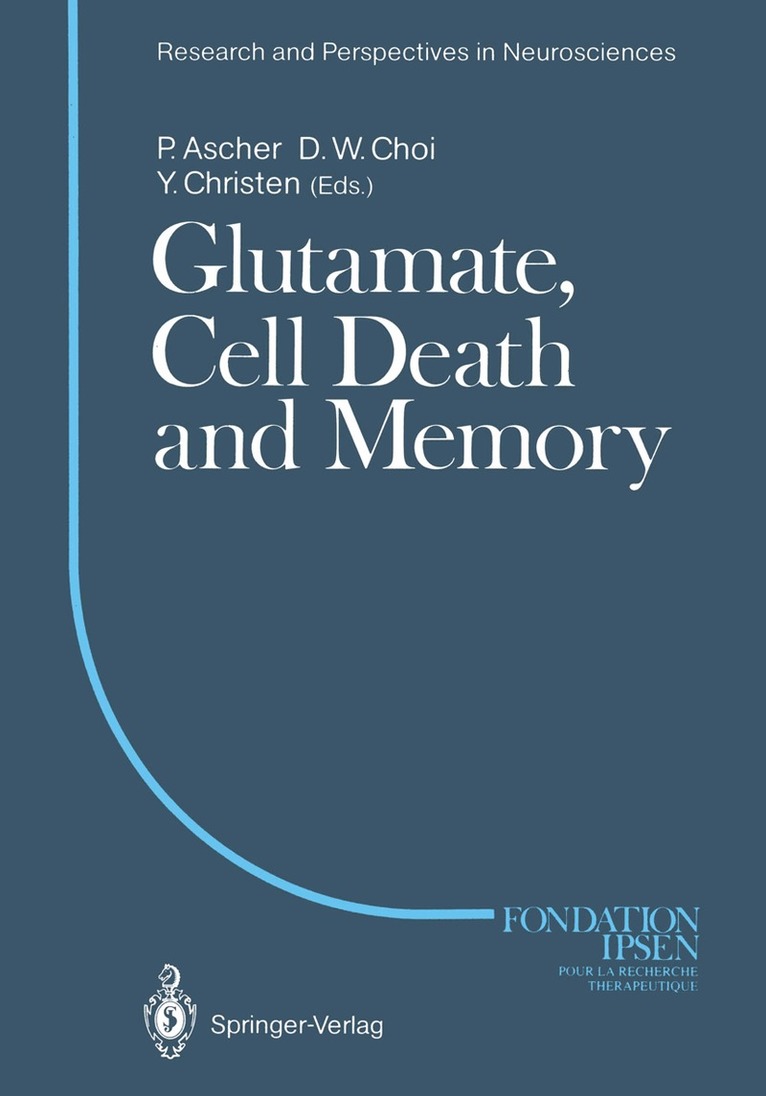
In the past few years, the Fondation IPSEN has been increasing its activity in the neurosciences, especially by supporting researchers working on Alzheimer's disease. This interest in the subject is demonstrated by a prize and a fellowship, which have been awarded each year since 1985, a monthly newsletter, and a series of Colloques Medecine et Recherche and their proceedings which are distributed world-wide. Since 1990, our effort in the field of neuroscience has been considerably enhanced. A new series of Colloques Medecine et Recherche has been devoted to this topic. Like the meetings on Alzheimer's disease, this series will deal with the most current research. Glutamate -the subject we chose for the first meeting of this series - is an excellent example since it has a major role in many physiological or pathological situations. This book contains the proceedings of the meeting which was held in Paris on September 24, 1990. As for the proceedings of the meeting on Alzheimer's disease - published in the series Research and Perspectives in Alzheimer's disease -these meetings will be reported in a new series, distributed at an international level, Research and Perspectives in Neurosciences. The second meeting on neurosciences is scheduled for September 23, 1991, and will be held in Paris. It will be dedicated to Gene transfer and therapy in the nervous system (Organizing Committee: F. Gage, La Jolla; Y. Christen, Paris).
E-bok
PDF, Engelska, 20133 923 kr
Läs direkt efter köp
"CNS neuroprotection" was a common subject of papers, symposia, and reviews during the previous "decade of the brain. " Indeed, in recent years, experimental study of putative neuroprotective agents prompted clinical trials of numerous drug candidates in acute and chronic human neurodegenerative conditions. While the outcomes of these trials have not been as successful as initially hoped, these were early explorations, and the pipeline of relevant ideas continues to grow in strength and depth. We predict that early in this new millennium, crippling disorders such as stroke and Alzheimer''s disease will be treated effectively by therapeutic neuroprotective strategies. This volume of the Handbook of Experimental Pharmacology titled eNS Neuroprotection provides a pharmacological perspective on currently promis ing neuroprotective approaches, and a clinical perspective on the challenges involved in establishing the efficacy of these approaches through appropriate clinical trials. Section I, "Mechanistic Approaches to CNS Neuroprotection," reviews major injury mechanisms that have formed the basis for many past and present clinical trials conducted around the world. Dr. KIM and colleagues, Washington University School of Medicine, review the status of blocking excitotoxicity as an approach to CNS neuroprotection. Dr. WANG, Pfizer Global Research and Development,Ann Arbor Laboratories, outlines evidence supporting a contri bution of apoptosis to pathological neuronal or glial cell loss. Drs. BECKER and HALLENBECK, University of Washington and the National Institute on Neuro logical Diseases and Stroke, respectively, argue that inhibiting inflammatory pathways in the brain can be neuroprotective. Dr.
Inbunden, Engelska, 2002
2 053 kr
Tillfälligt slut
In this book, an international group of investigators from a broad array of clinical and basic disciplines present the ideas and concepts in the foreground of cerebrovascular disease. Included in their discussion are perspectives on topics that continue to guide current investigations, such as white matter injury, newer imaging approaches, delayed neuronal death, and recovery after stroke, as well as continuing disagreements on the value of heparin or MRI endpoints in the management of stroke patients. Further topics include a proposal for a major multicenter re-study of the utility of extracranial-intracranial bypass surgery in light of additional diagnostic information available through PET scanning; examination of how processes such as apoptosis, inflammation, free radicals, poly (ADP-ribose) polymerase activation, and alterations in glutamate receptor function contribute to the pathogenesis of ischemic brain injury; and finally an exploration of how estrogens or cholesterol-lowering agents might be used therapeutically.