Denyse O'Leary – författare
Visar alla böcker från författaren Denyse O'Leary. Handla med fri frakt och snabb leverans.
5 produkter
The Immortal Mind
A Neurosurgeon’s Case for the Existence of the Soul
Av Denyse O'Leary, Michael Egnor
Inbunden, 2025
311 kr
Lägg i varukorg
A neuroscientist and surgeon makes an argument for the existence of a spiritual human soul in this eye-opening book.Many scientists and doctors believe that there is no such thing as the soul. That there is no part of us that persists beyond death. We are not spiritual in any respect. We are made …
Spiritual Brain
A Neuroscientist's Case for the Existence of the Soul
Av Mario Beauregard, Denyse O'Leary
Häftad, 2008
121 kr
Lägg i varukorg
Drawing on his own research along with others' work in neuroscience as well as some provocative new research in NDE (near-death experiences), Beauregard proves that genuine spiritual experiences can be documented and they generally have life-changing effects. "The Spiritual Brain" explains how such …
The Immortal Mind
A Neurosurgeon's Case for the Existence of the Soul
Av Denyse O'Leary, Michael Egnor
Häftad, 2028
190 kr
Kommande
A neuroscientist and surgeon makes an argument for the existence of a spiritual human soul in this eye-opening book.Many scientists and doctors believe that there is no such thing as the soul. That there is no part of us that persists beyond death. We are not spiritual in any respect. We are made …
By Design or by Chance?
The Growing Controversy on the Origins of Life in the Universe
Häftad, 2004
225 kr
Lägg i varukorg
O'Leary provides by far the broadast overview yet of the ID movement. she quotes ID leaders such as Phillip Johnson, William Dembski and Michael Behe. she also quotes their sternest critics, including Richard Dawkins, Stephen J. Gould and Michael Ruse. She writes about the Wedge movement, DNA, the …
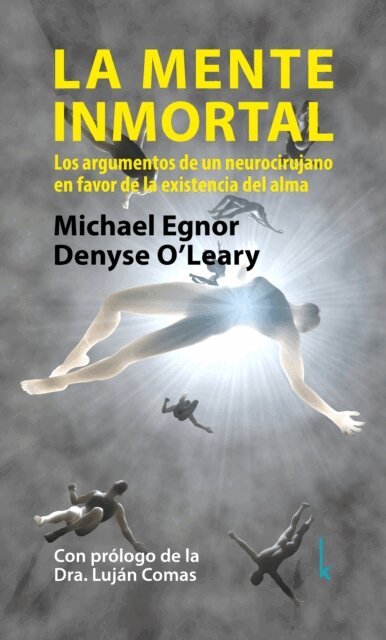
La mente inmortal
Los argumentos de un neurocirujano en favor de la existencia del alma
Av Denyse O'Leary, Michael Egnor
E-bok, 2026
218 kr
Lägg i varukorg
La actividad cerebral normal nos permite pensar abstractamente, siempre y cuando queramos decir con ello que hace que esa actividad sea posible. No podemos realizar actividades de cálculo matemático durante un accidente cerebrovascular ni estando en coma profundo.Los procesos cerebrales permiten …