Derek Hill - Böcker
Visar alla böcker från författaren Derek Hill. Handla med fri frakt och snabb leverans.
2 produkter
2 produkter
Charlie Kaufman and Hollywood's Merry Band of Pranksters, Fabulists and Dreamers
an excursion into the American New Wave
Häftad, Engelska, 2008
159 kr
Skickas inom 7-10 vardagar
Since the late 1990s, a subtle, subversive element has been at work within the staid confines of the Hollywood dream factory. Young filmmakers like Spike Jonze, Wes Anderson, Michel Gondry, David O. Russell, Richard Linklater, and Sofia Coppola rode in on the coattails of the independent film movement that blossomed in the early 1990s and have managed to wage an aesthetic campaign against imaginative cowardice of all persuasions, much like their artistic forebears - the so-called Movie Brats Coppola, Scorsese, De Palma, Altman, and Ashby among others - did in the 1970s. But their true pedigree can be traced back to the cinematic provocateurs of the Nouvelle Vague (Truffaut, Goddard, Chabrol, Rohmer, Rivette, et al), who in the late 1950s and throughout the 1960s liberated screens around the world with a series of films that challenged our assumptions of what the medium could offer and how stories could be told - all of them snapping with style as much as they delivered on ideas.Highly idiosyncratic yet intricately realised, accessible yet willing to overthrow the constraints of formal storytelling, surreal yet always grounded in human emotions, this new breed of American film captures the angst of its characters and the times in which we live, but with a wryness, imagination, earnestness, irony and stylish wit that makes the slide into existential despair a little more amusing than it should be. This book analyzes and traces the origins of the pivotal films and directors in this undeclared war on the mundane.
Del 7 - Heresy and Inquisition in the Middle Ages
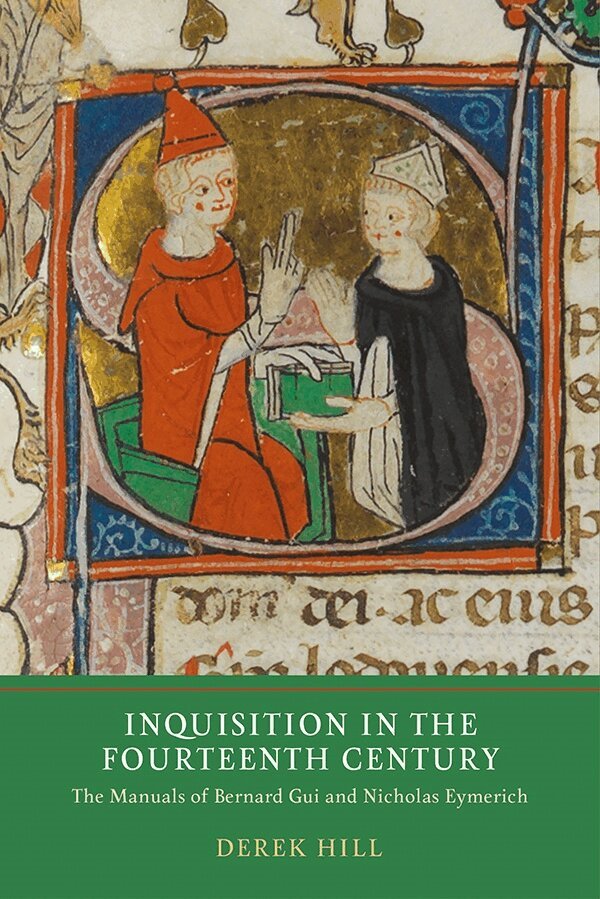
Inquisition in the Fourteenth Century
The Manuals of Bernard Gui and Nicholas Eymerich
Inbunden, Engelska, 2019
1 198 kr
Skickas inom 7-10 vardagar
An investigation of two manuals of inquisition reveals much about the practice in action.The Inquisition played a central role in European history. It moulded societies by enforcing religious and intellectual unity; it helped develop the judicial and police techniques which are the basis of those used today; and it helped lay the foundations for the persecution of witches. An understanding of the Inquisition is therefore essential to the late medieval and early modern periods.This book looks at how the philosophy and practice of Inquisition developed in the fourteenth century. It saw the proliferation of heresies defined by the Church (notably the Spiritual Franciscans and Beguines) and the classifcation of many more magical practices as heresy.The consequentialwidening of the Inquisition's role in turn led to it being seen as an essential part of the Church and the guardian of all the Church's doctrinal boundaries; the inclusion of magic in particular also changed the Inquisition's attitude towards suspects, and the use of torture became systematised and regularised.These changes are charted here through close attention to the inquisitorial manuals of Bernard Gui and Nicholas Eymerich, using other sourceswhere available. Gui's and Eymerich's personalities were important factors. Gui was a successful insider, Eymerich a maverick, but Eymerich's work had the greater long-term influence. Through them we can see the Inquisition in action. DEREK HILL gained his PhD from the University of London.