Derrick S.F. Crothers – författare
Visar alla böcker från författaren Derrick S.F. Crothers. Handla med fri frakt och snabb leverans.
6 produkter
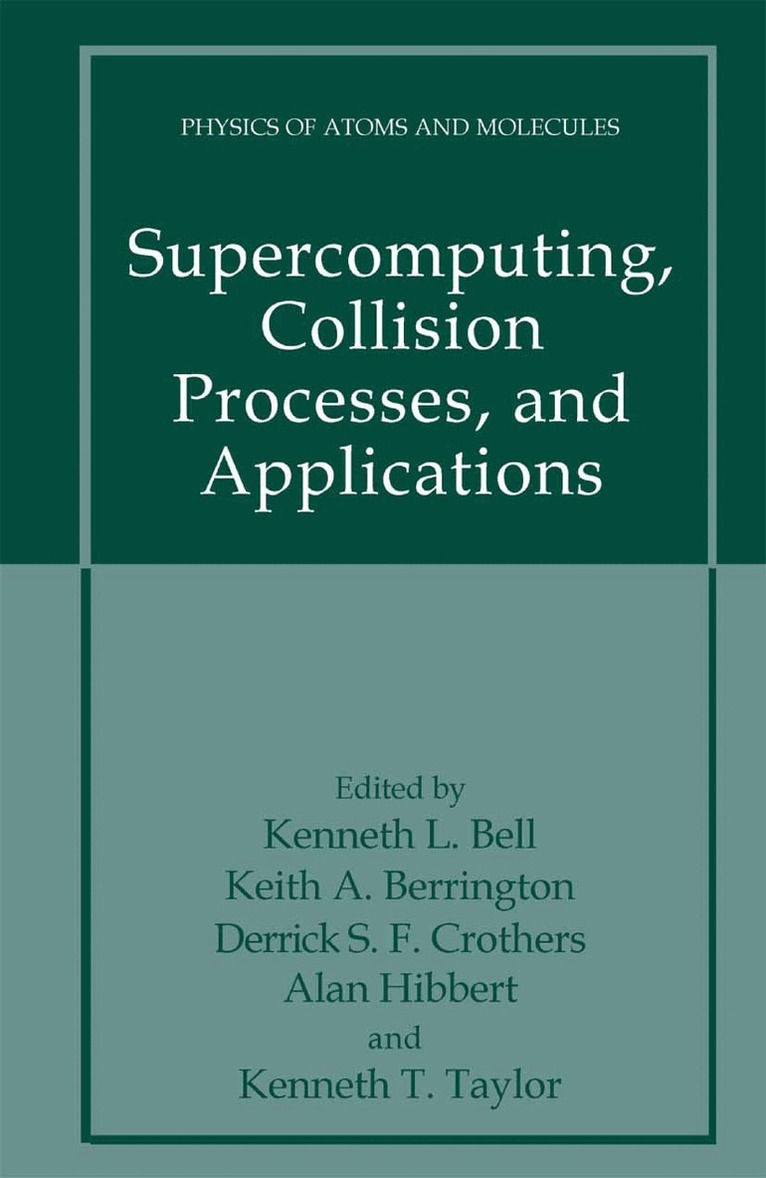
Supercomputing, Collision Processes, and Applications
Av Kenneth L. Bell, Keith A. Berrington m. fl.
Inbunden, 1999
1643 kr
Lägg i varukorg
This collection of 18 scientific papers sets out developments in the scientific disciplines and endeavours to which Professor P.G. Burke has contributed over the last 40 years, prior to his formal retirement in September 1998. The aim of the volume is to provide a survey of the developments in many …
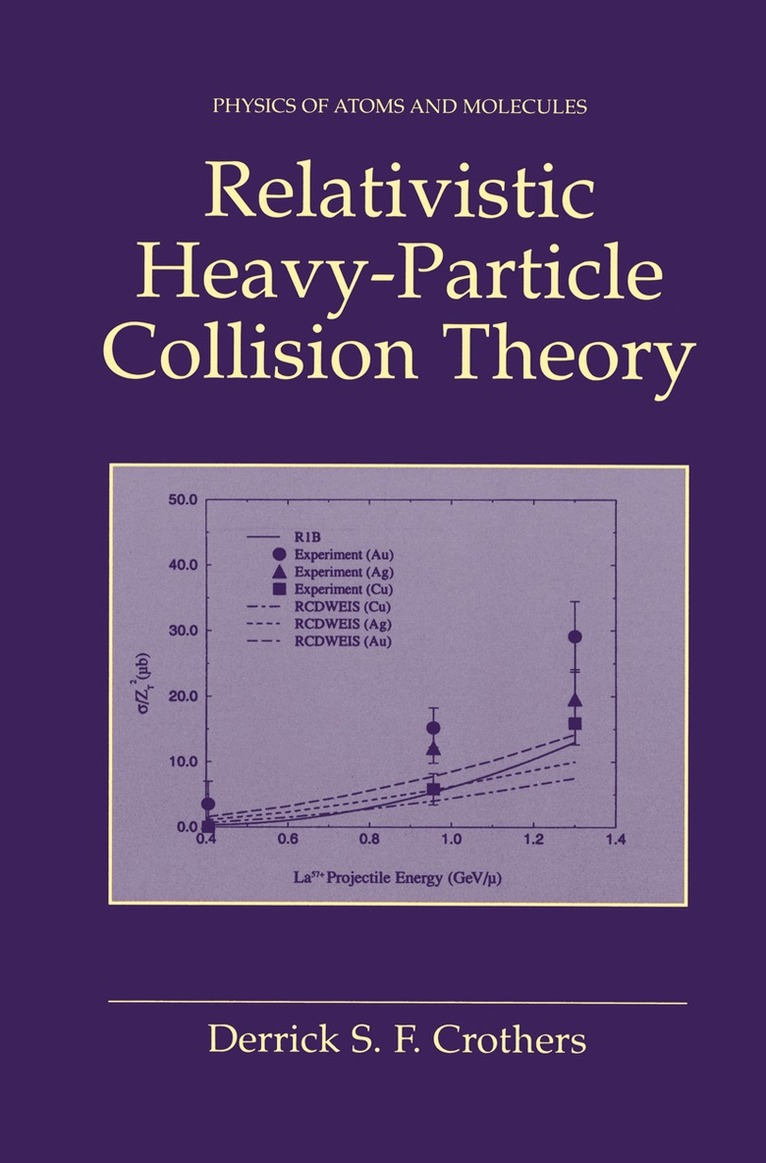
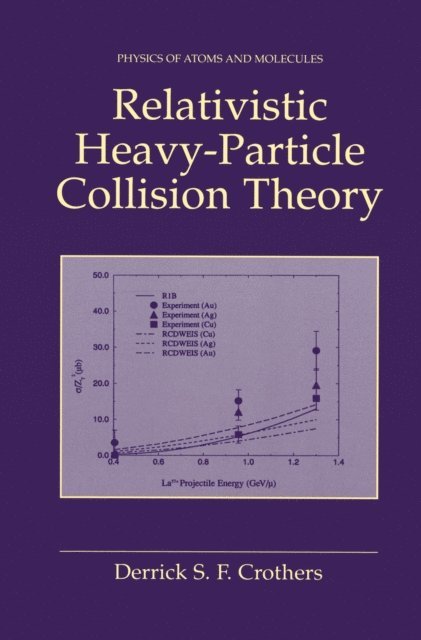
Relativistic Heavy-Particle Collision Theory
Inbunden, 2000
1098 kr
Lägg i varukorg
If a heavy particle ion (atom, molecule, muon) collides with another in the gas phase at speeds approaching the speed of light, the time-dependent Dirac equation equation must be used for its description, including quantum electro-dynamic, special relativity and magnetic coupling effects. In this …
Supercomputing, Collision Processes, and Applications
Av Kenneth T. Taylor, Alan Hibbert m. fl.
E-bok, 2006
2111 kr
Lägg i varukorg
Professor Philip G. Burke, CBE, FRS formally retired on 30 September 1998. To recognise this occasion some of his colleagues, friends, and former students decided to hold a conference in his honour and to present this volume as a dedication to his enormous contribution to the theoretical atomic …
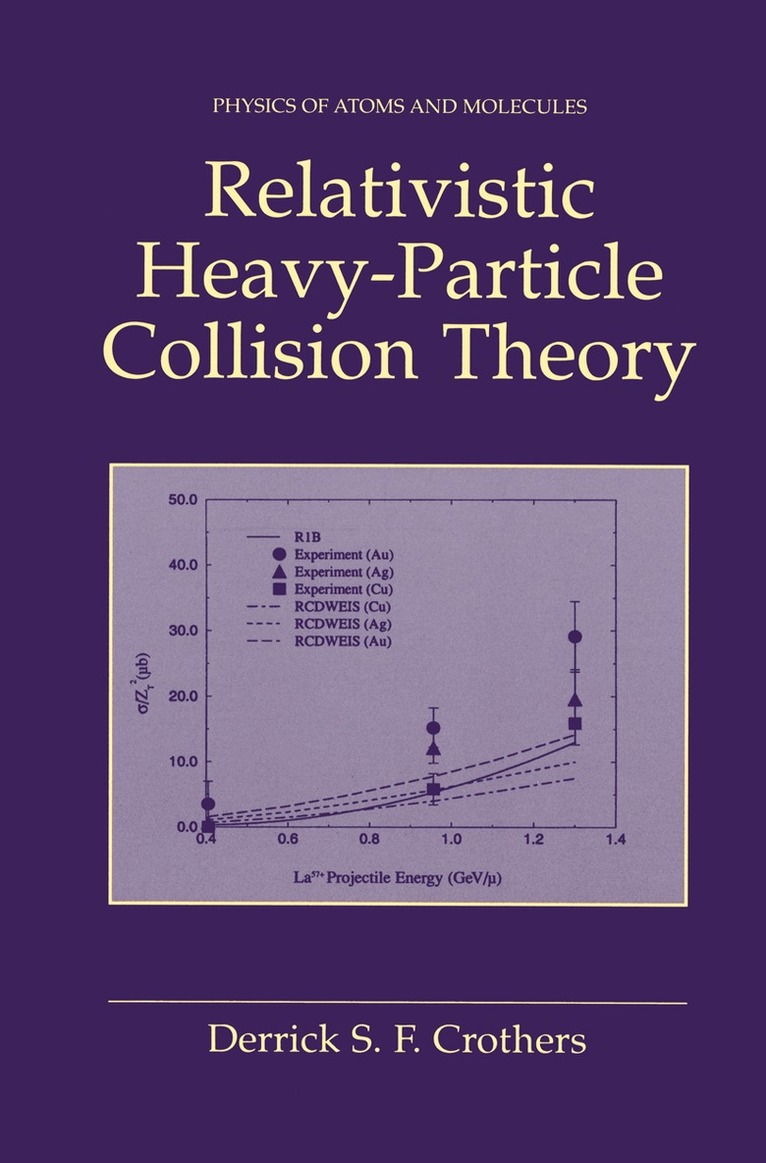
Relativistic Heavy-Particle Collision Theory
Häftad, 2013
1098 kr
Lägg i varukorg
If a heavy particle ion (atom, molecule, muon) collides with another in the gas phase at speeds approaching the speed of light, the time-dependent Dirac equation equation must be used for its description, including quantum electro-dynamic, special relativity and magnetic coupling effects. In this …
Relativistic Heavy-Particle Collision Theory
E-bok, 2012
1459 kr
Lägg i varukorg
If a heavy particle ion (atom, molecule, muon) collides with another in the gas phase at speeds approaching the speed of light, the time-dependent Dirac equation equation must be used for its description, including quantum electro-dynamic, special relativity and magnetic coupling effects. In this …
Supercomputing, Collision Processes, and Applications
Av Kenneth L. Bell, Keith A. Berrington m. fl.
Häftad, 2013
1643 kr
Lägg i varukorg
Professor Philip G. Burke, CBE, FRS formally retired on 30 September 1998. To recognise this occasion some of his colleagues, friends, and former students decided to hold a conference in his honour and to present this volume as a dedication to his enormous contribution to the theoretical atomic …