Detlef Muhlberger – författare
Visar alla böcker från författaren Detlef Muhlberger. Handla med fri frakt och snabb leverans.
12 produkter
Hitler's Followers (RLE Nazi Germany & Holocaust)
Studies in the Sociology of the Nazi Movement
Inbunden, 2014
2578 kr
Lägg i varukorg
When originally published in 1991, this book was the first systematic, detailed evaluation of the social structure of the Nazi Party in several regions of Germany during its so-called Kampfzeit phase. Based on extensive archival material, much of it left untouched since the end of the war until …
Hitler's Followers (RLE Nazi Germany & Holocaust)
Studies in the Sociology of the Nazi Movement
Häftad, 2016
665 kr
Lägg i varukorg
When originally published in 1991, this book was the first systematic, detailed evaluation of the social structure of the Nazi Party in several regions of Germany during its so-called Kampfzeit phase. Based on extensive archival material, much of it left untouched since the end of the war until …
Social Basis of European Fascist Movements
Inbunden, 2015
2578 kr
Lägg i varukorg
Between 1919 and 1945 most countries in Europe spawned some form of fascism. Some have become considerably more notorious than others: this book, first published in 1987, sets out to analyse the social forces that went into the making of the fascist parties of the major European countries and to …
Social Basis of European Fascist Movements
Häftad, 2017
665 kr
Lägg i varukorg
Between 1919 and 1945 most countries in Europe spawned some form of fascism. Some have become considerably more notorious than others: this book, first published in 1987, sets out to analyse the social forces that went into the making of the fascist parties of the major European countries and to …
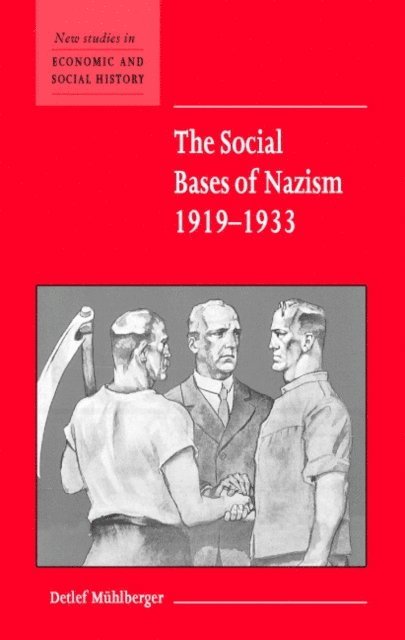
Social Bases of Nazism, 1919-1933
E-bok, 2003
424 kr
Lägg i varukorg
This latest addition to the New Studies in Economic and Social History series sheds fascinating light on an essential aspect of the history of Nazism. The social background of the supporters of Nazism has been the subject of intense debate since the early 1930s. Was the Nazi party a predominantly …
Social Basis of European Fascist Movements
E-bok, 2015
785 kr
Lägg i varukorg
Between 1919 and 1945 most countries in Europe spawned some form of fascism. Some have become considerably more notorious than others: this book, first published in 1987, sets out to analyse the social forces that went into the making of the fascist parties of the major European countries and to …
Social Basis of European Fascist Movements
E-bok, 2015
768 kr
Lägg i varukorg
Between 1919 and 1945 most countries in Europe spawned some form of fascism. Some have become considerably more notorious than others: this book, first published in 1987, sets out to analyse the social forces that went into the making of the fascist parties of the major European countries and to …
Hitler's Followers (RLE Nazi Germany & Holocaust)
Studies in the Sociology of the Nazi Movement
E-bok, 2014
785 kr
Lägg i varukorg
When originally published in 1991, this book was the first systematic, detailed evaluation of the social structure of the Nazi Party in several regions of Germany during its so-called Kampfzeit phase. Based on extensive archival material, much of it left untouched since the end of the war until …
Hitler's Followers (RLE Nazi Germany & Holocaust)
Studies in the Sociology of the Nazi Movement
E-bok, 2014
785 kr
Lägg i varukorg
When originally published in 1991, this book was the first systematic, detailed evaluation of the social structure of the Nazi Party in several regions of Germany during its so-called Kampfzeit phase. Based on extensive archival material, much of it left untouched since the end of the war until …
Organisation and Development of the Nazi Party /Nazi Ideology and Propaganda
The Volkischer Beobachter, 1920-1933
Inbunden, 2005
1329 kr
Lägg i varukorg
Nazi Party
The Anatomy of a People’s Party, 1919-1933
Av Paul Madden, Detlef Mühlberger
Inbunden, 2007
801 kr
Tillfälligt slut
The social characteristics of the membership of the Nazi Party have been much debated since the late 1920s. The dominant hypothesis which emerged at the time and which became orthodoxy after 1945 was that the Nazis drew their membership and electoral support almost exclusively from the middle class …