Dhanjoo N. Ghista - Böcker
Visar alla böcker från författaren Dhanjoo N. Ghista. Handla med fri frakt och snabb leverans.
9 produkter
9 produkter
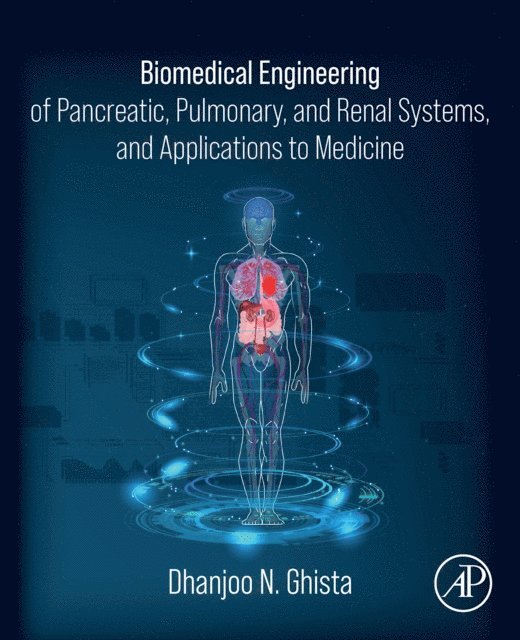
Biomedical Engineering of Pancreatic, Pulmonary, and Renal Systems, and Applications to Medicine
Häftad, Engelska, 2023
1 954 kr
Skickas inom 7-10 vardagar
Biomedical Engineering Modeling of Pancreatic, Respiratory, and Renal Regulatory Systems, and their Medical Assessments addresses the need for biomedical engineering to provide physiological analysis of organ systems and their medical applications to help enable quantitative formulation of physiological systems and defining their functions and dysfunctions, leading to precision diagnostics of diabetes, lung diseases, and kidney failure, often in the form of non-dimensional indices. The book chapters also deal with treatment systems, namely automated insulin infusion systems, hemodialysis, and peritoneal dialysis. The book is formulated to solve many physiological, bioengineering, and medical problems. Covers foundational concepts of the emerging fields of quantitative physiology and computational medicine, developing the biomedical engineering modeling of three important organ systems: pancreas, lungs, and kidneys Provides readers with detailed understanding of novel biomedical engineering strategies in key areas, such as pancreatic system engineering, glucose-insulin regulatory system engineering, pulmonary system engineering, and renal system engineering Provides in-depth technical coverage of computational modeling techniques and applied mathematics for these important physiological systems, including differential equations and the associated MATLAB datasets for all applied diagnostic and treatment examples
1 076 kr
Skickas inom 10-15 vardagar
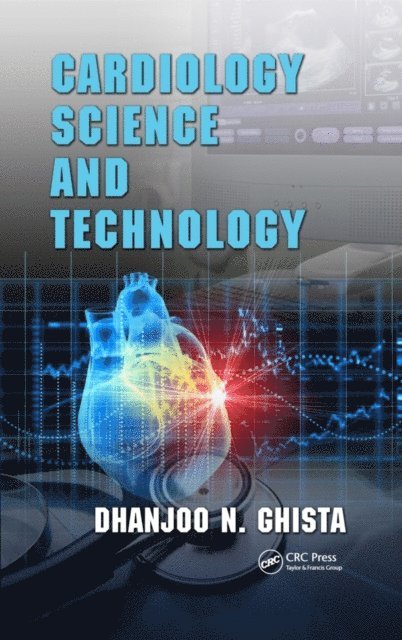
Cardiology Science and Technology comprehensively deals with the science and biomedical engineering formulations of cardiology. As a textbook, it addresses the teaching, research, and clinical aspects of cardiovascular medical engineering and computational cardiology. The books consists of two sections. The first section deals with left ventricular (LV) wall stress, cardiac contractility, ventricular remodeling, active wall stress and systolic pressure generation, and vector cardiogram characteristics, with applications in cardiology. The second section covers ECG signal analysis for arrhythmias detection, LV pumping (intra-LV, aortic and coronary flow) characteristics, and coronary bypass surgery design, with applications in cardiology and cardiac surgery.This book is like an exciting train ride through the heart and into blood flows within its chamber, the coronary tree, the aorta, and finally into coronary flow and bypass grafting. The train starts from the heart’s central station and journeys through exciting places of heart wall stresses, cardiac contractility measures to characterize heart failure, and active stress generation to develop systolic heart pressure. We learn about cardiomyopathic heart remodeling and its surgical ventricular restoration, theory of ECG and vector cardiogram with medical applications, and heart rate variability signal processing to detect cardiac arrhythmias. In the heart chamber, we witness the amazing intricate intra-ventricular flow patterns. Then, we study pressure pulse wave propagation into the aorta, determination of pulse wave velocity and arterial elasticity as a measure of arteriosclerosis. We climb into the mountainous coronary terrain and look at the fascinating scenery of coronary flows and myocardial perfusion that governs cardiac contractility. Finally, we arrive at coronary bypass grafting and witness the new sequential anastomosis design for enhanced patency.
1 992 kr
Kommande
Mathematics and Biomedical Engineering in Medicine, Physiology and Health Sciences is a visionary book, whose purpose is to demonstrate how fundamental mathematics and biomedical engineering can be incorporated into physiology, medicine, and health sciences teaching, research,and clinical practice to make these disciplines more quantitative and computational, and hence more explanatory and informative. The book also provides more quantitative formulation of medical procedures, towards supporting the growing field of precision medicine.Provides readers with a solid foundation in mathematical concepts and techniques relevant to physiology, medicine, and health sciences, making it accessible to students and professionals from various backgroundsProvides in-depth guidance on the mathematical concepts and biomedical engineering methodology of physiological and medical systemsIncludes real-world examples and case studies that illustrate how mathematics and biomedical engineering can be used in physiology, medical practice, and healthcare management, making the content practical and relatable
2 701 kr
Skickas inom 7-10 vardagar
Cardiology Science and Technology comprehensively deals with the science and biomedical engineering formulations of cardiology. As a textbook, it addresses the teaching, research, and clinical aspects of cardiovascular medical engineering and computational cardiology. The books consists of two sections. The first section deals with left ventricular (LV) wall stress, cardiac contractility, ventricular remodeling, active wall stress and systolic pressure generation, and vector cardiogram characteristics, with applications in cardiology. The second section covers ECG signal analysis for arrhythmias detection, LV pumping (intra-LV, aortic and coronary flow) characteristics, and coronary bypass surgery design, with applications in cardiology and cardiac surgery.This book is like an exciting train ride through the heart and into blood flows within its chamber, the coronary tree, the aorta, and finally into coronary flow and bypass grafting. The train starts from the heart’s central station and journeys through exciting places of heart wall stresses, cardiac contractility measures to characterize heart failure, and active stress generation to develop systolic heart pressure. We learn about cardiomyopathic heart remodeling and its surgical ventricular restoration, theory of ECG and vector cardiogram with medical applications, and heart rate variability signal processing to detect cardiac arrhythmias. In the heart chamber, we witness the amazing intricate intra-ventricular flow patterns. Then, we study pressure pulse wave propagation into the aorta, determination of pulse wave velocity and arterial elasticity as a measure of arteriosclerosis. We climb into the mountainous coronary terrain and look at the fascinating scenery of coronary flows and myocardial perfusion that governs cardiac contractility. Finally, we arrive at coronary bypass grafting and witness the new sequential anastomosis design for enhanced patency. This fascinating journey helps us to fully appreciate cardiology from the science, technology, engineering, and mathematics viewpoint. The book represents what can be termed as computational cardiology, and hence belongs to the emerging field of computational medicine.
Biomedical and Life Physics
Proceedings of the Second Gauss Symposium, 2–8th August 1993, Munich
Häftad, Engelska, 2012
1 091 kr
Skickas inom 10-15 vardagar
D. N. Ghista (Based on the Opening Address at the International Conference on Biomedical Physics & Mathematics of the Gauss Symposium, August 2, 1993 at Ludwig Maximillians Universitiit, Munchen, Germany) The traditional practice of Biomedical physics has now expanded to involve multiple aspects of medical practice: development of systems and technology in medical monitoring (e. g. , PET visualization of brain receptors to identify neuronal dysfunction), diagnosis (e. g. , computer-aided echocardiographic texture analysis to detect myocardial infarcts), organ support (e. g. , peritoneal dialysis), and therapeutic function (e. g. , encapsulation of insulin-producing pancreatic islet cells for treatment of diabetes). However, is Biomedical Physics a relatively new field? Not really, although we may have opened up new vistas of it, as presented in this book. Let us recall some early and well-known physician-cum-biomedical physicists. Both physical and physiological scientists will know of Jean Poiseuille (1799-1869), physician and physiologist; he measured blood pressure with a mercury manometer while being a medical student in Paris, received his medical degree in 1928, and then went on to describe the law of viscous flow (applicable to arteriolar flow).
2 374 kr
Skickas inom 5-8 vardagar
Socio-economic Democracy And The World Government: Collective Capitalism, Depovertization, Human Rights, Template For Sustainable Peace
Inbunden, Engelska, 2004
1 250 kr
Tillfälligt slut
In developing an enlightened socio-economic-political environment, this book provides a new socio-economic-political system based on (i) Collective Capitalism (CCP) of cooperatively managed institutions and enterprises, and (ii) a Civilian Democracy (CDM) sans political parties, whereby the most qualified representatives of all the functional sectors of the community get elected to the local legislature. It also specifies a new economic-political structure in the form of autonomous functionally-sustainable communities (FSCs), within regional economic zones (REZs) and self-reliant regional unions (SRUs, such as the EU). This system of FSCs, REZs and SRUs will come under the aegis of (and collectively represented by) a World government, over-seeing the development of a comprehensive charter of human rights and social justice for all the people of the world. The neo-humanistic integrated system of CCP and CDM, to be implemented within FSCs, will provide grass-roots socio-economic-political empowerment, contrary to the system of centralized economic and political governance.This book serves as a valuable teaching, learning, knowledge and research resource for (i) a holistic approach to a sustainable living environment promoting collective welfare, and (ii) a multi-stage road-map towards a world government system for unification of all the communities of the world into one global cooperative. The combined system of socio-economic democracy (involving knowledge and conscientious governance executives elected by and directly representing the various functional sectors of FSCs) and world government will help transform the current undignified north-south socioeconomic order into a democratic and equitable globalization order, for collective social security towards achieving sustainable local and global peace.
Del 1 - Clinically-oriented Biomedical Engineering
Cardiac Perfusion And Pumping Engineering
Inbunden, Engelska, 2007
3 053 kr
Tillfälligt slut
For the first time, this invaluable book shows how cardiac perfusion and pumping can be quantified and correlated. Self-contained and unified in presentation, the explanations in the compendium are detailed enough to capture the reader's curiosity and complete enough to provide the background material to explore further into the subject.Mathematically rigorous and clinically oriented, the book is a major resource for biomedical engineers, cardiologists, cardiac surgeons and clinicians. For students, it is an ideal textbook for senior-level courses in cardiovascular engineering.
2 089 kr
Skickas inom 3-6 vardagar
Cardiovascular diseases (CVD) including heart diseases, peripheral vascular disease and heart failure, account for one-third of deaths throughout the world. CVD risk factors include systolic blood pressure, total cholesterol, high-density lipoprotein cholesterol, and diabetic status. Clinical trials have demonstrated that when modifiable risk factors are treated and corrected, the chances of CVD occurring can be reduced. This illustrates the importance of this book's elaborate coverage of cardiovascular physiology by the application of mathematical and computational methods.This book has literally transformed Cardiovascular Physiology into a STEM discipline, involving (i) quantitative formulations of heart anatomy and physiology, (ii) technologies for imaging the heart and blood vessels, (iii) coronary stenosis hemodynamics measure by means of fractional flow reserve and intervention by grafting and stenting, (iv) fluid mechanics and computational analysis of blood flow in the heart, aorta and coronary arteries, and (v) design of heart valves, percutaneous valve stents, and ventricular assist devices.So how is this mathematically and computationally configured landscape going to impact cardiology and even cardiac surgery? We are now entering a new era of mathematical formulations of anatomy and physiology, leading to technological formulations of medical and surgical procedures towards more precise medicine and surgery. This will entail reformatting of (i) the medical MD curriculum and courses, so as to educate and train a new generation of physicians who are conversant with medical technologies for applying into clinical care, as well as (ii) structuring of MD-PhD (Computational Medicine and Surgery) Program, to train competent medical and surgical specialists in precision medical care and patient-specific surgical care.This book provides a gateway for this new emerging scenario of (i) science and engineering based medical educational curriculum, and (ii) technologically oriented medical and surgical procedures. As such, this book can be usefully employed as a textbook for courses in (i) cardiovascular physiology in both the schools of engineering and medicine of universities, as well as (ii) cardiovascular engineering in biomedical engineering departments worldwide.