Diana Lobel - Böcker
Visar alla böcker från författaren Diana Lobel. Handla med fri frakt och snabb leverans.
10 produkter
10 produkter
1 107 kr
Skickas inom 7-10 vardagar
Diana Lobel takes readers on a journey across Eastern and Western philosophical and religious traditions to discover a beauty and purpose at the heart of reality that makes life worth living. Guided by the ideas of ancient thinkers and the insight of the philosophical historian Pierre Hadot, The Quest for God and the Good treats philosophy not as an abstract, theoretical discipline, but as a living experience. For centuries, human beings have struggled to know why we are here, whether a higher being or dimension exists, and whether our existence is fundamentally good. Above all, we want to know whether the search for God and the good will bring happiness. Following in the path of the ancient philosophers, Lobel directly connects conceptions of God or an Absolute with notions of the good, illuminating diverse classical texts and thinkers. She explores the Bible and the work of Plato, Aristotle, Augustine, Maimonides, al-Farabi, and al-Ghazali.She reads the Tao Te Ching, I Ching, Bhagavad Gita, and Upanishads, as well as the texts of Theravada, Mahayana, and Zen Buddhism, and traces the repercussions of these works in the modern thought of Alfred North Whitehead, Iris Murdoch, Alasdair MacIntyre, and Charles Taylor. While each of these texts and thinkers sets forth a distinct and unique vision, all maintain that human beings find fulfillment in their contact with beauty and purpose. Rather than arriving at one universal definition of God or the good, Lobel demonstrates the aesthetic value of multiple visions presented by many thinkers across cultures. The Quest for God and the Good sets forth a path of investigation and discovery culminating in intellectual and spiritual communion.
578 kr
Skickas inom 3-6 vardagar
Diana Lobel takes readers on a journey across Eastern and Western philosophical and religious traditions to discover a beauty and purpose at the heart of reality that makes life worth living. Guided by the ideas of ancient thinkers and the insight of the philosophical historian Pierre Hadot, The Quest for God and the Good treats philosophy not as an abstract, theoretical discipline, but as a living experience. For centuries, human beings have struggled to know why we are here, whether a higher being or dimension exists, and whether our existence is fundamentally good. Above all, we want to know whether the search for God and the good will bring happiness. Following in the path of the ancient philosophers, Lobel directly connects conceptions of God or an Absolute with notions of the good, illuminating diverse classical texts and thinkers. She explores the Bible and the work of Plato, Aristotle, Augustine, Maimonides, al-Farabi, and al-Ghazali.She reads the Tao Te Ching, I Ching, Bhagavad Gita, and Upanishads, as well as the texts of Theravada, Mahayana, and Zen Buddhism, and traces the repercussions of these works in the modern thought of Alfred North Whitehead, Iris Murdoch, Alasdair MacIntyre, and Charles Taylor. While each of these texts and thinkers sets forth a distinct and unique vision, all maintain that human beings find fulfillment in their contact with beauty and purpose. Rather than arriving at one universal definition of God or the good, Lobel demonstrates the aesthetic value of multiple visions presented by many thinkers across cultures. The Quest for God and the Good sets forth a path of investigation and discovery culminating in intellectual and spiritual communion.
982 kr
Tillfälligt slut
What does it mean to be truly happy? In Philosophies of Happiness, Diana Lobel provides a rich spectrum of arguments for a theory of happiness as flourishing or well-being, offering a global, cross-cultural, and interdisciplinary perspective on how to create a vital, fulfilling, and significant life. Drawing upon perspectives from a broad range of philosophical traditions-Eastern and Western, ancient and contemporary-the book suggests that just as physical health is the well-being of the body, happiness is the healthy and flourishing condition of the whole human being, and we experience the most complete happiness when we realize our potential through creative engagement. Lobel shows that while thick descriptions of happiness differ widely in texture and detail, certain themes resonate across texts from different traditions and historical contexts, suggesting core features of a happy life: attentive awareness; effortless action; relationship and connection to a larger, interconnected community; love or devotion; and creative engagement. Each feature adds meaning, significance, and value, so that we can craft lives of worth and purpose.These themes emerge from careful study of philosophical and religious texts and traditions: the Greek philosophers Aristotle and Epicurus; the Chinese traditions of Confucius, Laozi, and Zhuangzi; the Hindu Bhagavad Gita; the Japanese Buddhist tradition of Soto Zen master Dogen and his modern expositor Shunryu Suzuki; the Western religious traditions of Augustine and Maimonides; the Persian Sufi tale Conference of the Birds; and contemporary research on mindfulness and creativity. Written in a clear, accessible style, Philosophies of Happiness invites readers of all backgrounds to explore and engage with religious and philosophical conceptions of what makes life meaningful.
321 kr
Skickas inom 7-10 vardagar
What does it mean to be truly happy? In Philosophies of Happiness, Diana Lobel provides a rich spectrum of arguments for a theory of happiness as flourishing or well-being, offering a global, cross-cultural, and interdisciplinary perspective on how to create a vital, fulfilling, and significant life. Drawing upon perspectives from a broad range of philosophical traditions-Eastern and Western, ancient and contemporary-the book suggests that just as physical health is the well-being of the body, happiness is the healthy and flourishing condition of the whole human being, and we experience the most complete happiness when we realize our potential through creative engagement. Lobel shows that while thick descriptions of happiness differ widely in texture and detail, certain themes resonate across texts from different traditions and historical contexts, suggesting core features of a happy life: attentive awareness; effortless action; relationship and connection to a larger, interconnected community; love or devotion; and creative engagement. Each feature adds meaning, significance, and value, so that we can craft lives of worth and purpose.These themes emerge from careful study of philosophical and religious texts and traditions: the Greek philosophers Aristotle and Epicurus; the Chinese traditions of Confucius, Laozi, and Zhuangzi; the Hindu Bhagavad Gita; the Japanese Buddhist tradition of Soto Zen master Dogen and his modern expositor Shunryu Suzuki; the Western religious traditions of Augustine and Maimonides; the Persian Sufi tale Conference of the Birds; and contemporary research on mindfulness and creativity. Written in a clear, accessible style, Philosophies of Happiness invites readers of all backgrounds to explore and engage with religious and philosophical conceptions of what makes life meaningful.
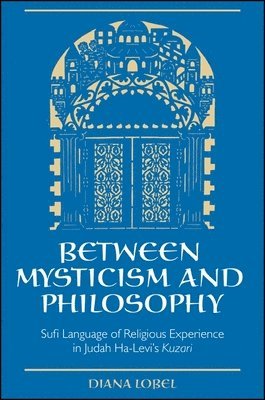
Between Mysticism and Philosophy
Sufi Language of Religious Experience in Judah Ha-Levi's Kuzari
Häftad, Engelska, 2000
382 kr
Tillfälligt slut
A revealing study of this important medieval Jewish poet and his relation to Islamic thought.Judah Ha-Levi (1075–1141), a medieval Jewish poet, mystic, and sophisticated critic of the rationalistic tradition in Judaism, is the focus of this ground-breaking study. Diana Lobel examines his influential philosophical dialogue, Sefer ha-Kuzari, written in Arabic and later translated into Hebrew, which broke religious and philosophical convention by infusing Sufi terms for religious experience with a new Jewish theological vision. Intellectually engaging, clear, and accessible, Between Mysticism and Philosophy is an indispensable resource for anyone interested in the intertwined worlds of Jewish and Islamic philosophy, religion, and culture.
Sufi-Jewish Dialogue
Philosophy and Mysticism in Bahya Ibn Paquda's "Duties of the Heart"
Inbunden, Engelska, 2007
861 kr
Skickas inom 10-15 vardagar
Written in Judeo-Arabic in eleventh-century Muslim Spain but quickly translated into Hebrew, Bahya Ibn Paquda's Duties of the Heart is a profound guidebook of Jewish spirituality that has enjoyed tremendous popularity and influence to the present day. Readers who know the book primarily in its Hebrew version have likely lost sight of the work's original Arabic context and its immersion in Islamic mystical literature. In A Sufi-Jewish Dialogue, Diana Lobel explores the full extent to which Duties of the Heart marks the flowering of the "Jewish-Arab symbiosis," the interpenetration of Islamic and Jewish civilizations.Lobel reveals Bahya as a maverick who integrates abstract negative theology, devotion to the inner life, and an intimate relationship with a personal God. Bahya emerges from her analysis as a figure so steeped in Islamic traditions that an Arabic reader could easily think he was a Muslim, yet the traditional Jewish seeker has always looked to him as a fountainhead of Jewish devotion. Indeed, Bahya represents a genuine bridge between religious cultures. He brings together, as well, a rationalist, philosophical approach and a strain of Sufi mysticism, paving the way for the integration of philosophy and spirituality in the thought of Moses Maimonides.A Sufi-Jewish Dialogue is the first scholarly book in English about a tremendously influential work of medieval Jewish thought and will be of interest to readers working in comparative literature, philosophy, and religious studies, particularly as reflected in the interplay of the civilizations of the Middle East. Readers will discover an extraordinary time when Jewish, Christian, and Islamic thinkers participated in a common spiritual quest, across traditions and cultural boundaries.
402 kr
Skickas inom 5-8 vardagar
Moses Maimonides—a proud heir to the Andalusian tradition of Aristotelian philosophy—crafted a bold and original philosophical interpretation of Torah and Judaism. His son Abraham Maimonides is a fascinating maverick whose Torah commentary mediates between the philosophical interpretations of his father, the contextual approach of Biblical exegetes such as Saadya, and the Sufi-flavored illuminative mysticism of his Egyptian Pietist circle. This pioneering study explores the intersecting approaches of Moses and Abraham Maimonides to the spark of divine illumination and revelation of the divine name Ehyeh asher Ehyeh, “I am that I am / I will be who I will be.”
1 181 kr
Skickas inom 5-8 vardagar
Moses Maimonides—a proud heir to the Andalusian tradition of Aristotelian philosophy—crafted a bold and original philosophical interpretation of Torah and Judaism. His son Abraham Maimonides is a fascinating maverick whose Torah commentary mediates between the philosophical interpretations of his father, the contextual approach of Biblical exegetes such as Saadya, and the Sufi-flavored illuminative mysticism of his Egyptian Pietist circle. This pioneering study explores the intersecting approaches of Moses and Abraham Maimonides to the spark of divine illumination and revelation of the divine name Ehyeh asher Ehyeh, “I am that I am / I will be who I will be.”
1 229 kr
Skickas
This broad-ranging study, the first full-length investigation of conceptions of faith and trust in the Judeo-Arabic tradition, explores a family of related concepts—faith (imān, emunah), conviction (i‘tiqād), and trust/reliance (tawakkul/ittikāl)—in Saadya, Baḥya, Halevi, Maimonides, Abraham Maimonides, and the Egyptian pietist circle of Abraham he-Ḥasid. The work points to a rich spectrum of conceptions of faith and trust—from the purely cognitive to the experiential and affective. What emerges are themes of faithfulness, loyalty, experiential certainty, and trustworthiness, expressed in devotion to a way of life that embodies these ideals. The virtue of trust expresses steadfast commitment to the truth.This study vividly illustrates the “Jewish-Arab symbiosis,” highlighting the shared spiritual language and rich, intertwined worlds of Islamic and Jewish philosophy, theology, and mysticism.
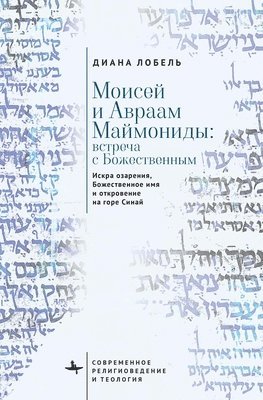
Moses and Abraham Maimonides (Russian language)
The Spark of Illumination, the Divine Name, and the Revelation at Mount Sinai
Inbunden, Ryska, 2026
464 kr
Skickas inom 5-8 vardagar
Моисей Маймонид, наследник андалузской традиции аристотелевской философии, создал смелое и оригинальное философское толкование Торы и иудаизма. Его сын Авраам Маймонид — увлекательный и неординарный мыслитель, чьи комментарии к Торе служат связующим звеном между философскими толкованиями его отца, контекстуальным подходом библейских экзегетов и суфийским мистицизмом. Диана Лобель в своей книге исследует пересечения в трудах Моисея и Авраама Маймонидов, акцентируя темы божественного озарения и откровения Божественного имени.