Diana Tietjens Meyers - Böcker
Visar alla böcker från författaren Diana Tietjens Meyers. Handla med fri frakt och snabb leverans.
8 produkter
8 produkter
1 078 kr
Skickas inom 5-8 vardagar
The cultural imagery of women is deeply ingrained in our consciousness. So deeply, in fact, that feminists see this as a fundamental threat to female autonomy because it enshrines procreative heterosexuality as well as the relations of domination and subordination between men and women. Diana Meyers' book is about this cultural imagery - and how, once it is internalized, it shapes perception, reflection, judgement, and desire. These intergral images have a deep impact not only on the individual psyche, but also on the social, political, and cultural syntax of society as a whole. Meyer's argues for the necessity of crafting a dissident, empowering, and 'emancipatory counter-imagery' for women. Rigorous, well written, and accessible, the reach of Gender in the mirror is arguably catholic, and addresses the interests or readers across an impressive range of intellectual disciplines.
704 kr
Skickas inom 5-8 vardagar
The cultural imagery of women is deeply ingrained in our consciousness. So deply, in fact, that feminists see this as a fundamental threat to female autonomy because it enshrines procreative heterosexuality as well as the relations of domination and subordination between men and women. Diana Meyers' book is about this cultural imagery - and how, once it is internalized, it shapes perception, reflection, judgement, and desire. These intergral images have a deep impact not only on the individual psyche, but also on the social, political, and cultural syntax of society as a whole. Meyer's argues for the necessity of crafting a dissident, empowering, and "emancipatory counter-imagery" for women. Rigorous, well written, and accessible, the reach of Gender in the mirror is arguably catholic, and addresses the interests or readers across an impressive range of intellectual disciplines.
1 757 kr
Skickas inom 5-8 vardagar
Victim's Stories and the Advancement of Human Rights takes on a set of questions suggested by the worldwide persistence of human rights abuse and the prevalence of victims' stories in human rights campaigns, truth commissions, and international criminal tribunals: What conceptions of victims are presumed in contemporary human rights discourse? How do conventional narrative templates fail victims of human rights abuse and resist raising novel human rights issues? What is empathy, and how can victims frame their stories to overcome empathetic obstacles and promote commitment to human rights? How can victims' stories be used ethically in the service of human rights? The book addresses these concerns by analyzing the rhetorical resources for and constraints on victims' ability to articulate their stories and by clarifying how their stories can contribute to enlarged understandings of human rights protections and deepened commitments to realizing human rights. It theorizes the normative content that victims' stories can convey and the bearing of that normative content on human rights. Throughout the book, published victims' stories-including stories of torture, slavery, genocide, rape in wartime, and child soldiering-are analyzed in conjunction with philosophical arguments. This book mobilizes philosophical theory to illuminate victims' stories and appeals to victims' stories to enrich the philosophy of human rights.
537 kr
Skickas inom 5-8 vardagar
Victim's Stories and the Advancement of Human Rights takes on a set of questions suggested by the worldwide persistence of human rights abuse and the prevalence of victims' stories in human rights campaigns, truth commissions, and international criminal tribunals: What conceptions of victims are presumed in contemporary human rights discourse? How do conventional narrative templates fail victims of human rights abuse and resist raising novel human rights issues? What is empathy, and how can victims frame their stories to overcome empathetic obstacles and promote commitment to human rights? How can victims' stories be used ethically in the service of human rights? The book addresses these concerns by analyzing the rhetorical resources for and constraints on victims' ability to articulate their stories and by clarifying how their stories can contribute to enlarged understandings of human rights protections and deepened commitments to realizing human rights. It theorizes the normative content that victims' stories can convey and the bearing of that normative content on human rights. Throughout the book, published victims' stories-including stories of torture, slavery, genocide, rape in wartime, and child soldiering-are analyzed in conjunction with philosophical arguments. This book mobilizes philosophical theory to illuminate victims' stories and appeals to victims' stories to enrich the philosophy of human rights.
1 871 kr
Skickas inom 7-10 vardagar
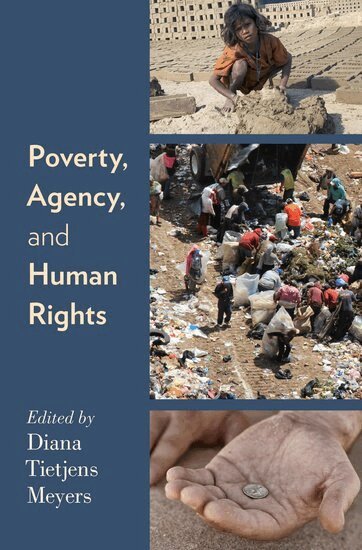
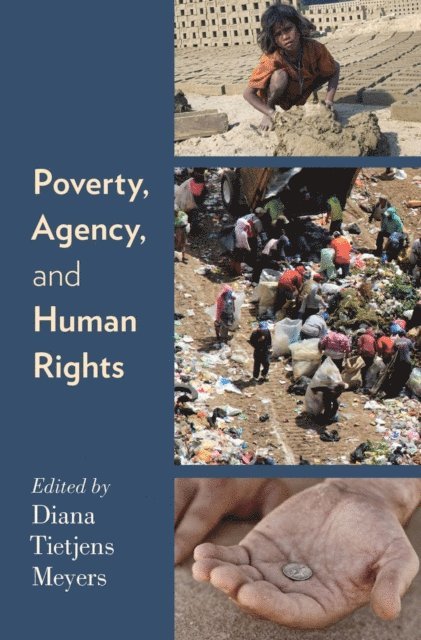
Poverty, Agency, and Human Rights collects thirteen new essays that analyze how human agency relates to poverty and human rights respectively as well as how agency mediates issues concerning poverty and social and economic human rights. No other collection of philosophical papers focuses on the diverse ways poverty impacts the agency of the poor, the reasons why poverty alleviation schemes should also promote the agency of beneficiaries, and the fitness of the human rights regime to secure both economic development and free agency. The book is divided into four parts. Part 1 considers the diverse meanings of poverty both from the standpoint of the poor and from that of the relatively well-off. Part 2 examines morally appropriate responses to poverty on the part of persons who are better-off and powerful institutions. Part 3 identifies economic development strategies that secure the agency of the beneficiaries. Part 4 addresses the constraints poverty imposes on agency in the context of biomedical research, migration for work, and trafficking in persons.
755 kr
Skickas inom 5-8 vardagar
Poverty, Agency, and Human Rights collects thirteen new essays that analyze how human agency relates to poverty and human rights respectively as well as how agency mediates issues concerning poverty and social and economic human rights. No other collection of philosophical papers focuses on the diverse ways poverty impacts the agency of the poor, the reasons why poverty alleviation schemes should also promote the agency of beneficiaries, and the fitness of the human rights regime to secure both economic development and free agency. The book is divided into four parts. Part 1 considers the diverse meanings of poverty both from the standpoint of the poor and from that of the relatively well-off. Part 2 examines morally appropriate responses to poverty on the part of persons who are better-off and powerful institutions. Part 3 identifies economic development strategies that secure the agency of the beneficiaries. Part 4 addresses the constraints poverty imposes on agency in the context of biomedical research, migration for work, and trafficking in persons.
2 724 kr
Skickas inom 10-15 vardagar
First published in 1998. Feminist Social Thought brings together key articles by prominent feminist thinkers, offering students sophisticated treatment of the theoretical topics central to feminist social thought. This reader highlights salient concerns in contemporary feminist scholarship and the advances feminist philosophers have made.BR>The editor's introduction outlines alternative routes through the text, allowing instructors to easily adapt this reader to their particular courses and the interests of their students. Each article is prefaced with a short introduction by the editor placing it in context, highlighting the principle issues and the conclusions reached. Students will find these headnotes helpful when tackling the challenging theoretical issues addressed.BR>Representing a spectrum of feminist thinking, Feminist Social Thought is organized around seven topics constructions of gender; theorizing diversity; figurations of women; subjectivity, agency and feminist critique; social identity, solidarity and political engagement; care and its critics; and women, equality and justice. Students will be exposed to a wide variety of feminist philosophy and encouraged to think critically about challenging questions around pivotal subjects includingBR>* How are gender norms instilled, enforced, and perpetuated?BR>* What are the relationships between gender and other socially demarcated positions such as race, class and sexual orientation?BR>* What resources do women have at their disposal for recognizing their subordination and resisting it?BR>* What goals should feminist politics pursue?BR>* How can social and legal equality be reconciled with difference?BR>
809 kr
Skickas inom 10-15 vardagar
First published in 1998. Feminist Social Thought brings together key articles by prominent feminist thinkers, offering students sophisticated treatment of the theoretical topics central to feminist social thought. This reader highlights salient concerns in contemporary feminist scholarship and the advances feminist philosophers have made.BR>The editor's introduction outlines alternative routes through the text, allowing instructors to easily adapt this reader to their particular courses and the interests of their students. Each article is prefaced with a short introduction by the editor placing it in context, highlighting the principle issues and the conclusions reached. Students will find these headnotes helpful when tackling the challenging theoretical issues addressed.BR>Representing a spectrum of feminist thinking, Feminist Social Thought is organized around seven topics constructions of gender; theorizing diversity; figurations of women; subjectivity, agency and feminist critique; social identity, solidarity and political engagement; care and its critics; and women, equality and justice. Students will be exposed to a wide variety of feminist philosophy and encouraged to think critically about challenging questions around pivotal subjects includingBR>* How are gender norms instilled, enforced, and perpetuated?BR>* What are the relationships between gender and other socially demarcated positions such as race, class and sexual orientation?BR>* What resources do women have at their disposal for recognizing their subordination and resisting it?BR>* What goals should feminist politics pursue?BR>* How can social and legal equality be reconciled with difference?BR>