Diane S. Pollard - Böcker
Visar alla böcker från författaren Diane S. Pollard. Handla med fri frakt och snabb leverans.
5 produkter
5 produkter
1 027 kr
Tillfälligt slut
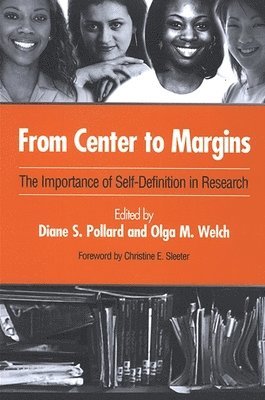
Considers perspectives from a diverse group of women educational researchers of color who center their discussion within the margins rather than from the center.In From Center to Margins, women educational researchers of color, trained in mainstream Euro-American traditions, interpret the experiences of those, including themselves, who are marginalized by these very traditions. Deliberately looking at research from within the margins rather than from the center, the contributors detail how their perspectives influence the way they frame questions for study, develop procedures to investigate them, and devise strategies for answering them. The contributors offer an alternative to the dominant perspective in educational research that uses its power to determine who shall be centered and who, marginalized. This book presents the margins, where women and other people of color reside intellectually, not as deficient areas from which we need to escape, but as legitimate sites where knowledge, useful to wider audiences, has been and will continue to be generated.
365 kr
Tillfälligt slut
Considers perspectives from a diverse group of women educational researchers of color who center their discussion within the margins rather than from the center.In From Center to Margins, women educational researchers of color, trained in mainstream Euro-American traditions, interpret the experiences of those, including themselves, who are marginalized by these very traditions. Deliberately looking at research from within the margins rather than from the center, the contributors detail how their perspectives influence the way they frame questions for study, develop procedures to investigate them, and devise strategies for answering them. The contributors offer an alternative to the dominant perspective in educational research that uses its power to determine who shall be centered and who, marginalized. This book presents the margins, where women and other people of color reside intellectually, not as deficient areas from which we need to escape, but as legitimate sites where knowledge, useful to wider audiences, has been and will continue to be generated.
3 689 kr
Skickas inom 10-15 vardagar
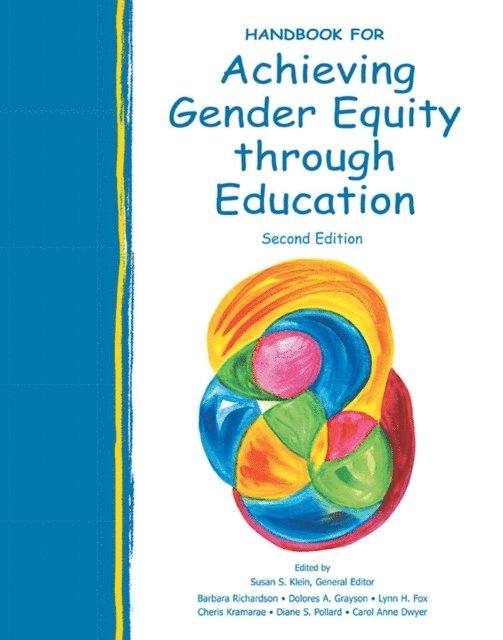
First published in 1985, the Handbook for Achieving Gender Equity Through Education quickly established itself as the essential reference work concerning gender equity in education. This new, expanded edition provides a 20-year retrospective of the field, one that has the great advantage of documenting U.S. national data on the gains and losses in the efforts to advance gender equality through policies such as Title IX, the landmark federal law prohibiting sex discrimination in education, equity programs and research. Key features include:Expertise – Like its predecessor, over 200 expert authors and reviewers provide accurate, consensus, research-based information on the nature of gender equity challenges and what is needed to meet them at all levels of education.Content Area Focus – The analysis of gender equity within specific curriculum areas has been expanded from 6 to 10 chapters including mathematics, science, and engineering.Global/Diversity Focus – Global gender equity is addressed in a separate chapter as well as in numerous other chapters. The expanded section on gender equity strategies for diverse populations contains seven chapters on African Americans, Latina/os, Asian and Pacific Island Americans, American Indians, gifted students, students with disabilities, and lesbian, gay, bisexual, and transgender students. Action Oriented – All chapters contain practical recommendations for making education activities and outcomes more gender equitable. A final chapter consolidates individual chapter recommendations for educators, policymakers, and researchers to achieve gender equity in and through education.New Material – Expanded from 25 to 31 chapters, this new edition includes:*more emphasis on male gender equity and on sexuality issues;*special within population gender equity challenges (race, ability and disability, etc);*coeducation and single sex education;*increased use of rigorous research strategies such as meta-analysis showing more sex similarities and fewer sex differences and of evaluations of implementation programs;*technology and gender equity is now treated in three chapters;*women’s and gender studies;*communication skills relating to English, bilingual, and foreign language learning; and*history and implementation of Title IX and other federal and state policies.Since there is so much misleading information about gender equity and education, this Handbook will be essential for anyone who wants accurate, research-based information on controversial gender equity issues—journalists, policy makers, teachers, Title IX coordinators, equity trainers, women’s and gender study faculty, students, and parents.
1 898 kr
Skickas inom 10-15 vardagar
First published in 1985, the Handbook for Achieving Gender Equity Through Education quickly established itself as the essential reference work concerning gender equity in education. This new, expanded edition provides a 20-year retrospective of the field, one that has the great advantage of documenting U.S. national data on the gains and losses in the efforts to advance gender equality through policies such as Title IX, the landmark federal law prohibiting sex discrimination in education, equity programs and research. Key features include:Expertise – Like its predecessor, over 200 expert authors and reviewers provide accurate, consensus, research-based information on the nature of gender equity challenges and what is needed to meet them at all levels of education.Content Area Focus – The analysis of gender equity within specific curriculum areas has been expanded from 6 to 10 chapters including mathematics, science, and engineering.Global/Diversity Focus – Global gender equity is addressed in a separate chapter as well as in numerous other chapters. The expanded section on gender equity strategies for diverse populations contains seven chapters on African Americans, Latina/os, Asian and Pacific Island Americans, American Indians, gifted students, students with disabilities, and lesbian, gay, bisexual, and transgender students. Action Oriented – All chapters contain practical recommendations for making education activities and outcomes more gender equitable. A final chapter consolidates individual chapter recommendations for educators, policymakers, and researchers to achieve gender equity in and through education.New Material – Expanded from 25 to 31 chapters, this new edition includes:*more emphasis on male gender equity and on sexuality issues;*special within population gender equity challenges (race, ability and disability, etc);*coeducation and single sex education;*increased use of rigorous research strategies such as meta-analysis showing more sex similarities and fewer sex differences and of evaluations of implementation programs;*technology and gender equity is now treated in three chapters;*women’s and gender studies;*communication skills relating to English, bilingual, and foreign language learning; and*history and implementation of Title IX and other federal and state policies.Since there is so much misleading information about gender equity and education, this Handbook will be essential for anyone who wants accurate, research-based information on controversial gender equity issues—journalists, policy makers, teachers, Title IX coordinators, equity trainers, women’s and gender study faculty, students, and parents.
980 kr
Skickas inom 10-15 vardagar
Although schools with an African-centered educational focus have existed for over 200 years, they have most often been independent institutions. Within the past few years, the idea of incorporating an African and African-American cultural orientation in public schools has been explored. This exploration has proceeded in a number of ways: in Baltimore, MD, African-centered education was instituted in selected classrooms within an otherwise traditional school. In Milwaukee, and in other cities such as Detroit, MI, and Washington, DC, African-centered programs have been implemented in selected schools.