Diane Wolfthal – författare
Visar alla böcker från författaren Diane Wolfthal. Handla med fri frakt och snabb leverans.
7 produkter
7 produkter
Inbunden, Engelska, 2022
411 kr
Skickas inom 5-8 vardagar
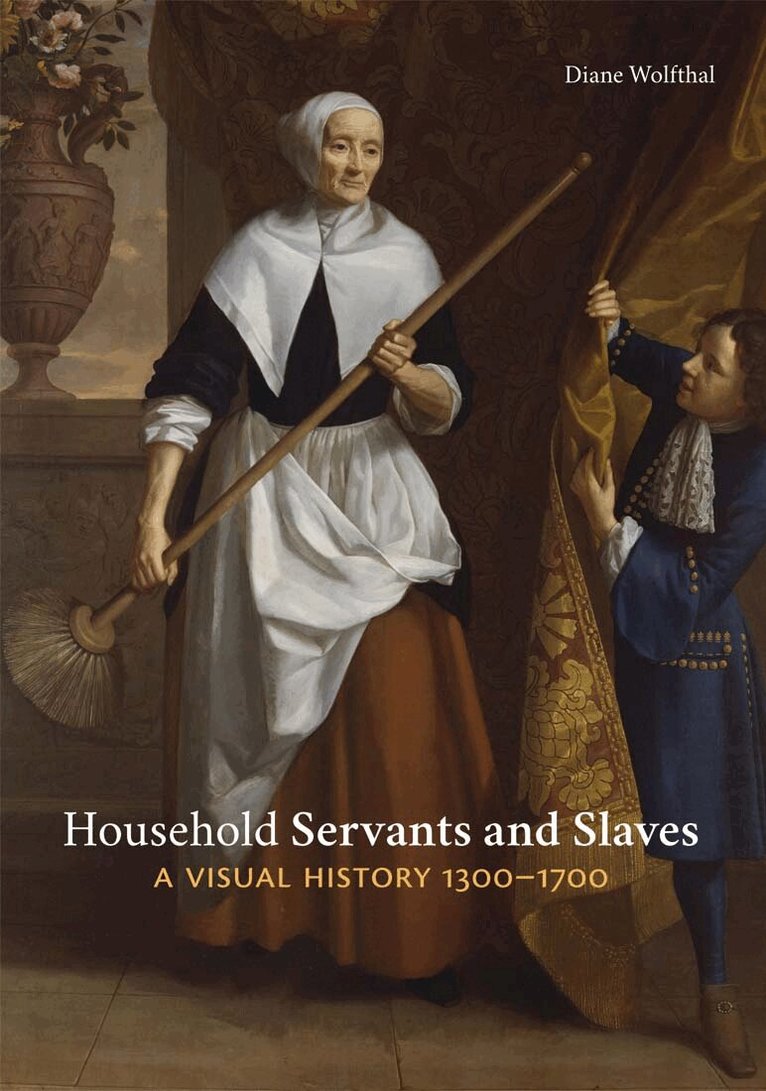
The first book-length study of household servants and slaves, exploring a visual history over 400 years and four continentsThe first book-length study of both images of ordinary household workers and their material culture, Household Servants and Slaves: A Visual History, 1300–1700 covers four hundred years and four continents, facilitating a better understanding of the changes in service that occurred as Europe developed a monetary economy, global trade, and colonialism. Diane Wolfthal presents new interpretations of artists including the Limbourg brothers, Albrecht Dürer, Paolo Veronese, and Diego Velázquez, but also explores numerous long-neglected objects, including independent portraits of ordinary servants, servant dolls and their miniature cleaning utensils, and dummy boards, candlesticks, and tablestands in the form of servants and slaves. Wolfthal analyzes the intersection of class, race, and gender while also interrogating the ideology of service, investigating both the material conditions of household workers’ lives and the immaterial qualities with which they were associated. If images repeatedly relegated servants to the background, then this book does the reverse: it foregrounds these figures in order to better understand the ideological and aesthetic functions that they served.
Inbunden, Engelska, 2010
2 592 kr
Skickas inom 10-15 vardagar
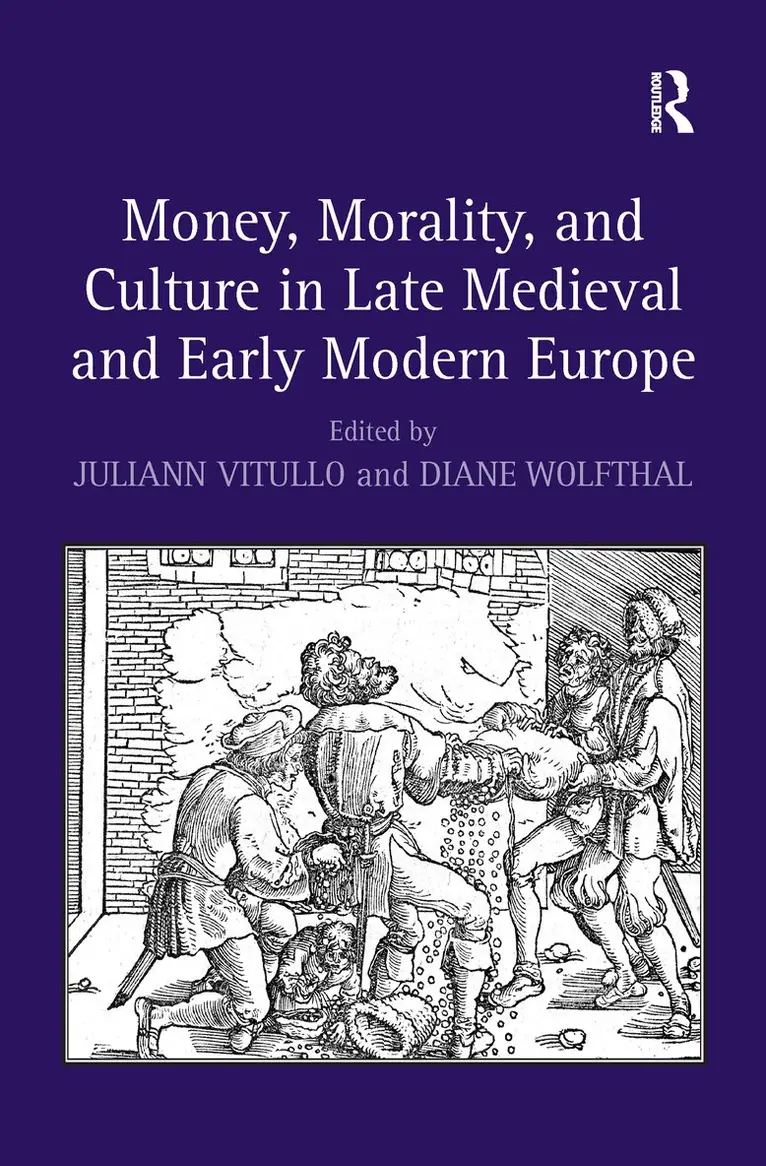
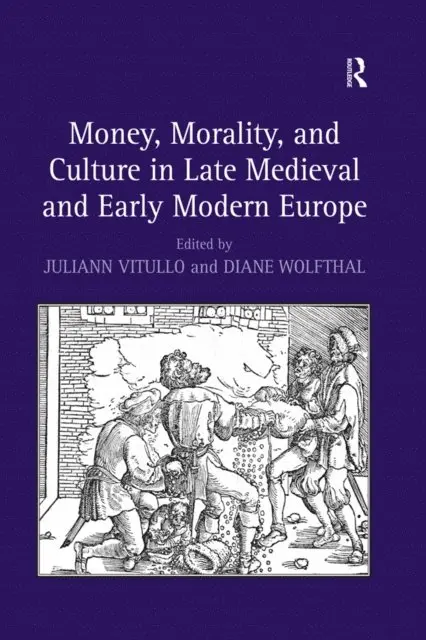
One of the first volumes to explore the intersection of economics, morality, and culture, this collection analyzes the role of the developing monetary economy in Western Europe from the twelfth to the seventeenth century. The contributors”scholars from the fields of history, literature, art history and musicology”investigate how money infiltrated every aspect of everyday life, modified notions of social identity, and encouraged debates about ethical uses of wealth. These essays investigate how the new symbolic system of money restructured religious practices, familial routines, sexual activities, gender roles, urban space, and the production of literature and art. They explore the complex ethical and theological discussions which developed because the role of money in everyday life and the accumulation of wealth seemed to contradict Christian ideals of poverty and charity, revealing a rich web of reactions to the tensions inherent in a predominately Christian, (neo)capitalist culture. Money, Morality, and Culture in Late Medieval and Early Modern Europe presents a comprehensive, multi-disciplinary assessment of the ways in which the rise of the monetary economy fundamentally affected morality and culture in Western Europe.
Häftad, Engelska, 2016
910 kr
Skickas inom 10-15 vardagar
One of the first volumes to explore the intersection of economics, morality, and culture, this collection analyzes the role of the developing monetary economy in Western Europe from the twelfth to the seventeenth century. The contributors”scholars from the fields of history, literature, art history and musicology”investigate how money infiltrated every aspect of everyday life, modified notions of social identity, and encouraged debates about ethical uses of wealth. These essays investigate how the new symbolic system of money restructured religious practices, familial routines, sexual activities, gender roles, urban space, and the production of literature and art. They explore the complex ethical and theological discussions which developed because the role of money in everyday life and the accumulation of wealth seemed to contradict Christian ideals of poverty and charity, revealing a rich web of reactions to the tensions inherent in a predominately Christian, (neo)capitalist culture. Money, Morality, and Culture in Late Medieval and Early Modern Europe presents a comprehensive, multi-disciplinary assessment of the ways in which the rise of the monetary economy fundamentally affected morality and culture in Western Europe.
E-bok
Engelska, 20161 045 kr
Läs direkt efter köp
One of the first volumes to explore the intersection of economics, morality, and culture, this collection analyzes the role of the developing monetary economy in Western Europe from the twelfth to the seventeenth century. The contributors”scholars from the fields of history, literature, art history and musicology”investigate how money infiltrated every aspect of everyday life, modified notions of social identity, and encouraged debates about ethical uses of wealth. These essays investigate how the new symbolic system of money restructured religious practices, familial routines, sexual activities, gender roles, urban space, and the production of literature and art. They explore the complex ethical and theological discussions which developed because the role of money in everyday life and the accumulation of wealth seemed to contradict Christian ideals of poverty and charity, revealing a rich web of reactions to the tensions inherent in a predominately Christian, (neo)capitalist culture. Money, Morality, and Culture in Late Medieval and Early Modern Europe presents a comprehensive, multi-disciplinary assessment of the ways in which the rise of the monetary economy fundamentally affected morality and culture in Western Europe.
E-bok
PDF, Engelska, 20161 045 kr
Läs direkt efter köp
One of the first volumes to explore the intersection of economics, morality, and culture, this collection analyzes the role of the developing monetary economy in Western Europe from the twelfth to the seventeenth century. The contributors”scholars from the fields of history, literature, art history and musicology”investigate how money infiltrated every aspect of everyday life, modified notions of social identity, and encouraged debates about ethical uses of wealth. These essays investigate how the new symbolic system of money restructured religious practices, familial routines, sexual activities, gender roles, urban space, and the production of literature and art. They explore the complex ethical and theological discussions which developed because the role of money in everyday life and the accumulation of wealth seemed to contradict Christian ideals of poverty and charity, revealing a rich web of reactions to the tensions inherent in a predominately Christian, (neo)capitalist culture. Money, Morality, and Culture in Late Medieval and Early Modern Europe presents a comprehensive, multi-disciplinary assessment of the ways in which the rise of the monetary economy fundamentally affected morality and culture in Western Europe.
Inbunden, Engelska, 2023
423 kr
Skickas inom 7-10 vardagar
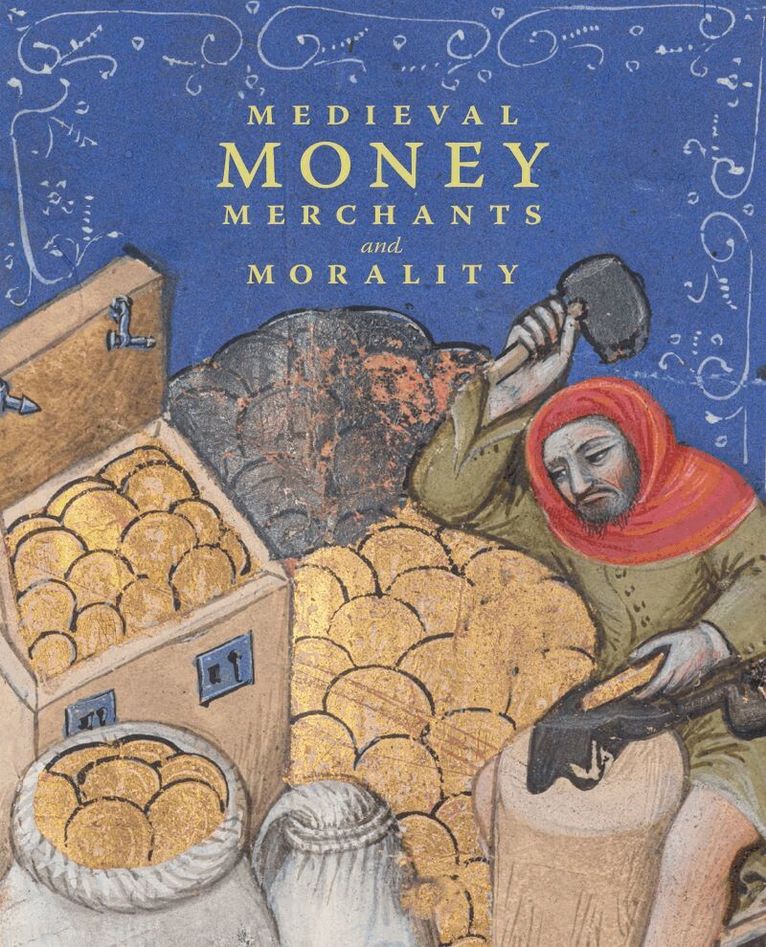
Medieval Money explores the ways art reflected and reinforced the complex ethical discussions that developed from the widespread role of money in everyday life in the Middle Ages. It traces the origins of global money, and surveys economic history, focusing on the environment, the plague, Jews, and institutions, using a wealth of imagery including illuminated manuscripts, coins, artworks, money chests, and account books. The iconography, minting, and foreign exchange of coins are examined, and the choice that Christians faced is investigated: should they save their money or their soul? The authors explore images of Avarice, the greedy punished in hell, and immoral ways to earn and spend money, and analyse representations of charity and voluntary poverty. Final chapters examine the material culture of the monetary economy (from an illuminated oath for minters to purses and lockboxes) and images of medieval money management. AUTHORS: Diane Wolfthal specializes in late medieval and early modern European art. Founding Co-editor of Early Modern Women: An Interdisciplinary Journal, she is David and Caroline Minter Chair Emerita in the Humanities and professor emerita of Art History, Rice University. She is the co-author, with Elisabeth Hollander, of a volume on the fourteenth-century Ma?zor in the Museum of Fine Arts, Houston. Deirdre Jackson is assistant curator of Medieval and Renaissance Manuscripts, the Morgan Library Steven A. Epstein is professor emeritus, department of history at the University of Kansas. He was educated at Swarthmore College, St. John's College (Cambridge University), and Harvard College, where he developed his interests in medieval social and economic history. David Yoon is Mark Salton Associate Curator of Medieval, Renaissance and Early European Numismatics, American Numismatic Society SELLING POINTS: . A richly illustrated interdisciplinary volume, with chapters written by social historian Steven Epstein, numismatist David Yoon, and art historians Deirdre Jackson and Diane Wolfthal . Vibrantly illustrated with illuminated manuscripts, panel paintings, prints, stained glass, sculpture, and all sorts of material objects 150 colour illustrations
E-bok
PDF, Engelska, 20042 979 kr
Läs direkt efter köp
This is the first comprehensive study of the images in five profusely illustrated Yiddish books that were produced in sixteenth-century Italy: a manuscript of Jewish customs illustrated by its scribe, and two books of customs, a chivalric romance, and a book of fables, all printed at Christian presses in Venice and Verona. The long-neglected manuscript includes more than one hundred drawings, here reproduced for the first time, which are strikingly inventive and full of a joie de vivre that gives the lie to the lachrymose view of Jewish history. This volume, which explores how Yiddish imagery constructs women, Jewish memory, and Jewish identity, will interest art historians, feminist scholars, Jewish Studies specialists, and specialists in the history of the book.