Dick Geary – författare
518 kr
Skickas inom 10-15 vardagar
519 kr
Läs direkt efter köp
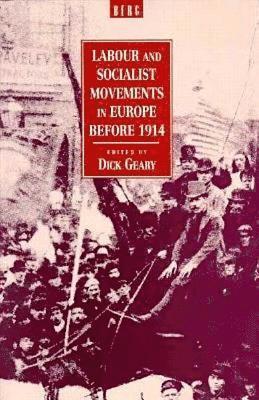
This book, first published in 1981, examines the issues inspiring working-class movements after 1848 in France, Germany and Britain, with some consideration also of Austria, Italy, Spain and Russia. It concentrates on the attitudes of the ordinary working men, rather than the ideologies and the leaders, and considers the many different forms and manifestations of their grievances and means of expression. What emerges is the complexity of the connection between economic circumstances and protest, and the existence of wide divergences of behaviour amongst the European working class.
519 kr
Läs direkt efter köp
This book, first published in 1981, examines the issues inspiring working-class movements after 1848 in France, Germany and Britain, with some consideration also of Austria, Italy, Spain and Russia. It concentrates on the attitudes of the ordinary working men, rather than the ideologies and the leaders, and considers the many different forms and manifestations of their grievances and means of expression. What emerges is the complexity of the connection between economic circumstances and protest, and the existence of wide divergences of behaviour amongst the European working class.
1 450 kr
Skickas inom 10-15 vardagar
469 kr
Skickas inom 10-15 vardagar
1 955 kr
Skickas inom 10-15 vardagar
469 kr
Skickas inom 10-15 vardagar
535 kr
Läs direkt efter köp
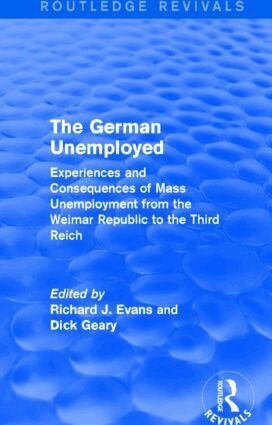
Unemployment was perhaps the major problem confronting European society at the time in which this book was first published in 1987, and is arguably still the case today. This collection of essays by British and German historians contributes to the debate by taking a close look at unemployment in the Weimar Republic. What groups were most severely affected, and why? How did they react? How effective were welfare and job creation schemes? Did unemployment fuel social instability and political extremism? How far was unemployment a cause of the collapse of the Weimar Republic and the triumph of the Third Reich? Did the Nazis solve the unemployment problem by peaceful Keynsianism or through massive rearmament?
This book is ideal for students of history, sociology, and economics.
535 kr
Läs direkt efter köp
Unemployment was perhaps the major problem confronting European society at the time in which this book was first published in 1987, and is arguably still the case today. This collection of essays by British and German historians contributes to the debate by taking a close look at unemployment in the Weimar Republic. What groups were most severely affected, and why? How did they react? How effective were welfare and job creation schemes? Did unemployment fuel social instability and political extremism? How far was unemployment a cause of the collapse of the Weimar Republic and the triumph of the Third Reich? Did the Nazis solve the unemployment problem by peaceful Keynsianism or through massive rearmament?
This book is ideal for students of history, sociology, and economics.