Dick Houtman - Böcker
Visar alla böcker från författaren Dick Houtman. Handla med fri frakt och snabb leverans.
12 produkter
12 produkter
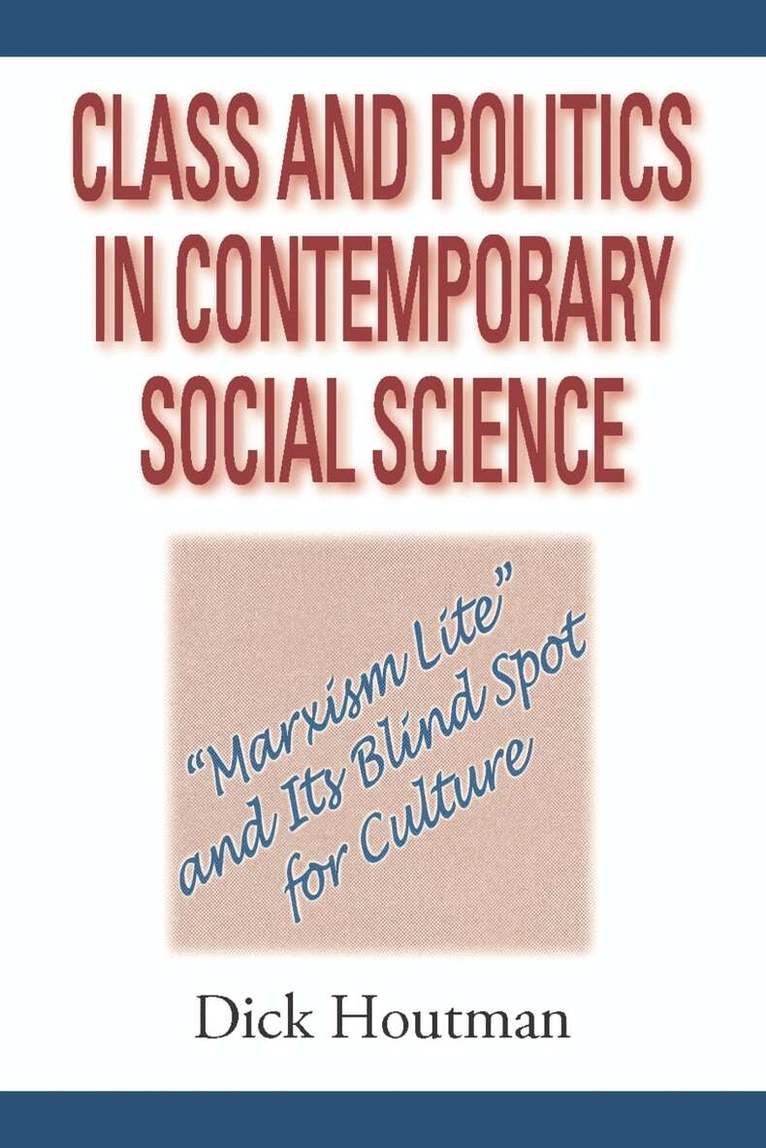
Class and Politics in Contemporary Social Science
Marxism Lite and Its Blind Spot for Culture
Inbunden, Engelska, 2004
1 099 kr
Tillfälligt slut
Dick Houtman argues that neither authoritarianism nor libertarianism can be explained by class or economic background, but rather by position in the cultural domain-- what he calls cultural capital. Although he examines all of the statistics and arguments of the conventional approaches with care and concern, Houtman convincingly demonstrates that the conclusions drawn from earlier studies are untenable at a more general theoretical level. Despite differences among advocates of class explanations, their theories are based on largely identical research findings--in particular a strong negative relationship between education and authoritarianism. Unobstructed by the conclusions these authors felt called upon to draw from the findings themselves, Houtman configures them in a new way. The hypotheses derived from this new theory allow for a systematic, strict, and competitive testing of original theses without ignoring the value of and earlier research. After demonstrating that authoritarianism and libertarianism cannot be explained by class or economic background, Houtman examines the implications of this argument for today's death of class debate in political sociology. He holds it to be unfortunate that the relevance of class to politics is typically addressed by studying the relation between class and voting. This conceals a complex cross-pressure mechanism that causes this relationship to capture the net balance of class voting and its opposite, cultural voting, instead of class voting. He argues that references to a decline in class voting may be basically correct, but dogmatic reliance on the relation between class and voting to prove the point systematically underestimates levels of class voting and produces an exaggerated picture of the decline.
Class and Politics in Contemporary Social Science
Marxism Lite and Its Blind Spot for Culture
Häftad, Engelska, 2004
676 kr
Skickas inom 10-15 vardagar
Dick Houtman argues that neither authoritarianism nor libertarianism can be explained by class or economic background, but rather by position in the cultural domain-- what he calls cultural capital. Although he examines all of the statistics and arguments of the conventional approaches with care and concern, Houtman convincingly demonstrates that the conclusions drawn from earlier studies are untenable at a more general theoretical level. Despite differences among advocates of class explanations, their theories are based on largely identical research findings--in particular a strong negative relationship between education and authoritarianism. Unobstructed by the conclusions these authors felt called upon to draw from the findings themselves, Houtman configures them in a new way. The hypotheses derived from this new theory allow for a systematic, strict, and competitive testing of original theses without ignoring the value of and earlier research. After demonstrating that authoritarianism and libertarianism cannot be explained by class or economic background, Houtman examines the implications of this argument for today's death of class debate in political sociology. He holds it to be unfortunate that the relevance of class to politics is typically addressed by studying the relation between class and voting. This conceals a complex cross-pressure mechanism that causes this relationship to capture the net balance of class voting and its opposite, cultural voting, instead of class voting. He argues that references to a decline in class voting may be basically correct, but dogmatic reliance on the relation between class and voting to prove the point systematically underestimates levels of class voting and produces an exaggerated picture of the decline.
The Shape of Spirituality
The Public Significance of a New Religious Formation
Inbunden, Engelska, 2024
1 127 kr
Skickas inom 7-10 vardagar
Winner, 2025 Choice Outstanding Academic TitleAround 20 percent of Americans fall into the category of “spiritual but not religious.” Yoga has become a ubiquitous pastime for middle-class Westerners. Mindfulness is increasingly incorporated into school curricula, sports programs, and even corporate culture. Hollywood icons and Silicon Valley trendsetters tout the benefits of a “spiritual” life. These developments reflect a widespread turn away from “religion” toward “spirituality.” Yet the nature of this spiritual turn is still poorly understood, and its consequences sorely underappreciated.The Shape of Spirituality brings together leading sociologists to challenge common notions that spirituality is individualistic, privatized, and apolitical—and to make the definitive case for its social and political significance. Contributors examine the sweeping influence of spirituality on a variety of realms, including health care and therapeutic practice, popular culture, civic engagement, public protest, conspiracy culture, and progressive politics. Leveraging cutting-edge quantitative and qualitative data, this authoritative book makes clear that, far from being marginal and inconsequential, spirituality holds profound public importance today.
287 kr
Skickas inom 7-10 vardagar
Winner, 2025 Choice Outstanding Academic TitleAround 20 percent of Americans fall into the category of “spiritual but not religious.” Yoga has become a ubiquitous pastime for middle-class Westerners. Mindfulness is increasingly incorporated into school curricula, sports programs, and even corporate culture. Hollywood icons and Silicon Valley trendsetters tout the benefits of a “spiritual” life. These developments reflect a widespread turn away from “religion” toward “spirituality.” Yet the nature of this spiritual turn is still poorly understood, and its consequences sorely underappreciated.The Shape of Spirituality brings together leading sociologists to challenge common notions that spirituality is individualistic, privatized, and apolitical—and to make the definitive case for its social and political significance. Contributors examine the sweeping influence of spirituality on a variety of realms, including health care and therapeutic practice, popular culture, civic engagement, public protest, conspiracy culture, and progressive politics. Leveraging cutting-edge quantitative and qualitative data, this authoritative book makes clear that, far from being marginal and inconsequential, spirituality holds profound public importance today.
Paradoxes of Individualization
Social Control and Social Conflict in Contemporary Modernity
Häftad, Engelska, 2011
935 kr
Skickas inom 10-15 vardagar
Paradoxes of Individualization addresses one of the most hotly debated issues in contemporary sociology: whether a process of individualization is liberating selves from society so as to make them the authors of their personal biographies. The book adopts a cultural-sociological approach that firmly rejects such a notion of individualization as naïve. The process is instead conceptualized as an increasing social significance of moral notions of individual liberty, personal authenticity and cultural tolerance, which informs two paradoxes. Firstly, chapters about consumer behavior, computer gaming, new age spirituality and right-wing extremism demonstrate that this individualism entails a new, yet often unacknowledged, form of social control. The second paradox, addressed in chapters about religious, cultural and political conflict, is concerned with the fact that it is precisely individualism's increased social significance that has made it morally and politically contested. Paradoxes of Individualization, will therefore be of interest to scholars and students of cultural sociology, cultural anthropology, political science, and cultural, religious and media studies, and particularly to those with interests in social theory, culture, politics and religion.
Paradoxes of Individualization
Social Control and Social Conflict in Contemporary Modernity
Inbunden, Engelska, 2011
2 170 kr
Skickas inom 10-15 vardagar
Paradoxes of Individualization addresses one of the most hotly debated issues in contemporary sociology: whether a process of individualization is liberating selves from society so as to make them the authors of their personal biographies. The book adopts a cultural-sociological approach that firmly rejects such a notion of individualization as naïve. The process is instead conceptualized as an increasing social significance of moral notions of individual liberty, personal authenticity and cultural tolerance, which informs two paradoxes. Firstly, chapters about consumer behavior, computer gaming, new age spirituality and right-wing extremism demonstrate that this individualism entails a new, yet often unacknowledged, form of social control. The second paradox, addressed in chapters about religious, cultural and political conflict, is concerned with the fact that it is precisely individualism's increased social significance that has made it morally and politically contested. Paradoxes of Individualization, will therefore be of interest to scholars and students of cultural sociology, cultural anthropology, political science, and cultural, religious and media studies, and particularly to those with interests in social theory, culture, politics and religion.
457 kr
Skickas inom 7-10 vardagar
This volume addresses the relation between religion and things. That relation has long been conceived in antagonistic terms, privileging spirit above matter, belief above ritual and objects, meaning above form, and "inward" contemplation above "outward" action. After all, wasn't the opposition between spirituality and materiality the defining characteristic of religion, understood as geared to a transcendental beyond that was immaterial by definition? Grounded in the rise of religion as a modern category, with Protestantism as its main exponent, this conceptualization devalues religious things as lacking serious empirical, let alone theoretical, interest. The resurgence of public religion in our time has exposed the limitations of this attitude.Taking materiality seriously, this volume uses as a starting point the insight that religion necessarily requires some kind of incarnation, through which the beyond to which it refers becomes accessible. Conjoining rather than separating spirit and matter, incarnation (whether understood as "the word becoming flesh" or in a broader sense) places at center stage the question of how the realm of the transcendental, spiritual, or invisible is rendered tangible in the world.How do things matter in religious discourse and practice? How are we to account for the value or devaluation, the appraisal or contestation, of things within particular religious perspectives? How are we to rematerialize our scholarly approaches to religion? These are the key questions addressed by this multidisciplinary volume.Focusing on different kinds of things that matter for religion, including sacred artifacts, images, bodily fluids, sites, and electronic media, it offers a wide-ranging set of multidisciplinary studies that combine detailed analysis and critical reflection.
234 kr
Skickas inom 7-10 vardagar
Although new religious movements (NRMs) are characterized as diverse and unique, this Element analyzes the cultural logic underlying this apparent diversity from a sociological approach. Section 1 demonstrates that NRMs are substantially shaped by the Romantic counterculture emerging around the 1960s and its critique of churched religion, modern industries, science, and capitalism. Section 2 shows how these Romantic NRMs shaped the Western mainstream in the twenty-first century. Subsequent sections discuss the institutionalization of New Age spirituality in health care and business; the mediatization of modern paganism in film, television series, and online games; and the emergence of new NRMs in Silicon Valley that are formed around technologies of salvation (virtual reality, artificial intelligence, and biotechnology). The Element concludes that the Romantic spirit of the NRMs - once distinctly countercultural - has paradoxically developed into a driving ideological force that now consolidates and strengthens the machineries of late-modern institutions.
753 kr
Skickas inom 7-10 vardagar
Although new religious movements (NRMs) are characterized as diverse and unique, this Element analyzes the cultural logic underlying this apparent diversity from a sociological approach. Section 1 demonstrates that NRMs are substantially shaped by the Romantic counterculture emerging around the 1960s and its critique of churched religion, modern industries, science, and capitalism. Section 2 shows how these Romantic NRMs shaped the Western mainstream in the twenty-first century. Subsequent sections discuss the institutionalization of New Age spirituality in health care and business; the mediatization of modern paganism in film, television series, and online games; and the emergence of new NRMs in Silicon Valley that are formed around technologies of salvation (virtual reality, artificial intelligence, and biotechnology). The Element concludes that the Romantic spirit of the NRMs - once distinctly countercultural - has paradoxically developed into a driving ideological force that now consolidates and strengthens the machineries of late-modern institutions.
1 311 kr
Skickas inom 7-10 vardagar
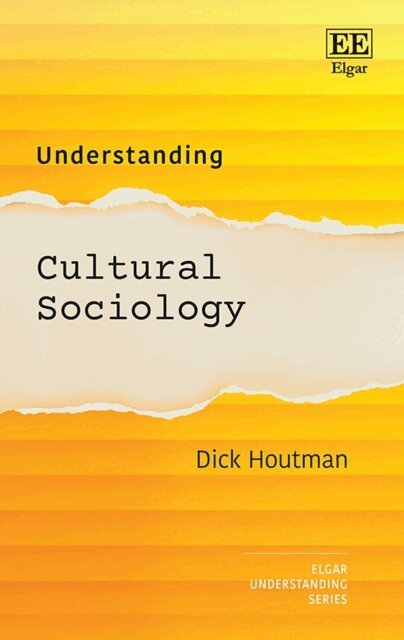
This fascinating book discusses the particularities, pleasures and promises of a sociology that underscores the significance of culture as a vital dimension of social life. It advocates an intellectually open-minded cultural sociology that acknowledges how culture influences sociologists’ own work and urges a field traditionally dominated by qualitative methods to open up to experimental and survey research.Understanding Cultural Sociology explains how the crisis of sociology in the 1960s resulted in a cultural turn away from positivism, due to discontent over positivist pretensions of strict objectivity and neutrality. Yet, the book also critiques how this shift gave rise to theoretical reductions of culture to structures of power and inequality, resulting in awkward resemblances to conspiracy theories. Dick Houtman advocates Emile Durkheim’s and Max Weber’s classical sociologies of culture and religion as promising blueprints for a cultural sociology that counters such reductionist tendencies.Staying away from mere theoretical exegesis, this illuminating book is a vital resource for students and scholars of sociology with an interest in what classical cultural-sociological theorizing has to offer to the empirical study of today’s major social and political conflicts.
1 392 kr
Skickas inom 10-15 vardagar
Identifying scientism as religion’s secular counterpart, this collection studies contemporary contestations of the authority of science. These controversies suggest that what we are witnessing today is not an increase in the authority of science at the cost of religion, but a dual decline in the authorities of religion and science alike.
1 392 kr
Skickas inom 10-15 vardagar
Identifying scientism as religion’s secular counterpart, this collection studies contemporary contestations of the authority of science. These controversies suggest that what we are witnessing today is not an increase in the authority of science at the cost of religion, but a dual decline in the authorities of religion and science alike.