Diego R. Lopez – författare
1 622 kr
Läs direkt efter köp
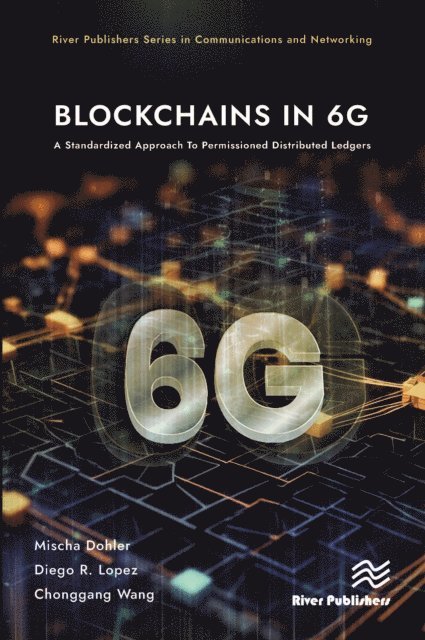
Based on work done within ETSI, this comprehensive guide dives deep into the heart of blockchains and their imminent intersection with 6G. Whether you''re a tech enthusiast or an industry expert, this book promises to enlighten, engage, and inspire, drawing you into the exciting intersection of 6G and blockchains.
Part I - Blockchain Enablers: Embark on a foundational journey through blockchains, unraveling their basic principles and complex mechanics. From understanding the rudiments of blockchains to exploring the nuances of smart contracts, this section elucidates the pivotal aspects that make blockchains tick. Learn about the necessity for scalability, interoperability, and the crucial role of permissioned distributed ledgers.
Part II - Blockchain Ecosystem: Delve into the underpinnings that form the blockchain ecosystem. This segment demystifies the governance and technical standards that guide blockchains and touches upon the alliances formed in its name. As an essential addition, it delves into the regulatory landscape and the critical R&D projects pushing blockchain boundaries.
Part III - Blockchain Standards: Setting a benchmark for quality and reliability, this part deciphers the ETSI standards work governing blockchains. Understand the governance of permissioned distributed ledger (PDL) applications, explore reference architectures, and comprehend the role of smart contracts. Data management in a distributed setup and the intricacies of offline operations are neatly detailed, followed by a deep dive into the challenges and solutions for ledger interoperability.
Part IV - Blockchains in 6G: The last part of the book bridges the vast world of blockchains with the frontier of 6G telecommunication systems. Commencing with an introduction to the predecessors of 6G, it then charts the course for blockchains'' role in 6G data sharing and the radio access network, as well as the emerging topic of the metaverse.
1 622 kr
Läs direkt efter köp
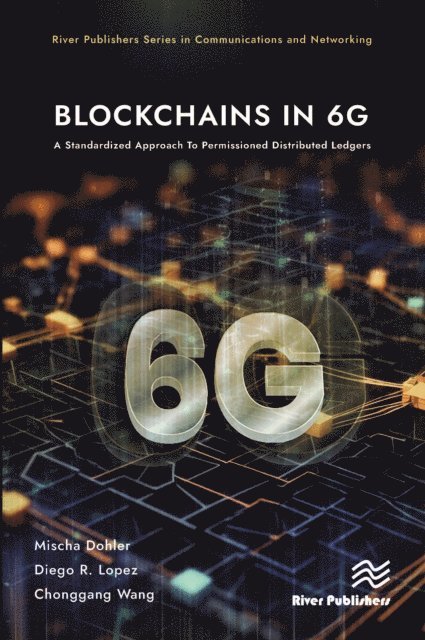
Based on work done within ETSI, this comprehensive guide dives deep into the heart of blockchains and their imminent intersection with 6G. Whether you''re a tech enthusiast or an industry expert, this book promises to enlighten, engage, and inspire, drawing you into the exciting intersection of 6G and blockchains.
Part I - Blockchain Enablers: Embark on a foundational journey through blockchains, unraveling their basic principles and complex mechanics. From understanding the rudiments of blockchains to exploring the nuances of smart contracts, this section elucidates the pivotal aspects that make blockchains tick. Learn about the necessity for scalability, interoperability, and the crucial role of permissioned distributed ledgers.
Part II - Blockchain Ecosystem: Delve into the underpinnings that form the blockchain ecosystem. This segment demystifies the governance and technical standards that guide blockchains and touches upon the alliances formed in its name. As an essential addition, it delves into the regulatory landscape and the critical R&D projects pushing blockchain boundaries.
Part III - Blockchain Standards: Setting a benchmark for quality and reliability, this part deciphers the ETSI standards work governing blockchains. Understand the governance of permissioned distributed ledger (PDL) applications, explore reference architectures, and comprehend the role of smart contracts. Data management in a distributed setup and the intricacies of offline operations are neatly detailed, followed by a deep dive into the challenges and solutions for ledger interoperability.
Part IV - Blockchains in 6G: The last part of the book bridges the vast world of blockchains with the frontier of 6G telecommunication systems. Commencing with an introduction to the predecessors of 6G, it then charts the course for blockchains'' role in 6G data sharing and the radio access network, as well as the emerging topic of the metaverse.
1 411 kr
Läs direkt efter köp
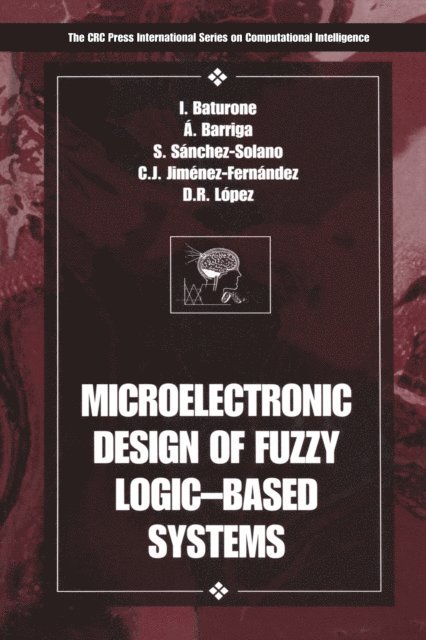
Fuzzy logic has virtually exploded over the landscape of emerging technologies, becoming an integral part of myriad applications and a standard tool for engineers. Until recently, most of the attention and applications have centered on fuzzy systems implemented in software. But these systems are limited. Problems that require real-time operation, low area, or low power consumption demand hardware designed to the fuzzy paradigm - and engineers with the background and skills to design it.Microelectronic Design of Fuzzy Logic-Based Systems offers low-cost answers to issues that software cannot resolve. From the theoretical, architectural, and technological foundation to design tools and applications, it serves as your guide to effective hardware realizations of fuzzy logic.
Review fuzzy logic theory and the basic issues of fuzzy sets, operators, and inference mechanisms Explore the trade-offs between efficient theoretical behavior and practical hardware realizations Discover the properties of the possible microelectronic realizations of fuzzy systems - conventional processors, fuzzy coprocessors, and fuzzy chips Investigate the design of fuzzy chips that implement the whole fuzzy inference method into silicon Analyze analog, digital, and mixed-signal techniques Reduce your design effort for fuzzy systems with CAD tools - learn the requirements they should meet and survey current environments. Put it all together - see examples and case studies illustrating how all of this is used to solve particular problems related to control and neuro-fuzzy applications1 411 kr
Läs direkt efter köp
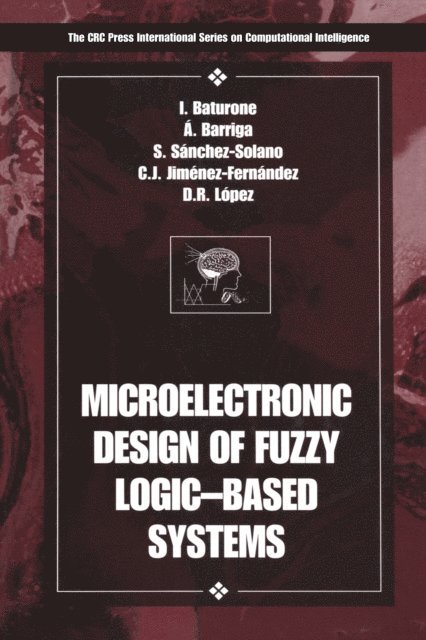
Fuzzy logic has virtually exploded over the landscape of emerging technologies, becoming an integral part of myriad applications and a standard tool for engineers. Until recently, most of the attention and applications have centered on fuzzy systems implemented in software. But these systems are limited. Problems that require real-time operation, low area, or low power consumption demand hardware designed to the fuzzy paradigm - and engineers with the background and skills to design it.Microelectronic Design of Fuzzy Logic-Based Systems offers low-cost answers to issues that software cannot resolve. From the theoretical, architectural, and technological foundation to design tools and applications, it serves as your guide to effective hardware realizations of fuzzy logic.
Review fuzzy logic theory and the basic issues of fuzzy sets, operators, and inference mechanisms Explore the trade-offs between efficient theoretical behavior and practical hardware realizations Discover the properties of the possible microelectronic realizations of fuzzy systems - conventional processors, fuzzy coprocessors, and fuzzy chips Investigate the design of fuzzy chips that implement the whole fuzzy inference method into silicon Analyze analog, digital, and mixed-signal techniques Reduce your design effort for fuzzy systems with CAD tools - learn the requirements they should meet and survey current environments. Put it all together - see examples and case studies illustrating how all of this is used to solve particular problems related to control and neuro-fuzzy applications1 631 kr
Skickas inom 10-15 vardagar
1 977 kr
Läs direkt efter köp
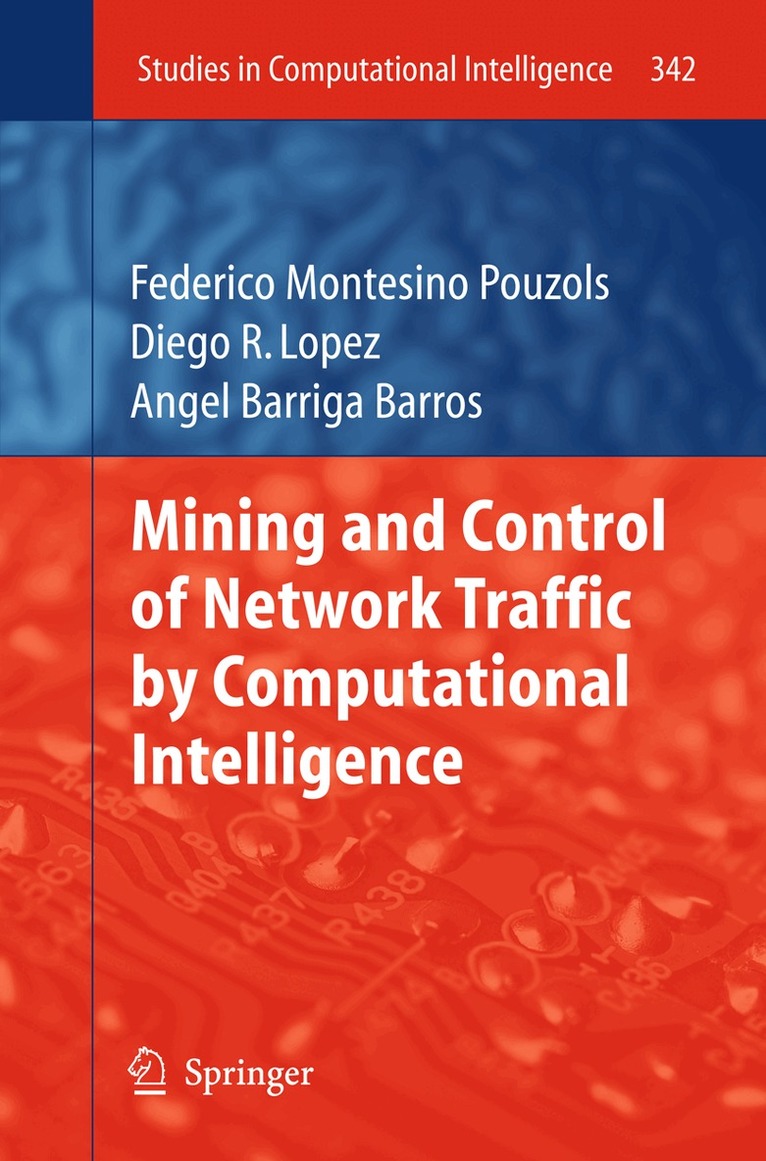
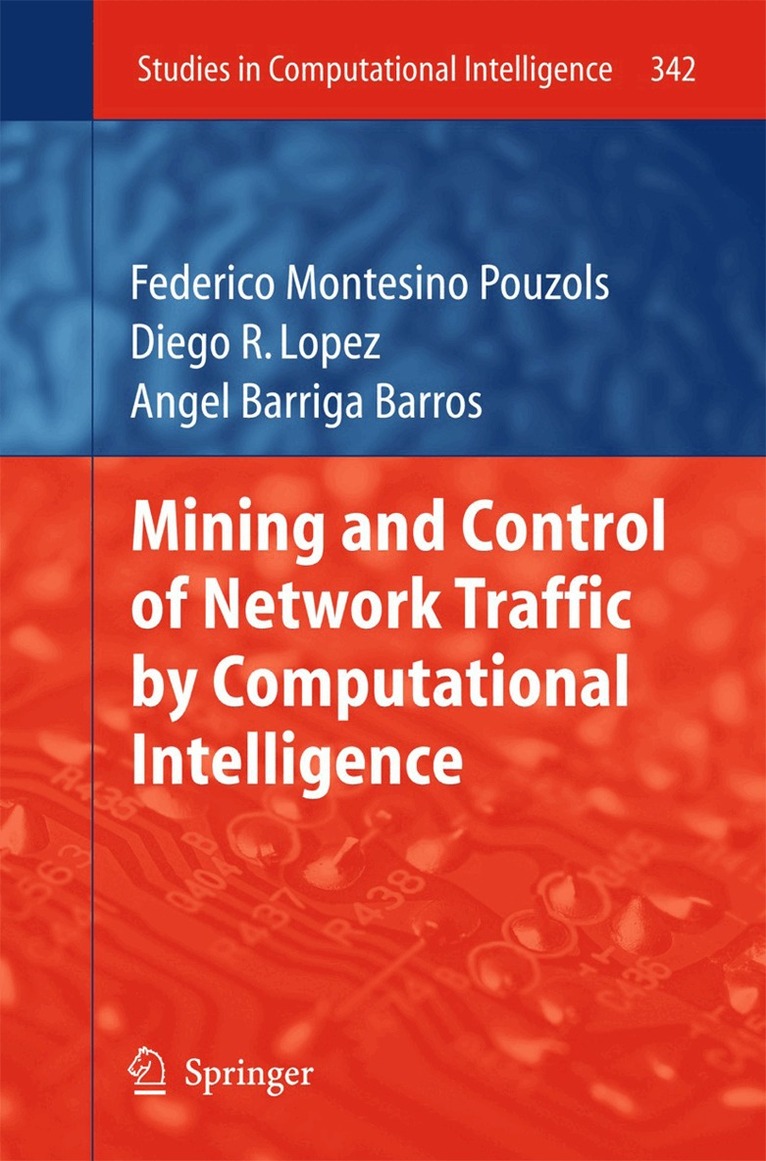
As other complex systems in social and natural sciences as well as in engineering, the Internet is hard to understand from a technical point of view. Packet switched networks defy analytical modeling. The Internet is an outstanding and challenging case because of its fast development, unparalleled heterogeneity and the inherent lack of measurement and monitoring mechanisms in its core conception.
This monograph deals with applications of computational intelligence methods, with an emphasis on fuzzy techniques, to a number of current issues in measurement, analysis and control of traffic in the Internet. First, the core building blocks of Internet Science and other related networking aspects are introduced. Then, data mining and control problems are addressed. In the first class two issues are considered: predictive modeling of traffic load as well as summarization of traffic flow measurements. The second class, control, includes active queue management schemes for Internet routers as well as window based end-to-end rate and congestion control. The practical hardware implementation of some of the fuzzy inference systems proposed here is also addressed. While some theoretical developments are described, we favor extensive evaluation of models using real-world data by simulation and experiments.
Mining and Control of Network Traffic by Computational Intelligence
1 631 kr
Skickas inom 10-15 vardagar
1 408 kr
Skickas inom 10-15 vardagar