Dieter Sell – författare
Visar alla böcker från författaren Dieter Sell. Handla med fri frakt och snabb leverans.
5 produkter
5 produkter
E-bok
Engelska, 20111 740 kr
Läs direkt efter köp
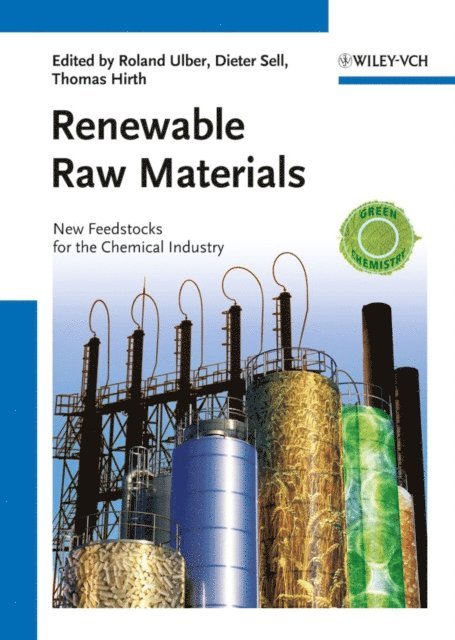
One of the main challenges facing the chemical industry is the transition to sustainable operations. Industries are taking initiatives to reduce resource intensities or footprints, and by adopting safer materials and processes. Such efforts need to be supported by techniques that can quantify the broad economic and environmental implications of industrial operations, retrofi t options and provide new design alternatives. This contemporary overview focuses on cradle-to-grave life cycle assessments of existing or conceptual processes for producing valueadded fuels, chemicals, and/or materials from renewable agricultural residues, plant-derived starches and oils, lignocellulosic biomass, and plant-based industrial processing wastes. It presents the key concepts, systems, and technologies, with an emphasis on new feedstocks for the chemical industry. Each chapter uses common themes of specifi c raw materials, thus forming a natural progression throughout the book. The result is coverage from a wide range of perspectives, emphasizing not only the technical issues but also considering the market place and socio-economic aspects.
E-bok
PDF, Engelska, 20111 787 kr
Läs direkt efter köp
One of the main challenges facing the chemical industry is the transition to sustainable operations. Industries are taking initiatives to reduce resource intensities or footprints, and by adopting safer materials and processes. Such efforts need to be supported by techniques that can quantify the broad economic and environmental implications of industrial operations, retrofi t options and provide new design alternatives. This contemporary overview focuses on cradle-to-grave life cycle assessments of existing or conceptual processes for producing valueadded fuels, chemicals, and/or materials from renewable agricultural residues, plant-derived starches and oils, lignocellulosic biomass, and plant-based industrial processing wastes. It presents the key concepts, systems, and technologies, with an emphasis on new feedstocks for the chemical industry. Each chapter uses common themes of specifi c raw materials, thus forming a natural progression throughout the book. The result is coverage from a wide range of perspectives, emphasizing not only the technical issues but also considering the market place and socio-economic aspects.
Inbunden, Engelska, 2007
3 263 kr
Skickas inom 10-15 vardagar
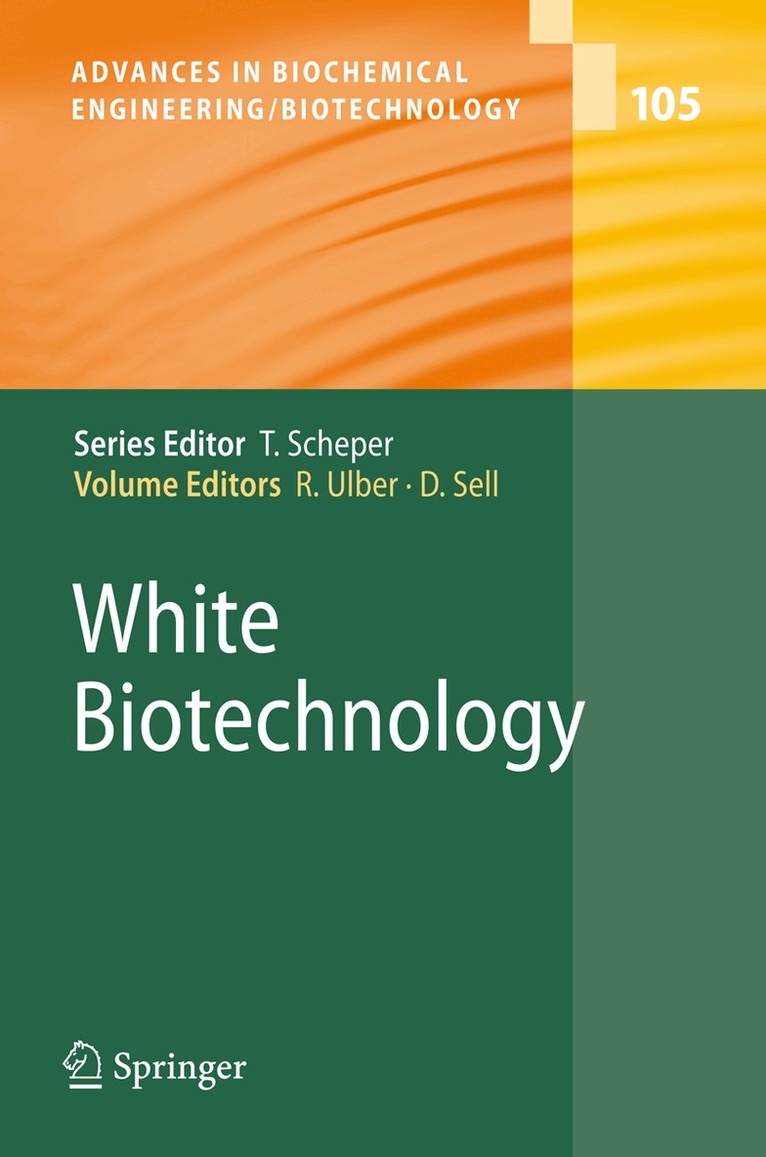
Hardly any other term in the ?eld of biotechnologyhas been the subject of so muchdiscussionamongexpertsaswhitebiotechnologyatpresent.Thistermis an alias for "industrial biotechnology," an already established "heavyweight" that focuses on the production of the most diverse products (bulk and ?ne chemicals, enzymes, food and animal feed additives, pharmaceutically active substances and agrochemicals,auxiliary agents for processindustries, etc.). Insomesegments,whitebiotechnologyhasalreadycapturedleadingmarket positions: - In recent years the annual biotechnological production of amino acids exceeded one million tons. - Invitaminproductiontherehavebeen several recent casesofachangeover from a chemical to a biotechnological synthesis process, a trend that is expected to increase. - During the last 10 years the market volume for enzymes has increased by 50%. - The successful launch of polylactide marked white biotechnology's bre- throughinto the ?eld ofpolymers and synthetics. Today crude oil is the most important energy source and the most widely used chemical raw material. Both primary industry and polymer chemistry currently depend to a great extent on oil.However, it is only a matter of time beforetheworld'soilreservesaredepleted.Almostallstudiespresentedtodate agreethatpeakoil,i.e.thepointintimewhenoilextractionreachesitshighest level, will take place in the ?rst half of the present century. The increasingly dif?cultdevelopmentofnewsourcesofoilhavetriggeredinitiativesworldwide to reduce national dependence on oil imports.
E-bok
PDF, Engelska, 20073 809 kr
Läs direkt efter köp
Del 105 - Advances in Biochemical Engineering/Biotechnology
White Biotechnology
Häftad, Engelska, 2010
3 263 kr
Skickas inom 10-15 vardagar
Hardly any other term in the ?eld of biotechnologyhas been the subject of so muchdiscussionamongexpertsaswhitebiotechnologyatpresent.Thistermis an alias for "industrial biotechnology," an already established "heavyweight" that focuses on the production of the most diverse products (bulk and ?ne chemicals, enzymes, food and animal feed additives, pharmaceutically active substances and agrochemicals,auxiliary agents for processindustries, etc.). Insomesegments,whitebiotechnologyhasalreadycapturedleadingmarket positions: - In recent years the annual biotechnological production of amino acids exceeded one million tons. - Invitaminproductiontherehavebeen several recent casesofachangeover from a chemical to a biotechnological synthesis process, a trend that is expected to increase. - During the last 10 years the market volume for enzymes has increased by 50%. - The successful launch of polylactide marked white biotechnology's bre- throughinto the ?eld ofpolymers and synthetics. Today crude oil is the most important energy source and the most widely used chemical raw material. Both primary industry and polymer chemistry currently depend to a great extent on oil.However, it is only a matter of time beforetheworld'soilreservesaredepleted.Almostallstudiespresentedtodate agreethatpeakoil,i.e.thepointintimewhenoilextractionreachesitshighest level, will take place in the ?rst half of the present century. The increasingly dif?cultdevelopmentofnewsourcesofoilhavetriggeredinitiativesworldwide to reduce national dependence on oil imports.