Dietmar Scholich – författare
Visar alla böcker från författaren Dietmar Scholich. Handla med fri frakt och snabb leverans.
6 produkter
Territorial Cohesion
Inbunden, 2007
1131 kr
Lägg i varukorg
Preface–Introduction 1 Dietmar Scholich The various regions within the European Union are marked by a high degree of disparity with regard to economic performance and productivity, and with respect to their labour markets. The intention underlying the EU’s concept of ‘territorial cohesion’ is to …
Territorial Cohesion
E-bok, 2009
1342 kr
Lägg i varukorg
Preface–Introduction 1 Dietmar Scholich The various regions within the European Union are marked by a high degree of disparity with regard to economic performance and productivity, and with respect to their labour markets. The intention underlying the EU’s concept of ‘territorial cohesion’ is to …
Territorial Cohesion
Häftad, 2010
1098 kr
Lägg i varukorg
Preface–Introduction 1 Dietmar Scholich The various regions within the European Union are marked by a high degree of disparity with regard to economic performance and productivity, and with respect to their labour markets. The intention underlying the EU’s concept of ‘territorial cohesion’ is to …
Integrative Und Sektorale Aspekte Der Stadtregion ALS System
Av Kompetenzzentr F Raumforschung U, Dietmar Scholich
Häftad, 2004
580 kr
Tillfälligt slut
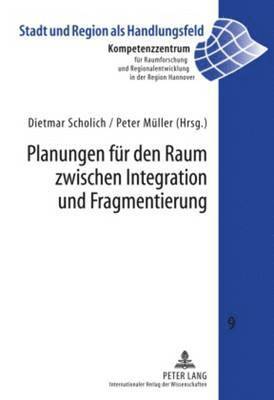
Planungen Fuer Den Raum Zwischen Integration Und Fragmentierung
Av Kompetenzzentr F Raumforschung U, Dietmar Scholich m. fl.
Inbunden, 2010
504 kr
Tillfälligt slut
Angesichts gravierender gesellschaftlicher Herausforderungen, etwa vor dem Hintergrund der demographischen Veränderungen, des Klimawandels oder der Energiekrise, ändern sich die Ansprüche an den Raum. Es entstehen sich überlagernde und konkurrierende Nutzungsansprüche. Hier kommt die Raumplanung …
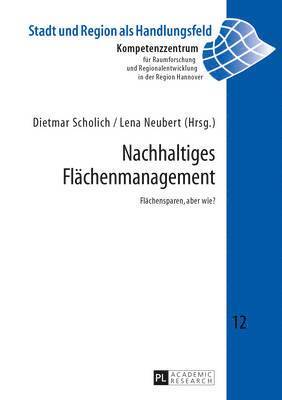
Nachhaltiges Flaechenmanagement
Flaechensparen, Aber Wie?
Av Kompetenzzentr F Raumforschung U, Dietmar Scholich m. fl.
Inbunden, 2013
384 kr
Tillfälligt slut
Die Siedlungsfläche – das sind Flächen für Infrastrukturen, Wohnen, Arbeiten, Freizeit und Mobilität – ist in Deutschland ständig gewachsen. Das Siedlungsflächenwachstum erfolgte fast ausschließlich auf Kosten der Landwirtschaftsflächen, die oftmals auch für den Naturschutz und für die …