Dietrich Paulus – författare
Visar alla böcker från författaren Dietrich Paulus. Handla med fri frakt och snabb leverans.
8 produkter
8 produkter
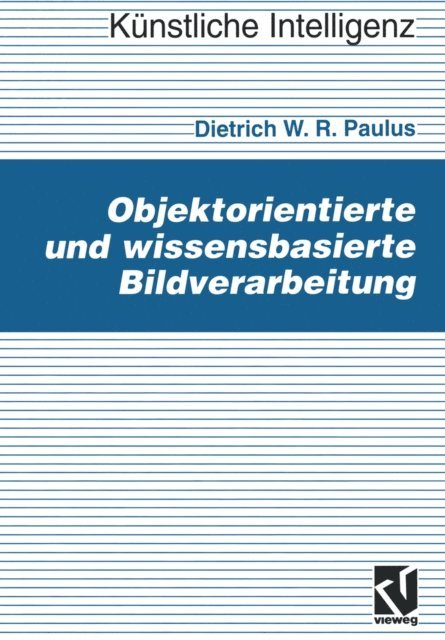
E-bok
PDF, Tyska, 2013450 kr
Läs direkt efter köp
E-bok
PDF, Engelska, 20121 737 kr
Läs direkt efter köp
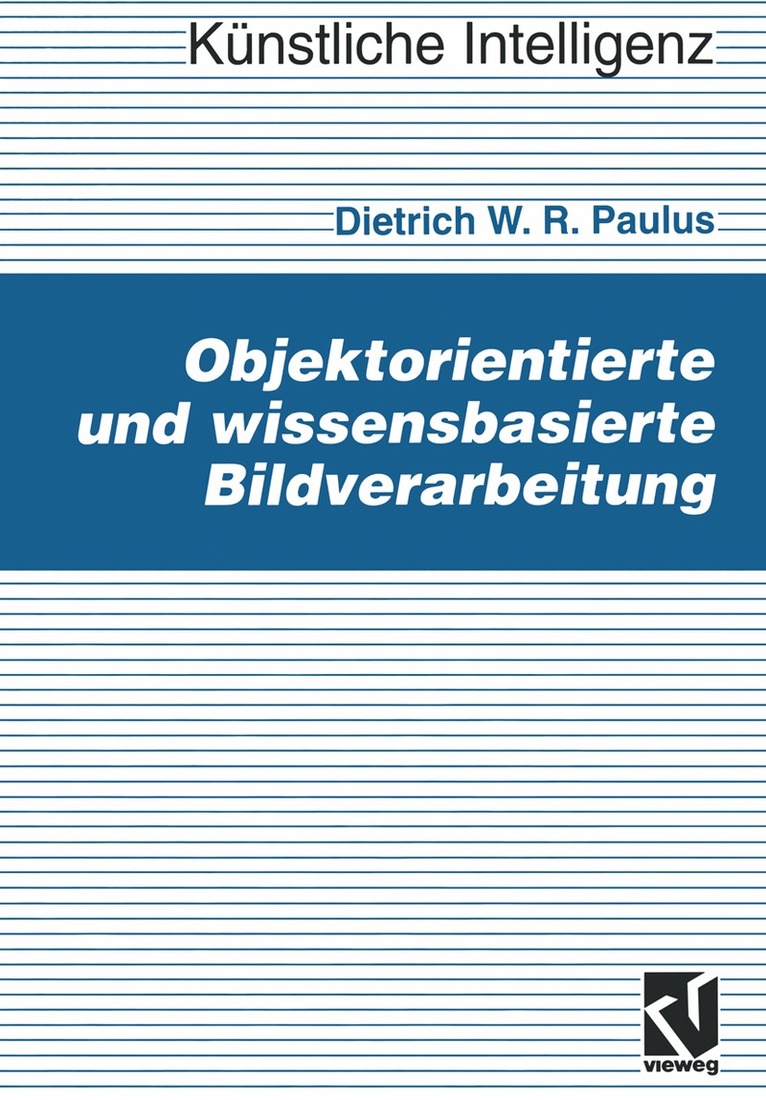
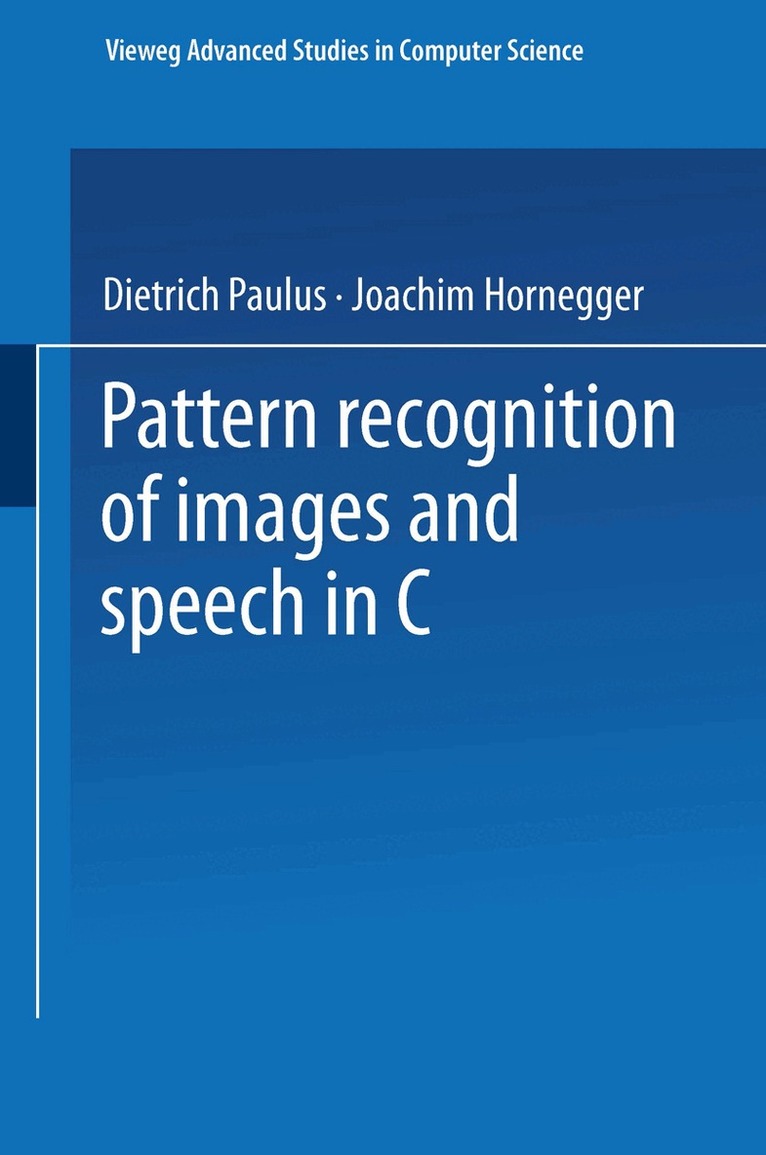
Parts of this text were used for several years by students in a one~term under graduate course in computer science. The students had to prepare projects in small groups (2~4 students).1 This book emphasizes practical experience with image processing. It offers a comprehensive study of • image processing and image analysis, • basics of speech processing, • object~oriented programming, • software design, • and programming in C++. The book is divided into four parts. In the first part we introduce image processing, image analysis, programming tools, and the basics of C++. In the second part we describe object~oriented programming in general and the possible applications of object~oriented concepts in C++. Several appli cations of object~oriented programming for image processing are discussed as well. The new features of C++ are introduced entirely through the use of examples. We cover the proper representation of the data that is a result of pattern analysis as well. The third part describes a complete system for image segmentation. Some of the material covered refers to the exercises found in the first and second parts: this verifies our belief that an image segmentation system of programs can be developed while simultaneously acquainting others to C++. We combine the data representation described in the second part with the algorithms that use and manipulate them here in the third part.
Häftad, Tyska, 1992
576 kr
Skickas inom 10-15 vardagar
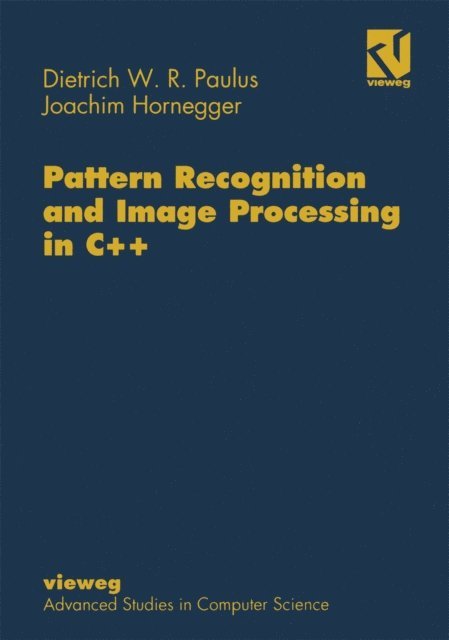
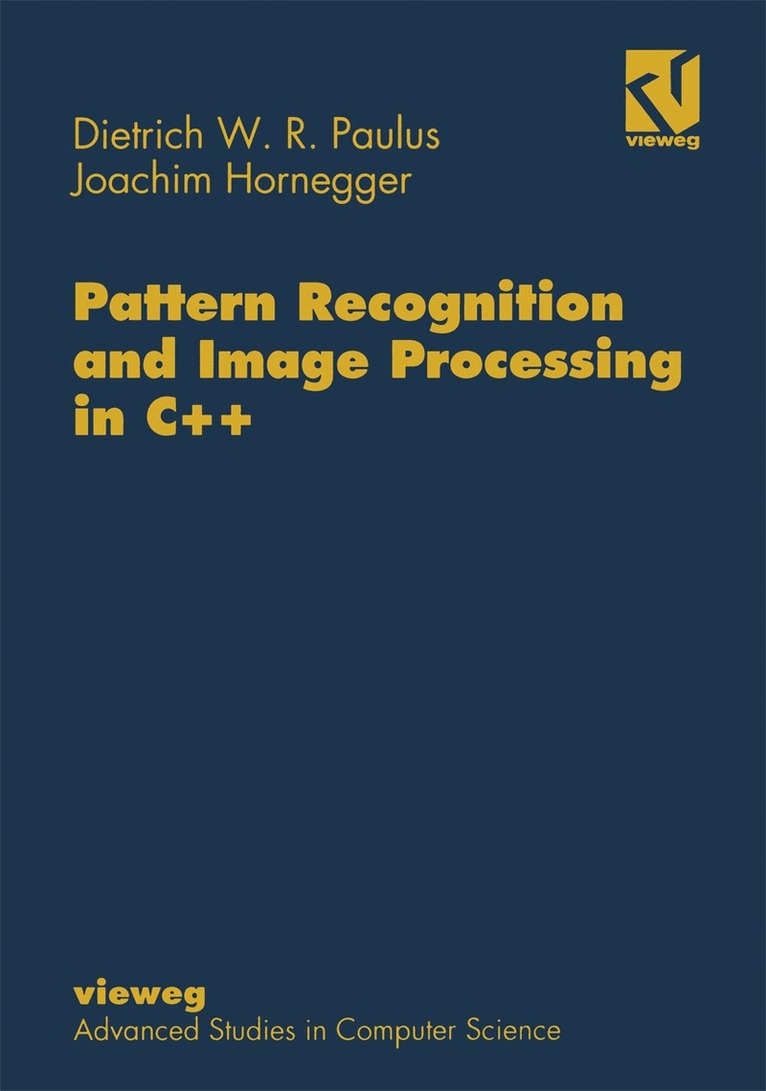
Häftad, Engelska, 1995
1 329 kr
Skickas inom 5-8 vardagar
This work provides an instructive into applications and problems from the broad field of pattern recognition. It describes basic topics and the required mathematical background of image and speech processing. Algorithms and data structures for filtering, feature extraction, segmentation and classification are discussed, introducing and demonstrating different C++ concepts. The practice of object-oriented programming is illustrated by a step-wise development of a complete class library for image processing.
Häftad, Engelska, 1997
561 kr
Skickas inom 10-15 vardagar
Häftad, Engelska, 2008
561 kr
Skickas inom 10-15 vardagar
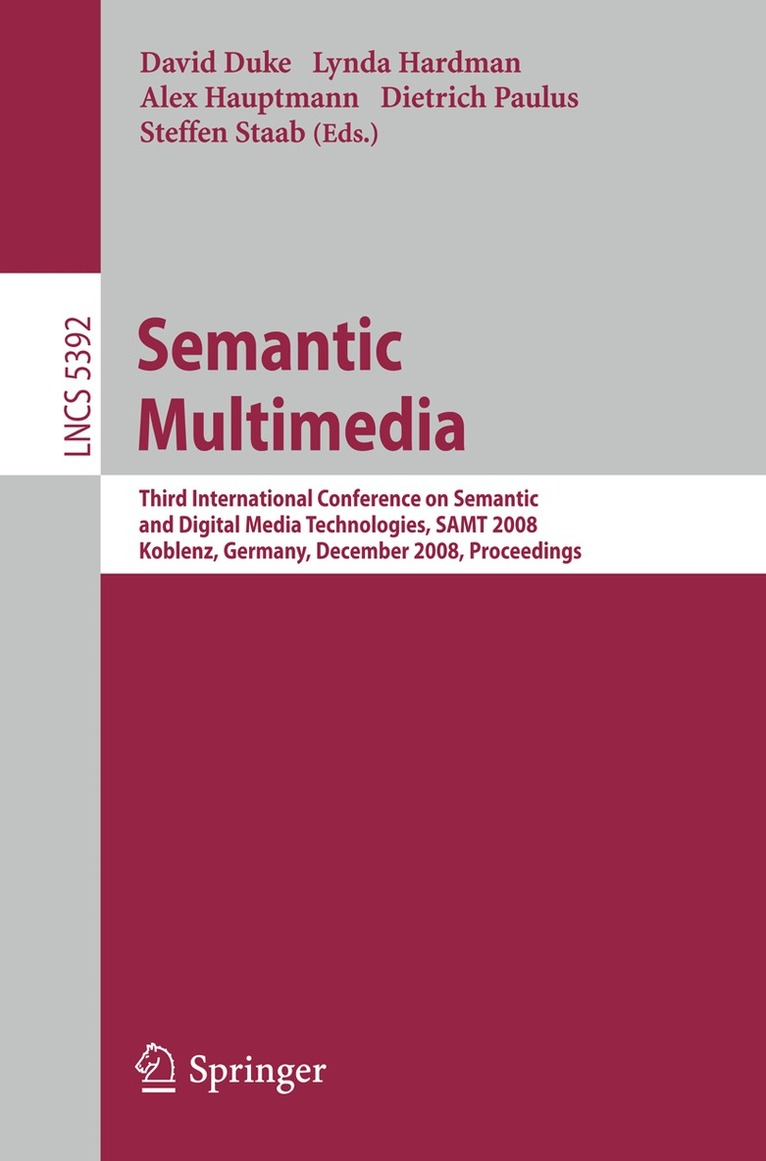
WearepleasedtowelcomeyoutotheproceedingsoftheThirdInternationalC- ference onSemantic andDigital Media Technologiesheld inKoblenz,Germany. The SAMT agenda brings together researchers at extreme ends of the - mantic multimedia spectrum. At one end, the Semantic Web and its supporting technologies are becoming established in both the open data environment and within specialist domains, such as corporate intranet search, e-Science (parti- larly life sciences), and cultural heritage. To facilitate the world-wide sharing of media, W3C is developing standard ways of denoting fragments of audio/visual content and of specifying and associating semantics with these. At the other end of the spectrum, media analysis tools continue to grow in sophistication, identifying features that can then be associated with explicit semantics, be they expressed formally or informally, using proprietary formats or open standards. Recent progress at these two fronts of the SAMT spectrum means that research spanningthesemanticgapisnowofvitalimportancetofeedtherealapplications that are emerging. This conference also represents a step towards bridging the gap between the research cultures and their respective approaches at both ends of the spectrum. The papers selected show that SAMT is able to attract researchers from media analysis, who see the bene?ts that more explicit semantics can provide, as well as researchers from knowledge engineering who realize that, while a picture can be expressed as a thousand concepts, a million morearewaiting to be extracted.
E-bok
PDF, Engelska, 2008708 kr
Läs direkt efter köp
WearepleasedtowelcomeyoutotheproceedingsoftheThirdInternationalC- ference onSemantic andDigital Media Technologiesheld inKoblenz,Germany. The SAMT agenda brings together researchers at extreme ends of the - mantic multimedia spectrum. At one end, the Semantic Web and its supporting technologies are becoming established in both the open data environment and within specialist domains, such as corporate intranet search, e-Science (parti- larly life sciences), and cultural heritage. To facilitate the world-wide sharing of media, W3C is developing standard ways of denoting fragments of audio/visual content and of specifying and associating semantics with these. At the other end of the spectrum, media analysis tools continue to grow in sophistication, identifying features that can then be associated with explicit semantics, be they expressed formally or informally, using proprietary formats or open standards. Recent progress at these two fronts of the SAMT spectrum means that research spanningthesemanticgapisnowofvitalimportancetofeedtherealapplications that are emerging. This conference also represents a step towards bridging the gap between the research cultures and their respective approaches at both ends of the spectrum. The papers selected show that SAMT is able to attract researchers from media analysis, who see the bene?ts that more explicit semantics can provide, as well as researchers from knowledge engineering who realize that, while a picture can be expressed as a thousand concepts, a million morearewaiting to be extracted.
E-bok
PDF, Engelska, 2019708 kr
Läs direkt efter köp