Dikaios Sakellariou – författare
650 kr
Skickas inom 10-15 vardagar
490 kr
Skickas inom 10-15 vardagar
This challenging and innovative book explores the political aspects of occupational therapy. It looks at how practitioners may develop political awareness in order to aid community development. A Political Practice of Occupational Therapy is about maximizing the potential impact of occupational therapists' engagements and ensuring the profession is working towards the contruction of a civic society. It is supported by twelve chapters of practice examples from the UK, US, Georgia and Australia, as well as a history of the profession as an agency for social change.
It asks:
How is it possible to introduce the political into a profession that is linked to health and social care? What form could political practice take, and how could the political components of practice be analyzed and evaluated?It includes significant theoretical chapters on gender, class and sexuality, challenges to holism, occupational literacy, and a discussion of political competence. This book will be of particular use for students exploring community and emerging role settings, client centred practice, occupational and social justice and the theoretical base of the profession.
From an editorial team that is widely recognized for their challenges to traditional thought and practice in occupational therapy, this book will be of value not just to occupational therapists but also those employed in health profession management and development, and community based rehabilitation.
676 kr
Skickas inom 5-8 vardagar
676 kr
Skickas inom 5-8 vardagar
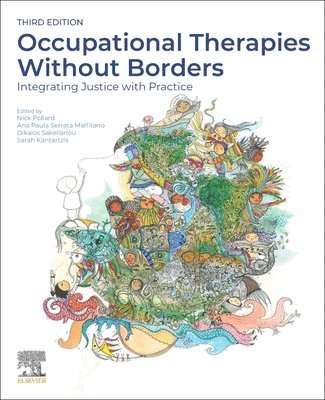
The new edition of this landmark international work builds on the previous two volumes, offering a window onto occupational therapy practice, theory and ideas in different cultures and geographies. It emphasizes the importance of critically deconstructing and engaging with the broader context of occupation, particularly around how occupational injustices are shaped through political, economic and historical factors.Centering on the wider social and political aspects of occupation and occupation-based practices, this textbook aims to inspire occupational therapy students and practitioners to include transformational elements into their practice. It also illustrates how occupational therapists from all over the world can affect positive changes by engaging with political and historical contexts.Divided into six sections, the new edition begins by analyzing the key concepts outlined throughout, along with an overview on the importance and practicalities of monitoring and evaluation in community projects. Section Two explores occupation and justice emphasizing that issues of occupational injustice are present everywhere, in different forms: from clinical settings to community-based rehabilitation. Section Three covers the enactment of different Occupational Therapies with a focus on the multiplicity of occupational therapy from the intimately personal to the broadly political. Section Four engages with the broader context of occupational therapy from the political to the financial. The chapters in this section highlight the recent financial crisis and the impact it has had on people’s everyday life. Section Five collects a range of different approaches to working to enable a notion of occupational justice. Featuring chapters from across the globe, Section Six concludes by highlighting the importance and diversity of educational practices.
566 kr
Läs direkt efter köp
POLITICS OF OCCUPATION-CENTRED PRACTICE Reflections on occupational engagement across cultures
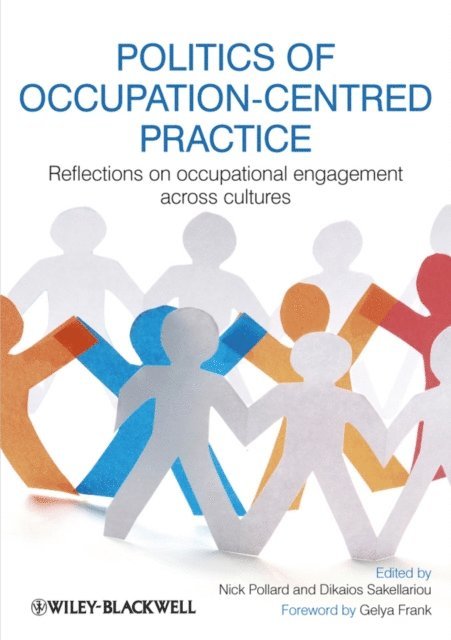
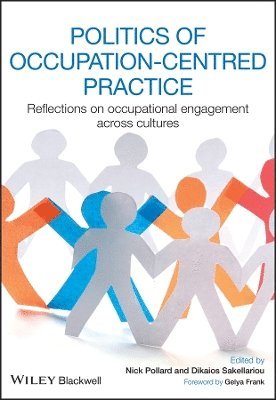
Politics of Occupation-Centred Practice: Reflections on occupational engagement across cultures addresses the cultural aspects of occupational identity and draws out the implications for practice, moving beyond the clinical environment to include the occupational therapist’s work in the wider community.
It explores the development of individual occupational narratives, community traditions and their roots in everyday experiences, offering a range of examples from distinctive populations to demonstrate approaches to forming sustainable occupational engagements. Chapters span such key areas as ‘Experiences of Disaster’, ‘Social Inclusion’, ‘Disability and Participation’, and ‘Sexuality, Disability Cultures and Occupation’.
This cutting-edge text, coordinated by two distinguished researchers and educators in the global field of occupational therapy and science, is designed to meet the needs of students studying the conceptual foundations of occupational therapy, occupational science, role emerging practice, occupational justice, community development and community-based rehabilitation. The book will also be of interest to academics and practitioners exploring new practice contexts created by the drive to address the diversity and inclusion agenda.
566 kr
Läs direkt efter köp
POLITICS OF OCCUPATION-CENTRED PRACTICE Reflections on occupational engagement across cultures
Politics of Occupation-Centred Practice: Reflections on occupational engagement across cultures addresses the cultural aspects of occupational identity and draws out the implications for practice, moving beyond the clinical environment to include the occupational therapist’s work in the wider community.
It explores the development of individual occupational narratives, community traditions and their roots in everyday experiences, offering a range of examples from distinctive populations to demonstrate approaches to forming sustainable occupational engagements. Chapters span such key areas as ‘Experiences of Disaster’, ‘Social Inclusion’, ‘Disability and Participation’, and ‘Sexuality, Disability Cultures and Occupation’.
This cutting-edge text, coordinated by two distinguished researchers and educators in the global field of occupational therapy and science, is designed to meet the needs of students studying the conceptual foundations of occupational therapy, occupational science, role emerging practice, occupational justice, community development and community-based rehabilitation. The book will also be of interest to academics and practitioners exploring new practice contexts created by the drive to address the diversity and inclusion agenda.
2 222 kr
Skickas inom 10-15 vardagar
730 kr
Läs direkt efter köp
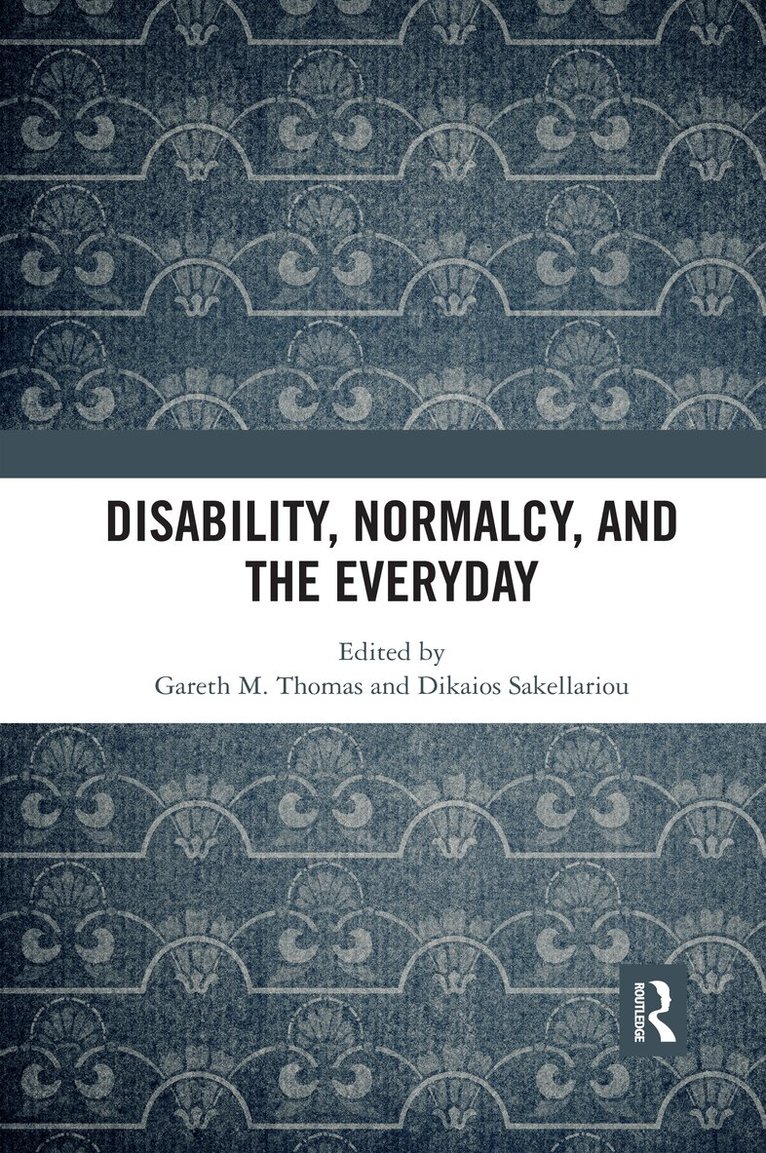
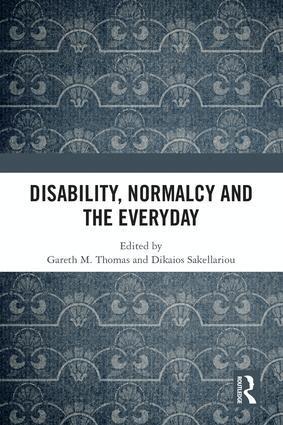
Many critical analyses of disability address important ‘macro’ concerns, but are often far removed from an interactional and micro-level focus. Written by leading scholars in the field, and containing a range of theoretical and empirical contributions from around the world, this book focuses on the taken-for-granted, mundane human activities at the heart of how social life is reproduced, and how this impacts on the lives of those with a disability, family members, and other allies.
It departs from earlier accounts by making sense of how disability is lived, mobilised, and enacted in everyday lives. Although broad in focus and navigating diverse social contexts, chapters are united by a concern with foregrounding micro, mundane moments for making sense of powerful discourses, practices, affects, relations, and world-making for disabled people and their allies. Using different examples – including learning disabilities, cerebral palsy, dementia, polio, and Parkinson’s disease – contributions move beyond a simplified narrow classification of disability which creates rigid categories of existence and denies bodily variation.
Disability, Normalcy, and the Everyday should be considered essential reading for disability studies students and academics, as well as professionals involved in health and social care. With contributions located within new and familiar debates around embodiment, stigma, gender, identity, inequality, care, ethics, choice, materiality, youth, and representation, this book will be of interest to academics from different disciplinary backgrounds including sociology, anthropology, humanities, public health, allied health professions, science and technology studies, social work, and social policy.
730 kr
Läs direkt efter köp
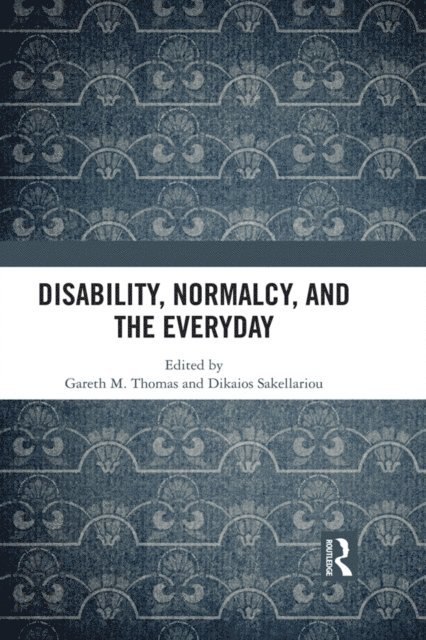
Many critical analyses of disability address important ‘macro’ concerns, but are often far removed from an interactional and micro-level focus. Written by leading scholars in the field, and containing a range of theoretical and empirical contributions from around the world, this book focuses on the taken-for-granted, mundane human activities at the heart of how social life is reproduced, and how this impacts on the lives of those with a disability, family members, and other allies.
It departs from earlier accounts by making sense of how disability is lived, mobilised, and enacted in everyday lives. Although broad in focus and navigating diverse social contexts, chapters are united by a concern with foregrounding micro, mundane moments for making sense of powerful discourses, practices, affects, relations, and world-making for disabled people and their allies. Using different examples – including learning disabilities, cerebral palsy, dementia, polio, and Parkinson’s disease – contributions move beyond a simplified narrow classification of disability which creates rigid categories of existence and denies bodily variation.
Disability, Normalcy, and the Everyday should be considered essential reading for disability studies students and academics, as well as professionals involved in health and social care. With contributions located within new and familiar debates around embodiment, stigma, gender, identity, inequality, care, ethics, choice, materiality, youth, and representation, this book will be of interest to academics from different disciplinary backgrounds including sociology, anthropology, humanities, public health, allied health professions, science and technology studies, social work, and social policy.
506 kr
Skickas inom 5-8 vardagar