Dimitrios Konstadakopulos - Böcker
Visar alla böcker från författaren Dimitrios Konstadakopulos. Handla med fri frakt och snabb leverans.
4 produkter
4 produkter
2 759 kr
Skickas inom 5-8 vardagar
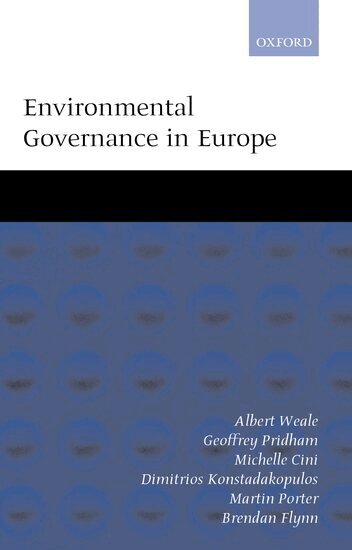
Over the last thirty years, the European Union has created a system of environmental governance in Europe. With a large number of legislative measures, the EU's environmental policy is broad in scope, extensive in detail and often stringent in effect. Environmental governance also extends to the ways in which decision making on environmental policy has become institutionalized within Europe, both at the level of the EU itself and in the practices of the member states. This work seeks to understand this new system of environmental governance both at the European level and at the level of member states. It argues that the system is multi-level, horizontally complex, evolving and incomplete. Locating developments at the European level in theories of European integration, it goes on to examine the extent of convergence and divergence in environmental policy among six member states: Germany, Spain, Greece, Italy, the Netherlands, and the UK. It then looks at the operation of the system of environmental governance through an examination of policy case studies before examining the wider political significance of these developments.
872 kr
Skickas inom 3-6 vardagar
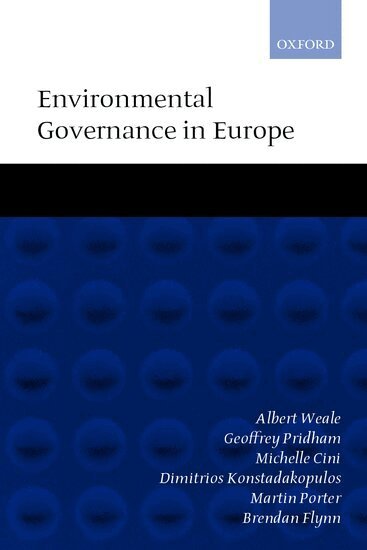
Over the last thirty years, the European Union has created a system of environmental governance in Europe. With a large number of legislative measures, the EU's environmental policy is broad in scope, extensive in detail and often stringent in effect. Environmental governance also extends to the ways in which decision making on environmental policy has become institutionalized within Europe, both at the level of the EU itself and in the practices of the member states.This work seeks to understand this new system of environmental governance both at the European level and at the level of member states. It argues that the system is multi-level, horizontally complex, evolving and incomplete. Locating developments at the European level in theories of European integration, it goes on to examine the extent of convergence and divergence in environmental policy among six member states: Germany, Spain, Greece, Italy, the Netherlands, and the UK. It then looks at the operation of the system of environmental governance through an examination of policy case studies before examining the wider political significance of these developments.
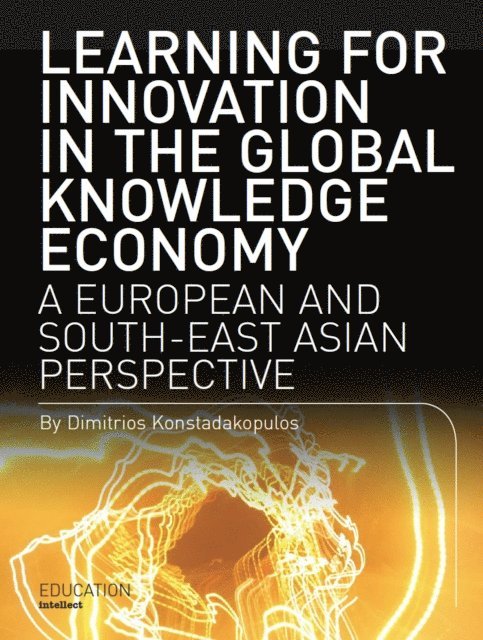
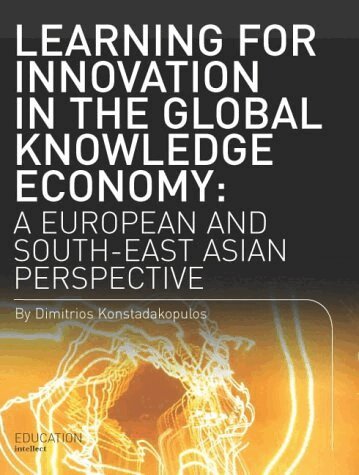
Learning for Innovation in the Global Knowledge Economy
A European and Southeast Asian Perspective
Häftad, Engelska, 2004
295 kr
Tillfälligt slut
This book is a major step forward in understanding the learning behaviour of clustered technology-intensive small and medium-sized enterprises (SMEs). Drawing upon qualitative and quantitative research methods and sampling techniques, it identifies how learning for innovation is stimulated or inhibited. An informative, challenging and comprehensive empirical study and analysis, this book will be useful to scholars and students of regional development, European and Asian relations, development economics, and management studies. It will also be a valuable reference to decision-makers, policy analysts and international businessmen seeking to understand how the process of learning and acquisition of knowledge could improve the innovative performance, growth and competitiveness of firms in which they are located.
Del 11 - Byzantine and Neohellenic Studies
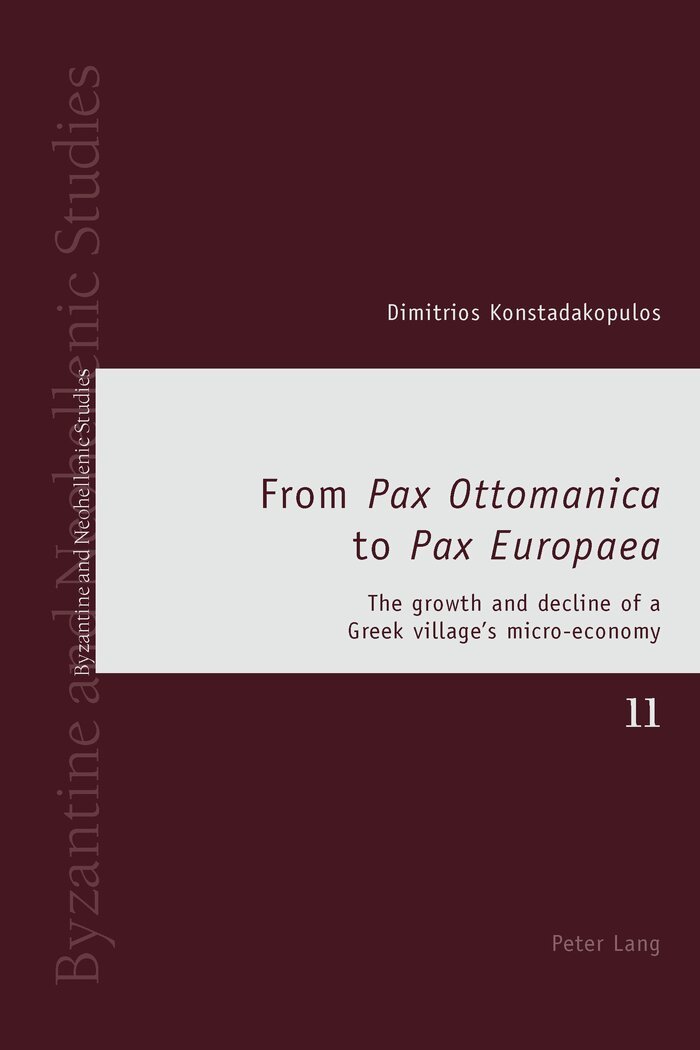
From «Pax Ottomanica» to «Pax Europaea»
The growth and decline of a Greek village’s micro-economy
Häftad, Engelska, 2014
1 007 kr
Skickas inom 5-8 vardagar
The macroeconomic development of south-eastern Europe has been profoundly affected not only by the region’s major historical events – for example, liberation from the Ottoman Empire, the outbreak of civil wars, and the birth of new nations – but also by global events, such as the world-wide conflicts of the twentieth century, and the recent transnational processes of globalisation and European integration. The rationale of this book is to employ a comprehensive micro-history – that is, the history of one particular community: in this case, the village of Tsamantas, in north-western Greece – as a means of providing a detailed picture that will permit extrapolation to a wider context. Situated in one of the most isolated parts of the region of Epirus, Tsamantas has a complex history and a rich folk culture. At times, it has been a textbook example of how decision-making within a community can impact upon the success of the local economy. Its inhabitants have been rational problem-solvers, with a sense of what is in their family’s best interests, rather than passive victims of circumstance, and their choices at critical points in the village’s history have resulted either in growth or decline. The author focuses his groundbreaking analysis on these choices, drawing upon publications, archived materials, and illuminating oral accounts of local events.