Dimitros Tzovaras – författare
Visar alla böcker från författaren Dimitros Tzovaras. Handla med fri frakt och snabb leverans.
4 produkter
4 produkter
1 637 kr
Skickas inom 10-15 vardagar
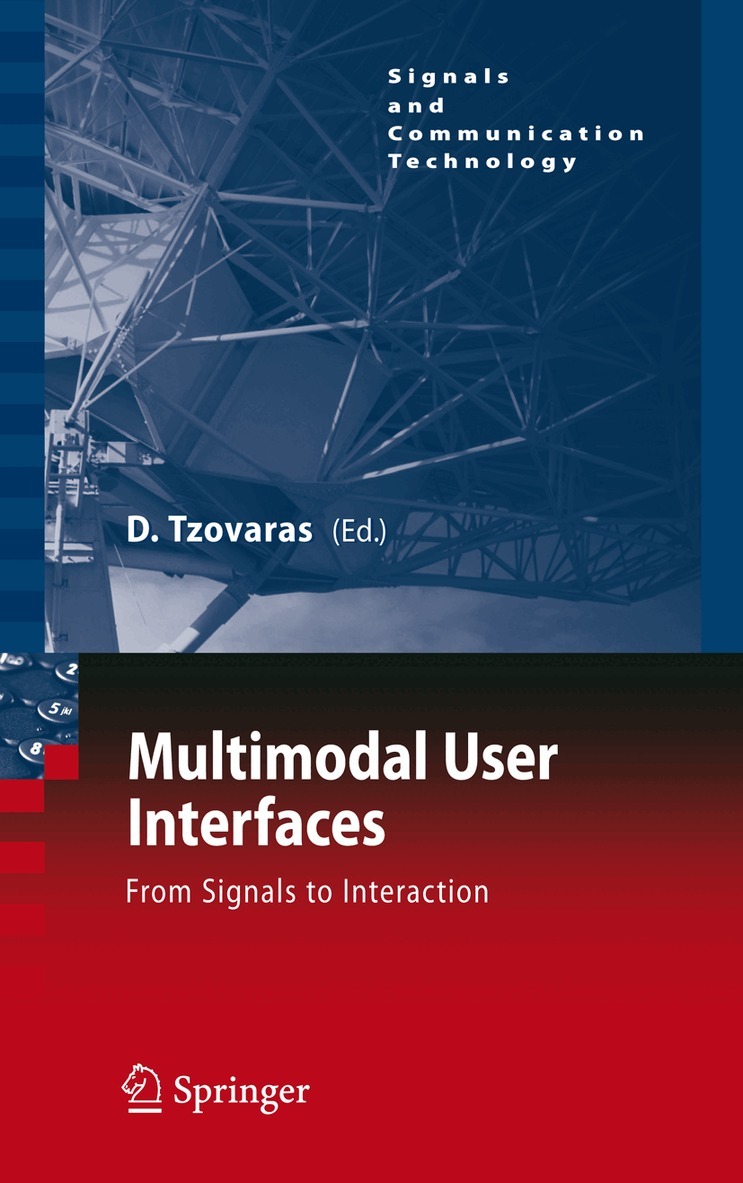
tionship indicates how multimodal medical image processing can be unified to a large extent, e. g. multi-channel segmentation and image registration, and extend information theoretic registration to other features than image intensities. The framework is not at all restricted to medical images though and this is illustrated by applying it to multimedia sequences as well. In Chapter 4, the main results from the developments in plastic UIs and mul- modal UIs are brought together using a theoretic and conceptual perspective as a unifying approach. It is aimed at defining models useful to support UI plasticity by relying on multimodality, at introducing and discussing basic principles that can drive the development of such UIs, and at describing some techniques as proof-of-concept of the aforementioned models and principles. In Chapter 4, the authors introduce running examples that serve as illustration throughout the d- cussion of the use of multimodality to support plasticity.
1 589 kr
Skickas inom 10-15 vardagar
tionship indicates how multimodal medical image processing can be unified to a large extent, e. g. multi-channel segmentation and image registration, and extend information theoretic registration to other features than image intensities. The framework is not at all restricted to medical images though and this is illustrated by applying it to multimedia sequences as well. In Chapter 4, the main results from the developments in plastic UIs and mul- modal UIs are brought together using a theoretic and conceptual perspective as a unifying approach. It is aimed at defining models useful to support UI plasticity by relying on multimodality, at introducing and discussing basic principles that can drive the development of such UIs, and at describing some techniques as proof-of-concept of the aforementioned models and principles. In Chapter 4, the authors introduce running examples that serve as illustration throughout the d- cussion of the use of multimodality to support plasticity.
1 062 kr
Skickas inom 10-15 vardagar
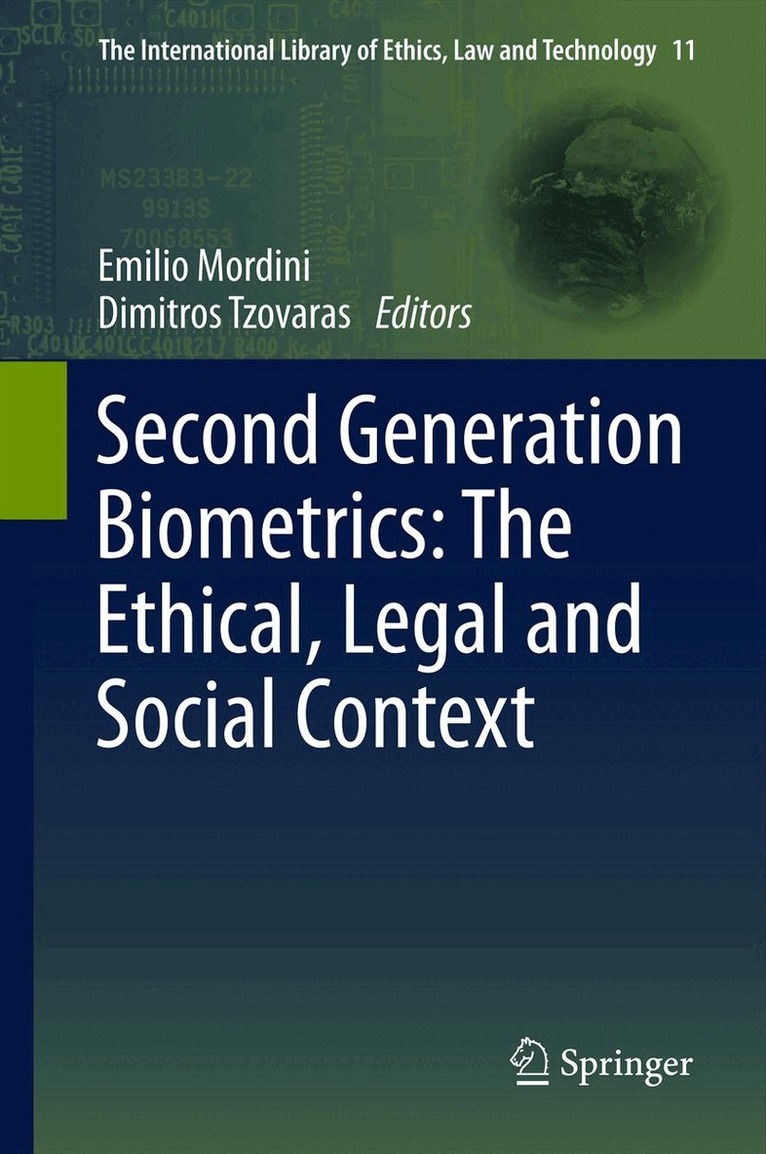
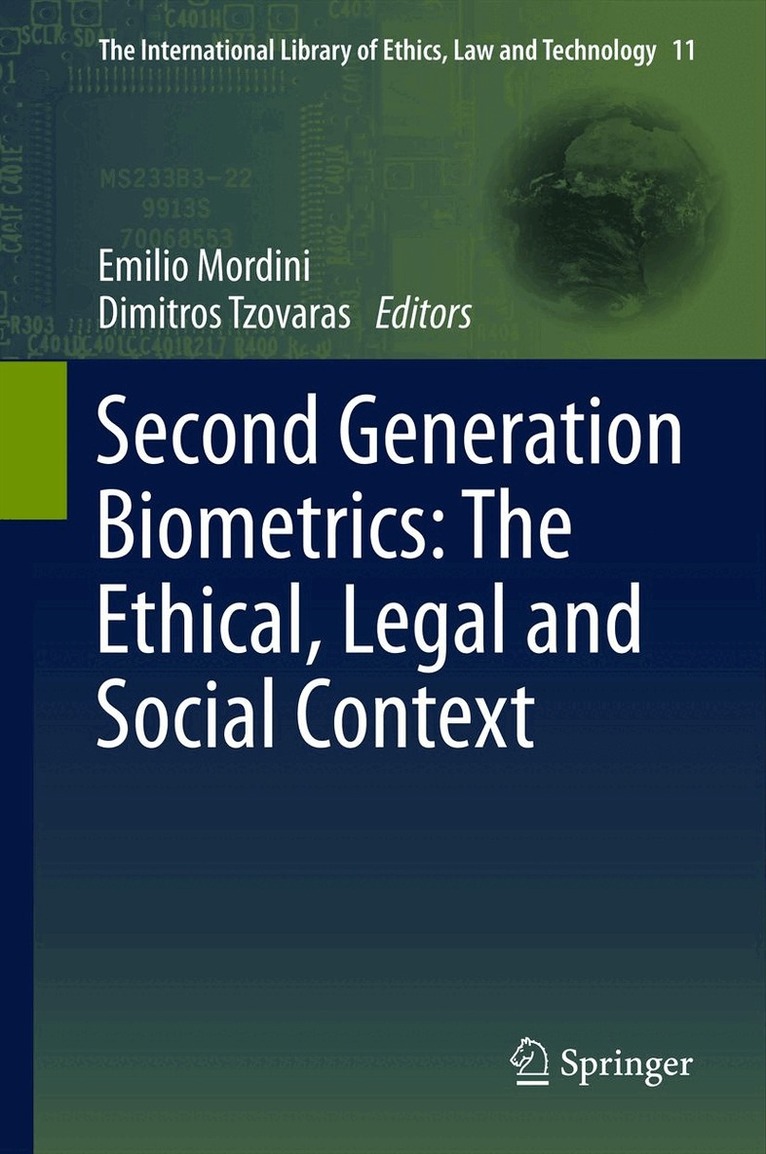
While a sharp debate is emerging about whether conventional biometric technology offers society any significant advantages over other forms of identification, and whether it constitutes a threat to privacy, technology is rapidly progressing. Politicians and the public are still discussing fingerprinting and iris scan, while scientists and engineers are already testing futuristic solutions. Second generation biometrics - which include multimodal biometrics, behavioural biometrics, dynamic face recognition, EEG and ECG biometrics, remote iris recognition, and other, still more astonishing, applications – is a reality which promises to overturn any current ethical standard about human identification. Robots which recognise their masters, CCTV which detects intentions, voice responders which analyse emotions: these are only a few applications in progress to be developed.This book is the first ever published on ethical, social and privacy implications of second generation biometrics. Authors include both distinguished scientists in the biometric field and prominent ethical, privacy and social scholars. This makes this book an invaluable tool for policy makers, technologists, social scientists, privacy authorities involved in biometric policy setting. Moreover it is a precious instrument to update scholars from different disciplines who are interested in biometrics and its wider social, ethical and political implications.
1 062 kr
Skickas inom 10-15 vardagar
While a sharp debate is emerging about whether conventional biometric technology offers society any significant advantages over other forms of identification, and whether it constitutes a threat to privacy, technology is rapidly progressing. Politicians and the public are still discussing fingerprinting and iris scan, while scientists and engineers are already testing futuristic solutions. Second generation biometrics - which include multimodal biometrics, behavioural biometrics, dynamic face recognition, EEG and ECG biometrics, remote iris recognition, and other, still more astonishing, applications – is a reality which promises to overturn any current ethical standard about human identification. Robots which recognise their masters, CCTV which detects intentions, voice responders which analyse emotions: these are only a few applications in progress to be developed.This book is the first ever published on ethical, social and privacy implications of second generation biometrics. Authors include both distinguished scientists in the biometric field and prominent ethical, privacy and social scholars. This makes this book an invaluable tool for policy makers, technologists, social scientists, privacy authorities involved in biometric policy setting. Moreover it is a precious instrument to update scholars from different disciplines who are interested in biometrics and its wider social, ethical and political implications.