Ding Lu - Böcker
Visar alla böcker från författaren Ding Lu. Handla med fri frakt och snabb leverans.
8 produkter
8 produkter
513 kr
Skickas inom 10-15 vardagar
This title was first published in 2003. This book represents one of the recent internationally coordinated initiatives to access the rich and still unfolding implications of China's participation in economic globalization in the context of the nation's accession to the World Trade Organization.
1 900 kr
Skickas inom 10-15 vardagar
This title was first published in 2003. This book represents one of the recent internationally coordinated initiatives to access the rich and still unfolding implications of China's participation in economic globalization in the context of the nation's accession to the World Trade Organization.
1 687 kr
Skickas inom 7-10 vardagar
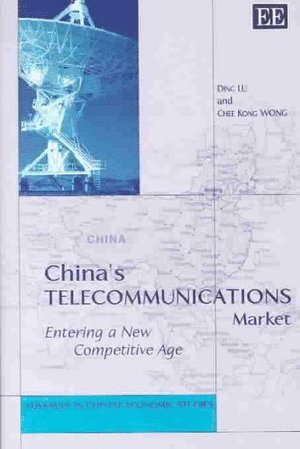
Before the 1990s, China's telecommunications sector was a lacklustre monopoly featured by poor-quality service and inadequate capacity. Today the country boasts a dynamic telecommunications industry with the world's largest communications network and user-base with over 460 million telephone subscribers. China's accession to the WTO in 2001 has opened this huge developing telecommunications market to foreign participation and investment.The authors examine the singularity of the Chinese experience in building up its extensive telecommunications network in merely a decade, by reviewing China's national industrial policies and institutional reforms within the industry. The reader will find in this volume a unique and in-depth analysis of the interplay between political and economic forces amidst the industry's structural overhaul and regulatory reforms. The accounts of industrial features and market conditions are enriched with up-to-date data, which are extremely useful for appreciating the development and prospects for this fast-growing market, set against the backdrop of China's accession to the WTO.Scholars of China or Asian studies and researchers of information-communications industry and Asian/China studies will find this work of great interest, as will governmental policymakers, both in China and beyond. For foreign business practitioners eyeing this market, this volume provides a helpful guide to understand China's various interests and public welfare considerations that motivate changes in policies towards foreign investment and participation.
1 686 kr
Skickas inom 7-10 vardagar
With a population of 1.2 billion and nearly two decades of spectacular growth, China promises to become one of the world's largest economic powers and consumer markets in the next century. A salient feature of the contemporary Chinese economy is the significance of state intervention toward business in the form of 'preferential policies'. Thanks to these policies, a firm's location, ownership type and area of business largely determine whether it should receive privileges of disadvantages in the regulated business environment. The fast changing preferential policies have had great influence on a wide range of economic activities, including foreign direct investment. The extent, complexity and variety of these policies are bewildering to both investors and academics who study the Chinese economy.State Intervention and Business in China is a systematic study of China's preferential economic policies. Dr Lu and Dr Tang present these policies in three categories, namely, the investor-oriented, the region-oriented, and the industry-oriented policies. The authors give a clear account of policies including: preferential tax rates, state bank loans, trade protection and subsidies, and licensing schemes. The book provides the in-depth political economy analyses that reveal the sources and functions of these policies. By offering empirical observations on the impact of state intervention on regional development and economic structures, this book sheds new light on the prospects for China's economic policy making.State Intervention and Business in China will be indispensably for scholars and specialists who are interested in contemporary Chinese economy and society. It is also a valuable guide for doing business in China.
2 677 kr
Tillfälligt slut
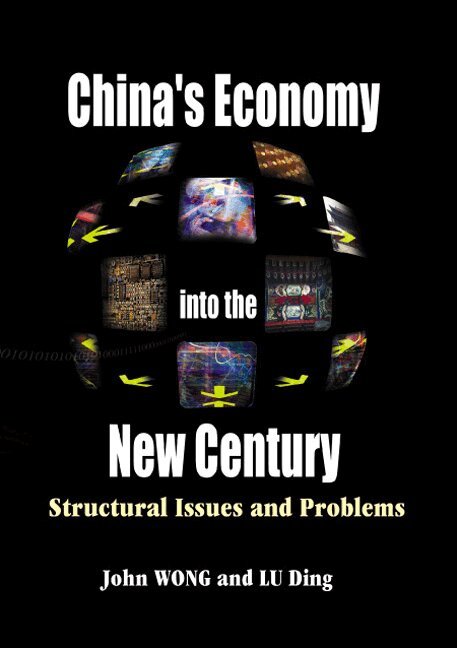
In the last two decades of the 20th century, China stood out as the world's star performer in economic growth, thanks to the market-oriented reform that started in 1978. At the turn of the century, the Chinese economy faces a series of challenges to sustain its growth and stability. The two-decade-long rapid growth has effectively strengthened China's economic power and raised its people's standard of living. It has also transformed China from a centrally planned command economy into a “socialist market economy”, which operates increasingly in line with capitalist norms. Major structural problems, however, remain and are growing acute. Weakness in the fiscal system breeds rent seeking at the local level and causes tension in the state budget. The flawed financial institutions and the biased ownership structure continue to distort resource allocation and cause huge efficiency losses. Inter-provincial and inter-regional disparity is reaching a level that threatens national unity and social stability. As China joins the World Trade Organization and becomes more integrated into the world economy, it urgently needs to improve the domestic business environment and to beef up indigenous industries for foreign competition.This volume is a collection of papers written by scholars at the East Asian Institute to address those problems during the period 1999-2001. The authors, with their knowledge and experience in China studies, provide in-depth observations and professional analyses of some of the most important issues for the Chinese economy at the turn of the century. Some of the observations and analyses lead to enlightening policy recommendations. The solid scholarship combined with the policy orientation of these papers will appeal greatly to researchers in academia, governments and other institutions. The policy-oriented and fact-based analyses will also be of interest to practitioners in business, including business consultants.
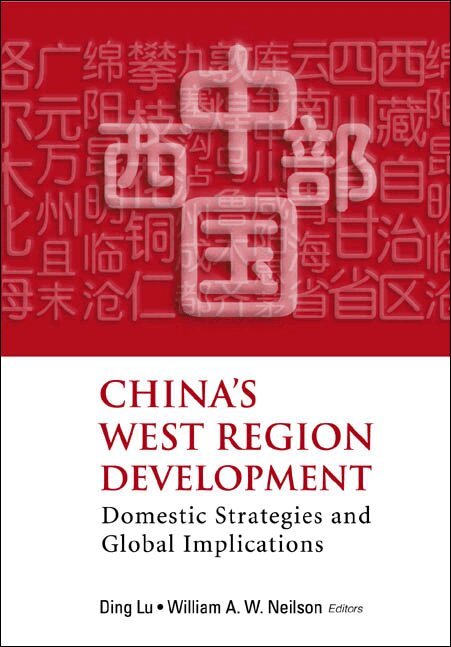
China's West Region Development: Domestic Strategies And Global Implications
Inbunden, Engelska, 2004
2 501 kr
Tillfälligt slut
In the last two decades, China's western inland region has largely been left out of the nation's economic boom. While its 355-million population accounts for 28% and its land area for 71% of China's total, the region's share of the national GDP is under 20%. Since 1999, Beijing has implemented the West China Development Program to boost the region's growth. To study the major domestic issues and the global implications of this program, the University of Victoria's Centre for Asia-Pacific Initiatives organized and hosted a multidisciplinary international conference on March 6-8, 2003. This volume of papers presented at the conference offers perspectives on the issues by leading experts of diversified academic disciplines from China, Canada, the US, and other countries.
829 kr
Skickas inom 5-8 vardagar
As China rises to become the world's largest economy, half a billion rural villagers are expected to become urban residents in the coming decades. The great urbanization of the world's most populated country is sure to be one of the most far-reaching social-economic events in the 21st century. This book provides a clear and comprehensive review of this unfolding event. It presents not only the evolution of public policies and institutional reforms regarding urban development over the past decades, but also an up-to-date survey and in-depth analysis of contemporary social-economic forces that define and contribute to the process of urbanization. Individuals interested in understanding China's urban development will find this book useful, informative, and fascinating.
2 089 kr
Skickas inom 3-6 vardagar
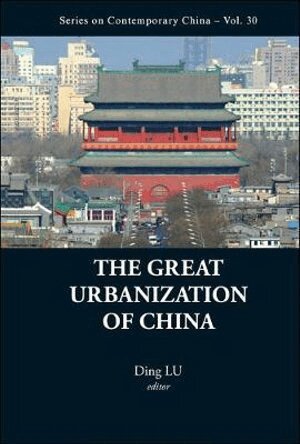
As China rises to become the world's largest economy, half a billion rural villagers are expected to become urban residents in the coming decades. The great urbanization of the world's most populated country is sure to be one of the most far-reaching social-economic events in the 21st century. This book provides a clear and comprehensive review of this unfolding event. It presents not only the evolution of public policies and institutional reforms regarding urban development over the past decades, but also an up-to-date survey and in-depth analysis of contemporary social-economic forces that define and contribute to the process of urbanization. Individuals interested in understanding China's urban development will find this book useful, informative, and fascinating.