Dinh-Toi Chu – författare
Visar alla böcker från författaren Dinh-Toi Chu. Handla med fri frakt och snabb leverans.
4 produkter
4 produkter
Del 203 - Progress in Molecular Biology and Translational Science
RNA Therapeutics Part A
Inbunden, Engelska, 2024
1 946 kr
Skickas inom 10-15 vardagar
RNA Therapeutics, Part A, Volume 203 presents the latest on a new class of medication based on RNA molecules. The book includes timely chapters that focus on An introduction to RNA therapeutics and potentials, The development and technologies of RNA therapeutics, Types of RNA therapeutics, Molecular mechanisms of RNA therapeutics, IT, and AI applications in RNA therapeutics, The application of data sciences and bioinformatics in RNA therapeutics, RNA therapeutics history and future perspectives, Recent applications of RNA therapeutic in clinics, Advantages and disadvantages of RNA therapeutics, RNA therapeutics for neurological disease, RNA therapeutics for metabolic disorders, and RNA therapeutics for metabolic disorders.Discusses the history of RNA therapeutics, along with future perspectivesPresents the processes of RNA therapeutical developmentsCovers recent applications of RNA therapeutics in clinicsProvides the advantages and disadvantages of RNA therapeutics
Inbunden, Engelska, 2023
2 226 kr
Skickas inom 10-15 vardagar
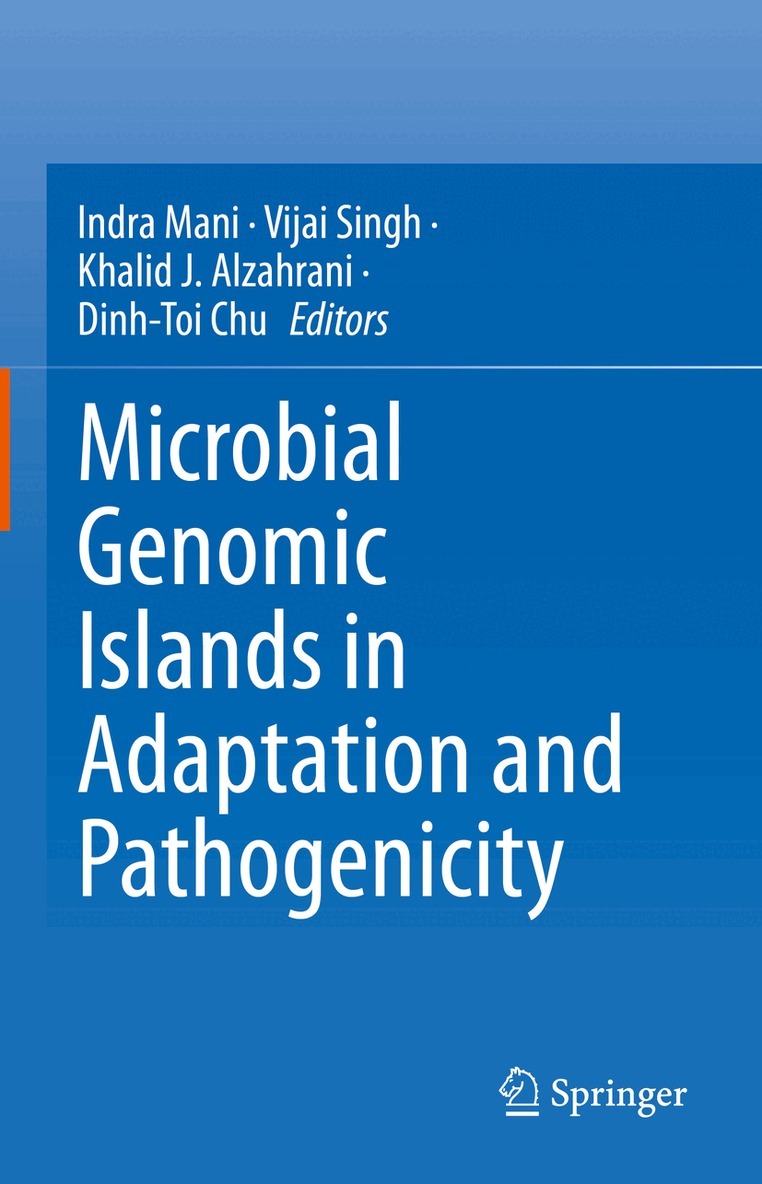
This book elucidates the role of microbial genomic islands (GEIs) in genome stability, plasticity, evolutionary adaptation, and pathogenicity in the bacterial population. The initial chapters of the book present tools, including bioinformatics, artificial intelligence, machine learning, next-generation sequencing, and molecular biology techniques, for the analysis of the genomic islands. The book also discusses the importance of genomic islands in bacterial speciation, acquisition of genes related to resistome, nitrogen fixation, mobilomes, and nutritional fitness and adaptation. It provides recent advances in understanding microbial genomic islands' distribution, evolution, and mechanistic modes of behavior in pathogenic, non-pathogenic, and environmental species. This book is a valuable source for beginners in molecular microbiology, students, researchers, clinicians, stakeholders, and policymakers interested in understanding the role of GEIs in the adaptive evolution of microorganisms.
E-bok
Engelska, 20232 933 kr
Läs direkt efter köp
This book elucidates the role of microbial genomic islands (GEIs) in genome stability, plasticity, evolutionary adaptation, and pathogenicity in the bacterial population. The initial chapters of the book present tools, including bioinformatics, artificial intelligence, machine learning, next-generation sequencing, and molecular biology techniques, for the analysis of the genomic islands. The book also discusses the importance of genomic islands in bacterial speciation, acquisition of genes related to resistome, nitrogen fixation, mobilomes, and nutritional fitness and adaptation. It provides recent advances in understanding microbial genomic islands'' distribution, evolution, and mechanistic modes of behavior in pathogenic, non-pathogenic, and environmental species. This book is a valuable source for beginners in molecular microbiology, students, researchers, clinicians, stakeholders, and policymakers interested in understanding the role of GEIs in the adaptive evolution of microorganisms.
Häftad, Engelska, 2024
2 226 kr
Skickas inom 10-15 vardagar
This book elucidates the role of microbial genomic islands (GEIs) in genome stability, plasticity, evolutionary adaptation, and pathogenicity in the bacterial population. The initial chapters of the book present tools, including bioinformatics, artificial intelligence, machine learning, next-generation sequencing, and molecular biology techniques, for the analysis of the genomic islands. The book also discusses the importance of genomic islands in bacterial speciation, acquisition of genes related to resistome, nitrogen fixation, mobilomes, and nutritional fitness and adaptation. It provides recent advances in understanding microbial genomic islands' distribution, evolution, and mechanistic modes of behavior in pathogenic, non-pathogenic, and environmental species. This book is a valuable source for beginners in molecular microbiology, students, researchers, clinicians, stakeholders, and policymakers interested in understanding the role of GEIs in the adaptive evolution of microorganisms.