Dirk C. Mattfeld - Böcker
Visar alla böcker från författaren Dirk C. Mattfeld. Handla med fri frakt och snabb leverans.
5 produkter
5 produkter
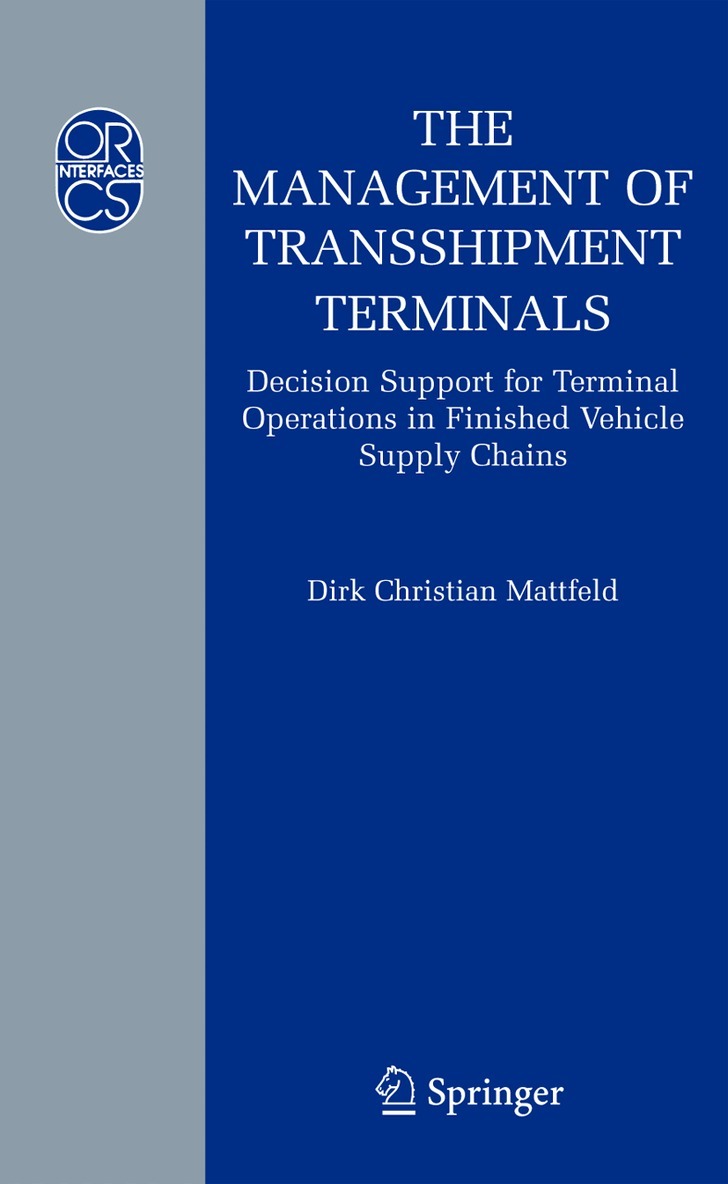
Management of Transshipment Terminals
Decision Support for Terminal Operations in Finished Vehicle Supply Chains
Inbunden, Engelska, 2006
1 099 kr
Skickas inom 10-15 vardagar
1.1 Freight Transshipment We observe an ongoing trend towards globalized industrial produc tion. Multinational companies aim at strategic competitive advantages by distributing their activities around the globe. As a result, the in dividual supply chains become longer and more complex. Next to the supply chain reliability, companies try to keep supply chains cost effi cient and responsive, i.e. warrant short order fulfillment lead times (Siirie and Wagner, 2005). The above goals dictate low inventory levels at the stages of a supply chain as well as a high frequency of transports between the partners involved. Supply Chain Requirements. Detailed performance measures for a supply chain are provided by the Supply Chain Operations Refer ence (SCOR) model (Supply-Chain Council, 2002). The SCOR model provides four levels with increasing detail of process modeling. In accor dance to the process detail depicted SCOR metrics are defined for each level. Level 1 distinguishes metrics addressing the reliability of supply chains, their responsiveness, flexibility, cost and optionally their assets. On levels 2-4 these metrics are operationalized with respect to the pro cess types source, make and deliver. Thus, as substantial activities of the deliver process, transport and transshipment are evaluated as an integral part of the supply chain.
Management of Transshipment Terminals
Decision Support for Terminal Operations in Finished Vehicle Supply Chains
Häftad, Engelska, 2010
1 385 kr
Skickas inom 10-15 vardagar
1.1 Freight Transshipment We observe an ongoing trend towards globalized industrial produc tion. Multinational companies aim at strategic competitive advantages by distributing their activities around the globe. As a result, the in dividual supply chains become longer and more complex. Next to the supply chain reliability, companies try to keep supply chains cost effi cient and responsive, i.e. warrant short order fulfillment lead times (Siirie and Wagner, 2005). The above goals dictate low inventory levels at the stages of a supply chain as well as a high frequency of transports between the partners involved. Supply Chain Requirements. Detailed performance measures for a supply chain are provided by the Supply Chain Operations Refer ence (SCOR) model (Supply-Chain Council, 2002). The SCOR model provides four levels with increasing detail of process modeling. In accor dance to the process detail depicted SCOR metrics are defined for each level. Level 1 distinguishes metrics addressing the reliability of supply chains, their responsiveness, flexibility, cost and optionally their assets. On levels 2-4 these metrics are operationalized with respect to the pro cess types source, make and deliver. Thus, as substantial activities of the deliver process, transport and transshipment are evaluated as an integral part of the supply chain.
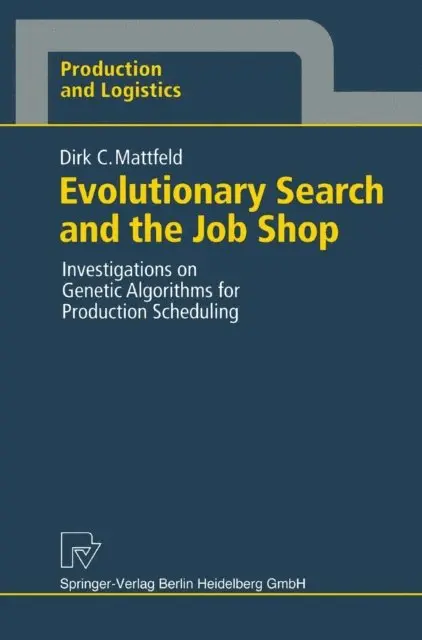
Evolutionary Search and the Job Shop
Investigations on Genetic Algorithms for Production Scheduling
Häftad, Engelska, 1996
537 kr
Skickas inom 10-15 vardagar
Production scheduling dictates highly constrained mathematical models with complex and often contradicting objectives. Evolutionary algorithms can be formulated almost independently of the detailed shaping of the problems under consideration. As one would expect, a weak formulation of the problem in the algorithm comes along with an inefficient search. This book discusses the suitability of genetic algorithms for production scheduling, and presents an approach which produces results comparable with those of more tailored optimization techniques.
1 624 kr
Skickas inom 10-15 vardagar
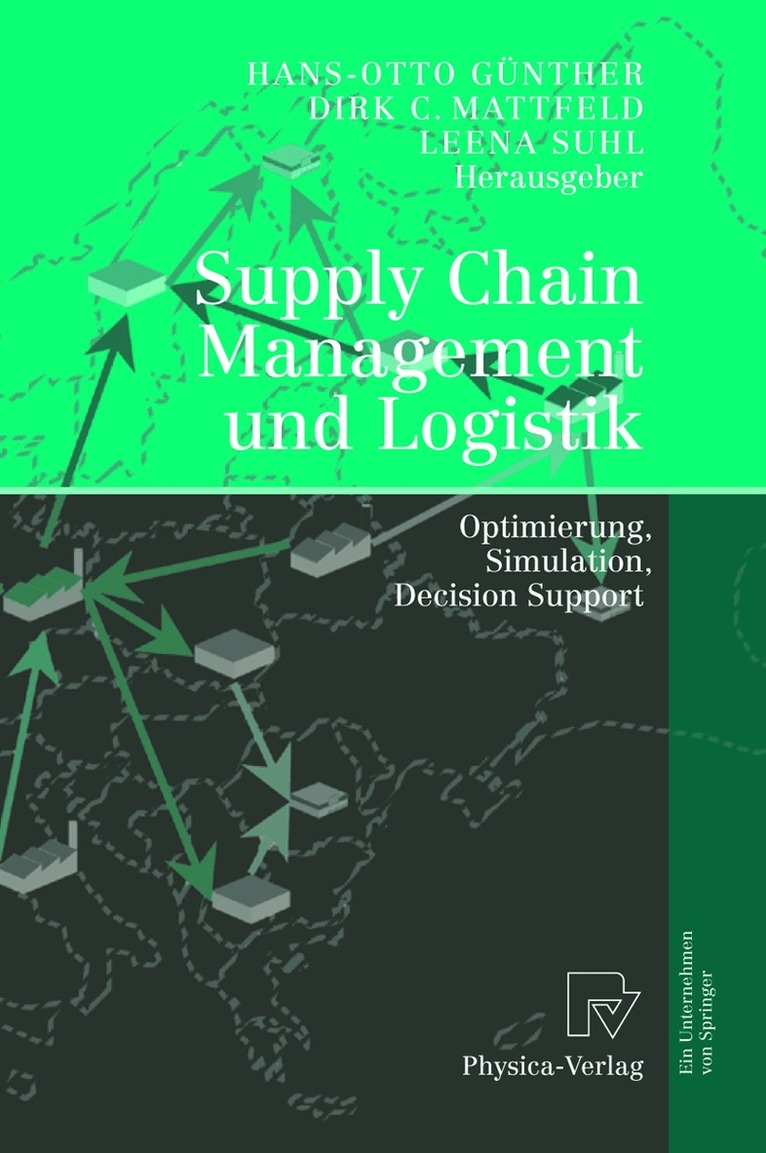
Innerhalb moderner Informations- und Kommunikationssysteme für Supply Chain Management und Logistik stehen heute erstmals große Mengen an digitalen, strukturierten Daten zur Verfügung. Diese bilden eine hervorragende Basis für den Einsatz quantitativer Methoden bei der Entscheidungsunterstützung. Durch State-of-the-Art-Technologien des Operations Research können heute sehr große Praxismodelle optimal gelöst und die Ergebnisse nahtlos in die Informations- und Kommunikationssysteme eines Unternehmens oder einer Lieferkette eingebunden werden. Darüber hinaus ist der Einsatz von Optimierungsverfahren heute nicht nur in der Planungsphase, sondern auch in der Ausführung möglich. Das Buch präsentiert Beispiele zur Nutzung quantitativer Methoden in Supply Chain Management und Logistik aus den Bereichen des Operations Research und der Wirtschaftsinformatik.
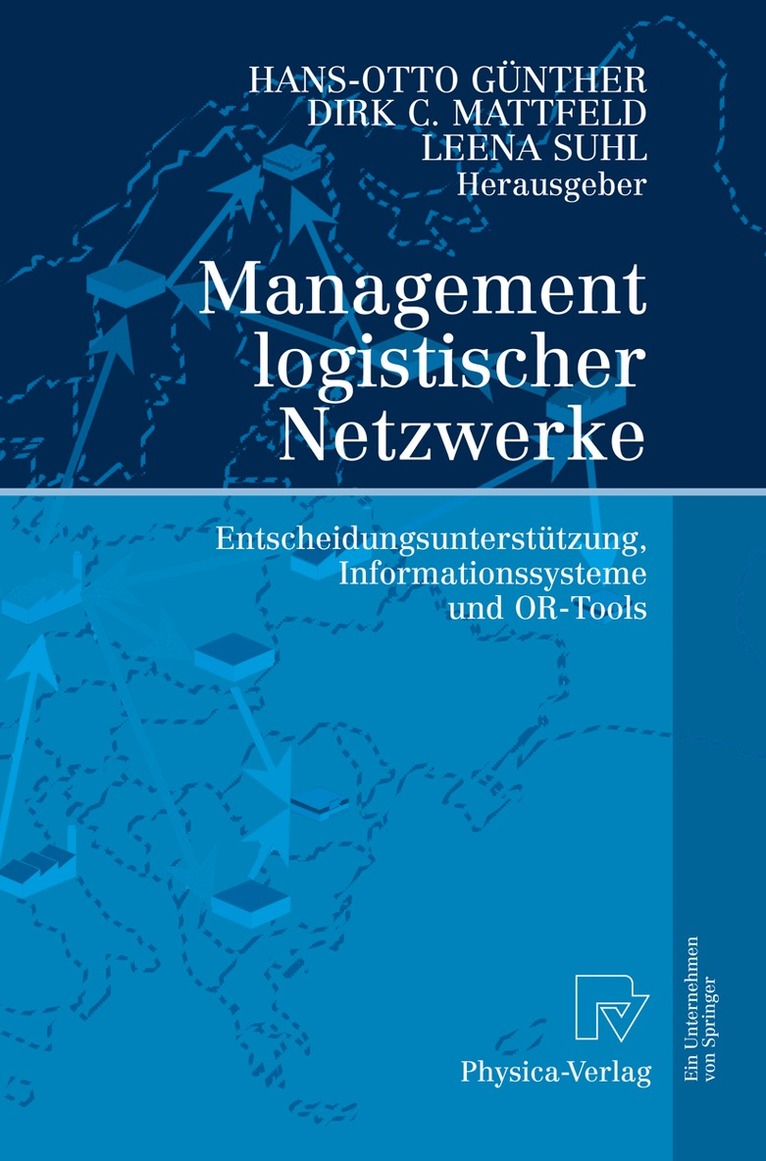
Management logistischer Netzwerke
Entscheidungsunterstützung, Informationssysteme und OR-Tools
Häftad, Tyska, 2007
1 147 kr
Skickas inom 10-15 vardagar
Durch die enorme Beschleunigung des physischen Warenaustausches, die umfassende Globalisierung der Wirtschaftsbeziehungen und die weltweite informationstechnische Vernetzung sind unternehmensübergreifende Wertschöpfungsnetzwerke entstanden. Die Gestaltung solcher Netzwerke und die Lösung logistischer Entscheidungsprobleme bedürfen fundierter wissenschaftlicher Methoden. Dabei werden zur Entscheidungsunterstützung im Liefernetz- und Logistikmanagement zunehmend so genannte Advanced Planning Systems (APS) mit den darin eingebetteten leistungsfähigen Optimierungsverfahren eingesetzt. Das Buch präsentiert Beispiele zur Nutzung quantitativer Methoden in Supply Chain Management und Logistik aus den Bereichen des Operations Research und der Wirtschaftsinformatik.