Dirk-Martin Grube - Böcker
Visar alla böcker från författaren Dirk-Martin Grube. Handla med fri frakt och snabb leverans.
3 produkter
3 produkter
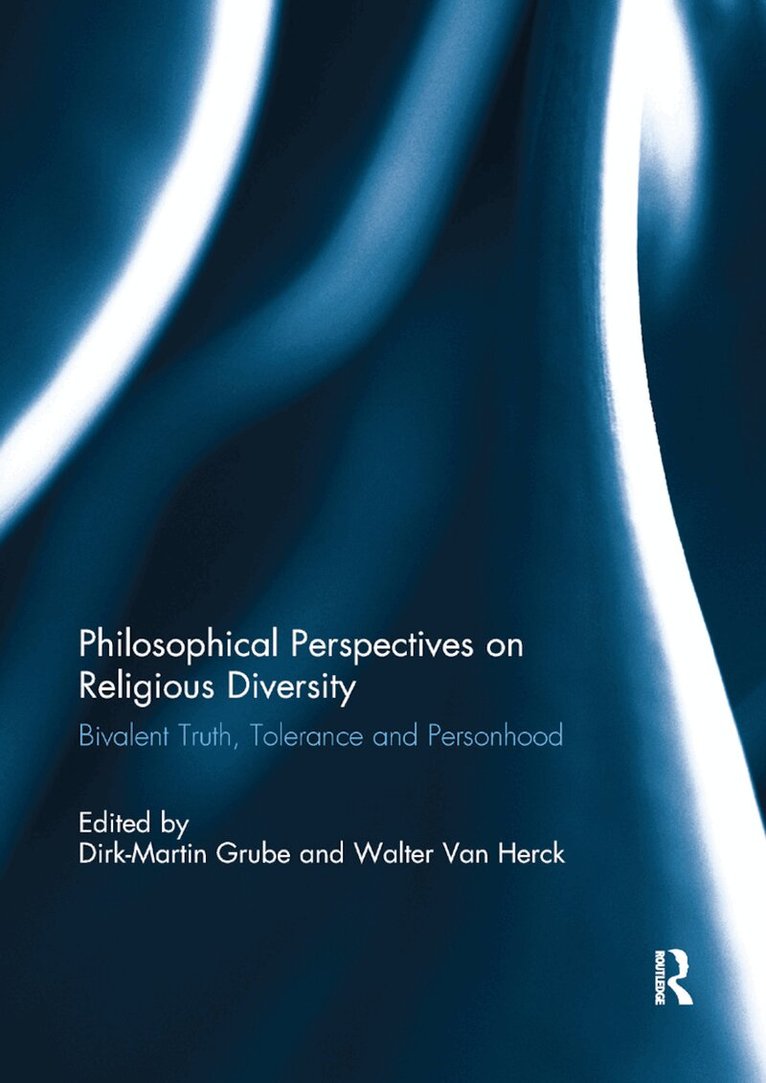
Philosophical Perspectives on Religious Diversity
Bivalent Truth, Tolerance and Personhood
Häftad, Engelska, 2019
335 kr
Skickas inom 10-15 vardagar
Addressing the question of what kind of theoretical foundations are required if we wish to have a constructive attitude towards different religions, this book scrutinizes aspects of the human condition, personhood and notions of (exclusive) truth and tolerance.In the book, Wolterstorff suggests that persons have hermeneutic and related competences that account for their special dignity, and that this dignity implies the right to practice religion freely. Margolis emphasizes the contingent character of all religious pursuits – being products of a unique form of evolution, humans need to create convincing purposes in an otherwise purposeless world. Respondents criticize both views with an eye on the question of whether those views promote religious tolerance.Grube criticizes the tendency for interreligious dialogue to be pursued under the parameters of an exclusive, bivalent notion of truth according to which something is necessarily false if it is not true. Under those parameters, religions that differ from the (one) true religion must be false. This explains why religious pluralists attempt to minimize the differences between religions at all costs and why others suggest implausibly strong concepts of tolerance. As an alternative, Grube proposes to drop exclusive concepts of truth and to conduct interreligious dialogue under the parameters of the concept of justification which allows for pluralisation. The following discussion takes up this criticism of bivalence and its consequences for dealing with religious otherness. This book was originally published as a special issue of the International Journal of Philosophy and Theology.
Philosophical Perspectives on Religious Diversity
Bivalent Truth, Tolerance and Personhood
Inbunden, Engelska, 2017
799 kr
Skickas inom 10-15 vardagar
Addressing the question of what kind of theoretical foundations are required if we wish to have a constructive attitude towards different religions, this book scrutinizes aspects of the human condition, personhood and notions of (exclusive) truth and tolerance.In the book, Wolterstorff suggests that persons have hermeneutic and related competences that account for their special dignity, and that this dignity implies the right to practice religion freely. Margolis emphasizes the contingent character of all religious pursuits – being products of a unique form of evolution, humans need to create convincing purposes in an otherwise purposeless world. Respondents criticize both views with an eye on the question of whether those views promote religious tolerance.Grube criticizes the tendency for interreligious dialogue to be pursued under the parameters of an exclusive, bivalent notion of truth according to which something is necessarily false if it is not true. Under those parameters, religions that differ from the (one) true religion must be false. This explains why religious pluralists attempt to minimize the differences between religions at all costs and why others suggest implausibly strong concepts of tolerance. As an alternative, Grube proposes to drop exclusive concepts of truth and to conduct interreligious dialogue under the parameters of the concept of justification which allows for pluralisation. The following discussion takes up this criticism of bivalence and its consequences for dealing with religious otherness. This book was originally published as a special issue of the International Journal of Philosophy and Theology.
Del 14 - Tillich Research
Offenbarung, absolute Wahrheit und interreligiöser Dialog
Studien zur Theologie Paul Tillichs
Inbunden, Tyska, 2019
1 788 kr
Skickas inom 5-8 vardagar
In dieser Aufsatzsammlung werden die Probleme und Konsequenzen des Offenbarungsbegriffs im Denken Paul Tillichs untersucht. Zunächst wird dieser Begriff näher thematisiert anhand der Fragen, wie dieser gewonnen wird und welche Rolle dabei die Phänomenologie spielt, ob dessen Ausarbeitung zu stark von subjektivistischen Voraussetzungen geprägt ist und wie sich die Offenbarungserkenntnis zur (natur-)wissenschaftlichen Erkenntnis verhält.Im Anschluss daran werden charakteristische Aspekte von Tillichs Theologie analysiert: sein Postulat mystischer Unmittelbarkeit als Grund von Offenbarung, die Frage nach der Rolle der Erfahrung bei der Begründung von Offenbarungserkenntnis, seine Korrelationsmethode, d.h. die Zuordnung von philosophischen Fragen und theologischen Antworten, sowie die Bedeutung von Tillichs Christologie - in der Spannung zwischen absoluten Geltungsansprüchen und deren Relativierung - für den interreligiösen Dialog heute. Auf diese Weise wird deutlich, dass die Impulse von Tillichs Ansatz von bleibender Bedeutung für die gegenwärtige Theologie sind, besonders was das Gespräch mit den nicht-christlichen Religionen und der Philosophie angeht.