Divina Frau-Meigs – författare
1 956 kr
Skickas inom 10-15 vardagar
620 kr
Skickas inom 10-15 vardagar
769 kr
Läs direkt efter köp
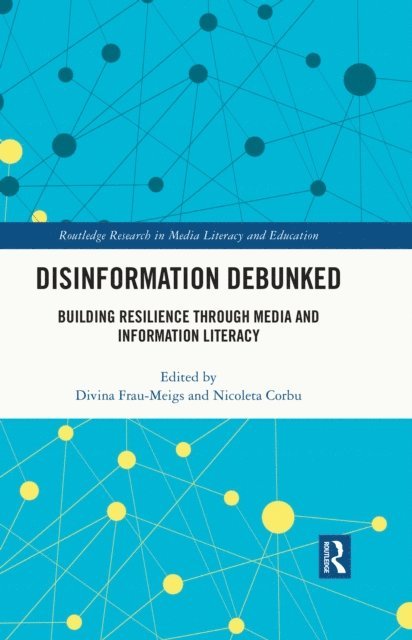
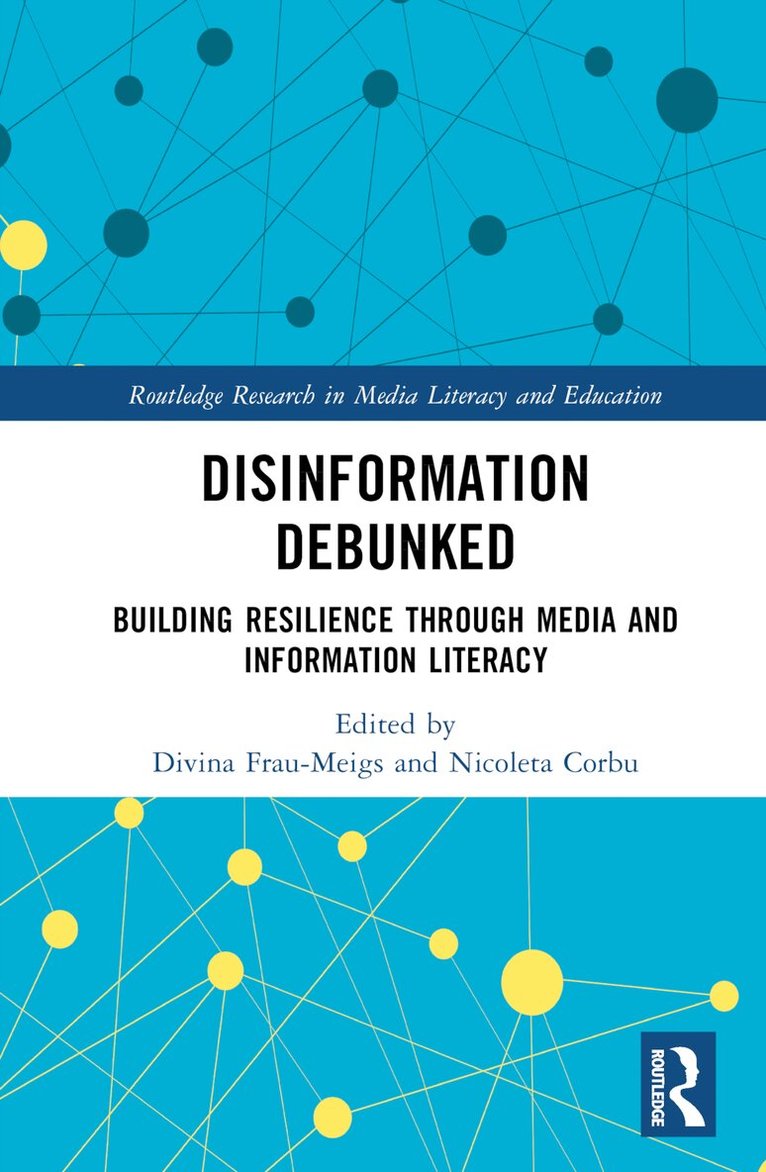
Disinformation Debunked: Building Resilience through Media and Information Literacy examines the way media and information literacy (MIL) can address disinformation in conjunction with fact-checkers and developers, to benefit from the expertise of these fields in fighting disinformation.
The book highlights the underlying stakes that are involved in the fight against disinformation, from producing smart tools to generalizing their use beyond the journalistic profession. It considers the MIL theories and methodologies at work in the digital era, especially from the perspective of digital visual literacy. Offering a comparative study of four European national experiences (France, Romania, Spain, and Sweden), the authors also make public policy recommendations to improve the fight against disinformation.
This book is of great importance to students, scholars, and educators working on media and information literacy, digital media, journalism, mass communication, misinformation and disinformation.
776 kr
Läs direkt efter köp
Disinformation Debunked: Building Resilience through Media and Information Literacy examines the way media and information literacy (MIL) can address disinformation in conjunction with fact-checkers and developers, to benefit from the expertise of these fields in fighting disinformation.
The book highlights the underlying stakes that are involved in the fight against disinformation, from producing smart tools to generalizing their use beyond the journalistic profession. It considers the MIL theories and methodologies at work in the digital era, especially from the perspective of digital visual literacy. Offering a comparative study of four European national experiences (France, Romania, Spain, and Sweden), the authors also make public policy recommendations to improve the fight against disinformation.
This book is of great importance to students, scholars, and educators working on media and information literacy, digital media, journalism, mass communication, misinformation and disinformation.
2 274 kr
Skickas inom 5-8 vardagar
2 603 kr
Läs direkt efter köp
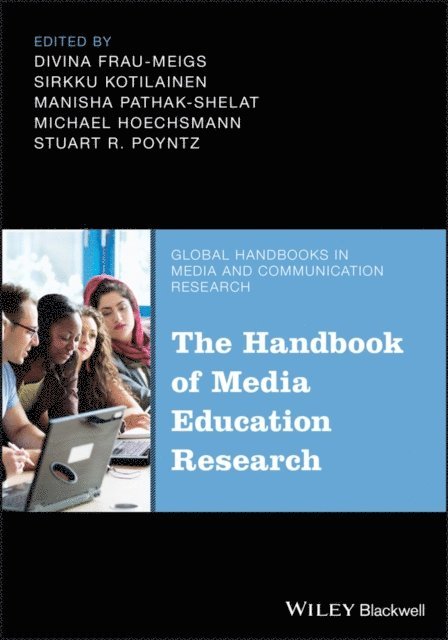
Over the past forty years, media education research has emerged as a historical, epistemological and practical field of study. Shifts in the field—along with radical transformations in media technologies, aesthetic forms, ownership models, and audience participation practices—have driven the application of new concepts and theories across a range of both school and non-school settings. The Handbook on Media Education Research is a unique exploration of the complex set of practices, theories, and tools of media research. Featuring contributions from a diverse range of internationally recognized experts and practitioners, this timely volume discusses recent developments in the field in the context of related scholarship, public policy, formal and non-formal teaching and learning, and DIY and community practice. Offering a truly global perspective, the Handbook focuses on empirical work from Media and Information Literacy (MIL) practitioners from around the world. The book’s five parts explore global youth cultures and the media, trans-media learning, media literacy and scientific controversies, varying national approaches to media research, media education policies, and much more. A ground breaking resource on the concepts and theories of media research, this important book:
Provides a diversity of views and experiences relevant to media literacy education research Features contributions from experts from a wide-range of countries including South Africa, Finland, India, Italy, Brazil, and many more Examines the history and future of media education in various international contexts Discusses the development and current state of media literacy education institutions and policies Addresses important contemporary issues such as social media use; datafication; digital privacy, rights, and divides; and global cultural practices.The Handbook of Media Education Research is an invaluable guide for researchers in the field, undergraduate and graduate students in media studies, policy makers, and MIL practitioners.
2 603 kr
Läs direkt efter köp
Over the past forty years, media education research has emerged as a historical, epistemological and practical field of study. Shifts in the field—along with radical transformations in media technologies, aesthetic forms, ownership models, and audience participation practices—have driven the application of new concepts and theories across a range of both school and non-school settings. The Handbook on Media Education Research is a unique exploration of the complex set of practices, theories, and tools of media research. Featuring contributions from a diverse range of internationally recognized experts and practitioners, this timely volume discusses recent developments in the field in the context of related scholarship, public policy, formal and non-formal teaching and learning, and DIY and community practice. Offering a truly global perspective, the Handbook focuses on empirical work from Media and Information Literacy (MIL) practitioners from around the world. The book’s five parts explore global youth cultures and the media, trans-media learning, media literacy and scientific controversies, varying national approaches to media research, media education policies, and much more. A ground breaking resource on the concepts and theories of media research, this important book:
Provides a diversity of views and experiences relevant to media literacy education research Features contributions from experts from a wide-range of countries including South Africa, Finland, India, Italy, Brazil, and many more Examines the history and future of media education in various international contexts Discusses the development and current state of media literacy education institutions and policies Addresses important contemporary issues such as social media use; datafication; digital privacy, rights, and divides; and global cultural practices.The Handbook of Media Education Research is an invaluable guide for researchers in the field, undergraduate and graduate students in media studies, policy makers, and MIL practitioners.
2 151 kr
Skickas inom 10-15 vardagar
574 kr
Skickas inom 10-15 vardagar
665 kr
Läs direkt efter köp
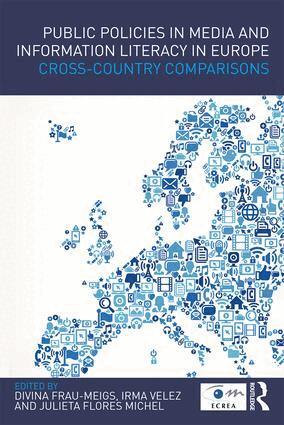
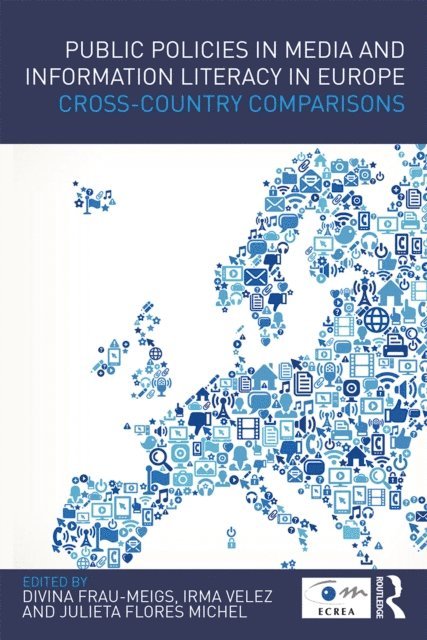
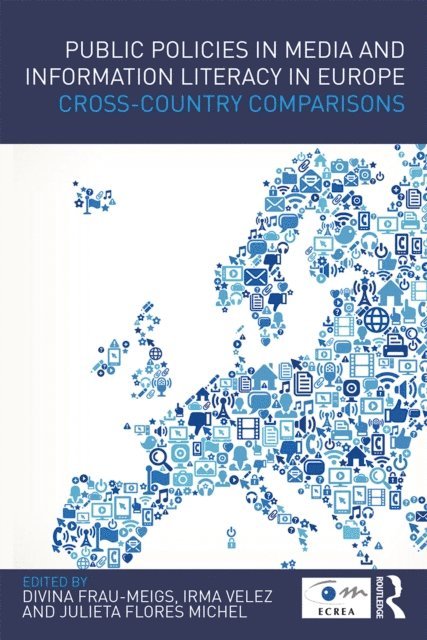
Public Policies in Media and Information Literacy in Europe explores the current tensions in European countries as they attempt to tackle the transition to the digital age, providing a comparative and cross-cultural analysis of Media and Information Literacy (MIL) across Europe.
This book takes a long-term perspective over the development of media education in Europe, and includes an appraisal of media, information, computer and digital literacies as they coalesce and diverge in the public debate over twenty-first-century skills. The contributors assess the various definitions of media and information literacy as a composite notion whose evolution as a cross-cultural phenomenon reveals various trends and influences in Europe. Throughout, this volume offers an in-depth coverage of MIL with all the different dimensions of policy-making, from legal frameworks to training, funding, evaluation and good practices. The authors propose modeling current MIL governance trends in Europe and conclude with a call for alternative and collective frames of research that they hope will influence policy-makers and other stakeholders, especially in terms of MIL governance.
This collection is ideal for students and researchers of MIL, as well as policy makers, educators and associations interested in MIL in the digital age.
665 kr
Läs direkt efter köp
Public Policies in Media and Information Literacy in Europe explores the current tensions in European countries as they attempt to tackle the transition to the digital age, providing a comparative and cross-cultural analysis of Media and Information Literacy (MIL) across Europe.
This book takes a long-term perspective over the development of media education in Europe, and includes an appraisal of media, information, computer and digital literacies as they coalesce and diverge in the public debate over twenty-first-century skills. The contributors assess the various definitions of media and information literacy as a composite notion whose evolution as a cross-cultural phenomenon reveals various trends and influences in Europe. Throughout, this volume offers an in-depth coverage of MIL with all the different dimensions of policy-making, from legal frameworks to training, funding, evaluation and good practices. The authors propose modeling current MIL governance trends in Europe and conclude with a call for alternative and collective frames of research that they hope will influence policy-makers and other stakeholders, especially in terms of MIL governance.
This collection is ideal for students and researchers of MIL, as well as policy makers, educators and associations interested in MIL in the digital age.
457 kr
Skickas inom 5-8 vardagar
458 kr
Läs direkt efter köp
1 365 kr
Skickas inom 10-15 vardagar
1 625 kr
Läs direkt efter köp
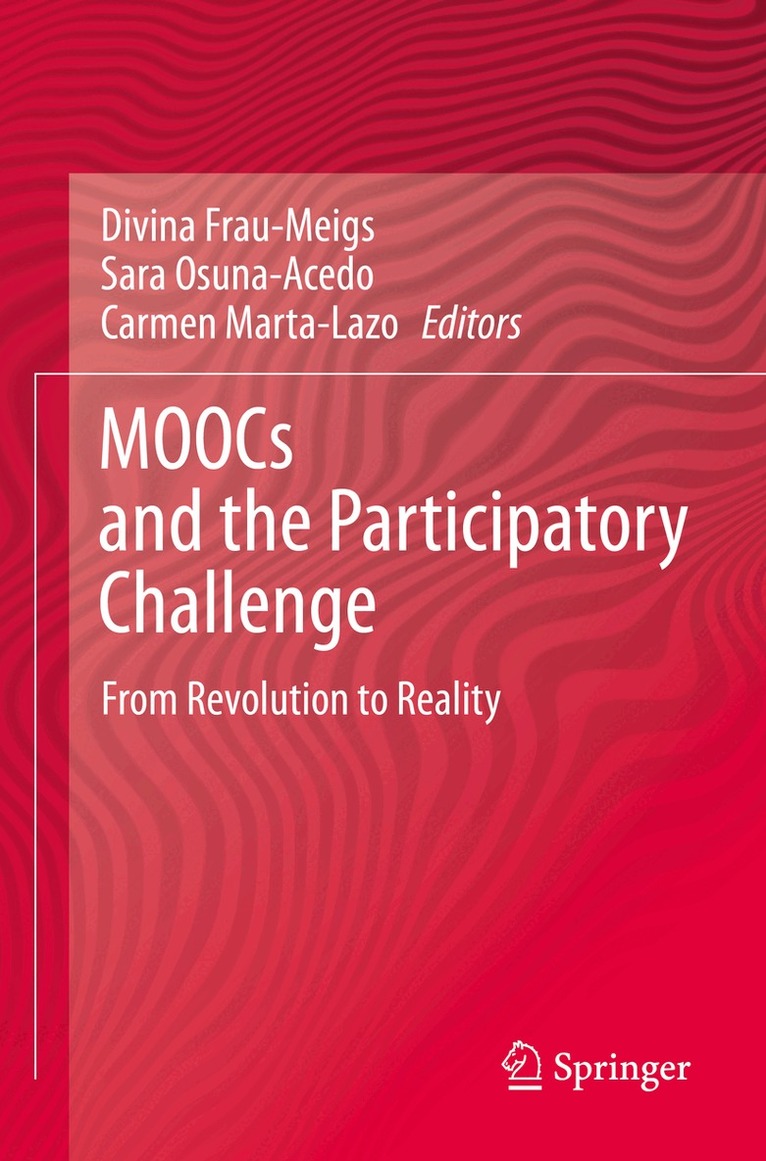
This book reports on a rather unique European experience, the pioneering ECO project for Social MOOCs (Massive Open Online Courses) and recapitulates the whole three-year process. It provides a critical perspective on the future of MOOCs in Europe and provides several comparisons with other existing models and platforms.
The book contains chapters that address the major issues connected to MOOC design and implementation. The first 8 chapters cover large issues that extend beyond the ECO project experience, such as creative industries and trans-literacy; management and implementation; learning environments and platforms; dissemination; pedagogical models; interactivity and agility; gamification; evaluation; and business models. The last 3 chapters hone in on narrowly focused topics such as mobility, knowledge transfer and peer to peer evaluation. The specificities of this on-going project (funded by the EU) are: a unique collaborative pedagogy, an intercultural process (6 languages), and focus on intercreativity, the multiplying impact of e-teachers (the community of participants that was empowered to create more than 50 new MOOCs), accessibility and gamification.
The book will be of interest due to its holistic approach to MOOCs and its assessment of their opportunities and their limitations. Many issues are explored and contribute to deeper understanding of the phenomenon and its transformative capacities for education and learning.
1 365 kr
Skickas inom 10-15 vardagar