D.K.L. MacKerron – författare
Visar alla böcker från författaren D.K.L. MacKerron. Handla med fri frakt och snabb leverans.
5 produkter
5 produkter
Inbunden, Engelska, 1995
1 621 kr
Skickas inom 10-15 vardagar
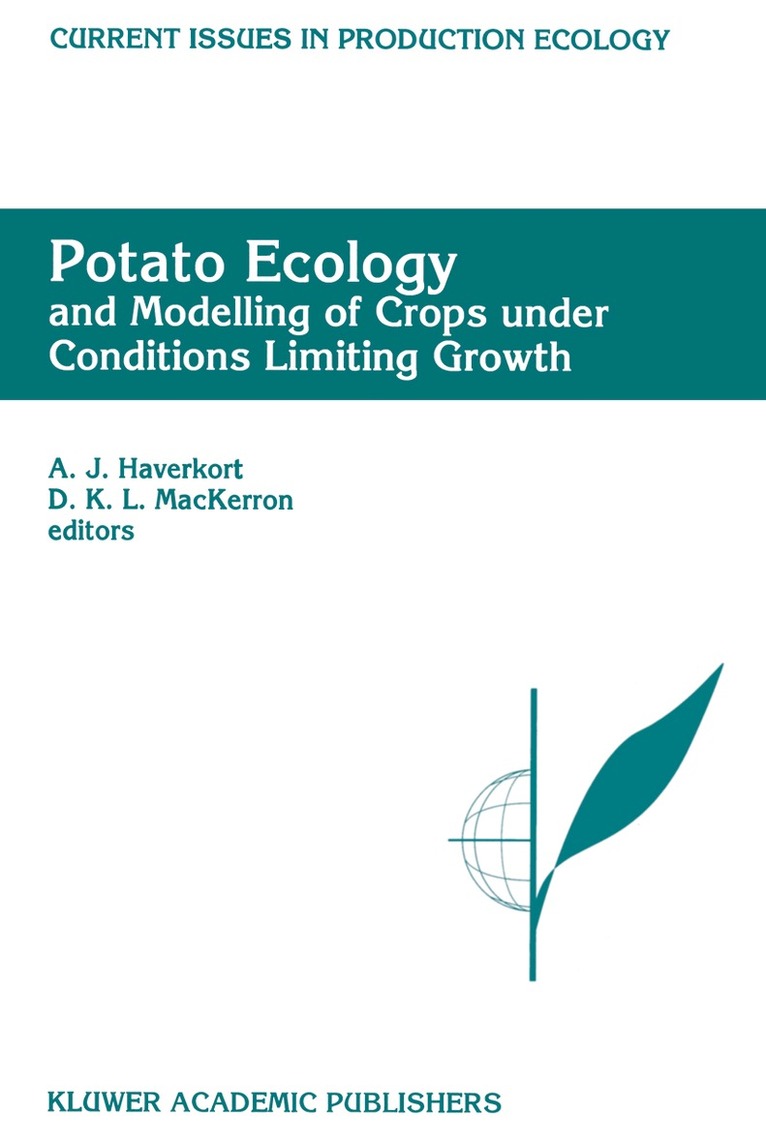
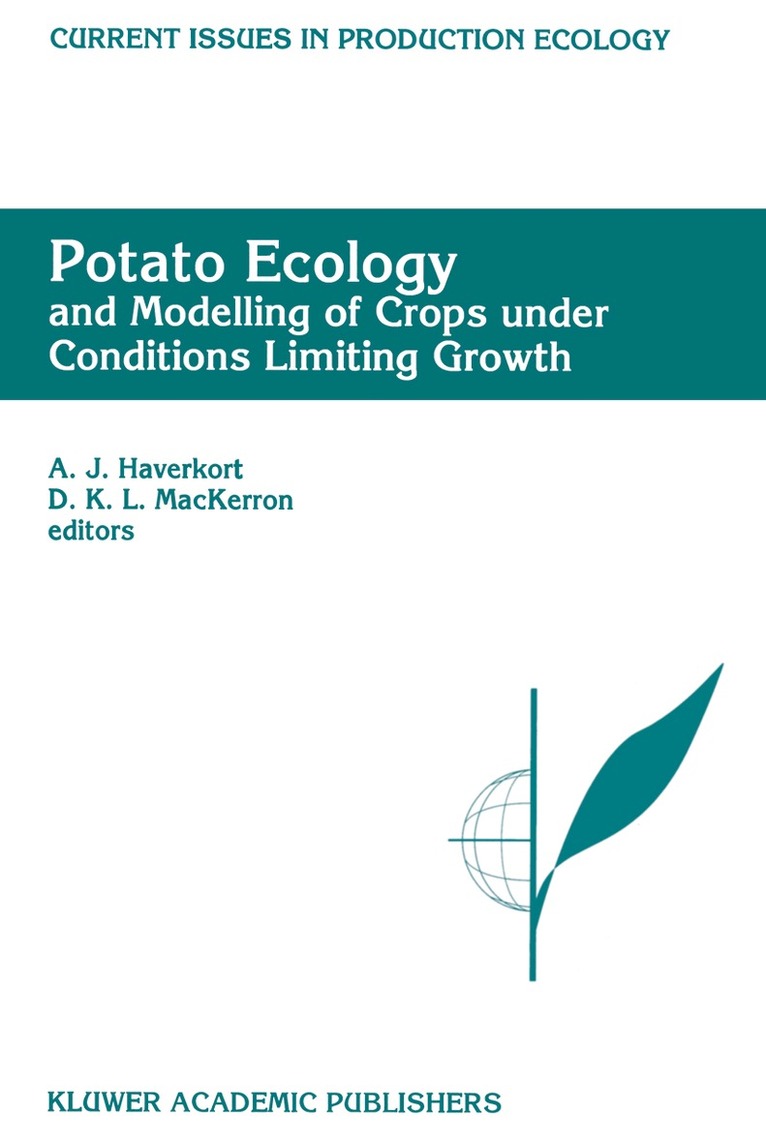
This text examines both the crop ecology and the modelling of a broad range of biotic and abiotic factors. These factors include environmental factors, such as temperature, solar radiation and carbon dioxide, as well as air- and soil-borne diseases and pest. The use of models in practice (decision-support systems) and in science (modelling sustainability and agro-ecological zoning) is treated. Although the potato crop is used as an example, this book provides the current state of knowledge of both the crop physiology and modelling of a field-grown crop and as such is of interest to any scientist dealing with field-grown crops.
E-bok
PDF, Engelska, 20231 724 kr
Läs direkt efter köp
Potato is very sensitive to water and nitrogen applied during growth, affecting its profitability and impact on the environment. Recent scientific and technical breakthroughs enable us to make best use of water and nitrogen. This book shows how scientific knowledge works in practice, now and well into the new millennium. This systematic and comprehensive book on crop, soil and water technologies will assist producers to achieve optimal production with maximum benefit to themselves and to the environment. Crucial questions, such as: - Which sampling techniques of plants and soil are available and which should I use? - What do the data gathered mean and how do they assist me in water and nitrogen application? - Which decision support systems exist for rain-fed, irrigated, precision or organic farming? are answered. The book updates and interprets knowledge in a simple, easily understandable way. It is intended for farmers, farmers' consultants, researchers and decision makers and is also recommended for students in soil science and agronomy.
E-bok
PDF, Engelska, 20232 044 kr
Läs direkt efter köp
Models of crop growth and development were conceived originally for scientific purposes. Typically, they describe the mechanisms of crop production, development from emergence through tuber initiation to senescence determined by temperature and day-length. Growth is driven by solar radiation intercepted by the foliage. Yields are enhanced by the availability of water and nutrients and may be reduced by pests, diseases and weeds. The scientific models describing the processes involved are leaving the research institutes and increasingly are becoming a means of knowledge transfer for students, and most importantly, to growers and their intermediaries such as extensionists and consultants. Many decision support systems (DSS) have a mechanistic model core that assures their robustness and reliability. This book gives an overview of model-based DSS in potato production. Decision support systems are used by the processing industry to guide them to promising production areas and by breeders to identify the ideal genotype for such environments. Consultants and soil laboratories use them as well as farmers to optimize the use of nitrogen, water and chemicals to control insects, nematodes, late blight and weeds. The systems, making use of models and sensing techniques, improve yield and quality while allowing their users to improve the efficiency of use of resources, thus generating positive effects for profits and for the environment. The book also gives examples of new introductions of DSS and farmers responses. The book is intended for researchers wanting to bring their models to practice, students to learn bout DSS, intermediaries and growers to improve the performance of the potato industry or of other commodities for which potato serves as an example.
Häftad, Engelska, 2012
1 605 kr
Skickas inom 10-15 vardagar
Potato is the fourth major staple food in the world and is still rapidly gaining importance, especially in the tropics. In May, 1994 the second international potato modelling conference was held in Wageningen, the Netherlands, as a summerschool of the C. T. de Wit Graduate School. The conference was sponsored by DLO, SCRI, SSCR, W AU and the LEB-Fund. Over 80 scientists participated, coming from 16 countries. Of each crop physiological and modelling subject, a leading scientist was requested to write a review of the most recent developments in his or her field. The reviews, with highlights from the authors' own work, are such that the physiological work described is of interest to the modeller and the modelling work to the crop physiologist. Applications of the quantitative approach are also reviewed in the concluding chapters that deal with decision support systems, breeding and agro-ecological zoning. An outstanding point of this book is that both the crop ecology and the modelling of a broad range of biotic and abiotic factors are treated by scientists representing groups which are specialized in the subject. The two related disciplines met during the conference and thus wrote the chapters with each other's interest in mind. The book highlights the limitations for potato growth and development from the viewpoints of both the crop physiologist and the crop-systems analyst.
E-bok
PDF, Engelska, 20121 977 kr
Läs direkt efter köp
Potato is the fourth major staple food in the world and is still rapidly gaining importance, especially in the tropics. In May, 1994 the second international potato modelling conference was held in Wageningen, the Netherlands, as a summerschool of the C. T. de Wit Graduate School. The conference was sponsored by DLO, SCRI, SSCR, W AU and the LEB-Fund. Over 80 scientists participated, coming from 16 countries. Of each crop physiological and modelling subject, a leading scientist was requested to write a review of the most recent developments in his or her field. The reviews, with highlights from the authors'' own work, are such that the physiological work described is of interest to the modeller and the modelling work to the crop physiologist. Applications of the quantitative approach are also reviewed in the concluding chapters that deal with decision support systems, breeding and agro-ecological zoning. An outstanding point of this book is that both the crop ecology and the modelling of a broad range of biotic and abiotic factors are treated by scientists representing groups which are specialized in the subject. The two related disciplines met during the conference and thus wrote the chapters with each other''s interest in mind. The book highlights the limitations for potato growth and development from the viewpoints of both the crop physiologist and the crop-systems analyst.