Domenico Bertoloni Meli – författare
Visar alla böcker från författaren Domenico Bertoloni Meli. Handla med fri frakt och snabb leverans.
9 produkter
9 produkter
Inbunden, Engelska, 2018
514 kr
Skickas inom 5-8 vardagar
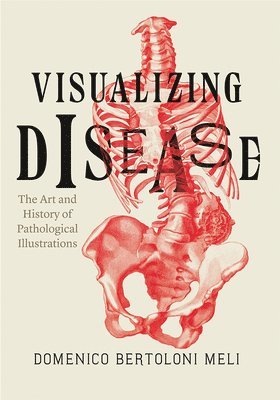
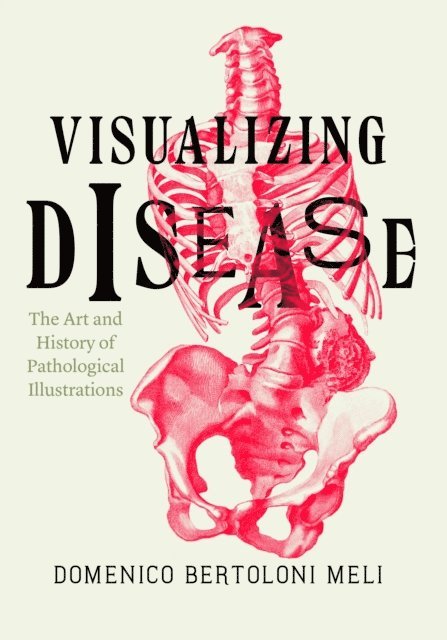
Visual anatomy books have been a staple of medical practice and study since the mid-sixteenth century. But the visual representation of diseased states followed a very different pattern from anatomy, one we are only now beginning to investigate and understand. With Visualizing Disease, Domenico Bertoloni Meli explores key questions in this domain, opening a new field of inquiry based on the analysis of a rich body of arresting and intellectually challenging images reproduced here both in black and white and in color. Starting in the Renaissance, Bertoloni Meli delves into the wide range of figures involved in the early study and representation of disease, including not just men of medicine, like anatomists, physicians, surgeons, and pathologists, but also draftsmen and engravers.Pathological preparations proved difficult to preserve and represent, and as Bertoloni Meli takes us through a number of different cases from the Renaissance to the mid-nineteenth century, we gain a new understanding of how knowledge of disease, interactions among medical men and artists, and changes in the technologies of preservation and representation of specimens interacted to slowly bring illustration into the medical world.
E-bok
Engelska, 2018998 kr
Läs direkt efter köp
Visual anatomy books have been a staple of medical practice and study since the mid-sixteenth century. But the visual representation of diseased states followed a very different pattern from anatomy, one we are only now beginning to investigate and understand. With Visualizing Disease, Domenico Bertoloni Meli explores key questions in this domain, opening a new field of inquiry based on the analysis of a rich body of arresting and intellectually challenging images reproduced here both in black and white and in color. Starting in the Renaissance, Bertoloni Meli delves into the wide range of figures involved in the early study and representation of disease, including not just men of medicine, like anatomists, physicians, surgeons, and pathologists, but also draftsmen and engravers. Pathological preparations proved difficult to preserve and represent, and as Bertoloni Meli takes us through a number of different cases from the Renaissance to the mid-nineteenth century, we gain a new understanding of how knowledge of disease, interactions among medical men and artists, and changes in the technologies of preservation and representation of specimens interacted to slowly bring illustration into the medical world.
Häftad, Engelska, 2007
488 kr
Skickas inom 5-8 vardagar
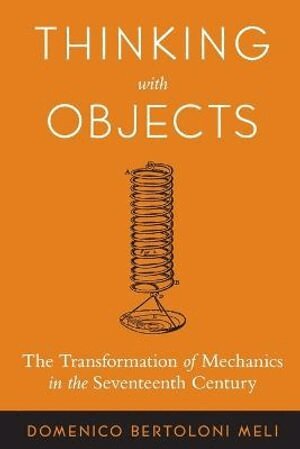
Thinking with Objects offers a fresh view of the transformation that took place in mechanics during the 17th century. By giving center stage to objects-levers, inclined planes, beams, pendulums, springs, and falling and projected bodies-Domenico Bertoloni Meli provides a unique and comprehensive portrayal of mechanics as practitioners understood it at the time. Bertoloni Meli reexamines such major texts as Galileo's Dialogues Concerning Two New Sciences, Descartes' Principles of Philosophy, and Newton's Principia, and in them finds a reliance on objects that has escaped proper understanding. From Pappus of Alexandria to Guidobaldo dal Monte, Bertoloni Meli sees significant developments in the history of mechanical experimentation, all of them crucial for understanding Galileo. Bertoloni Meli uses similarities and tensions between dal Monte and Galileo as a springboard for exploring the revolutionary nature of seventeenth-century mechanics. Examining objects helps us appreciate the shift from the study to the practice of mechanics and challenges artificial dichotomies among practical and conceptual pursuits, mathematics, and experiment.
Inbunden, Engelska, 2011
1 025 kr
Skickas
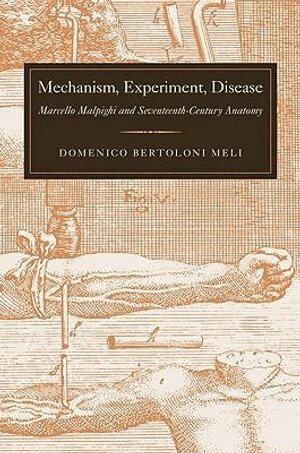
A leading early modern anatomist and physician, Marcello Malpighi often compared himself to that period's other great mind-Galileo. Domenico Bertoloni Meli here explores Malpighi's work and places it in the context of seventeenth-century intellectual life. Malpighi's interests were wide and varied. As a professor at the University of Bologna, he confirmed William Harvey's theory of the circulation of blood; published groundbreaking studies of human organs; made important discoveries about the anatomy of silkworms; and examined the properties of plants. He sought to apply his findings to medical practice. By analyzing Malpighi's work, the author provides novel perspectives not only on the history of anatomy but also on the histories of science, philosophy, and medicine. Through the lens of Malpighi and his work, Bertoloni Meli investigates a range of important themes, from sense perception to the meaning of Galenism in the seventeenth century. Bertoloni Meli contends that to study science and medicine in the seventeenth century one needs to understand how scholars and ideas crossed disciplinary boundaries.He examines Malpighi's work within this context, describing how anatomical knowledge was achieved and transmitted and how those processes interacted with the experimental and mechanical philosophies, natural history, and medical practice. Malpighi was central in all of these developments, and his work helped redefine the intellectual horizon of the time. Bertoloni Meli's critical study of this key figure and the works of his contemporaries-including Borelli, Swammerdam, Redi, and Ruysch-opens a wonderful window onto the scientific and medical worlds of the seventeenth century.
Inbunden, Engelska, 2025
1 198 kr
Skickas inom 5-8 vardagar
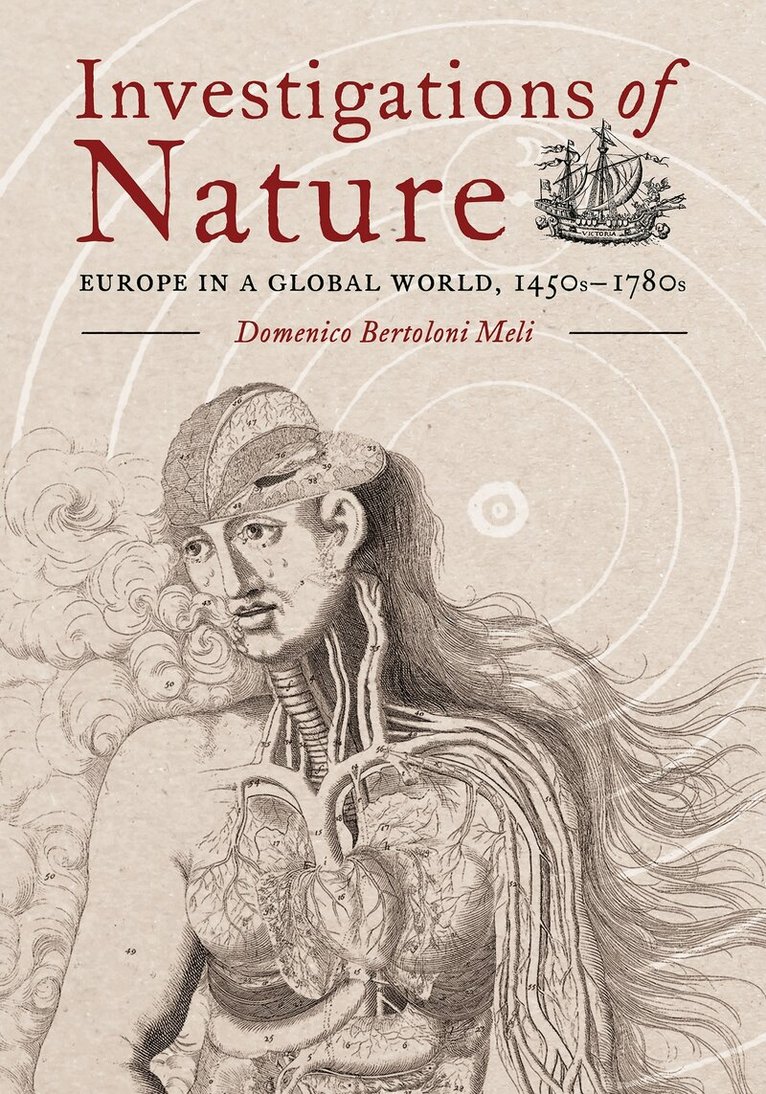
Join Domenico Bertoloni Meli on a detailed journey through the understanding and investigations of nature, when profound changes transformed the intellectual landscape and the beginning of European expansion and colonialism. His book takes us on a guided tour through history, when the religious unity of Europe was broken with huge political, intellectual, and economic consequences, while global history took on new meanings, with European voyages of exploration and exploitation being interwoven with geographical knowledge, warfare, and trade. After a brief introduction, each part of this book—from the Renaissance to the Epistemic Revolution to the Enlightenment—opens with a chapter discussing a defining character: geography and navigation characterize the Renaissance as the age of discovery and colonialism; astronomy and optics characterize the Epistemic Revolution as the age of new instruments, such as the telescope; and universal gravity in Newton’s time characterizes the Enlightenment as the age of quantification, with welcome and unwelcome consequences, and reflection on the status of our theories. Heavily illustrated with a practical historiographic guide and bibliography for further reading, Investigations of Nature is an indispensable teaching tool for anyone seeking an accessible survey of the Renaissance or the Enlightenment.
Häftad, Engelska, 2025
528 kr
Skickas inom 5-8 vardagar
Investigations of Nature takes us on a guided tour through history, when voyages of exploration and exploitation were tied to technological advances in navigation and warfare; religious unity was broken with huge political, economic, and intellectual consequences; and the new art of printing led to an explosion of information. After a brief introduction, each part of this book—from sections on the Renaissance to the Epistemic Revolution to the Enlightenment—opens with a chapter discussing a defining characteristic: geography and navigation characterize the Renaissance as the age of discovery and colonialism; astronomy and optics characterize the Epistemic Revolution as the age of new instruments, such as the telescope; and universal gravity in Newton’s time characterizes the Enlightenment as the age of quantification, with welcome and unwelcome consequences and reflection on the status of our theories. Heavily illustrated and with a practical historiographic guide and bibliography for further reading, this book is an indispensable teaching tool for anyone seeking an accessible survey of the Renaissance or the Enlightenment.
E-bok
Engelska, 2019777 kr
Läs direkt efter köp
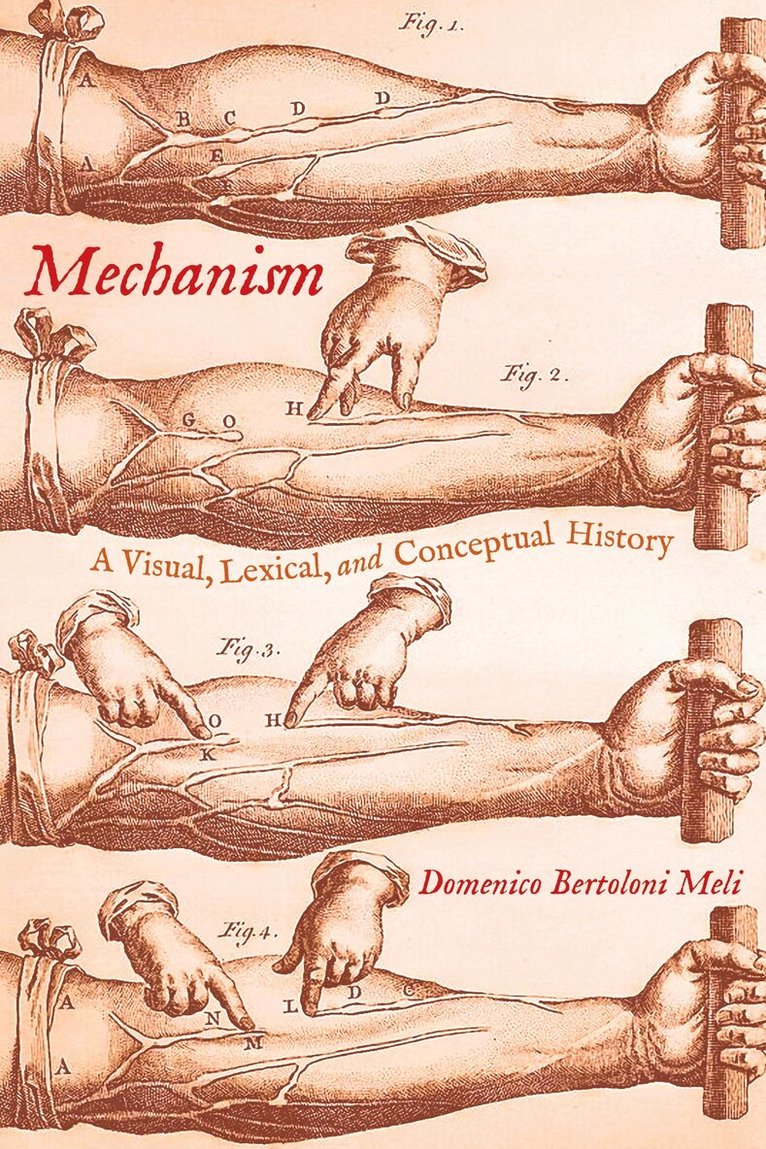
The mechanical philosophy first emerged as a leading player on the intellectual scene in the early modern period—seeking to explain all natural phenomena through the physics of matter and motion—and the term mechanism was coined. Over time, natural phenomena came to be understood through machine analogies and explanations and the very word mechanism, a suggestive and ambiguous expression, took on a host of different meanings. Emphasizing the important role of key ancient and early modern protagonists, from Galen to Robert Boyle, this book offers a historical investigation of the term mechanism from the late Renaissance to the end of the seventeenth century, at a time when it was used rather frequently in complex debates about the nature of the notion of the soul. In this rich and detailed study, Domenico Bertoloni Melifocuses on strategies for discussing the notion of mechanism in historically sensitive ways; the relation between mechanism, visual representation, and anatomy; the usage and meaning of the term in early modern times; and Marcello Malpighi and the problems of fecundation and generation, among the most challenging topics to investigate from a mechanistic standpoint.
Inbunden, Engelska, 2007
786 kr
Tillfälligt slut
Thinking with Objects offers a fresh view of the transformation that took place in mechanics during the 17th century. By giving center stage to objects-levers, inclined planes, beams, pendulums, springs, and falling and projected bodies-Domenico Bertoloni Meli provides a unique and comprehensive portrayal of mechanics as practitioners understood it at the time. Bertoloni Meli reexamines such major texts as Galileo's Dialogues Concerning Two New Sciences, Descartes' Principles of Philosophy, and Newton's Principia, and in them finds a reliance on objects that has escaped proper understanding. From Pappus of Alexandria to Guidobaldo dal Monte, Bertoloni Meli sees significant developments in the history of mechanical experimentation, all of them crucial for understanding Galileo. Bertoloni Meli uses similarities and tensions between dal Monte and Galileo as a springboard for exploring the revolutionary nature of seventeenth-century mechanics. Examining objects helps us appreciate the shift from the study to the practice of mechanics and challenges artificial dichotomies among practical and conceptual pursuits, mathematics, and experiment.
Häftad, Engelska, 2011
484 kr
Tillfälligt slut
A leading early modern anatomist and physician, Marcello Malpighi often compared himself to that period's other great mind-Galileo. Domenico Bertoloni Meli here explores Malpighi's work and places it in the context of seventeenth-century intellectual life. Malpighi's interests were wide and varied. As a professor at the University of Bologna, he confirmed William Harvey's theory of the circulation of blood; published groundbreaking studies of human organs; made important discoveries about the anatomy of silkworms; and examined the properties of plants. He sought to apply his findings to medical practice. By analyzing Malpighi's work, the author provides novel perspectives not only on the history of anatomy but also on the histories of science, philosophy, and medicine. Through the lens of Malpighi and his work, Bertoloni Meli investigates a range of important themes, from sense perception to the meaning of Galenism in the seventeenth century. Bertoloni Meli contends that to study science and medicine in the seventeenth century one needs to understand how scholars and ideas crossed disciplinary boundaries.He examines Malpighi's work within this context, describing how anatomical knowledge was achieved and transmitted and how those processes interacted with the experimental and mechanical philosophies, natural history, and medical practice. Malpighi was central in all of these developments, and his work helped redefine the intellectual horizon of the time. Bertoloni Meli's critical study of this key figure and the works of his contemporaries-including Borelli, Swammerdam, Redi, and Ruysch-opens a wonderful window onto the scientific and medical worlds of the seventeenth century.