Dominik Collet – författare
Visar alla böcker från författaren Dominik Collet. Handla med fri frakt och snabb leverans.
6 produkter
6 produkter
Häftad, Engelska, 2025
428 kr
Skickas inom 5-8 vardagar
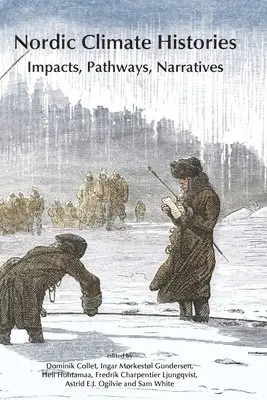
This volume is the first to collect climate histories from across all the Nordic countries. It combines research from climatologists, historians, archaeologists and museologists to explore how climate and culture interacted in the past and what we might learn from these interactions today.Down the centuries, the people of the Nordic countries have confronted challenges from climatic variability and change and sought ways to survive and adapt. In a time of accelerating global warming, these climate histories take on new contemporary significance. Drawing on tools from the natural and historical sciences, the innovative scholarship in this volume addresses questions such as: How did Nordic societies cope with past climatic hazards? What was the historical significance of the 'Little Ice Age' or the 'Medieval Climate Anomaly' for Nordic countries? And how do we study, narrate and learn from these past experiences?This volume is the first to collect climate histories from across all the Nordic countries. It combines research from climatologists, historians, archaeologists and museologists to explore how climate and culture interacted in the past and what we might learn from these interactions today.The chapters range from in-depth case studies to reflexive meta-histories; cover periods from the Bronze Age to the present; and draw on sources from tree rings to material culture to poetry. They also discuss how these histories can be communicated today, including how museums and literature can bring them into conversation with a current audience looking for lived experiences of climate adaptation.The volume was conceived during an international conference at the University of Oslo in May 2024. This interdisciplinary forum connected leading scholars in the field with practitioners and stakeholders. The essays presented here engage a rapidly growing field of intense public and political concern in the Nordics and beyond.The book speaks to various academic communities (climatology, history, literature) and stakeholders (museum practitioners, climate communicators and advocates). It includes the growing research and student community invested in this topic across several disciplines, practitioners and communicators in the field and the wider public interested in the vibrant debates about climate adaptation and experience.
Häftad, Engelska, 2019
1 778 kr
Skickas inom 10-15 vardagar
This highly interdisciplinary book studies historical famines as an interface of nature and culture. With reference to recent interdisciplinary concepts (disaster studies, vulnerability studies, environmental history) it will examine, how the dominant opposition of natural and cultural factors can be overcome.
E-bok
Engelska, 20172 194 kr
Läs direkt efter köp
This highly interdisciplinary book studies historical famines as an interface of nature and culture. It will bring together researchers from the natural and social sciences as well as the humanities. With reference to recent interdisciplinary concepts (disaster studies, vulnerability studies, environmental history) it will examine, how the dominant opposition of natural and cultural factors can be overcome. Such an integrated approach includes the "archives of nature" as well as "archives of man". It challenges deterministic models of human-environment interaction and replaces them with a dynamic, historicising approach. As a result it provides a fresh perspective on the entanglement of climate and culture in past societies.
Inbunden, Engelska, 2017
1 778 kr
Skickas inom 10-15 vardagar
This highly interdisciplinary book studies historical famines as an interface of nature and culture. It will bring together researchers from the natural and social sciences as well as the humanities. With reference to recent interdisciplinary concepts (disaster studies, vulnerability studies, environmental history) it will examine, how the dominant opposition of natural and cultural factors can be overcome. Such an integrated approach includes the "archives of nature" as well as "archives of man". It challenges deterministic models of human-environment interaction and replaces them with a dynamic, historicising approach. As a result it provides a fresh perspective on the entanglement of climate and culture in past societies.
E-bok
PDF, Tyska, 2018590 kr
Läs direkt efter köp
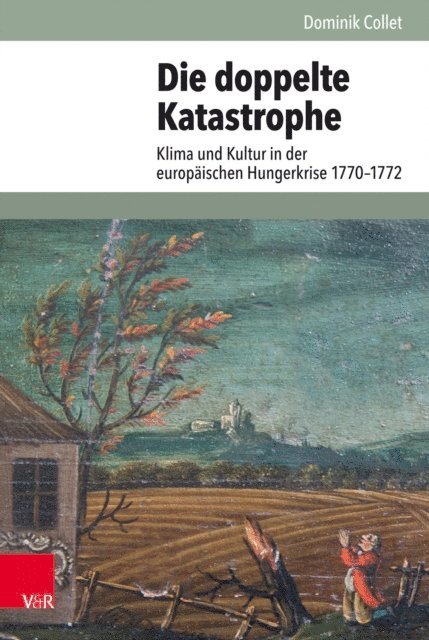
Am Ende des 18. Jahrhunderts durchlebte Europa, im Zuge einer extremen Klimaanomalie der Kleinen Eiszeit eine der schwersten Hungerkrisen seiner Geschichte. Das fatale Zusammenspiel von Klima und Kultur machte sie zur »doppelten« Katastrophe. Ihre Auswirkungen erfassten den gesamten Kontinent und kosteten hunderttausende Menschen das Leben. Die Krise beförderte neben Ausgrenzung, Auswanderung und Antisemitismus aber auch politische Reformen, Humanitarismus und neue Wissenschaften. Das Buch zeigt am Beispiel dieses Ereignisses, wie frühere Gesellschaften Witterungsextreme bewältigten und wie vielfältig Klimaimpulse »sozialisiert« werden konnten. Dominik Collet plädiert für einen integrativen, sozionaturalen Zugang zur Geschichte. Es erzählt eine Verflechtungsgeschichte von Mensch und Umwelt, in der kurzfristige Ereignisse und langfristige, sozioökologische Strukturen eng miteinander verkoppelt sind. Daher offenbart der Blick auf die Hungersnot schlaglichtartig grundlegende ökonomische und ökologische Problemlagen der Gesellschaften des 18. Jahrhunderts. In diesem Umfeld erweisen sich vermeintliche Naturkatastrophen immer auch als Kulturkatastrophen. Die Studie stellt deterministische Zugänge in Frage und zeigt, dass eine dynamische Perspektive auf das Zusammenwirken von Klima und Kultur ebenso notwendig wie praktikabel ist. Sie regt dazu an, die Natur nicht länger als Gegenteil, sondern als Teil der Geschichte zu begreifen.
E-bok
PDF, Tyska, 2015897 kr
Läs direkt efter köp
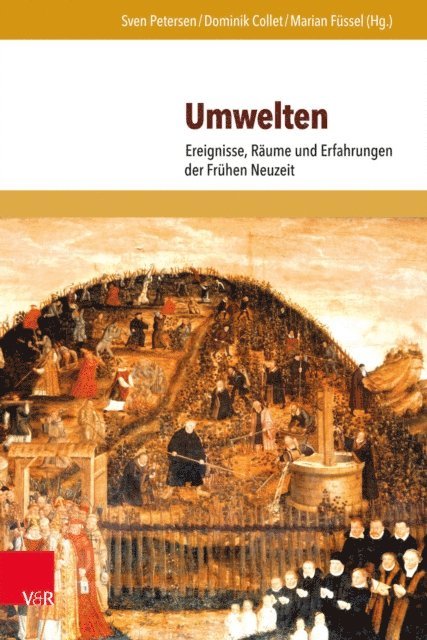
This volume focuses on nature, religion and politics - three "environments" of early modernity. Exemplary studies from pietism research, historical disaster studies, interdisciplinary environmental history and the history of transnational connectivity provide close-up insights into a plurality of lifeworlds and environments. Seen as a whole, these perspectives offer a broader understanding of early modern "environments" as material as well as cultural contexts of historical events and experiences, and encourage the crossing of the boundaries between established fields of research.