Dominik Wodarz - Böcker
Visar alla böcker från författaren Dominik Wodarz. Handla med fri frakt och snabb leverans.
6 produkter
6 produkter
1 427 kr
Skickas inom 10-15 vardagar
Systems biology and computational biology have recently become prominent areas of research in the biomedical community, especially in the area of cell biology. Given that much information on genes and their protein products has become available, the big question is how the individual components interact and work together, and how this determines the functioning of cells, organs, and organisms. Long before the popularity of systems biology in biomedicine, however, such approaches have been used successfully in a di?erent area of biology: population ecology. Research in the area of population dynamics - vestigated complex interactions between di?erent populations of organisms, such as the dynamics of competition and predation, food webs, community structure, as well as the epidemiology of infectious diseases. In this ?eld, t- oretical biology and mathematical modeling have become an integral part of research. Mathematical models allowed people to obtain interesting and counter-intuitive insights into how complex interactions among di?erent p- ulations can play out. Such mathematical studies not only gave rise to - teresting theoretical ideas, but also provided the basis for the design of new experimental work and de?ned major questions and directions of research. Around 1990, such population dynamic concepts, and the use of mathema- cal/computational approaches, started to be applied to the in vivo dynamics between viruses and the immune system. These interactions have many s- ilarities to ecological, epidemiological, and evolutionary principles. Consider theepidemiologicalspreadofapathogen(suchasthecommoncold)througha population of hosts.
Del 32 - Interdisciplinary Applied Mathematics
Killer Cell Dynamics
Mathematical and Computational Approaches to Immunology
Häftad, Engelska, 2010
1 434 kr
Skickas inom 10-15 vardagar
Systems biology and computational biology have recently become prominent areas of research in the biomedical community, especially in the area of cell biology. Given that much information on genes and their protein products has become available, the big question is how the individual components interact and work together, and how this determines the functioning of cells, organs, and organisms. Long before the popularity of systems biology in biomedicine, however, such approaches have been used successfully in a di?erent area of biology: population ecology. Research in the area of population dynamics - vestigated complex interactions between di?erent populations of organisms, such as the dynamics of competition and predation, food webs, community structure, as well as the epidemiology of infectious diseases. In this ?eld, t- oretical biology and mathematical modeling have become an integral part of research. Mathematical models allowed people to obtain interesting and counter-intuitive insights into how complex interactions among di?erent p- ulations can play out. Such mathematical studies not only gave rise to - teresting theoretical ideas, but also provided the basis for the design of new experimental work and de?ned major questions and directions of research. Around 1990, such population dynamic concepts, and the use of mathema- cal/computational approaches, started to be applied to the in vivo dynamics between viruses and the immune system. These interactions have many s- ilarities to ecological, epidemiological, and evolutionary principles. Consider theepidemiologicalspreadofapathogen(suchasthecommoncold)througha population of hosts.
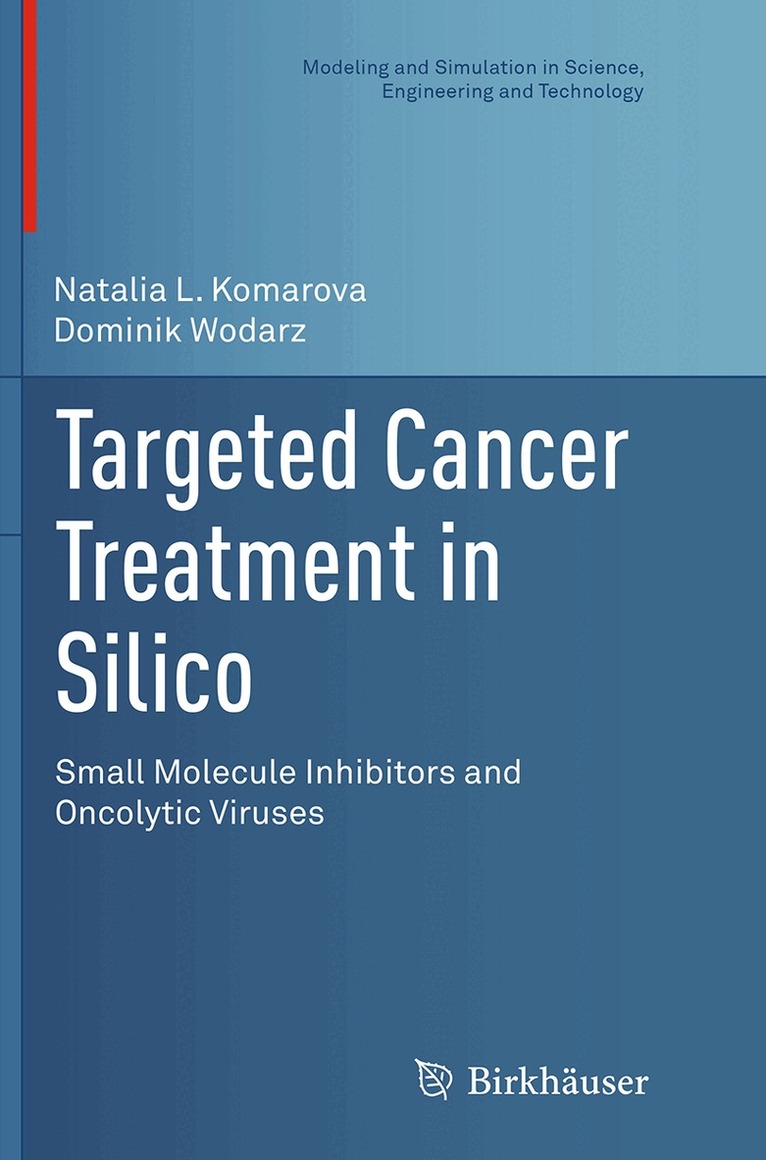
Targeted Cancer Treatment in Silico
Small Molecule Inhibitors and Oncolytic Viruses
Inbunden, Engelska, 2013
553 kr
Skickas inom 10-15 vardagar
Countless medical researchers over the past century have been occupied by the search for a cure of cancer. So far, they have developed and implemented a wide range of treatment techniques, including surgery, chemo- and radiotherapy, antiangiogenic drugs, small molecule inhibitors, and oncolytic viruses. However, patterns of these treatments' effectiveness remain largely unclear, and a better understanding of how cancer therapies work has become a key research goal. Cancer Treatment in Silico provides the first in-depth study of approaching this understanding by modeling cancer treatments, both mathematically and through computer simulations.The main goal of this book is to help expose students and researchers to in silico methods of studying cancer. It is intended for both the applied mathematics and experimental oncology communities, as mathematical models are playing an increasingly important role to supplement laboratory biology in the fight against cancer. Written at a level that generally requires little technical background, the work will be a valuable resource for scientists and students alike.
Targeted Cancer Treatment in Silico
Small Molecule Inhibitors and Oncolytic Viruses
Häftad, Engelska, 2016
553 kr
Skickas inom 10-15 vardagar
Countless medical researchers over the past century have been occupied by the search for a cure of cancer. So far, they have developed and implemented a wide range of treatment techniques, including surgery, chemo- and radiotherapy, antiangiogenic drugs, small molecule inhibitors, and oncolytic viruses. However, patterns of these treatments' effectiveness remain largely unclear, and a better understanding of how cancer therapies work has become a key research goal. Cancer Treatment in Silico provides the first in-depth study of approaching this understanding by modeling cancer treatments, both mathematically and through computer simulations.The main goal of this book is to help expose students and researchers to in silico methods of studying cancer. It is intended for both the applied mathematics and experimental oncology communities, as mathematical models are playing an increasingly important role to supplement laboratory biology in the fight against cancer. Written at a level that generally requires little technical background, the work will be a valuable resource for scientists and students alike.
1 371 kr
Skickas inom 5-8 vardagar
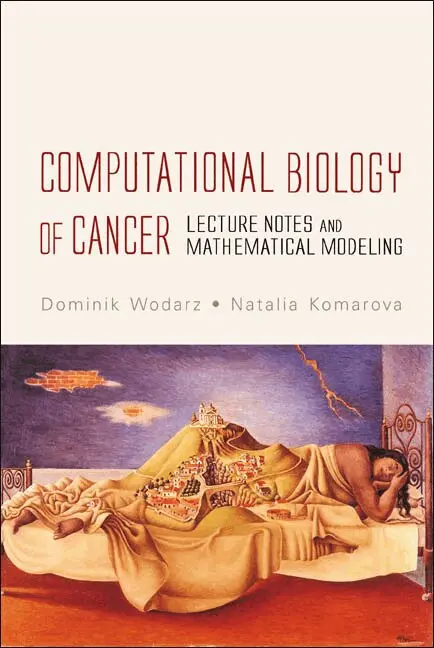
The book shows how mathematical and computational models can be used to study cancer biology. It introduces the concept of mathematical modeling and then applies it to a variety of topics in cancer biology. These include aspects of cancer initiation and progression, such as the somatic evolution of cells, genetic instability, and angiogenesis. The book also discusses the use of mathematical models for the analysis of therapeutic approaches such as chemotherapy, immunotherapy, and the use of oncolytic viruses.
2 698 kr
Skickas inom 3-6 vardagar
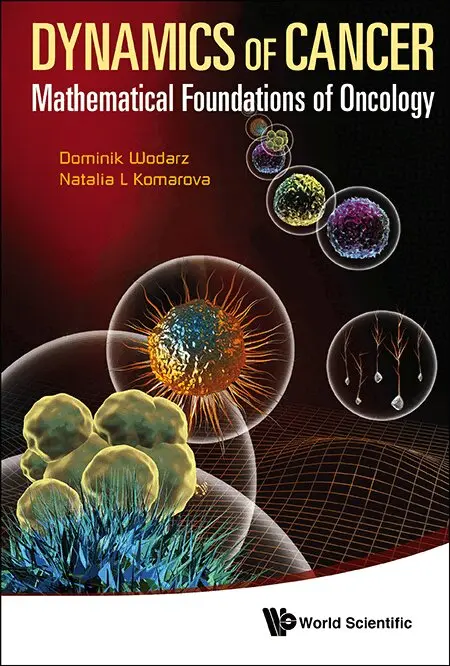
The book aims to provide an introduction to mathematical models that describe the dynamics of tumor growth and the evolution of tumor cells. It can be used as a textbook for advanced undergraduate or graduate courses, and also serves as a reference book for researchers. The book has a strong evolutionary component and reflects the viewpoint that cancer can be understood rationally through a combination of mathematical and biological tools. It can be used both by mathematicians and biologists. Mathematically, the book starts with relatively simple ordinary differential equation models, and subsequently explores more complex stochastic and spatial models. Biologically, the book starts with explorations of the basic dynamics of tumor growth, including competitive interactions among cells, and subsequently moves on to the evolutionary dynamics of cancer cells, including scenarios of cancer initiation, progression, and treatment. The book finishes with a discussion of advanced topics, which describe how some of the mathematical concepts can be used to gain insights into a variety of questions, such as epigenetics, telomeres, gene therapy, and social interactions of cancer cells.