Domnita Dumitrescu - Böcker
Visar alla böcker från författaren Domnita Dumitrescu. Handla med fri frakt och snabb leverans.
3 produkter
3 produkter
2 176 kr
Skickas inom 10-15 vardagar
L2 Spanish Pragmatics is a comprehensive, state-of-the-art overview of current research into pragmatics and Spanish language teaching. It presents the research on the teaching of pragmatics and Spanish language as a multifaceted discipline. Written by an international cohort of scholars, the breadth of topics includes innovative topics in the teaching of Spanish, such as genre analysis, discourse markers, politeness and impoliteness, nonverbal communication, irony, and humor, as well as web-based pragmatics resources.Key features: An overview of new trends in Spanish pragmatics research and the growing need for instruction in intercultural communication; Insights derived from important theoretical and empirical works that may contribute to integrate pragmatics in the teaching of the language; Explanations with great clarity, plenty of examples and references, as well as connections to language teaching and learning; Tasks and activities that can help teachers move from a traditional curricular approach to a more innovative and engaging one; Descriptions of numerous activities or guidelines for the classroom, supplemented with additional materials; A bilingual glossary of terms in pragmatics that will help teachers in their implementation of activities to teach L2 Spanish pragmatics. L2 Spanish Pragmatics constitutes a reference book on current research on learning and teaching Spanish pragmatics. It will be of interest to university lecturers, researchers, and graduate students. It will also be an excellent resource for language educators and K-16 teachers willing to expand their knowledge and apply the teaching of pragmatics as an integral component in the teaching of the Spanish language.
749 kr
Skickas inom 10-15 vardagar
L2 Spanish Pragmatics is a comprehensive, state-of-the-art overview of current research into pragmatics and Spanish language teaching. It presents the research on the teaching of pragmatics and Spanish language as a multifaceted discipline. Written by an international cohort of scholars, the breadth of topics includes innovative topics in the teaching of Spanish, such as genre analysis, discourse markers, politeness and impoliteness, nonverbal communication, irony, and humor, as well as web-based pragmatics resources.Key features: An overview of new trends in Spanish pragmatics research and the growing need for instruction in intercultural communication; Insights derived from important theoretical and empirical works that may contribute to integrate pragmatics in the teaching of the language; Explanations with great clarity, plenty of examples and references, as well as connections to language teaching and learning; Tasks and activities that can help teachers move from a traditional curricular approach to a more innovative and engaging one; Descriptions of numerous activities or guidelines for the classroom, supplemented with additional materials; A bilingual glossary of terms in pragmatics that will help teachers in their implementation of activities to teach L2 Spanish pragmatics. L2 Spanish Pragmatics constitutes a reference book on current research on learning and teaching Spanish pragmatics. It will be of interest to university lecturers, researchers, and graduate students. It will also be an excellent resource for language educators and K-16 teachers willing to expand their knowledge and apply the teaching of pragmatics as an integral component in the teaching of the Spanish language.
722 kr
Skickas inom 5-8 vardagar
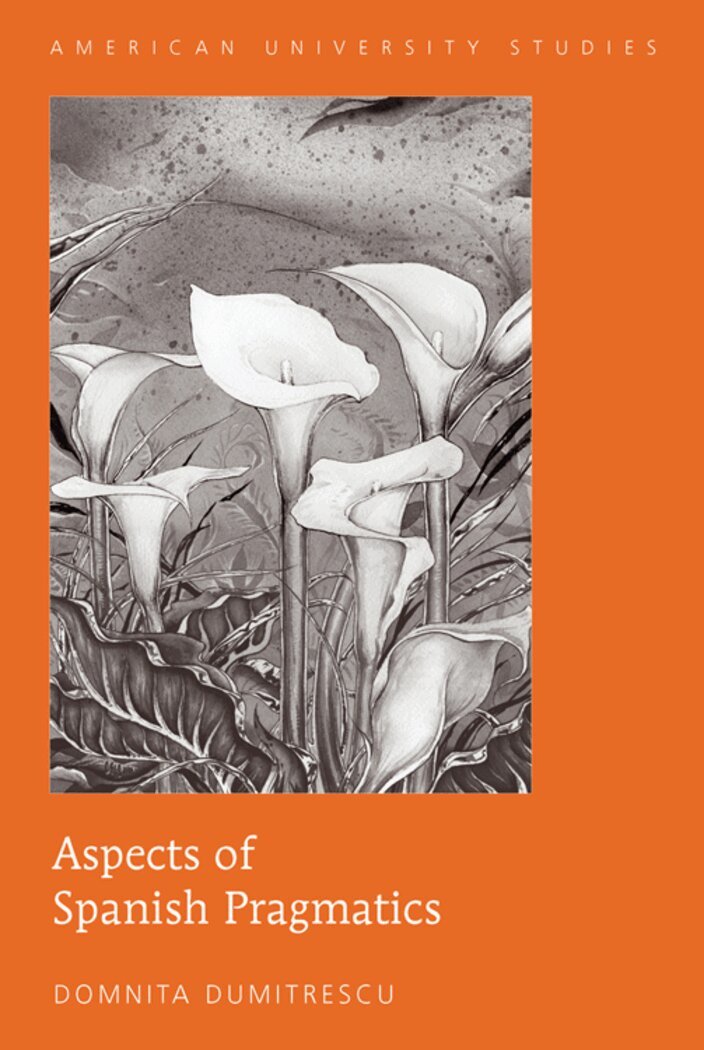
This collection of essays on Spanish pragmatics can be understood in its broadest sense in Iacob L. Mey’s words as «the study of the conditions of human language use in a societal context.» The essays, which can be read independently from one another, revolve around three key areas within the Anglo-American school of pragmatics: speech acts, conversation, and politeness as sociocultural manifestations of communication.The first part of the book emphasizes the study of politeness in different Spanish-speaking communities, paying special attention to the realization of polite speech acts and their cross-cultural and cross-linguistic implications, as well as the face-work that interlocutors conduct in casual conversations and other communicative settings. The second part expands the topic of politeness strategies to the study of new contexts (such as echo questions and conversational repairs) and addresses other language phenomena that can be best explored from a pragmalinguistic perspective, such as evidentiality, mitigation, contrastive emphasis, and topicality and discourse salience.The examples (with the exception of a few literary quotes) proceed from naturally occurring data or were collected through questionnaires, and represent a wide range of colloquial «Spanishes,» from Peninsular to Latin American, from monolingual to bilingual, and from native to heritage to second language learners’ varieties.The empirical nature of Aspects of Spanish Pragmatics will appeal to a wide range of readers interested in the use of Spanish for real-life communicative interactions, as well as in the topic of intercultural communication and the teaching of authentic language to students of Spanish in the United States.