Don Carleton - Böcker
Visar alla böcker från författaren Don Carleton. Handla med fri frakt och snabb leverans.
7 produkter
7 produkter
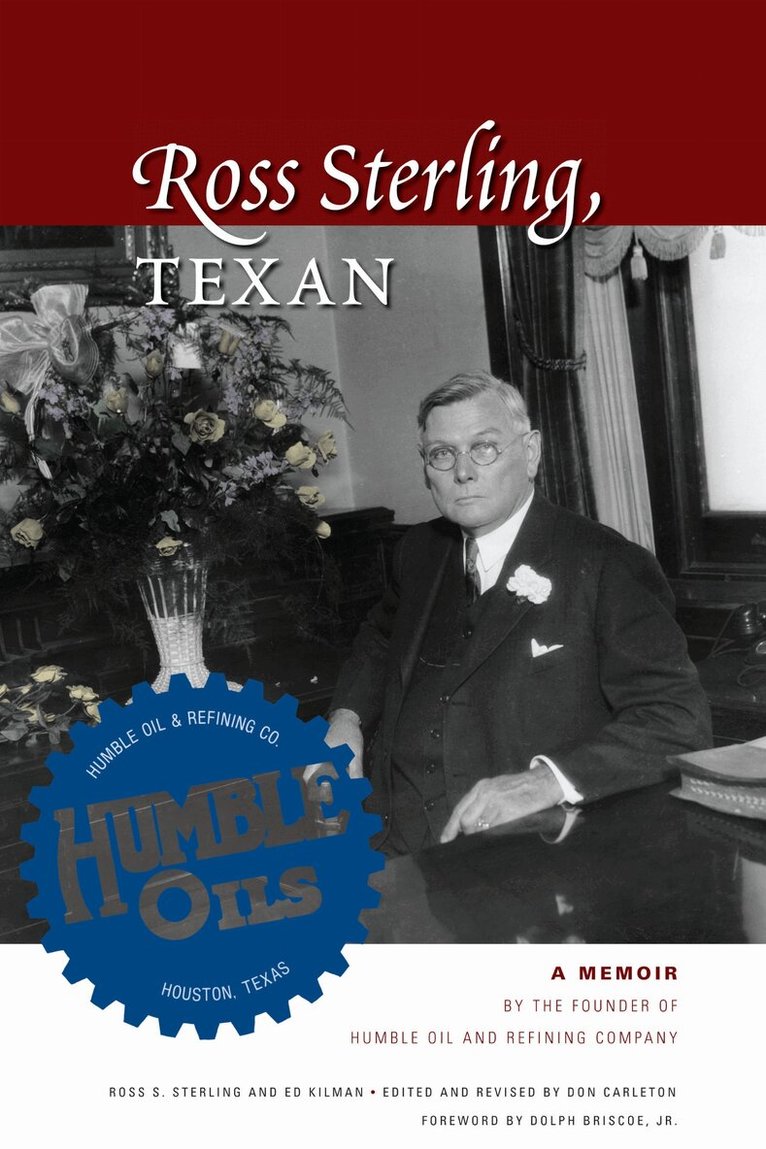
Ross Sterling, Texan
A Memoir by the Founder of Humble Oil and Refining Company
Häftad, Engelska, 2007
305 kr
Skickas inom 10-15 vardagar
Born on a farm near Anahuac, Texas, in 1875 and possessed of only a fourth-grade education, Ross Sterling was one of the most successful Texans of his generation. Driven by a relentless work ethic, he become a wealthy oilman, banker, newspaper publisher, and, from 1931 to 1933, one-term governor of Texas. Sterling was the principal founder of the Humble Oil and Refining Company, which eventually became the largest division of the ExxonMobil Corporation, as well as the owner of the Houston Post.Eager to "preserve a narrative record of his life and deeds," Ross Sterling hired Ed Kilman, an old friend and editorial page editor of the Houston Post, to write his biography. Though the book was nearly finished before Sterling's death in 1949, it never found a publisher due to Kilman's florid writing style and overly hagiographic portrayal of Sterling.In this volume, by contrast, editor Don Carleton uses the original oral history dictated by Ross Sterling to Ed Kilman to present the former governor's life story in his own words. Sterling vividly describes his formative years, early business ventures, and active role in developing the Texas oil industry. He also recalls his political career, from his appointment to the Texas Highway Commission to his term as governor, ending with his controversial defeat for reelection by "Ma" Ferguson. Sterling's reminiscences constitute an important primary source not only on the life of a Texan who deserves to be more widely remembered, but also on the history of Houston and the growth of the American oil industry.
268 kr
Skickas inom 10-15 vardagar
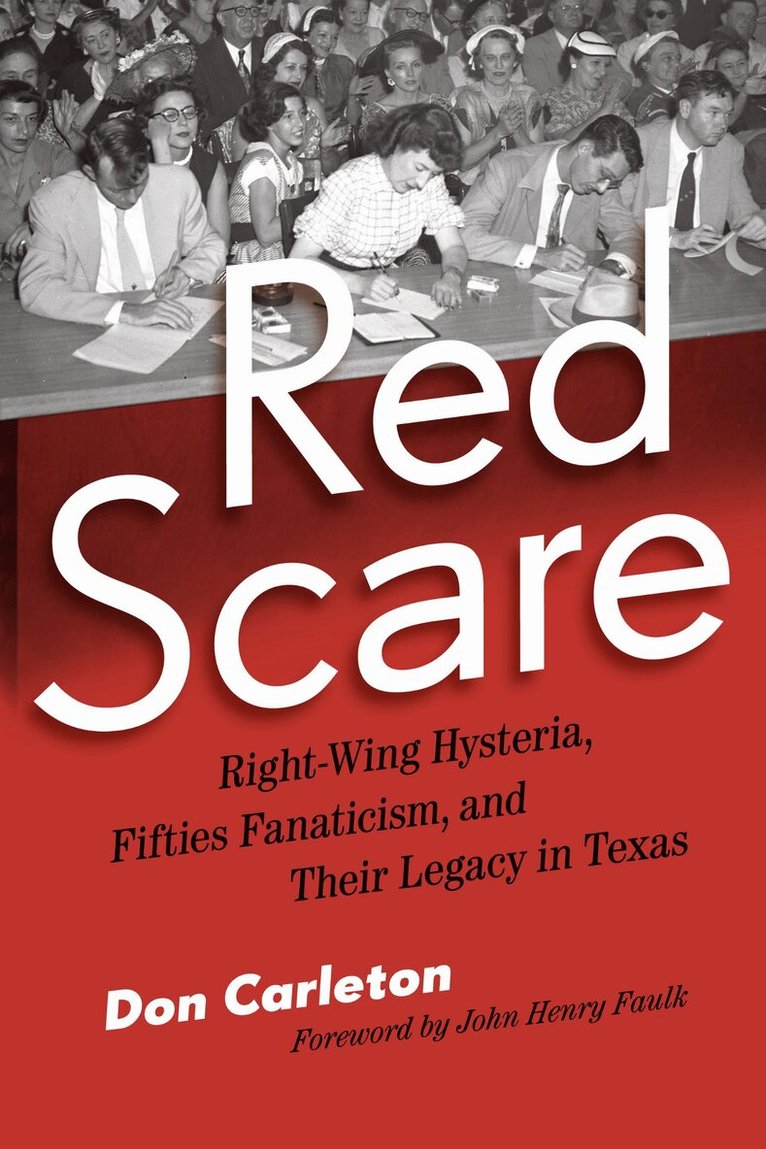
Winner of the Texas State Historical Association Coral Horton Tullis Memorial Prize for Best Book on Texas History, this authoritative study of red-baiting in Texas reveals that what began as a coalition against communism became a fierce power struggle between conservative and liberal politics.
342 kr
Skickas inom 7-10 vardagar
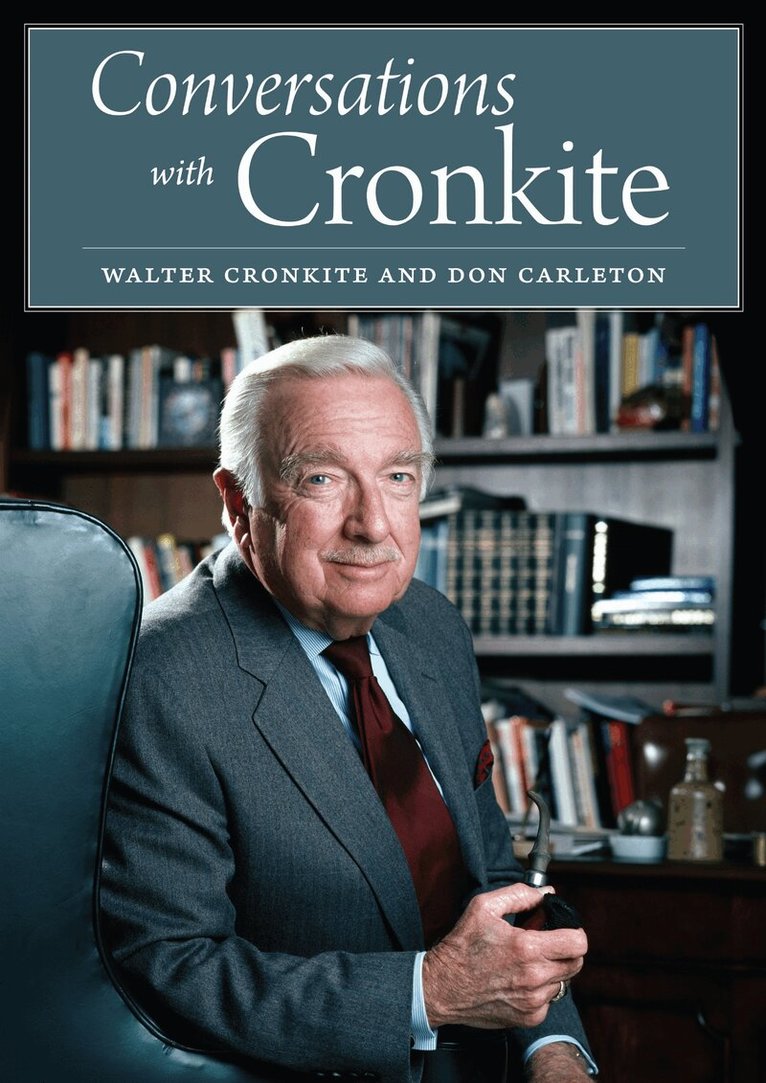
Intimate. Revealing. Candid. Published by the Dolph Briscoe Center for American History, Conversations with Cronkite gives readers a rare glimpse into the life and times of Walter Cronkite in his own words. The book contains selections from interviews between the legendary journalist and an experienced oral historian-Cronkite's friend, Dr. Don Carleton. With the publication of Conversations with Cronkite, readers have the opportunity to discover the behind-the-scenes stories of his life, edited by Carleton to focus on key events, issues, and themes. More than just oral history transcripts, these are the intimate conversations of two friends, covering virtually every aspect of Cronkite's life and career. Illustrated with photographs and archival treasures from the Cronkite Papers, Conversations with Cronkite gives readers the opportunity to once again hear the voice of "the most trusted man in America." Walter Cronkite on: His famous sign off "And that's the way it is" I didn't clear it with [CBS] in any way. I started using it, and [Richard Salant] said, "This presupposes that everything we said is right, that that's the whole picture of the day's news. I don't really think you ought to be doing that." I think he was correct. But the thing had already caught on. It really was just rolling. So I got to kind of a point of being stubborn about it and said, "Well, I like it." [Salant] said, "Well, it's up to you." He let it go. It has been much criticized by serious television critics . . . because of that argument that . . . it was presumptive that everything we said is correct. Which was wrong. I shouldn't have said that. . . . And particularly when we got into controversial subjects like the Vietnam War. In fact, there's a New Yorker cartoon with a guy coming half out of his chair and shouting at his television, saying, "That's NOT the way it is." Being a United Press reporter during the Battle of the Bulge in World War II God, it was cold. We looked like Washington's army at Valley Forge. At one point, the troops I was with entered a town, and we got into a fire fight right away. It was very intense. My driver and I hopped out of our jeep and got in behind a doorway. The Germans were at one end of the main street and . . . it was a pretty good fire fight. I looked up and saw a GI . . . leaning out taking a shot or two. . . . I knew this was a story. I yelled out, "What's your name, soldier?" "Colonel Jones." I said, "Where are you from, what outfit are you with?" He said, "Mr. Cronkite, I'm your driver." On Fidel Castro He was fascinated about . . . my war experience. Fascinated about the landings in Normandy. A real war buff. At one point I said, "I've been in a lot of Communist countries, including living two years in Moscow. I have yet to see a Communist country that understood the necessity of maintenance of . . . buildings or anything else." [Castro] threw up his hands and said, "Oh, boy, I know that. It's absolutely terrible." I said, "Well, why is it?" [Castro] said, "First of all, it's inherent in the idea of Communism. People don't own things, so they don't take care of them. That's the answer you capitalists give, but it's true."
217 kr
Skickas inom 7-10 vardagar
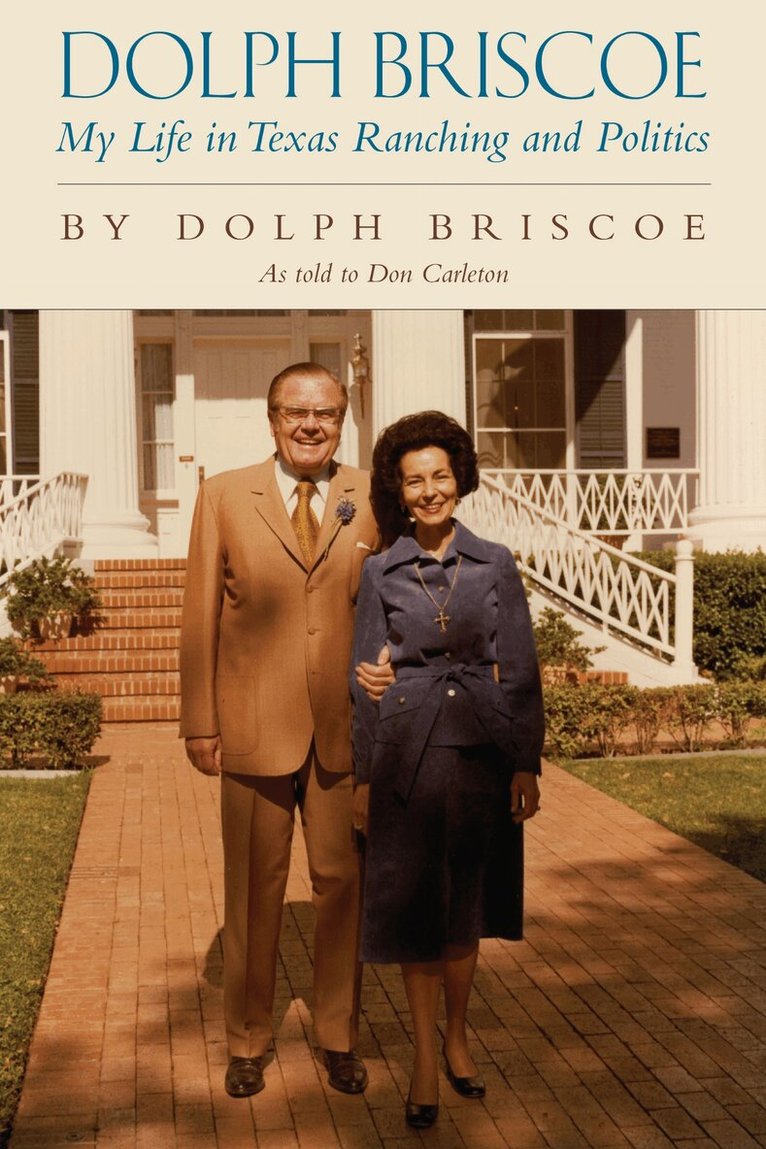
Dolph Briscoe, governor of Texas from 1973 until 1979, was the largest individual landowner and rancher in a state famous for its huge ranches. He was one of the most respected businessmen in Texas, with a portfolio that included banks, agribusinesses, cattle, and oil and gas properties. His philanthropy provided much-needed support to a wide range of educational, medical, scientific, and cultural institutions. As a member of the state legislature in the decade following World War II, Briscoe was the author of major legislation that improved the daily lives of farmers and ranchers throughout Texas. As an activist leader of the Texas and Southwestern Cattle Raisers Association, Briscoe played a significant role in the successful effort to eliminate the screwworm, an age-old scourge of the livestock industry. As a friend and associate of a number of major American political figures, he was an eyewitness to history. And as a governor who assumed office following one of the most far-reaching corruption scandals in Texas history, Briscoe played a crucial role in restoring public confidence in the integrity of state government.Don Carleton, executive director of the Dolph Briscoe Center for American History at the University of Texas at Austin, conducted a series of lengthy oral history interviews with Governor Briscoe to produce this book.
214 kr
Tillfälligt slut
People have been looking for the sites of the long-lost and mysterious battles of King Arthur for a thousand years. In this book, the result of extensive consultation with experts across academic disciplines, the author’s researches point to fascinating new conclusions about Arthur’s life.Much of the history of the time was lost because of some kind of natural catastrophe around AD 540. But the warrior elite, of which Arthur was part, went on to rule what later became known as Wessex, the cradle of the English nation – for which King Arthur became a founding legend.Don Carleton’s study – arguably the first attempt at an ‘authentic history’ of King Arthur for generations – offers a compelling case for a new location of the long-lost Battle of Badon, King Arthur’s greatest battle. The king and warrior who emerges from this work will be, to some readers, uncongenial. In this portrait, Arthur appears to have been a wily but amoral, boastful blond Irish raider, unrestrained in his ravaging, who used his battles to carve out a kingdom among the Britons and ended his life as a shambling, incoherent shadow of a warrior, a danger to himself and to everyone around him.
495 kr
Skickas inom 7-10 vardagar
The modern civil rights movement rapidly came to prominence after World War II, coalescing around the demand to repeal Jim Crow laws and promote a vision of a just, multiracial society. The vast majority of civil rights organizations practiced assertive nonviolence to meet these goals. Nevertheless, opponents often met their activism with violence and intimidation.Like those who marched, protested, and organized for civil rights and social justice, photojournalists put themselves in great danger. The Briscoe Center for American History’s exhibit, Struggle for Justice: Four Decades of Civil Rights Photography, which was displayed on the University of Texas at Austin campus, celebrated the legacy of those photographers. The material walked visitors through much of the civil rights era and provided a lesson both inspiring and challenging: that social progress is possible when one values it above personal comfort and safety. Now in book form, Struggle for Justice honors the photographers who were willing to put their privilege on the line to document the discrimination of others and, by doing so, helped to galvanize public support for the civil rights movement.
398 kr
Skickas inom 7-10 vardagar