Donald. Grierson - Böcker
Visar alla böcker från författaren Donald. Grierson. Handla med fri frakt och snabb leverans.
11 produkter
11 produkter
536 kr
Skickas inom 10-15 vardagar
In the preface to the first edition ofthis book, we expressed a conviction that there was a need for a short book that highlighted important advances in the new discipline of plant molecular biology. The rapid development of this topic has been brought about by the recognition of the unique properties of plants in the study of growth and development together with the application of recombinant DNA techniques to tackle these problems. Plant cells contain DNA in nuclei, plastids and mitochondria, and so offer the unique challenge of studying the interaction of three separate genetic systems in a single organism. The molecular approach has provided, in recent years, a wealth of important information about how plants function, and how they interact with bacteria, fungi and viruses. Furthermore, plant development involves the regulation of gene expression in response to intern al and external signals, and plant molecular biology has provided a fundamental insight into how this development is regulated. This is not only of considerable scientific interest, but also has important implications for the production of plants and plant products in agriculture, horticulture and the food industries.
853 kr
Skickas inom 10-15 vardagar
Most aspects of plant growth and development that affect food production involve the regulated expression of specific genes. This volume addresses the problem of how physiological environmental, and genetic factors interact to control plant gene expression, in the belief that an improved understanding of how plants function at the molecular level is an important prerequisite for the next phase in plant genetic engineering.
2 101 kr
Skickas inom 10-15 vardagar
This series reviews recent developments in plant biotechnology, shows how scientific understanding leads to commercial applications, and discusses opportunities and problems in this rapidly developing field. Most important phases of plant growth, development and reproduction that affect food production and quality involve changes in plant gene expression. These include processes such as germination, flowering, ripening, seed development, formation of storage organs, senescence, and response to alterations in the environment and to pathogens. Recent developments in plant physiology, biochemistry and molecular biology mean that we are beginning to understand these processes in molecular terms. Most importantly, the availability of plant genetic engineering techniques means that we can do experiments in planta. This makes it possible to provide new scientific information about macromolecular interactions and control mechanisms, and to alter the properties of plants in a directed and controlled way. It is now possible to consider altering the properties of raw materials in the plant, by gene technology.This has profound implications for the future quality and industrial processing of plant products. This volume discusses present knowledge of the biosynthesis of plant natural products, their use as fresh produce, in processing prior to consumption and as raw materials for industrial processing, and the potential of programmes designed to change natural products within the plant by genetic engineering.
536 kr
Skickas inom 10-15 vardagar
The second edition of this popular textbook has been substantially revised and updated to take into account the rapid advances in research over the last few years. The authors have retained the basic format, whilst some chapters have been updated and others completely rewritten - this includes new sections on protein targeting, chloroplast DNA, the mitochondrial genome, developmental regulation of gene expression and the latest information on Rhizobium, Agrobacterium, and plant viruses. The substantial revision of chapter nine reflects the many new developments in the area of plant genetic engineering. The inclusion of many new diagrams complements the text. This book should be of interest to advanced undergraduates and postgraduates in plant physiology and biochemistry, molecular biology, genetics and biotechnology.
1 064 kr
Skickas inom 10-15 vardagar
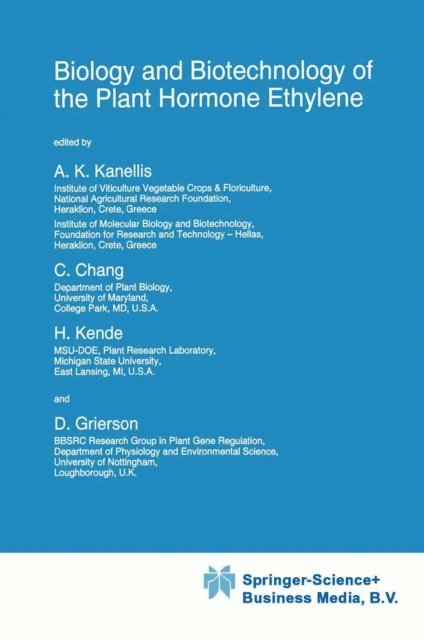
Ethylene is a simple, gaseous plant hormone produced by higher plants, bacteria and fungi. Thanks to new tools that have become available in biochemistry and molecular genetics, parts of the ethylene biosynthesis, perception and signal transduction reactions have been elucidated. This knowledge has been applied to enhance the quality of a number of agronomically important crops. In this text, leading figures in the field provide surveys of the current state of ethylene biosynthesis and action, perception and signal transduction pathways, senescence, biotechnological control, and the involvement of ethylene in pathogenesis and stress.
2 101 kr
Skickas inom 10-15 vardagar
There have been rapid advances in elucidating the mechanisms of ethylene perception and synthesis by plants, the signal transduction pathway, and ethylene control in transgenic plants. It is noted here that studies on ethylene have led the way in enhancing our understanding of the biosynthesis of a plant hormone at the biochemical and molecular levels, and future studies should further help in the understanding of the biochemical machinery responsible for the perception and signal transduction of this plant hormone. The purpose of the papers here is the critical assessment of the ethylene synthesis, perception and signal transduction, its role in pathogenesis and stress, its involvement in plant growth and development and, lastly, the biotechnological control of its formation and function.
2 101 kr
Skickas inom 10-15 vardagar
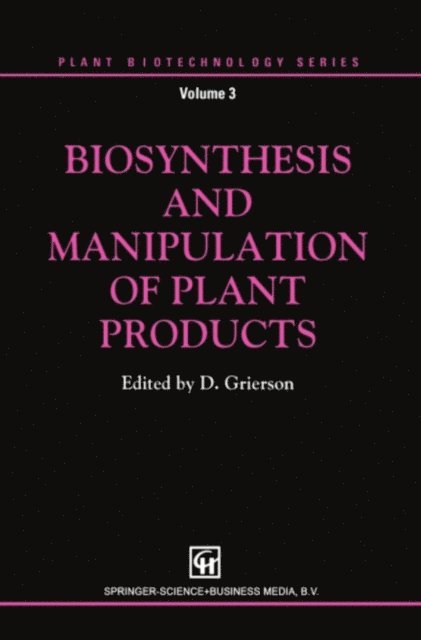
Volumes I and 2 of this Plant Biotechnology series reviewed fundamental aspects of plant molecular biology and discussed production and analysis of the first generation of transgenic plants of potential use in agriculture and horticulture. These included plants resistant to insects, viruses and herbicides, which were produced by adding genes from other organisms. Realisation of the potential of plant breeding has led to a resurgence of interest in methods of altering the structure, composition and function of plant constituents, which represents an even greater challenge and offers scope for improving the quality of a wide range of agricultural products. This, in tum, has resulted in a re-evaluation of priorities and targets by industry. Volume 3 of this series considers the biochemical and gentic basis of the biosynthesis of plant products such as starch, lipids, carotenoids and cell walls, and evaluates the ways in which biosynthesis of these products can be modified for use in the food industries. Authors also cover the biosynthesis of rare secondary products and the function and application of proteins for plant protection and therapeutic use. The emphasis throughout is on the relationship between fundamen tal aspects of biosynthesis and structure-function relationships, and application of this knowledge to the redesigning and altering of plant products by molecular genetics.
2 101 kr
Skickas inom 10-15 vardagar
The inflorescence of the monoecious maize plant is unique among the Gramineae in the sharp separation of the male and female structures. The male tassel at the terminus of the plant most often sheds pollen before the visual appearance of the receptive silks of th the female ear at a lateral bud, normally at the 10 leaf [I]. Earlier studies examined the ontogeny of the growing tissues beginning with the embryo in the kernel through to the obvious protuberances of the growing point as the kernel germinates. The differentiated developing soon-to-become tassel and the lateral bulges that develop into the ears on the lateral buds become apparent very early in the germinating kernel [2, 3, 46]. A certain number of cells are destined for tassel and ear development [8]. As the plant develops, there is a phase transition [\3, 16] from the vegetative lateral buds to the reproductive lateral buds. This change in phase has been ascribed to genotypic control as evidenced in the differences among different genotypes in the initiation of the reproductive [I]. The genetic control of tassel and ear initiation has been gleaned from anatomical observations. Lejeune and Bernier [I2] found that maize plants terminate the initiation of additional axillary meristems at the time of tassel initiation. This would indicate that the top-most ear shoot is initiated on the same day as the initiation of tassel development and this event signals the end of the undifferentiated growing point.
1 064 kr
Skickas inom 10-15 vardagar
Ethylene is a simple gaseous plant hormone produced by higher plants, bacteria and fungi. Thanks to new tools that have become available in biochemistry and molecular genetics, parts of the ethylene biosynthesis, perception and signal transduction reactions have been elucidated. This knowledge has been applied to enhance the quality of a number of agronomically important crops. In Biology and Biotechnology of the Plant Hormone Ethylene, leading figures in the field provide surveys of the current state of ethylene biosynthesis and action, perception and signal transduction pathways, senescence, biotechnological control, and the involvement of ethylene in pathogenesis and stress. Audience: Indispensable to all academic, industrial and agricultural researchers as well as undergraduates and graduates in plant biology, biochemistry, genetics, molecular biology and food science.
1 064 kr
Skickas inom 10-15 vardagar
Plant biotechnology offers important opportunities for agriculture, horticul ture, and the food industry by generating new transgenic crop varieties with altered properties. This is likely to change farming practices, improve the quality of fresh and processed plant products, and reduce the impact of food production on the environment. The purpose of this series is to review the basic science that underpins plant biotechnology and to show how this knowledge is being used in directed plant breeding. It is intended for those involved in fundamental and applied research on transgenic plants in the academic and commercial sectors. The first volume deals with plant genes, how they work, and their transfer from one organism to another. Authors discuss the production and evaluation of the first generation of transgenic crops resistant to insects, viruses and herbicides, and consider aspects of gene regulation and targeting of their protein products to the correct cellular location. All the contributors are actively engaged in research in plant biotechnology and several are concerned directly with its commercial applications. Their chapters highlight the importance of a fundamental understanding of plant physiology, biochemistry, and cell and molecular biology for the successful genetic engineering of plants. This interdisciplinary approach, which focuses research from traditionally separate areas, is the key to further developments which are considered in subsequent volumes. Don Grierson Contributors Alan B. Bennett Mann Laboratory, Department of Vegetable Crops, University of California, Davis, CA 95616 John W. s.
536 kr
Skickas inom 10-15 vardagar
Plant biotechnology offers important opportunities for agriculture, horticul ture, and the food industry by generating new transgenic crop varieties with altered properties. This is likely to change farming practices, improve the quality of fresh and processed plant products, and reduce the impact of food production on the environment. The purpose of this series is to review the basic science that underpins plant biotechnology and to show how this knowledge is being used in directed plant breeding. It is intended for those involved in fundamental and applied research on transgenic plants in the academic and commercial sectors. The first volume deals with plant genes, how they work, and their transfer from one organism to another. Authors discuss the production and evaluation of the first generation of transgenic crops resistant to insects, viruses and herbicides, and consider aspects of gene regulation and targeting of their protein products to the correct cellular location. All the contributors are actively engaged in research in plant biotechnology and several are concerned directly with its commercial applications. Their chapters highlight the importance of a fundamental understanding of plant physiology, biochemistry, and cell and molecular biology for the successful genetic engineering of plants. This interdisciplinary approach, which focuses research from traditionally separate areas, is the key to further developments which are considered in subsequent volumes. Don Grierson Contributors Alan B. Bennett Mann Laboratory, Department of Vegetable Crops, University of California, Davis, CA 95616 John W. s.