Donald Morse - Böcker
Visar alla böcker från författaren Donald Morse. Handla med fri frakt och snabb leverans.
4 produkter
4 produkter
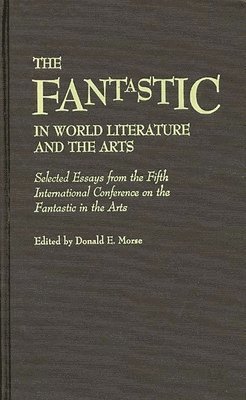
Fantastic in World Literature and the Arts
Selected Essays from the Fifth International Conference on the Fantastic in the Arts
Inbunden, Engelska, 1987
776 kr
Skickas inom 10-15 vardagar
From a discussion of the problem of communicating with non-human beings and a review of popular fantastic films to an examination of stage portrayals of Dr. Frankenstein's monster, the essays included reflect and reinfoce the international appeal of the fantastic. Studies on J.R.R. Tolkien, Lewis Caroll, Carlos Fuentes, Edgar Allen Poe, Jorges Luis Borges, and others show how writers, artists, and directors use the impossible as a way of presenting familiar problems and themes--such as the relation of the past to the future or our attitudes towards death--in a new light. Several essays suggest new or newly refined ways of approaching the fantastic in literature from a critical standpoint, while others focus on the visual and kinetic arts. Taken together, the essays accurately mirror the flux and vitality of the current study of the fantastic in the arts.
776 kr
Skickas inom 10-15 vardagar
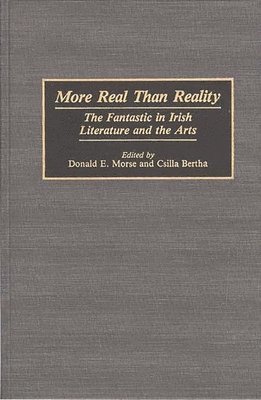
For many readers, the Irish and the fantastic are synonymous. From the ancient texts and medieval illuminated manuscripts to 20th century poetry, painting, drama, stories, and novels, Irish writers and artists have found the fantastic not only congenial but necessary to their art. In his introduction to this collection of fifteen essays that focus on the fantastic in Irish literature and the arts, Donald E. Morse contends that the use of the fantastic mode has allowed Irish writers and artists to express ideas, emotions, and insights not available through the direct imitation of everyday reality. Morse argues that for the Irish, the road to insight was often through the territory of the marvelous and the fantastic rather than through literalism, rationalism, or logic. In seeking to arrive at a definition of what constitutes the fantastic, Morse looks at work by Sean O'Casey and Seamus Heaney and finds that the fantastic occurs during encounters with what is considered to be the impossible, a concept contingent upon personal beliefs. To demonstrate how the fantastic may yield new insights into human beings, their behavior, feelings, and thoughts, as well as lead to innovations in art, Morse scrutinizes Circe from James Joyce's Ulysses, probably the most famous use of the fantastic in all modern Irish literature. The works of Yeats, Field, Shelly, Synge, Beckett, Swift, Coleridge, and others are examined in incisive chapters written from the point of view of the fantastic.The four-part study begins with a section on Ancient Knowledge and the Fantastic in which four chapters discuss Yeats's plays; The Figure of the Mermaid in Irish Legend and Poetry; Ghosts in Irish Drama; and The Only Jealousy of Emer. In a section devoted to Irish theatre, music, and painting, the paintings of Jack B. Yeats are examined for fantastic content and Peter Egri finds parallels between the work of John Field and Chopin, Shelly, and Turner. The plays of Synge, O'Casey, Beckett, and Thomas Murphy are the subject of Part III. The final section considers The Occult, Fantasy, and Phantasmagoria in Swift, Dunsany, Joyce, and Yeats. The coeditors' afterword, Looking Backward, Looking Ahead, concludes the volume which also contains a select bibliography on the fantastic. Generalists in literature or the arts, students and scholars of Irish Studies and the fantastic in the arts, as well as those enamored of things Irish will find this collection resonant with rich insights into the genre.
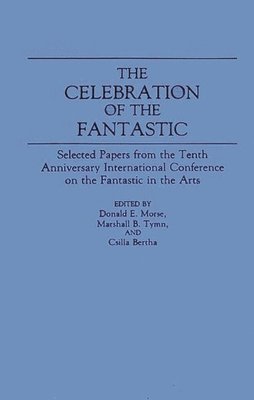
Celebration of the Fantastic
Selected Papers from the Tenth Anniversary International Conference on the Fantastic in the Arts
Inbunden, Engelska, 1992
1 160 kr
Skickas inom 10-15 vardagar
The Celebration of the Fantastic reaffirms the wide range and validity of the subject, treatment, and approach that the fantastic demands. Twenty-five essays, selected from among the more than 230 presented at the Tenth Anniversary Conference of the IAFA, consider writers as diverse as Stephen King, Doris Lessing, Rudyard Kipling, Loren Eiseley, Mary Stewart, Bernard Malamud, Orson Scott Card, Toni Morrison, Henry James, and Ray Bradbury as well as television personalities, film directors, and German and Hungarian visual artists. Also included are essays on science fiction writers Robert Silverberg, Joe Haldeman, and Greg Bear.Some of the more provocative work is on Feminist Fantasy and Open Structure, The Greatest Fantasy on Earth: The Superweapon in Fiction and Fact, Virtual Space and Its Boundaries in Science Fiction Film and Television, The Fantastic in German Democratic Republic Literature, Csontvary: The Painter of the Sun's Path, and The Shaman in Modern Fantasy. The essays illustrate the essential theme of the fantastic: the testing of the limits of civilization and the questioning of commonly accepted values and ideas as writers and artists explore the hidden and the repressed.
1 160 kr
Skickas inom 10-15 vardagar
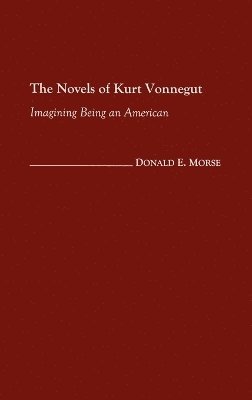
Vonnegut belongs to what Emerson called the party of hope but hope clearly restricted to this world. This book is the first scholarly study to discuss all of Vonnegut's novels against the background of his other writing, events of the 20th century, and the vast array of Vonnegut scholarship. In his novels he speaks eloquently and succinctly for his generation of Americans—the central generation of 20th-century Americans—thus making him the representative 20th-century American writer. His novels reflect the major traumatic public and private events that have gone into imagining being an American during that century, including the Great Depression, World War II, the Bomb, Vietnam, the weakening of social institutions, the vicissitudes of marriage and family, divorce, growing old, experiencing loss, and anticipating death.The book presents a clear, well-argued view of Vonnegut's work within the context of American literature and history. Like a majority of American writers, Vonnegut is a moralistic novelist but one who employs humor to drive home his ethical points. In many respects he most closely resembles Mark Twain not only in being a highly ethical novelist, but also in his use of comedy. His books serve a remarkable range of purposes: social commentary, theological discussion, ethical argument, parody, satire, and prophecy. His work reflects his strong belief in the dignity and worth of all individuals, and as an American pragmatist, he reminds his readers again and again of the unfinished nature of America.