Donia Zhang - Böcker
Visar alla böcker från författaren Donia Zhang. Handla med fri frakt och snabb leverans.
4 produkter
4 produkter
831 kr
Skickas inom 10-15 vardagar
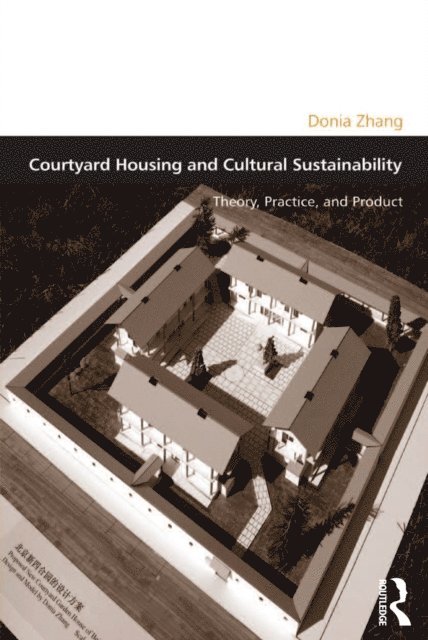
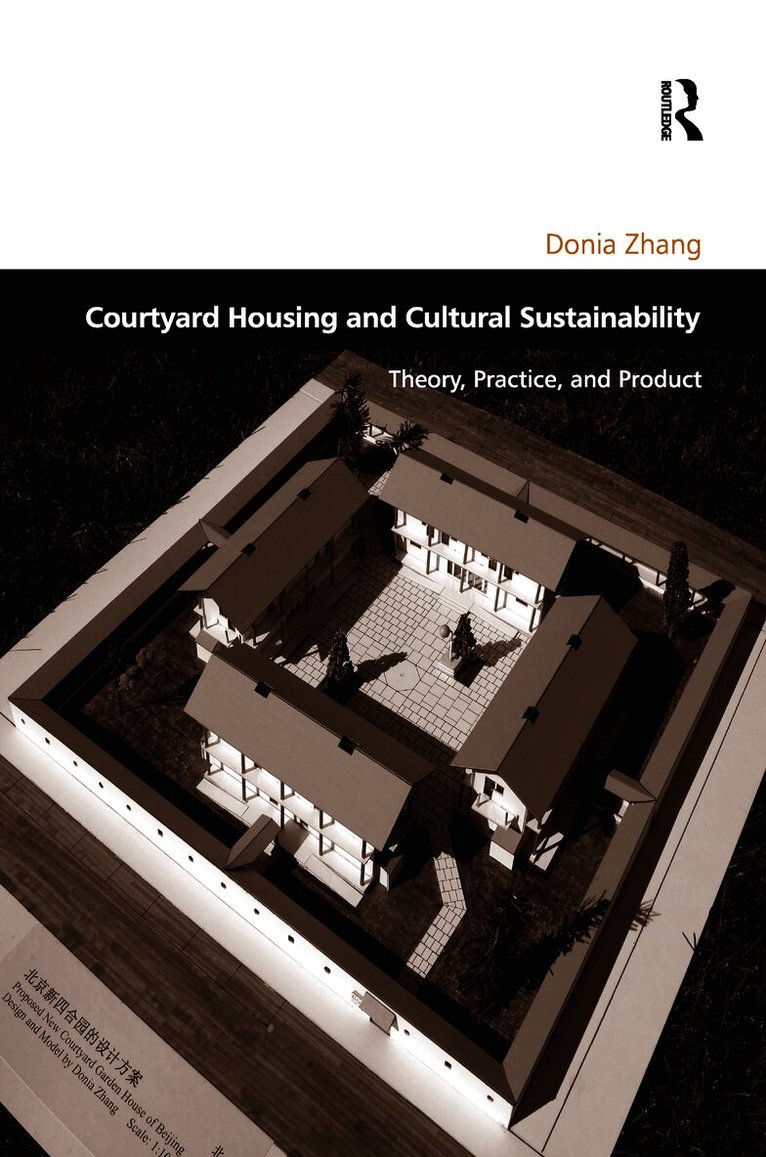
Cultural sustainability is a very important aspect of the overall sustainability framework and is regarded as the fourth pillar alongside the other three: environmental, economic, and social sustainability. However, the concept is neither fully explored, nor widely accepted or recognized. This book elicits the interplay of nature-culture-architecture and theorizes the concept of cultural sustainability and culturally sustainable architecture. It identifies four key themes in Chinese philosophy: Harmony with Heaven, Harmony with Earth, Harmony with Humans, and Harmony with Self, along with Greek philosopher Aristotle’s physics: form, space, matter, and time, it sets them as criteria to evaluate the renewed and new courtyard housing projects constructed in China since the 1990s. Using an innovative architectural and social science approach, this book examines the political, economic, social, and spatial factors that affect cultural sustainability. Supported by a multiplicity of data including: field surveys, interviews with residents, architects, and planners, time diaries, drawings, photos, planning documents, observation notes, and real estate brochures, the book proposes new courtyard garden house design strategies that promote healthy communities and human care for one another, a concept that is universally applicable. The volume is a first opportunity to take a holistic view, to encompass eastern and western, tangible and intangible, cultures in the theorization of cultural sustainability and culturally sustainable architecture. It is a comprehensive contribution to architectural theory.
Courtyard Housing for Health and Happiness
Architectural Multiculturalism in North America
Häftad, Engelska, 2017
747 kr
Skickas inom 10-15 vardagar
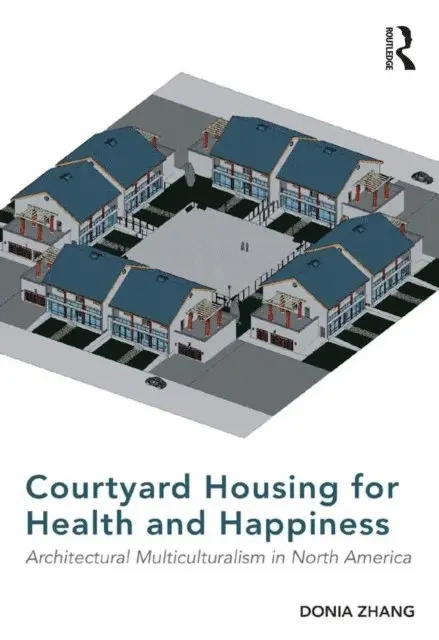
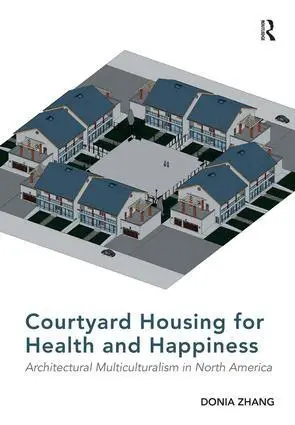
Health and happiness are fundamental to human quality of life. The United Nations World Happiness Report 2012 reflects a new worldwide call for governments to include happiness as a criterion to their policies. The Healthy Cities or Happy Cities movement has been endorsed by the WHO since 1986, and a Healthy House or Happy Home is a critical constituent of a healthy city or a happy city. Nevertheless, the concept has not been fully explored. Existing literature on the healthy house has often focused on the technical, economic, environmental, or biochemical aspects, while current scholarship on the happy home commonly centers on interior decoration. Few studies have addressed the importance of social and cultural factors that affect the health and happiness of the occupants. Identifying four key themes in Chinese philosophy to promote health and happiness at home, this book links architecture with Chinese philosophy, social sciences, and the humanities, and in doing so, argues that Architectural Multiculturalism is a vital ideology to guide housing design in North America. Using both qualitative and quantitative evidence gathered from ethnic Chinese and non-Chinese living in the USA and Canada, the study proposes that the Courtyard is a central component to promote social and cultural health and happiness of residents. It further details courtyard garden house design strategies that combine a sense of privacy with a feeling of community as represented in courtyard housing. The schemes may have universal implications.
2 219 kr
Skickas inom 10-15 vardagar
Cultural sustainability is a very important aspect of the overall sustainability framework and is regarded as the fourth pillar alongside the other three: environmental, economic, and social sustainability. However, the concept is neither fully explored, nor widely accepted or recognized. This book elicits the interplay of nature-culture-architecture and theorizes the concept of cultural sustainability and culturally sustainable architecture. It identifies four key themes in Chinese philosophy: Harmony with Heaven, Harmony with Earth, Harmony with Humans, and Harmony with Self, along with Greek philosopher Aristotle’s physics: form, space, matter, and time, it sets them as criteria to evaluate the renewed and new courtyard housing projects constructed in China since the 1990s. Using an innovative architectural and social science approach, this book examines the political, economic, social, and spatial factors that affect cultural sustainability. Supported by a multiplicity of data including: field surveys, interviews with residents, architects, and planners, time diaries, drawings, photos, planning documents, observation notes, and real estate brochures, the book proposes new courtyard garden house design strategies that promote healthy communities and human care for one another, a concept that is universally applicable. The volume is a first opportunity to take a holistic view, to encompass eastern and western, tangible and intangible, cultures in the theorization of cultural sustainability and culturally sustainable architecture. It is a comprehensive contribution to architectural theory.
Courtyard Housing for Health and Happiness
Architectural Multiculturalism in North America
Inbunden, Engelska, 2015
2 150 kr
Skickas inom 10-15 vardagar
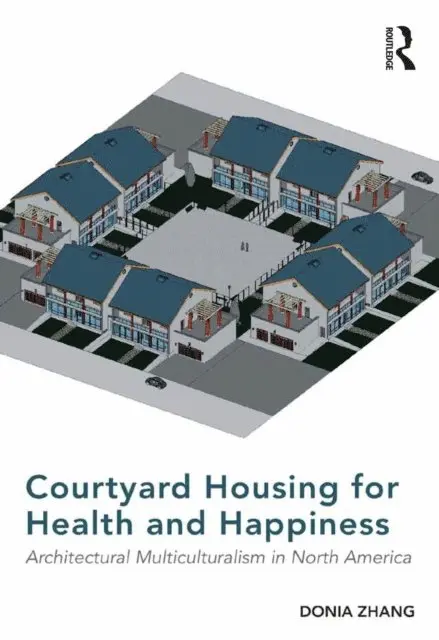
Health and happiness are fundamental to human quality of life. The United Nations World Happiness Report 2012 reflects a new worldwide call for governments to include happiness as a criterion to their policies. The Healthy Cities or Happy Cities movement has been endorsed by the WHO since 1986, and a Healthy House or Happy Home is a critical constituent of a healthy city or a happy city. Nevertheless, the concept has not been fully explored. Existing literature on the healthy house has often focused on the technical, economic, environmental, or biochemical aspects, while current scholarship on the happy home commonly centers on interior decoration. Few studies have addressed the importance of social and cultural factors that affect the health and happiness of the occupants. Identifying four key themes in Chinese philosophy to promote health and happiness at home, this book links architecture with Chinese philosophy, social sciences, and the humanities, and in doing so, argues that Architectural Multiculturalism is a vital ideology to guide housing design in North America. Using both qualitative and quantitative evidence gathered from ethnic Chinese and non-Chinese living in the USA and Canada, the study proposes that the Courtyard is a central component to promote social and cultural health and happiness of residents. It further details courtyard garden house design strategies that combine a sense of privacy with a feeling of community as represented in courtyard housing. The schemes may have universal implications.