Donileen Loseke – författare
Visar alla böcker från författaren Donileen Loseke. Handla med fri frakt och snabb leverans.
6 produkter
6 produkter
Häftad, Engelska, 2003
706 kr
Skickas inom 10-15 vardagar
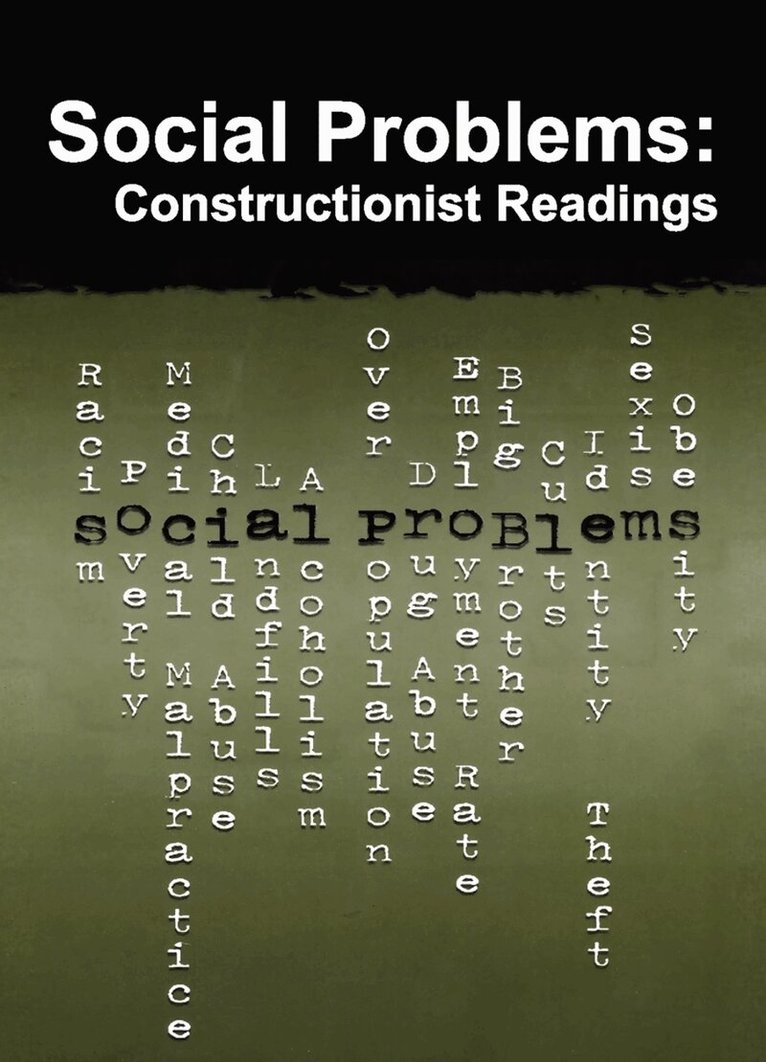
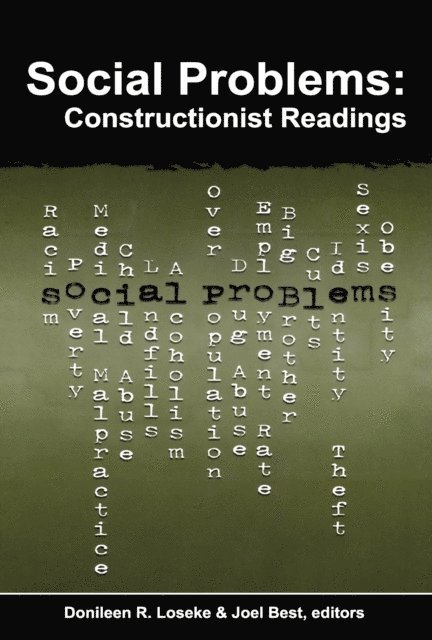
This collection of focused essays is directed at several levels of students of social problems. It is accessible to the uninitiated, who are not familiar with the constructionist literature, and aimed at those who are not particularly interested in subtle theoretical and empirical issues of concern to academics studying social problems from constructionist perspectives. Some readings focus on the construction of problems by scientists and other professionals; others examine the work of social activists, mass media, and social service personnel. Among the topics included are studies of social inequalities and individual deviance; a comparison of the images of social problems in the United States with those in other countries; and an examination of the importance of politics and power in constructing public images of social problems.Constructionist perspectives have become the leading theoretical approach for sociology and allied fields in studying social problems. Yet constructionists' impact on the teaching of social problems has been far less dramatic. Undergraduate courses on social problems are often subject to a theoretical barrage of eclectic perspectives. Just as the first social problems textbooks did almost a century ago, textbooks continue to present a series of unrelated chapters, each devoted to a particular social problem. Social Problems is an effort at systematic analysis rather than random thought on the subject.Social Problems presents detailed case studies demonstrating how constructionist perspectives can actually be applied to understand particular social problems. While these articles can be read alone, the editors have organized these selections to correspond with the chapter topics in the second edition of Donileen Loseke's Thinking about Social Problems, an accessible introduction to constructionist approaches. At the same time, some instructors who use this edited collection might wish to provide their own mix to the selection process. Many of the contributions make multiple points and so reasonably could be used to illustrate other basic texts or classic studies in the field of social problems.
Inbunden, Engelska, 2017
2 195 kr
Skickas inom 10-15 vardagar
This collection of focused essays is directed at several levels of students of social problems. It is accessible to the uninitiated, who are not familiar with the constructionist literature, and aimed at those who are not particularly interested in subtle theoretical and empirical issues of concern to academics studying social problems from constructionist perspectives. Some readings focus on the construction of problems by scientists and other professionals; others examine the work of social activists, mass media, and social service personnel. Among the topics included are studies of social inequalities and individual deviance; a comparison of the images of social problems in the United States with those in other countries; and an examination of the importance of politics and power in constructing public images of social problems.Constructionist perspectives have become the leading theoretical approach for sociology and allied fields in studying social problems. Yet constructionists' impact on the teaching of social problems has been far less dramatic. Undergraduate courses on social problems are often subject to a theoretical barrage of eclectic perspectives. Just as the first social problems textbooks did almost a century ago, textbooks continue to present a series of unrelated chapters, each devoted to a particular social problem. Social Problems is an effort at systematic analysis rather than random thought on the subject.Social Problems presents detailed case studies demonstrating how constructionist perspectives can actually be applied to understand particular social problems. While these articles can be read alone, the editors have organized these selections to correspond with the chapter topics in the second edition of Donileen Loseke's Thinking about Social Problems, an accessible introduction to constructionist approaches. At the same time, some instructors who use this edited collection might wish to provide their own mix to the selection process. Many of the contributions make multiple points and so reasonably could be used to illustrate other basic texts or classic studies in the field of social problems.
E-bok
Engelska, 2017833 kr
Läs direkt efter köp
For nearly half a century, social scientists have made claims that there is a "therapeutic ethos" with extensive influence upon numerous aspects of American society. In Therapeutic Culture, twelve authors address the implications of this ethos and its effects on a wide range of social institutions, extending from the family to schools, and operating in religious behavior and within the legal system. Has there been, as the sociological theorist Philip Rieff argued in 1966, a "triumph of the therapeutic?" If so, in what kinds of institutions has it been most pervasive? At the same time, what aspects of modern culture has it replaced or defeated? Therapeutic Culture addresses these questions, and raises others. Part 1 of this volume examines the emergence of the idea of "authenticity" as it defines the manipulation of emotions and behavior both in the United States and Great Britain. Contributors include Elisabeth Lasch-Quinn, Frank Furedi, Jonathan B. Imber, and Alan Woolfolk. Part 2 illustrates specific cases of the effects of therapeutic culture within institutions, including courts, schools, religious communities, and the "virtual community" of the Internet. Contributors include James L. Nolan, Jr., John Steadman Rice, Felicia Wu Song, and James Tucker. Part 3 extends the analyses of specific social institutions to the broader consequences that have resulted as a therapeutic ethos has taken root in contemporary life. Contributors include Digby Anderson, Ellen Herman, and James Davison Hunter. Part 4 is devoted to a previously unpublished essay by Philip Rieff whose significant influence can be seen in many of the contributions. Rieff revisits the highly controversial confirmation hearings of Supreme Court Associate Justice Clarence Thomas in 1991 and offers ample evidence of the therapeutic uses of politics as well as the political manipulations available within a therapeutic culture to provide a fitting conclusion. This volume establishes a benchmark for furthe
E-bok
PDF, Engelska, 2017833 kr
Läs direkt efter köp
For nearly half a century, social scientists have made claims that there is a "therapeutic ethos" with extensive influence upon numerous aspects of American society. In Therapeutic Culture, twelve authors address the implications of this ethos and its effects on a wide range of social institutions, extending from the family to schools, and operating in religious behavior and within the legal system. Has there been, as the sociological theorist Philip Rieff argued in 1966, a "triumph of the therapeutic?" If so, in what kinds of institutions has it been most pervasive? At the same time, what aspects of modern culture has it replaced or defeated? Therapeutic Culture addresses these questions, and raises others. Part 1 of this volume examines the emergence of the idea of "authenticity" as it defines the manipulation of emotions and behavior both in the United States and Great Britain. Contributors include Elisabeth Lasch-Quinn, Frank Furedi, Jonathan B. Imber, and Alan Woolfolk. Part 2 illustrates specific cases of the effects of therapeutic culture within institutions, including courts, schools, religious communities, and the "virtual community" of the Internet. Contributors include James L. Nolan, Jr., John Steadman Rice, Felicia Wu Song, and James Tucker. Part 3 extends the analyses of specific social institutions to the broader consequences that have resulted as a therapeutic ethos has taken root in contemporary life. Contributors include Digby Anderson, Ellen Herman, and James Davison Hunter. Part 4 is devoted to a previously unpublished essay by Philip Rieff whose significant influence can be seen in many of the contributions. Rieff revisits the highly controversial confirmation hearings of Supreme Court Associate Justice Clarence Thomas in 1991 and offers ample evidence of the therapeutic uses of politics as well as the political manipulations available within a therapeutic culture to provide a fitting conclusion. This volume establishes a benchmark for furthe
E-bok
Engelska, 2017858 kr
Läs direkt efter köp
This collection of focused essays is directed at several levels of students of social problems. It is accessible to the uninitiated, who are not familiar with the constructionist literature, and aimed at those who are not particularly interested in subtle theoretical and empirical issues of concern to academics studying social problems from constructionist perspectives. Some readings focus on the construction of problems by scientists and other professionals; others examine the work of social activists, mass media, and social service personnel. Among the topics included are studies of social inequalities and individual deviance; a comparison of the images of social problems in the United States with those in other countries; and an examination of the importance of politics and power in constructing public images of social problems.Constructionist perspectives have become the leading theoretical approach for sociology and allied fields in studying social problems. Yet constructionists'' impact on the teaching of social problems has been far less dramatic. Undergraduate courses on social problems are often subject to a theoretical barrage of eclectic perspectives. Just as the first social problems textbooks did almost a century ago, textbooks continue to present a series of unrelated chapters, each devoted to a particular social problem. Social Problems is an effort at systematic analysis rather than random thought on the subject.Social Problems presents detailed case studies demonstrating how constructionist perspectives can actually be applied to understand particular social problems. While these articles can be read alone, the editors have organized these selections to correspond with the chapter topics in the second edition of Donileen Loseke''s Thinking about Social Problems, an accessible introduction to constructionist approaches. At the same time, some instructors who use this edited collection might wish to provide th
E-bok
PDF, Engelska, 2017858 kr
Läs direkt efter köp
This collection of focused essays is directed at several levels of students of social problems. It is accessible to the uninitiated, who are not familiar with the constructionist literature, and aimed at those who are not particularly interested in subtle theoretical and empirical issues of concern to academics studying social problems from constructionist perspectives. Some readings focus on the construction of problems by scientists and other professionals; others examine the work of social activists, mass media, and social service personnel. Among the topics included are studies of social inequalities and individual deviance; a comparison of the images of social problems in the United States with those in other countries; and an examination of the importance of politics and power in constructing public images of social problems.Constructionist perspectives have become the leading theoretical approach for sociology and allied fields in studying social problems. Yet constructionists'' impact on the teaching of social problems has been far less dramatic. Undergraduate courses on social problems are often subject to a theoretical barrage of eclectic perspectives. Just as the first social problems textbooks did almost a century ago, textbooks continue to present a series of unrelated chapters, each devoted to a particular social problem. Social Problems is an effort at systematic analysis rather than random thought on the subject.Social Problems presents detailed case studies demonstrating how constructionist perspectives can actually be applied to understand particular social problems. While these articles can be read alone, the editors have organized these selections to correspond with the chapter topics in the second edition of Donileen Loseke''s Thinking about Social Problems, an accessible introduction to constructionist approaches. At the same time, some instructors who use this edited collection might wish to provide th