Dorothea Hilhorst - Böcker
Visar alla böcker från författaren Dorothea Hilhorst. Handla med fri frakt och snabb leverans.
10 produkter
10 produkter
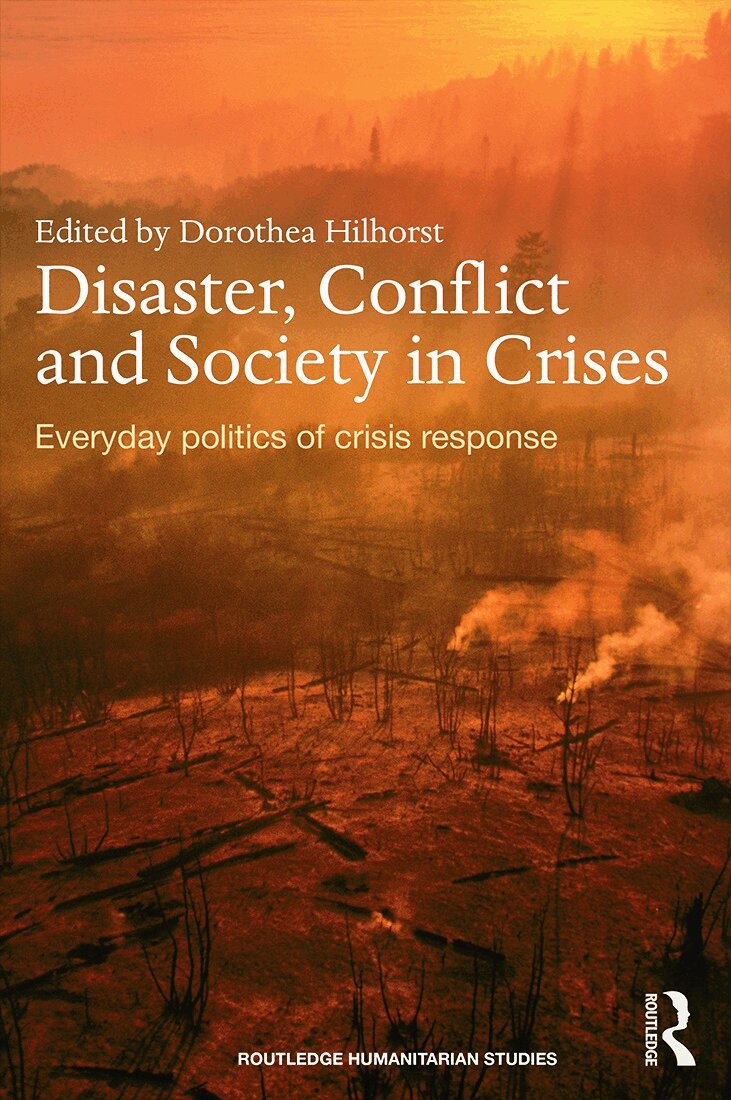
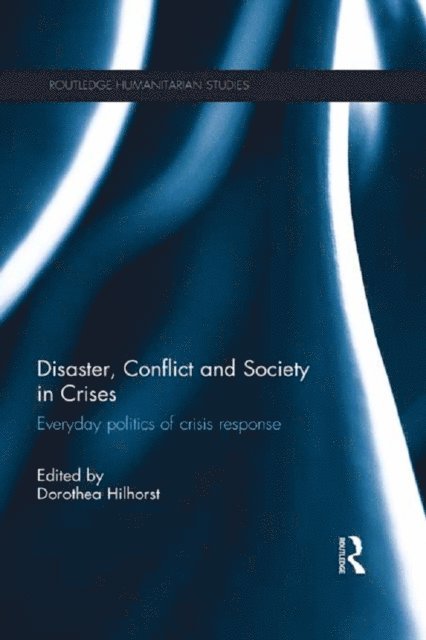
Disaster, Conflict and Society in Crises
Everyday Politics of Crisis Response
Inbunden, Engelska, 2013
2 290 kr
Skickas inom 10-15 vardagar
Humanitarian crises - resulting from conflict, natural disaster or political collapse – are usually perceived as a complete break from normality, spurring special emergency policies and interventions. In reality, there are many continuities and discontinuities between crisis and normality. What does this mean for our understanding of politics, aid, and local institutions during crises? This book examines this question from a sociological perspective. This book provides a qualitative inquiry into the social and political dynamics of local institutional response, international policy and aid interventions in crises caused by conflict or natural disaster.Emphasising the importance of everyday practices, this book qualitatively unravels the social and political working of policies, aid programmes and local institutions. The first part of the book deals with the social life of politics in crisis. Some of the questions raised are: What is the meaning of human security in practice? How do governments and other actors use crises to securitize – and hence depoliticize - their strategies? The second part of the book deals with the question how local institutions fare under and transform in response to crises. Conflicts and disasters are breakpoints of social order, with a considerable degree of chaos and disruption, but they are also marked by processes of continuity and re-ordering, or the creation of new institutions and linkages. This part of the book focuses on institutions varying from inter-ethnic marriage patterns in Sri Lanka to situation of institutional multiplicity in Angola. The final part of the book concerns the social and political realities of different domains of interventions in crisis, including humanitarian aid, peace-building, disaster risk reduction and safety nets to address chronic food crises. This book gives students and researchers in humanitarian studies, disaster studies, conflict and peace studies as well as humanitarian and military practitioners an invaluable wealth of case studies and unique political science analysis of the humanitarian studies field.
617 kr
Skickas inom 10-15 vardagar
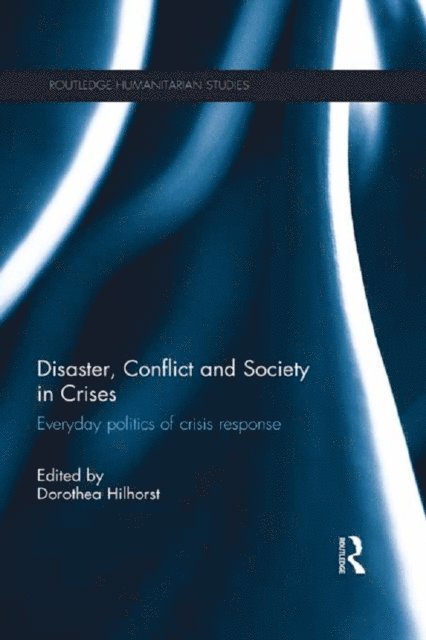
Humanitarian crises - resulting from conflict, natural disaster or political collapse – are usually perceived as a complete break from normality, spurring special emergency policies and interventions. In reality, there are many continuities and discontinuities between crisis and normality. What does this mean for our understanding of politics, aid, and local institutions during crises? This book examines this question from a sociological perspective. This book provides a qualitative inquiry into the social and political dynamics of local institutional response, international policy and aid interventions in crises caused by conflict or natural disaster.Emphasising the importance of everyday practices, this book qualitatively unravels the social and political working of policies, aid programmes and local institutions. The first part of the book deals with the social life of politics in crisis. Some of the questions raised are: What is the meaning of human security in practice? How do governments and other actors use crises to securitize – and hence depoliticize - their strategies? The second part of the book deals with the question how local institutions fare under and transform in response to crises. Conflicts and disasters are breakpoints of social order, with a considerable degree of chaos and disruption, but they are also marked by processes of continuity and re-ordering, or the creation of new institutions and linkages. This part of the book focuses on institutions varying from inter-ethnic marriage patterns in Sri Lanka to situation of institutional multiplicity in Angola. The final part of the book concerns the social and political realities of different domains of interventions in crisis, including humanitarian aid, peace-building, disaster risk reduction and safety nets to address chronic food crises. This book gives students and researchers in humanitarian studies, disaster studies, conflict and peace studies as well as humanitarian and military practitioners an invaluable wealth of case studies and unique political science analysis of the humanitarian studies field.
2 088 kr
Skickas inom 10-15 vardagar
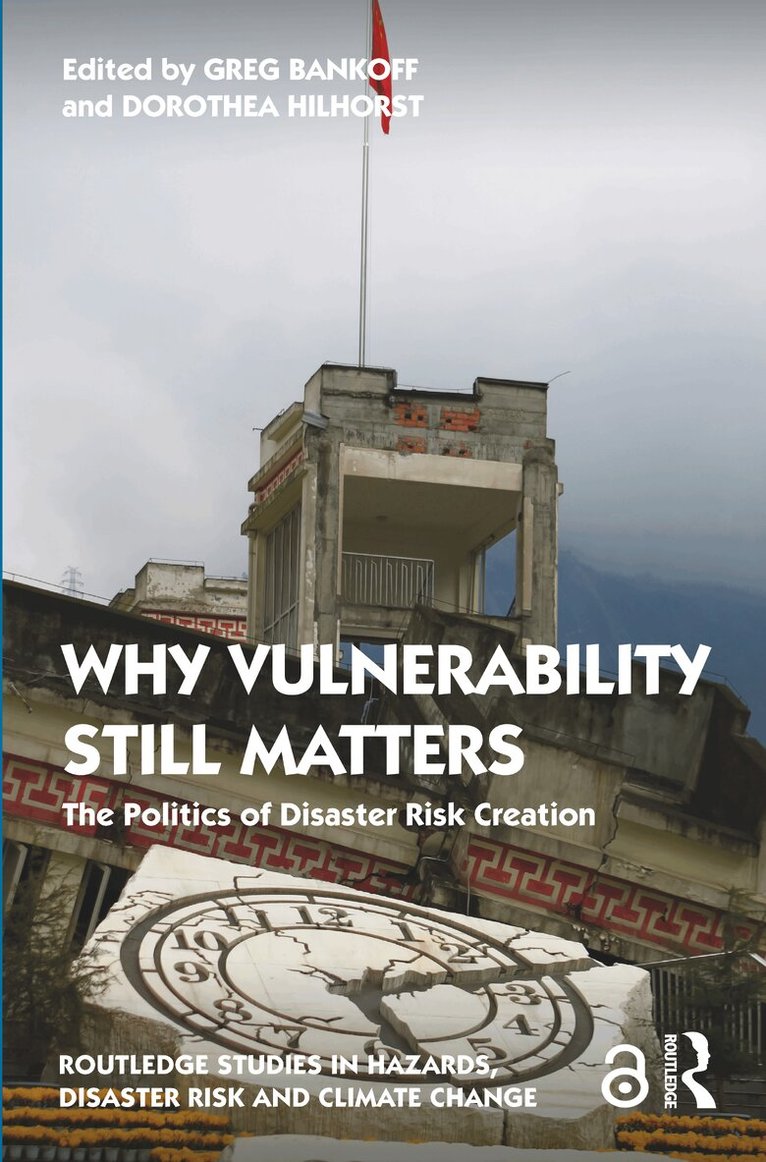
We think vulnerability still matters when considering how people are put at risk from hazards and this book shows why in a series of thematic chapters and case studies written by eminent disaster studies scholars that deal with the politics of disaster risk creation: precarity, conflict, and climate change.The chapters highlight different aspects of vulnerability and disaster risk creation, placing the stress rightly on what causes disasters and explaining the politics of how they are created through a combination of human interference with natural processes, the social production of vulnerability, and the neglect of response capacities. Importantly, too, the book provides a platform for many of those most prominently involved in launching disaster studies as a social discipline to reflect on developments over the past 50 years and to comment on current trends.The interdisciplinary and historical perspective that this book provides will appeal to scholars and practitioners at both the national and international level seeking to study, develop, and support effective social protection strategies to prevent or mitigate the effects of hazards on vulnerable populations. It will also prove an invaluable reference work for students and all those interested in the future safety of the world we live in.The Open Access version of this book, available at http://www.taylorfrancis.com, has been made available under a Creative Commons Attribution-NonCommercial-ShareAlike (CC-BY-NC-SA) 4.0 International license.
549 kr
Skickas inom 10-15 vardagar
We think vulnerability still matters when considering how people are put at risk from hazards and this book shows why in a series of thematic chapters and case studies written by eminent disaster studies scholars that deal with the politics of disaster risk creation: precarity, conflict, and climate change.The chapters highlight different aspects of vulnerability and disaster risk creation, placing the stress rightly on what causes disasters and explaining the politics of how they are created through a combination of human interference with natural processes, the social production of vulnerability, and the neglect of response capacities. Importantly, too, the book provides a platform for many of those most prominently involved in launching disaster studies as a social discipline to reflect on developments over the past 50 years and to comment on current trends.The interdisciplinary and historical perspective that this book provides will appeal to scholars and practitioners at both the national and international level seeking to study, develop, and support effective social protection strategies to prevent or mitigate the effects of hazards on vulnerable populations. It will also prove an invaluable reference work for students and all those interested in the future safety of the world we live in.The Open Access version of this book, available at http://www.taylorfrancis.com, has been made available under a Creative Commons Attribution-NonCommercial-ShareAlike (CC-BY-NC-SA) 4.0 International license.
2 088 kr
Skickas inom 10-15 vardagar
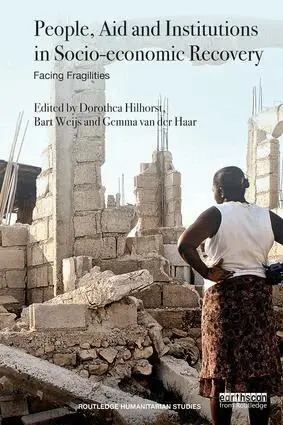
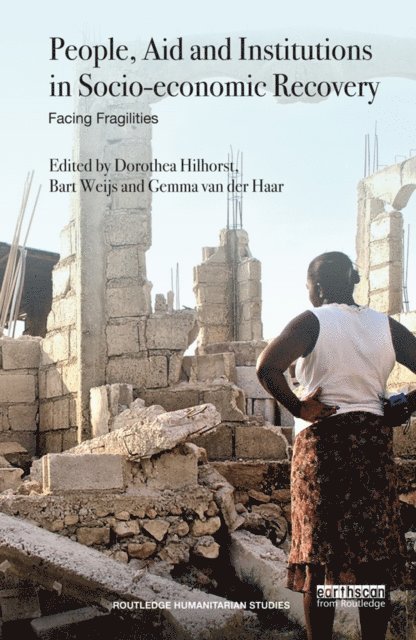
An estimated 2 billion people live in countries affected by fragility, conflict and violence. Extreme poverty is increasingly concentrated in these areas, and governments and international agencies seek avenues to enable socio-economic recovery and to support people as they try to rebuild their lives and livelihoods. People, Aid and Institutions in Socio-economic Recovery: Facing Fragilities provides an in-depth understanding of people’s strategies in the face of conflict and disaster-related fragility and examines how policies and aid interventions enable their socio-economic recovery – or fail to do so. Through field-based research, the book captures the complex and unfolding realities on the ground, exploring the interfaces between economic, social and institutional change. This provides a rich and unique vantage point from which to reflect on the impact of recovery policies. The book provides a set of cross-cutting findings that aim to inform policy and practice. The detailed case studies of the book lay bare key dynamics of recovery. Set against the findings from two chapters that review the literature, the cases provide evidence-based lessons for socio-economic recovery.The chapters combine qualitative and quantitative methodologies and form a valuable resource to researchers and postgraduate students of disaster management, conflict, humanitarian aid and social reconstruction, and development management.
753 kr
Skickas inom 10-15 vardagar
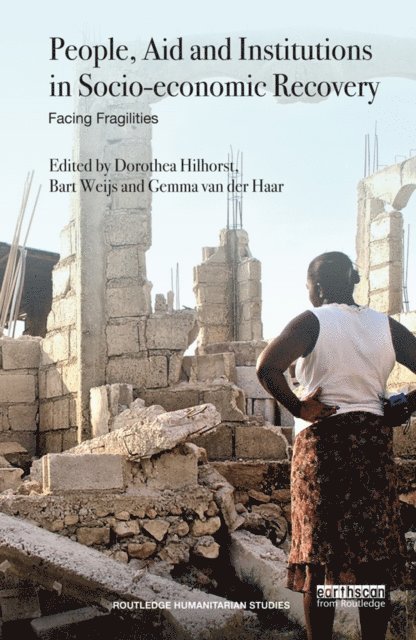
An estimated 2 billion people live in countries affected by fragility, conflict and violence. Extreme poverty is increasingly concentrated in these areas, and governments and international agencies seek avenues to enable socio-economic recovery and to support people as they try to rebuild their lives and livelihoods. People, Aid and Institutions in Socio-economic Recovery: Facing Fragilities provides an in-depth understanding of people’s strategies in the face of conflict and disaster-related fragility and examines how policies and aid interventions enable their socio-economic recovery – or fail to do so. Through field-based research, the book captures the complex and unfolding realities on the ground, exploring the interfaces between economic, social and institutional change. This provides a rich and unique vantage point from which to reflect on the impact of recovery policies. The book provides a set of cross-cutting findings that aim to inform policy and practice. The detailed case studies of the book lay bare key dynamics of recovery. Set against the findings from two chapters that review the literature, the cases provide evidence-based lessons for socio-economic recovery.The chapters combine qualitative and quantitative methodologies and form a valuable resource to researchers and postgraduate students of disaster management, conflict, humanitarian aid and social reconstruction, and development management.
1 209 kr
Skickas inom 10-15 vardagar
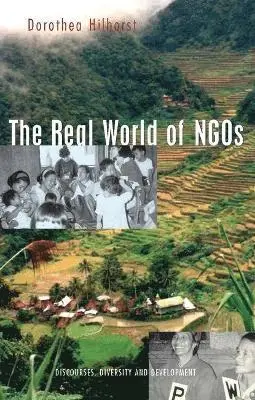
Against an international context where NGOs are still seen, in contrast to many official development agencies, as the saviours and sources of hope for an otherwise disappointing development process, Dorothea Hilhorst provides for the first time an empirically rooted and theoretically innovative understanding of the everyday politics, actual internal workings, organizational practices and discursive repertoires of this kind of organization. Her evidence and insights lead to a different picture of NGOs from the one prevailing in the literature. Hilhorst develops a model of NGOs not as clearcut organizations, but often with several different faces, fragmented, and consisting of social networks whose organizing practices remain in flux, is helpful to understanding not just these bodies, but official development agencies too.
448 kr
Skickas inom 10-15 vardagar
Against an international context where NGOs are still seen, in contrast to many official development agencies, as the saviours and sources of hope for an otherwise disappointing development process, Dorothea Hilhorst provides for the first time an empirically rooted and theoretically innovative understanding of the everyday politics, actual internal workings, organizational practices and discursive repertoires of this kind of organization. Her evidence and insights lead to a different picture of NGOs from the one prevailing in the literature. Hilhorst develops a model of NGOs not as clearcut organizations, but often with several different faces, fragmented, and consisting of social networks whose organizing practices remain in flux, is helpful to understanding not just these bodies, but official development agencies too.
2 088 kr
Skickas inom 10-15 vardagar
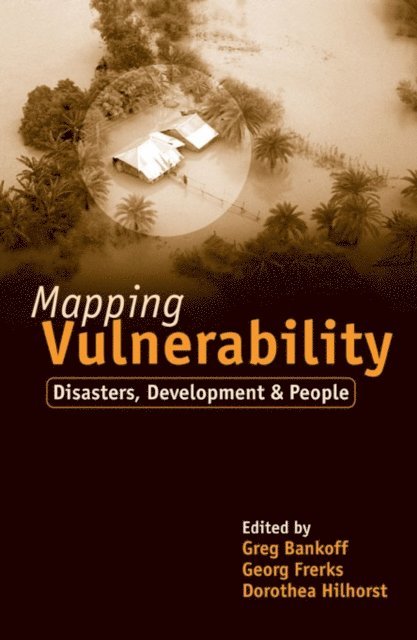
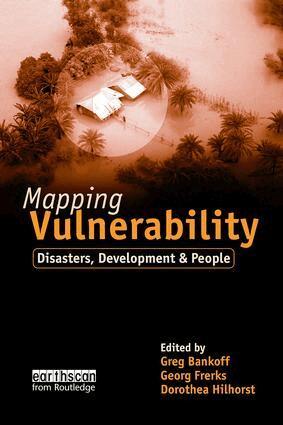
Raging floods, massive storms and cataclysmic earthquakes: every year up to 340 million people are affected by these and other disasters, which cause loss of life and damage to personal property, agriculture, and infrastructure. So what can be done? The key to understanding the causes of disasters and mitigating their impacts is the concept of 'vulnerability'.Mapping Vulnerability analyses 'vulnerability' as a concept central to the way we understand disasters and their magnitude and impact. Written and edited by a distinguished group of disaster scholars and practitioners, this book is a counterbalance to those technocratic approaches that limit themselves to simply looking at disasters as natural phenomena. Through the notion of vulnerability, the authors stress the importance of social processes and human-environmental interactions as causal agents in the making of disasters. They critically examine what renders communities unsafe - a condition, they argue, that depends primarily on the relative position of advantage or disadvantage that a particular group occupies within a society's social order. The book also looks at vulnerability in terms of its relationship to development and its impact on policy and people's lives, through consideration of selected case studies drawn from Africa, Asia and Latin America. Mapping Vulnerability is essential reading for academics, students, policymakers and practitioners in disaster studies, geography, development studies, economics, environmental studies and sociology.
698 kr
Skickas inom 10-15 vardagar
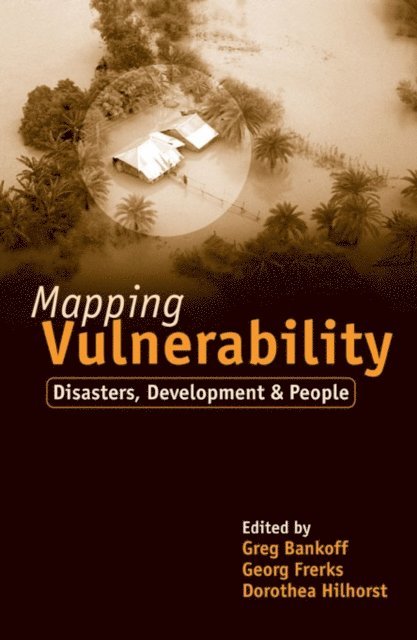
Raging floods, massive storms and cataclysmic earthquakes: every year up to 340 million people are affected by these and other disasters, which cause loss of life and damage to personal property, agriculture, and infrastructure. So what can be done? The key to understanding the causes of disasters and mitigating their impacts is the concept of 'vulnerability'.Mapping Vulnerability analyses 'vulnerability' as a concept central to the way we understand disasters and their magnitude and impact. Written and edited by a distinguished group of disaster scholars and practitioners, this book is a counterbalance to those technocratic approaches that limit themselves to simply looking at disasters as natural phenomena. Through the notion of vulnerability, the authors stress the importance of social processes and human-environmental interactions as causal agents in the making of disasters. They critically examine what renders communities unsafe - a condition, they argue, that depends primarily on the relative position of advantage or disadvantage that a particular group occupies within a society's social order. The book also looks at vulnerability in terms of its relationship to development and its impact on policy and people's lives, through consideration of selected case studies drawn from Africa, Asia and Latin America. Mapping Vulnerability is essential reading for academics, students, policymakers and practitioners in disaster studies, geography, development studies, economics, environmental studies and sociology.