Dorothea von Hantelmann – författare
Visar alla böcker från författaren Dorothea von Hantelmann. Handla med fri frakt och snabb leverans.
5 produkter
5 produkter
E-bok
Engelska, 2014162 kr
Läs direkt efter köp
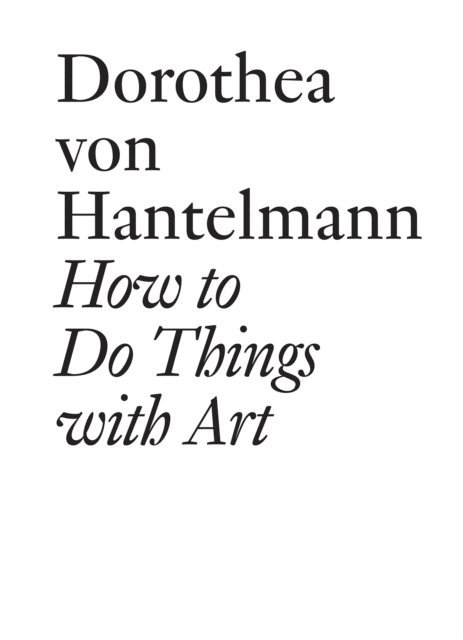
Art has never been as culturally and economically prominent as it is today. How can artists themselves shape the social relevance and impact of their work? In How to Do Things with Art, German art historian Dorothea von Hantelmann uses four case study artists--Daniel Buren, James Coleman, Jeff Koons and Tino Sehgal--to examine how an artwork acts upon and within social conventions, particularly through the "performing" of exhibitions. The book''s title is a play on J.L. Austin''s seminal text, How to Do Things with Words, which describes language''s reality-producing properties and demonstrates that in "saying" there is always a "doing"--a linguistic counterpart to the dynamics envisioned by Von Hantelmann for art, in which "showing" is a kind of "doing." Von Hantelmann''s close analysis of works by Buren, Coleman, Koons and Sehgal explores how each of these artists has taken control of how their work conducts itself in the world.
Häftad, Engelska, 2024
463 kr
Skickas inom 5-8 vardagar
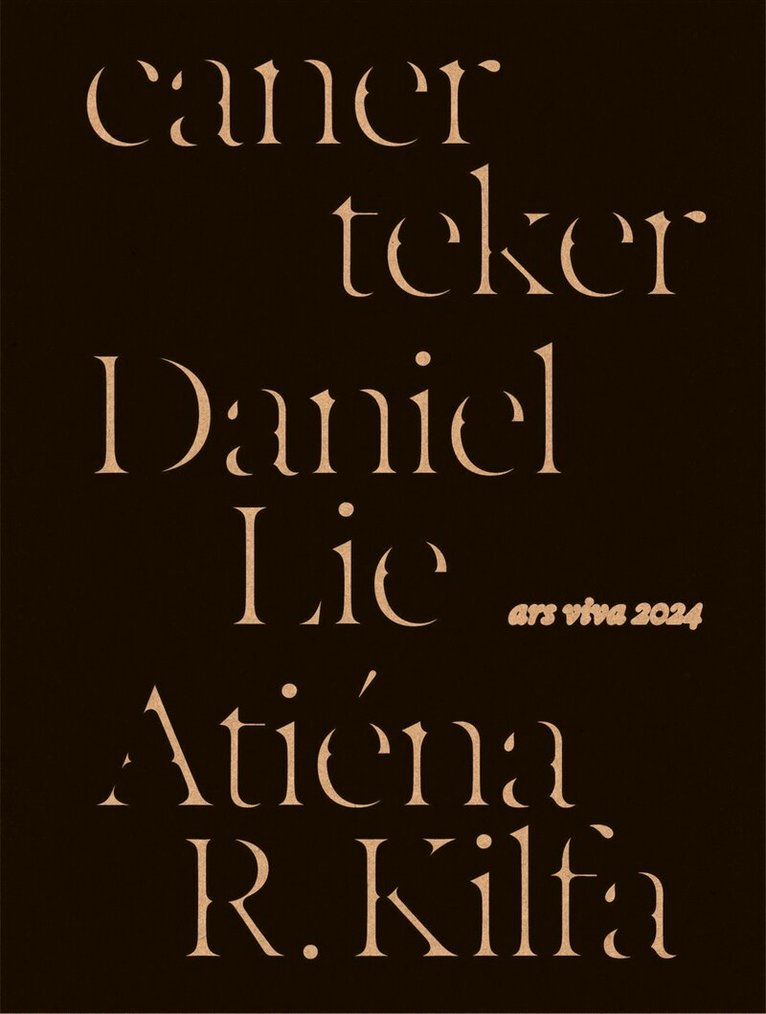
Since 1953, the Kulturkreis der deutschen Wirtschaft im BDI e. V. has awarded the annual ars viva prize for visual arts to outstanding young artists based in Germany. The award honours work that demonstrates a distinct language of form and an awareness of contemporary issues. This year’s award includes exhibitions at the Rudolf-Scharpf-Galerie of the Wilhelm-Hack-Museum in Ludwigshafen, and at the Belvedere 21 in Vienna, as well as an artist residency on Fogo Island, Canada. The ars viva prize 2024 will be awarded to Atiéna R. Kilfa (b. 1990), Daniel Lie (b. 1988) and caner teker (b. 1994).Text in English and German.
E-bok
Tyska, 201243 kr
Läs direkt efter köp
Wie kann es sein, dass ausgerechnet die Künstlerische Leiterin der dOCUMENTA (13) von der »Obsoletheit der Ausstellung« spricht? Dieser Frage geht Dorothea von Hantelmann nach, Bezug nehmend auf ein Gespräch mit Carolyn Christov-Bakargiev und Einblick gebend in ihr kurz vor Abschluss stehendes Buchprojekt. Während mehr Museen gebaut, mehr Biennalen realisiert und mehr Besucher denn je gezählt werden, wächst Kritik an den aktuellen Ausstellungsformen. Die historische Entwicklung des Museumswesens zeigt, dass sich die Orte der Kunstpräsentation zunehmend von ihrer in der modernen bürgerlichen Gesellschaft definierten Aufgabe der »Objektschau« abwenden und den Erlebnis- und Erfahrungsgehalt der Dinge aufsuchen. Doch die klassischen Werke der Kunst verdichten die Zeit im Objekt und sind auf eine zeitlich ausgedehnte Rezeption angewiesen, die in der gegenwärtig nur noch selten geleistet wird. Der White Cube verschiebt den Fokus zwar bereits erfolgreich »vom produzierten Objekt zum konsumierenden Subjekt« und macht Ausstellungen im Sinne von Objektschauen tatsächlich obsolet. Zugleich aber muss die Wahrnehmung von Kunst ein »soziales Ritual« werden, sollen Traditionslinie und Legitimationsmacht des Museums gewahrt werden.Dorothea von Hantelmann (*1969) unterrichtet Kunstgeschichte an der Freien Universität Berlin.
E-bok
PDF, Tyska, 202343 kr
Läs direkt efter köp
Wie kann es sein, dass ausgerechnet die Künstlerische Leiterin der dOCUMENTA (13) von der »Obsoletheit der Ausstellung« spricht? Dieser Frage geht Dorothea von Hantelmann nach, Bezug nehmend auf ein Gespräch mit Carolyn Christov-Bakargiev und Einblick gebend in ihr kurz vor Abschluss stehendes Buchprojekt. Während mehr Museen gebaut, mehr Biennalen realisiert und mehr Besucher denn je gezählt werden, wächst Kritik an den aktuellen Ausstellungsformen. Die historische Entwicklung des Museumswesens zeigt, dass sich die Orte der Kunstpräsentation zunehmend von ihrer in der modernen bürgerlichen Gesellschaft definierten Aufgabe der »Objektschau« abwenden und den Erlebnis- und Erfahrungsgehalt der Dinge aufsuchen. Doch die klassischen Werke der Kunst verdichten die Zeit im Objekt und sind auf eine zeitlich ausgedehnte Rezeption angewiesen, die in der gegenwärtig nur noch selten geleistet wird. Der White Cube verschiebt den Fokus zwar bereits erfolgreich »vom produzierten Objekt zum konsumierenden Subjekt« und macht Ausstellungen im Sinne von Objektschauen tatsächlich obsolet. Zugleich aber muss die Wahrnehmung von Kunst ein »soziales Ritual« werden, sollen Traditionslinie und Legitimationsmacht des Museums gewahrt werden. Dorothea von Hantelmann (*1969) unterrichtet Kunstgeschichte an der Freien Universität Berlin.
E-bok
Spanska, 2017135 kr
Läs direkt efter köp
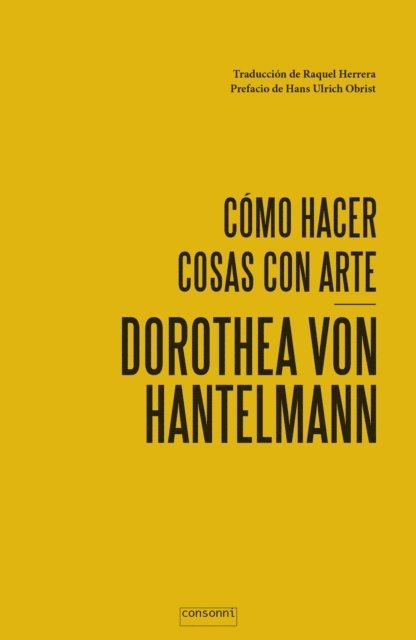
La pregunta clave que plantea Cómo hacer cosas con arte es qué relevancia tiene el arte en la sociedad. ¿Cómo deviene importante el arte a nivel político o social? Este libro intenta responder a esta pregunta de forma teórica, e indicar, mediante el análisis de obras de James Coleman, Daniel Buren, Jeff Koons y Tino Sehgal, cómo los artistas pueden desarrollar e influir en la vertiente social; dicho en otras palabras, este libro proporciona lo que se denomina una interpretación pragmática del impacto social del arte. El título de la obra ya es un juego de palabras con la influyente serie de conferencias de John Langshaw Austin "Cómo hacer cosas con palabras", en la que reflexionaba sobre lo performativo, esto es, sobre la capacidad productora de realidad del lenguaje.Si la línea argumental de Dorothea von Hantelmann se basa en dos premisas teóricas de Austin y en la noción de performatividad de Judith Butler, este libro ofrece una auténtica semántica de cómo "actúa" la obra de arte, no a pesar sino en virtud de integrarse en ciertas convenciones: cómo, por ejemplo, sostiene o coproduce una cierta idea de historia, progreso y desarrollo a través del museo. El modelo de performatividad que defiende la autora señala estos niveles fundamentales de producción de sentido: centrándose en las convenciones de producción, presentación y persistencia histórica del arte, von Hantelmann muestra cómo estas convenciones se coproducen en cualquier obra de arte, y sugiere que es precisamente esta dependencia de las convenciones lo que plantea la posibilidad de cambiarlas.La cuestión de cómo hacer cosas con arte parece particularmente pertinente hoy en día: nunca antes en la historia de las sociedades occidentales había sido tan importante lo que llamamos arte; se están construyendo más museos de arte que nunca; las exposiciones atraen a públicos masivos; el mundo del arte se ha expandido no solo global sino también socialmente, y es probable que ninguna otra profesión haya aumentado tanto de estatus como la del artista, quien encarna a la perfección la idea predominante actual de subjetividad creativa y autónoma.