Dorothy Harley Eber – författare
Visar alla böcker från författaren Dorothy Harley Eber. Handla med fri frakt och snabb leverans.
8 produkter
8 produkter
E-bok
PDF, Engelska, 1989289 kr
Läs direkt efter köp
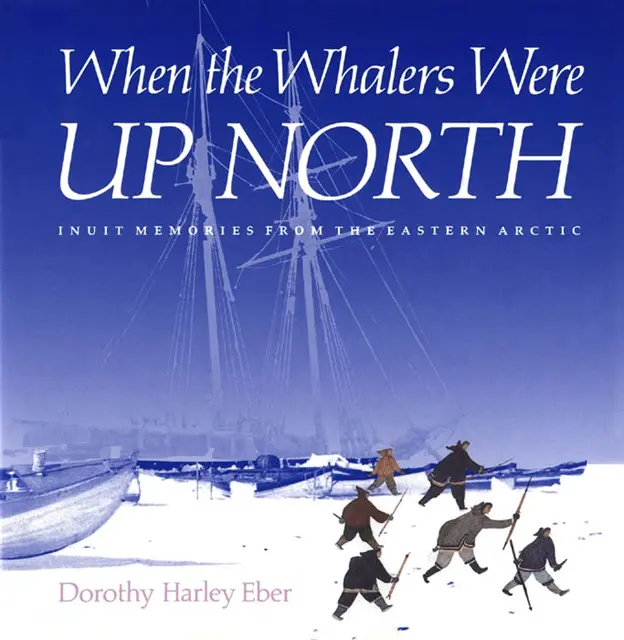
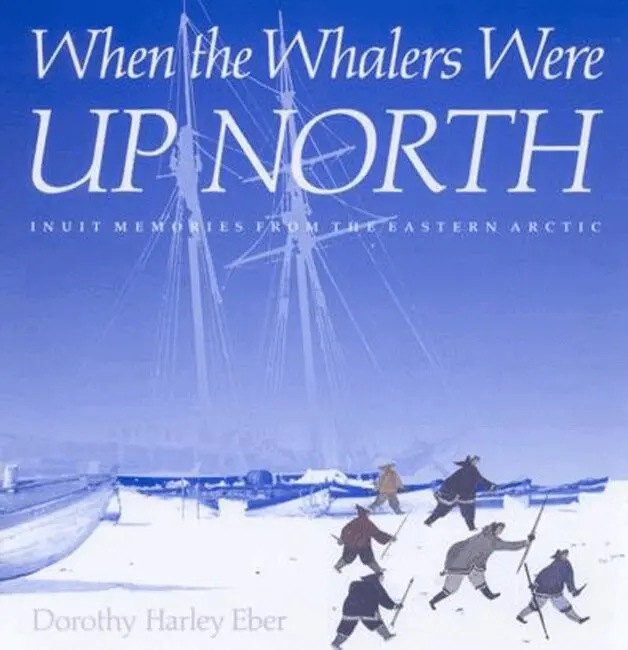
The author tells a story drawn from oral memories, a story which will soon disappear with the last Inuit generation to have seen the whalers. Illuminated by a remarkable collection of drawings, photographs, and illustrations, many in full colour, tales are told of when the whalers first appeared on the north-east coast of Baffin Island, how they set up land stations in the whale-rich waters of Cumberland Sound, and how they eventually pushed on into Hudson Bay. During this time the Inuit not only fed and clothed the whalers, they hunted with them, adding to the whalers'' wealth. Our understanding of change in Inuit life is often linked to the fur traders, who arrived in the North fifty years after the arrival of the whalers. In truth it is the Inuit''s close contact with the foreign world of the whalers which marked the beginning of a change in previously undisturbed Inuit culture and traditions.
E-bok
PDF, Engelska, 1993372 kr
Läs direkt efter köp
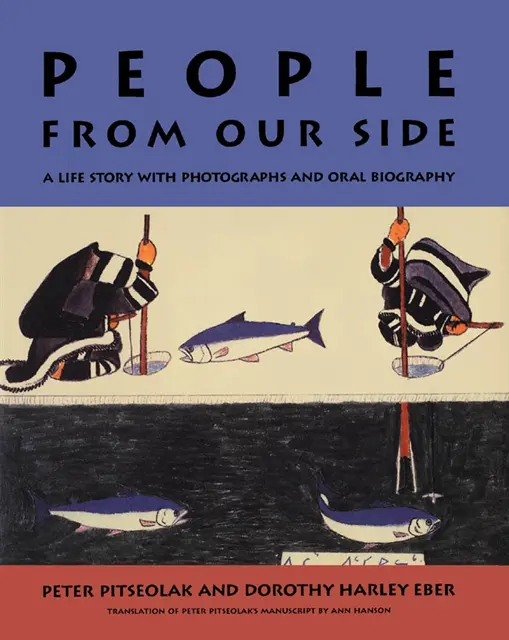
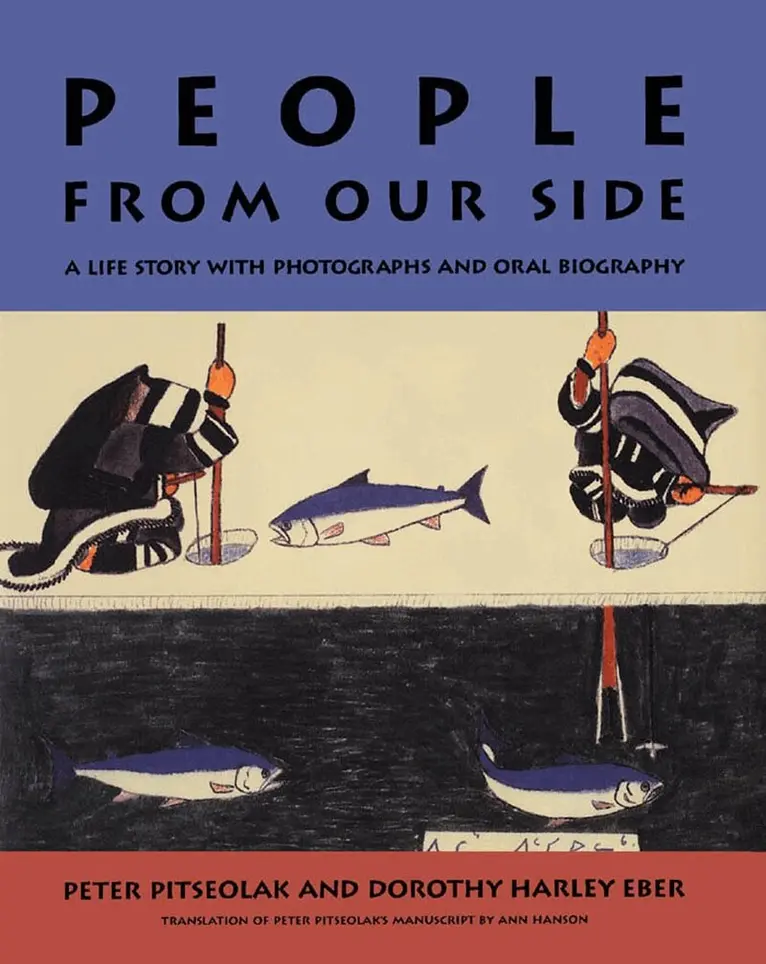
The text of People from Our Side consists of Peter Pitseolak''s manuscript -- originally written in syllabics -- and a narrative drawn from interviews conducted by Dorothy Eber with the help of young Inuit interpreters. Peter Pitseolak learned the system of reading and writing brought by the missionaries and from an early age formed the habit of keeping a diary. He took his first photograph for a white man who was afraid to approach a polar bear and later, in the early 1940s, acquired his own camera and taught himself, with the help of his wife Aggeok, to develop films in igloo, tent, and hut. His pictures catch, as no white photographer''s could, the authentic quality and detail of Eskimo life in the last days of the camp system. Sweeping from nomadic times to the early 1970s, Peter Pitseolak provides a frank and vigorous account of how change came to Baffin Island. A realist who knew he was providing a social history of a vanishing way of life, his story is a farewell to traditional camp life and to Seekooseelak -- where the people of Cape Dorset once had their camps.
E-bok
PDF, Engelska, 1997344 kr
Läs direkt efter köp
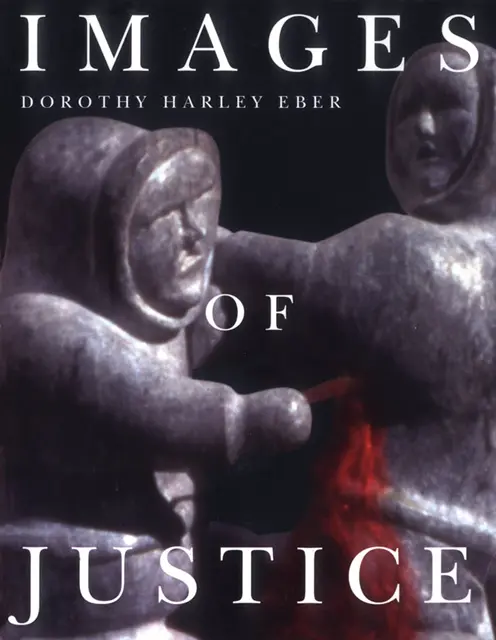
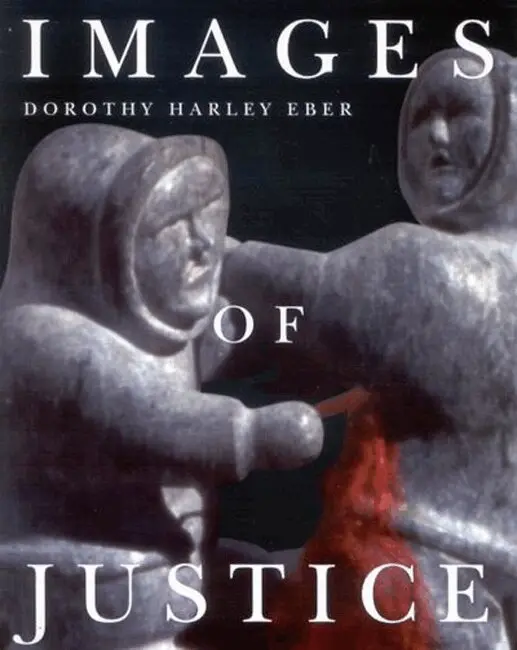
Images of Justice resonates with voices of the North and comes alive through interviews with many of those involved in the cases - defendants, judges, and prosecutors. Eber also provides valuable information on the little-known carvers who created these remarkable works of art. At a time when alternative legal systems for Native peoples are being debated, Images of Justice provides a lively, accessible account of the northern courts, their evolution, and their future in a changing northern society.
E-bok
PDF, Engelska, 2003383 kr
Läs direkt efter köp
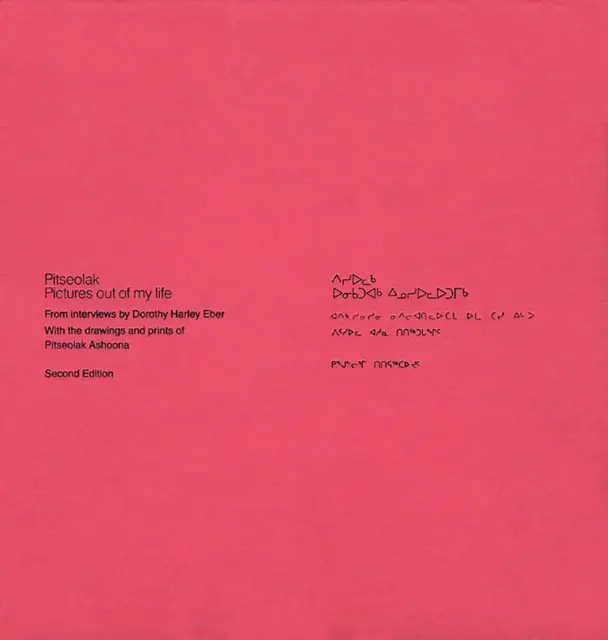
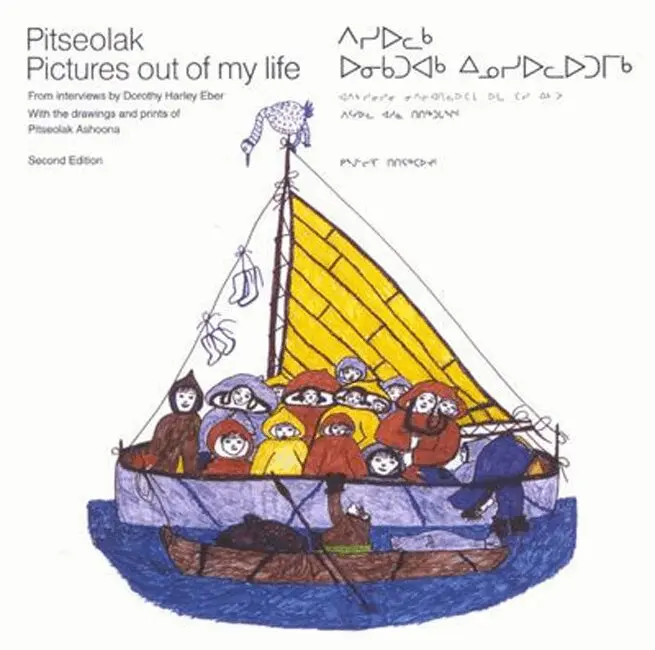
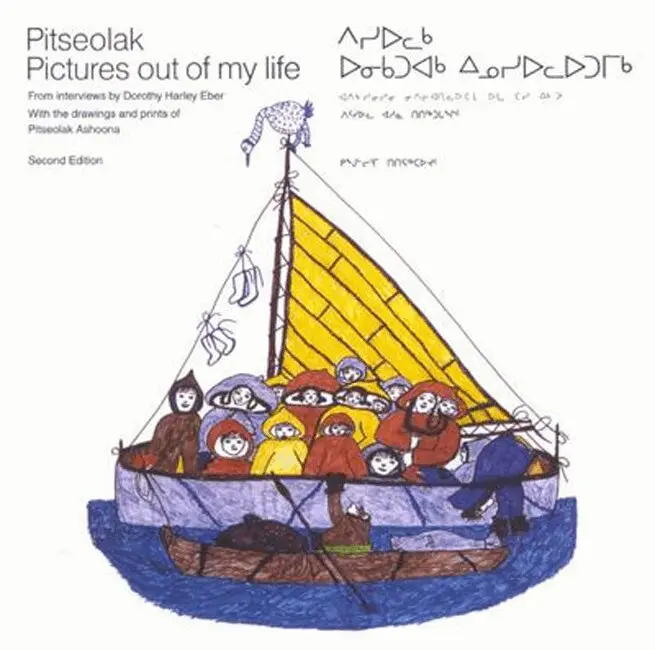
This new edition, appearing more than thirty years after the first, contains additional drawings and prints by Pitseolak Ashoona and a new introduction by Eber that provides more information about the artist and the circumstances under which her groundbreaking oral biography came about. Pitseolak Ashoona, who died in 1983, was known for lively prints and drawings showing "the things we did long ago before there were many white men" and for imaginative renderings of spirits and monsters. She began creating prints in the late 1950s after James Houston started printmaking experiments at Cape Dorset, creating several thousand images of traditional Inuit life. Pitseolak Ashoona was elected a member of the Royal Canadian Academy of Arts in 1974 and was also a member of the Order of Canada.
E-bok
Engelska, 1997357 kr
Läs direkt efter köp
Images of Justice resonates with voices of the North and comes alive through interviews with many of those involved in the cases - defendants, judges, and prosecutors. Eber also provides valuable information on the little-known carvers who created these remarkable works of art. At a time when alternative legal systems for Native peoples are being debated, Images of Justice provides a lively, accessible account of the northern courts, their evolution, and their future in a changing northern society.
Häftad, Engelska, 2008
345 kr
Skickas inom 5-8 vardagar
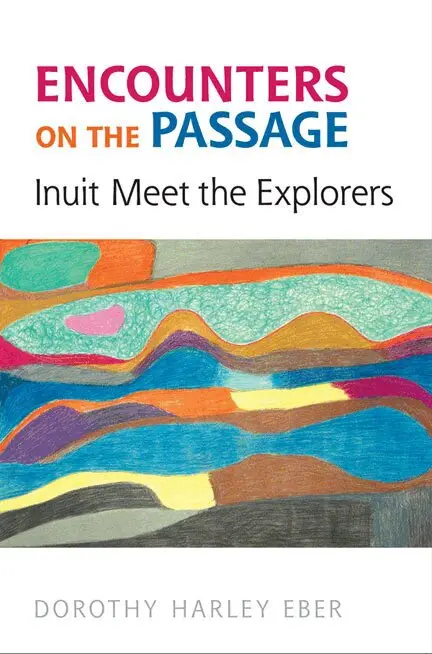
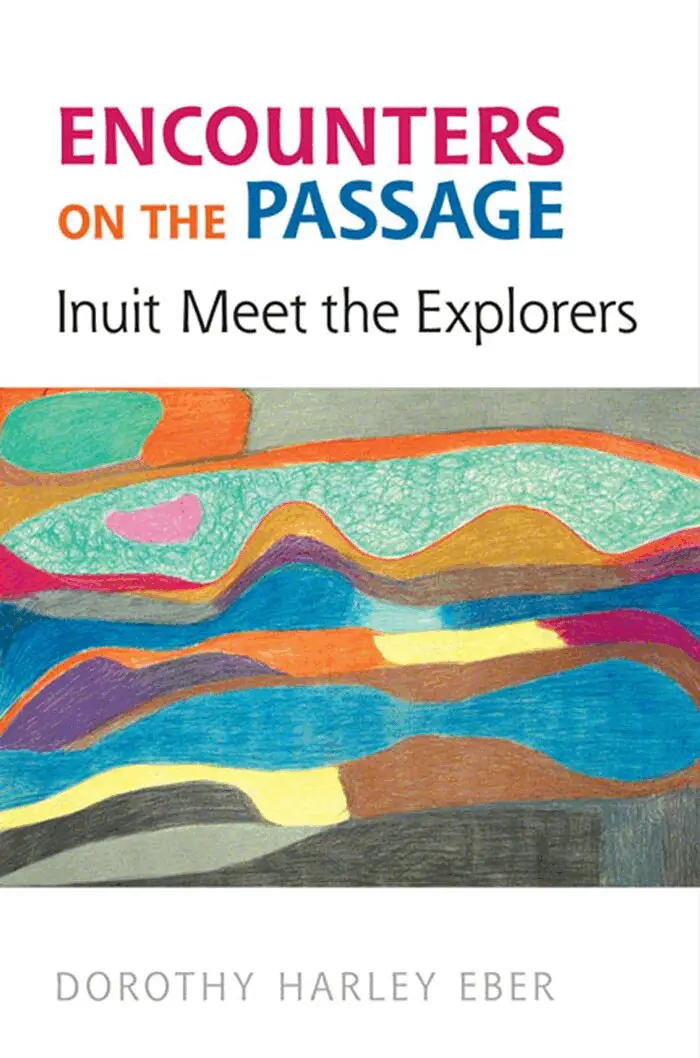
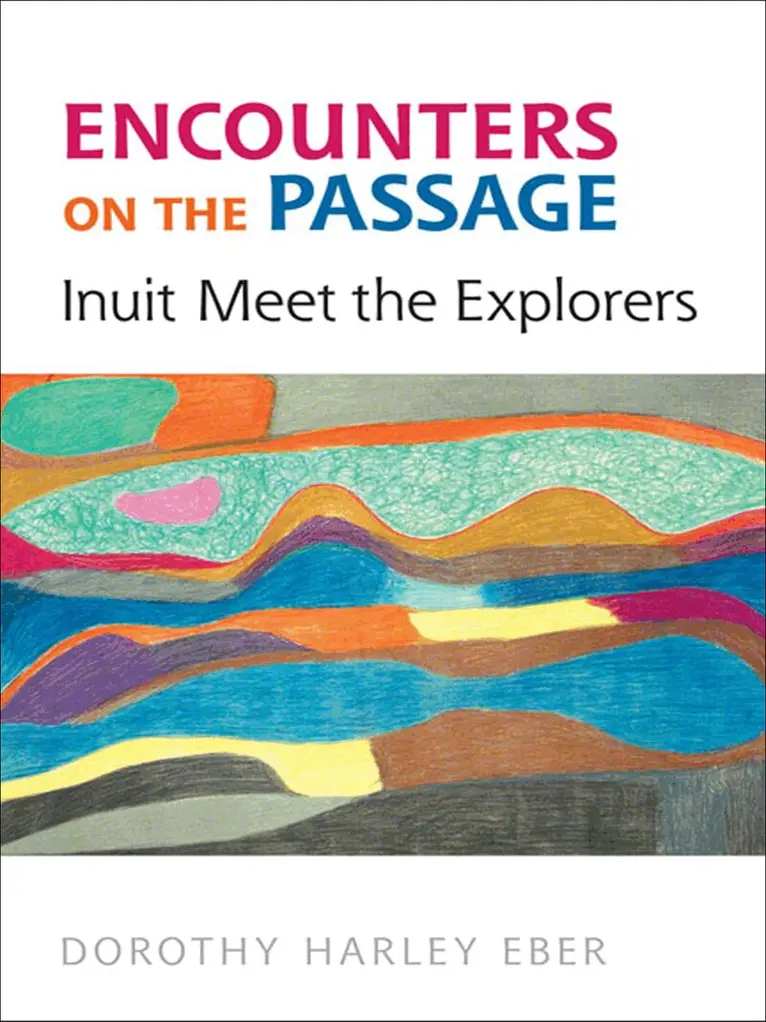
Inuit elders who grew up in camps on the shores of Frobisher Bay can tell you what happened when Martin Frobisher arrived with his vessel in 1576: "He fired two warning shots into the air. So right away there were some grievances." Frobisher's shots were the opening salvos in the search for the Northwest Passage, a search that lasted for more than four hundred years and riveted the Western world, particularly in the nineteenth and early twentieth century. In Encounters on the Passage, present day Inuit tell the stories that have been passed down from their ancestors of the first encounters with European explorers.In many of these stories the old cosmogony is still in place, with shamans playing starring roles opposite "the strangers intruding on the Inuit lands." Dorothy Harley Eber presents stories told to her about the expeditions of Sir Edward Parry, Sir John Ross, Sir John Franklin, and the Norwegian explorer Roald Amundsen, and sets them squarely in historical context. In the case of the disasterous Franklin expedition, new information opens up another fascinating chapter on the Franklin tragedy. Collected over twelve years on visits to communities in Nunavut, these remarkable stories of expeditionary forces and their dealings with native peoples will be new and exciting reading for those interested in the search for the Northwest Passage, the Franklin tragedy, and traditions of oral history.
E-bok
PDF, Engelska, 2008409 kr
Läs direkt efter köp
Inuit elders who grew up in camps on the shores of Frobisher Bay can tell you what happened when Martin Frobisher arrived with his vessel in 1576: "He fired two warning shots into the air. So right away there were some grievances." Frobisher's shots were the opening salvos in the search for the Northwest Passage, a search that lasted for more than four hundred years and riveted the Western world, particularly in the nineteenth and early twentieth century. In Encounters on the Passage, present day Inuit tell the stories that have been passed down from their ancestors of the first encounters with European explorers.In many of these stories the old cosmogony is still in place, with shamans playing starring roles opposite "the strangers intruding on the Inuit lands." Dorothy Harley Eber presents stories told to her about the expeditions of Sir Edward Parry, Sir John Ross, Sir John Franklin, and the Norwegian explorer Roald Amundsen, and sets them squarely in historical context. In the case of the disasterous Franklin expedition, new information opens up another fascinating chapter on the Franklin tragedy. Collected over twelve years on visits to communities in Nunavut, these remarkable stories of expeditionary forces and their dealings with native peoples will be new and exciting reading for those interested in the search for the Northwest Passage, the Franklin tragedy, and traditions of oral history.
E-bok
Engelska, 2008409 kr
Läs direkt efter köp
Inuit elders who grew up in camps on the shores of Frobisher Bay can tell you what happened when Martin Frobisher arrived with his vessel in 1576: "He fired two warning shots into the air. So right away there were some grievances." Frobisher's shots were the opening salvos in the search for the Northwest Passage, a search that lasted for more than four hundred years and riveted the Western world, particularly in the nineteenth and early twentieth century. In Encounters on the Passage, present day Inuit tell the stories that have been passed down from their ancestors of the first encounters with European explorers.In many of these stories the old cosmogony is still in place, with shamans playing starring roles opposite "the strangers intruding on the Inuit lands." Dorothy Harley Eber presents stories told to her about the expeditions of Sir Edward Parry, Sir John Ross, Sir John Franklin, and the Norwegian explorer Roald Amundsen, and sets them squarely in historical context. In the case of the disasterous Franklin expedition, new information opens up another fascinating chapter on the Franklin tragedy. Collected over twelve years on visits to communities in Nunavut, these remarkable stories of expeditionary forces and their dealings with native peoples will be new and exciting reading for those interested in the search for the Northwest Passage, the Franklin tragedy, and traditions of oral history.