Dorothy V.M. Bishop - Böcker
Visar alla böcker från författaren Dorothy V.M. Bishop. Handla med fri frakt och snabb leverans.
4 produkter
4 produkter
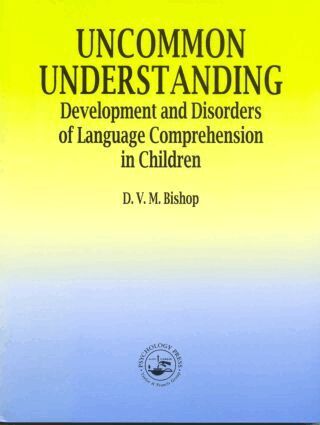
Uncommon Understanding
Development and Disorders of Language Comprehension in Children
Häftad, Engelska, 1998
430 kr
Skickas inom 10-15 vardagar
A great deal has been written on how children learn to speak, but development of language comprehension has been a relatively neglected topic. This book is unique in integrating research in language acquisition, psycholinguistics and neuropsychology to give a comprehensive picture of the process we call "comprehension", right from the reception of an acoustic stimulus at the ear, up to the point where we interpret the message the speaker intended to convey by the utterance. A major theme of the book is that "comprehension" is not a unitary skill: to understand spoken language, one needs the ability to classify incoming speech sounds, to relate them to a "mental lexicon", to interpret the propositions encoded by word order and grammatical inflections, and to use information from the environmental and social context to select, from a wide range of possible interpretations, the one that was intended by the speaker. Furthermore, although neuropsychological and experimental research on adult comprehension can provide useful concepts and methods for assessing comprehension, they should be applied with caution, because a sequential, bottom-up information processing model of comprehension is ill-suited to the developmental context.The emphasis of the book is on children with specific language impairments, but normal development is also given extensive coverage. The focus is on research and theory, rather than practical matters of assessment and intervention. Nevertheless, while this book is not intended as a clinical guide to assessment, it does aim to provide a theoretical framework that can help clinicians develop a clearer understanding of what comprehension involves, and how different types of difficulty may be pinpointed.
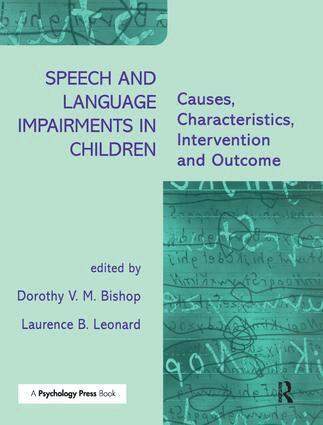
Speech and Language Impairments in Children
Causes, Characteristics, Intervention and Outcome
Häftad, Engelska, 2001
694 kr
Skickas inom 10-15 vardagar
Delayed development of speech and/or language is one of the commonest reasons for parents of preschool children to seek the advice of a paediatrician.Accessible to non-academic Speech and Language Impairments provides an overview of recent research developments in specific speech and language impairments, written by experts in the field. Topics include normal and disordered development of problems , crosslinguistic studies, pragmatic language impairments, early identification, educational and psychiatric outcomes, acquired epileptic aphasia and experimental studies of remediation. The book concludes with a chapter by Michael Rutter that gives guidelines for conducting and evaluating research in this field.
2 160 kr
Skickas inom 10-15 vardagar
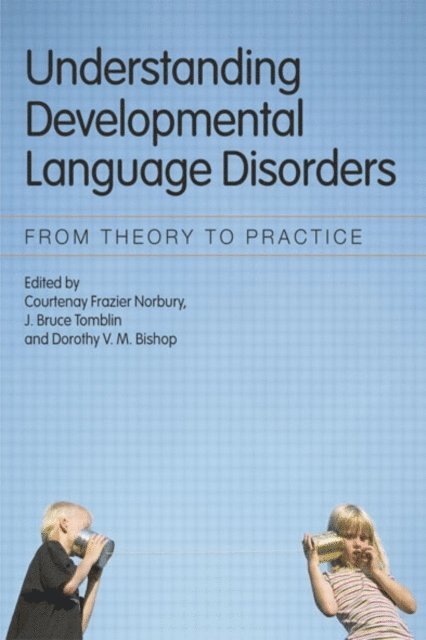
Developmental language disorders (DLD) occur when a child fails to develop his or her native language often for no apparent reason. Delayed development of speech and/or language is one of the most common reasons for parents of preschool children to seek the advice of their family doctor. Although some children rapidly improve, others have more persistent language difficulties. These long-term deficits can adversely affect academic progress, social relationships and mental well-being.Although DLDs are common, we are still a long way from understanding what causes them and how best to intervene. Understanding Developmental Language Disorders summarises the recent research developments in genetics and neuroimaging studies, assessment techniques and treatment studies to provide an overview of all aspects of DLD. The book investigates the possible genetic and biological causes of the disorder, how best to assess children's language skills to identify when and where communication breakdown occurs, what the long-term outcomes are for children who grow up with DLD, overlaps between DLD and other childhood disorders such as dyslexia and autism and how best to treat children with the disorder. Each chapter is written by a leading authority in the field in a format accessible to researchers, clinicians and families alike. This book, with its focus on both theory and practice, will be invaluable to students and researchers of speech-language pathology, psychology, psychiatry, linguistics and education. It will also be of interest to practicing speech-language pathologists, clinical psychologists, psychiatrists, educational psychologists, and teachers and parents of children with developmental language disorders.
722 kr
Skickas inom 10-15 vardagar
Developmental language disorders (DLD) occur when a child fails to develop his or her native language often for no apparent reason. Delayed development of speech and/or language is one of the most common reasons for parents of preschool children to seek the advice of their family doctor. Although some children rapidly improve, others have more persistent language difficulties. These long-term deficits can adversely affect academic progress, social relationships and mental well-being.Although DLDs are common, we are still a long way from understanding what causes them and how best to intervene. Understanding Developmental Language Disorders summarises the recent research developments in genetics and neuroimaging studies, assessment techniques and treatment studies to provide an overview of all aspects of DLD. The book investigates the possible genetic and biological causes of the disorder, how best to assess children's language skills to identify when and where communication breakdown occurs, what the long-term outcomes are for children who grow up with DLD, overlaps between DLD and other childhood disorders such as dyslexia and autism and how best to treat children with the disorder. Each chapter is written by a leading authority in the field in a format accessible to researchers, clinicians and families alike. This book, with its focus on both theory and practice, will be invaluable to students and researchers of speech-language pathology, psychology, psychiatry, linguistics and education. It will also be of interest to practicing speech-language pathologists, clinical psychologists, psychiatrists, educational psychologists, and teachers and parents of children with developmental language disorders.