Douglas A. Lauffenburger – författare
Visar alla böcker från författaren Douglas A. Lauffenburger. Handla med fri frakt och snabb leverans.
5 produkter
5 produkter
E-bok
Engelska, 2009997 kr
Läs direkt efter köp
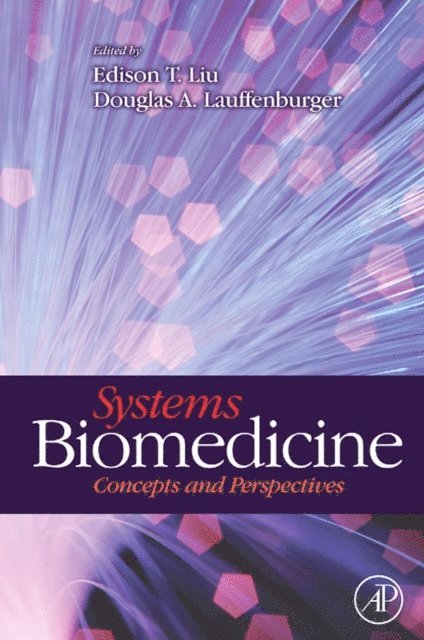
Systems biology is a critical emerging field that quantifies and annotates the complexity of biological systems in order to construct algorithmic models to predict outcomes from component input. Applications in medicine are revolutionizing our understanding of biological processes and systems.Systems Biomedicine is organized around foundations, computational modeling, network biology, and integrative biology, with the extension of examples from human biology and pharmacology, to focus on the applications of systems approaches to medical problems. An integrative approach to the underlying genomic, proteomic, and computational biology principles provides researchers with guidance in the use of qualitative systems and hypothesis generators. To reflect the highly interdisciplinary nature of the field, careful detail has been extended to ensure explanations of complex mathematical and biological principles are clear with minimum technical jargon.- Organized to reflect the important distinguishing characteristics of systems strategies in experimental biology and medicine- Provides precise and comprehensive measurement tools for constructing a model of the system and tools for defining complexity as an experimental dependent variable- Includes a thorough discussion of the applications of quantitative principles to biomedical problems
E-bok
Engelska, 19962 211 kr
Läs direkt efter köp
Receptors: Models for Binding, Trafficking, and Signaling bridges the gap between chemical engineering and cell biology by lucidly and practically demonstrating how a mathematical modeling approach combined with quantitative experiments can provide enhanced understanding of cell phenomena involving receptor/ligand interactions. In stressing the need for a quantitative understanding of how receptor-mediated cell functions depend on receptor and ligand properties, the book offers comprehensive treatments of both basic and state-of-the-art model frameworks that span the entire spectrum of receptor processes--from fundamental cell surface binding, intracellular trafficking, and signal transduction events to the cell behavioral functions they govern, including proliferation, adhesion, and migration. The book emphasizes mechanistic models that are accessible to experimental testing and includes detailed examples of important contemporary issues. This much-needed book introduces chemical engineers and bioengineers to important problems in receptor biology and familiarizes cell biologists with the insights that can be gained from engineering analysis and synthesis. As such, chemical engineers, researchers, and advanced students in the fields of biotechnology, biomedical sciences, bioengineering, and molecular cell biology will find this book to be conceptually rich, timely, and useful.
E-bok
PDF, Engelska, 19932 211 kr
Läs direkt efter köp
Receptors: Models for Binding, Trafficking, and Signaling bridges the gap between chemical engineering and cell biology by lucidly and practically demonstrating how a mathematical modeling approach combined with quantitative experiments can provide enhanced understanding of cell phenomena involving receptor/ligand interactions. In stressing the need for a quantitative understanding of how receptor-mediated cell functions depend on receptor and ligand properties, the book offers comprehensive treatments of both basic and state-of-the-art model frameworks that span the entire spectrum of receptor processes--from fundamental cell surface binding, intracellular trafficking, and signal transduction events to the cell behavioral functions they govern, including proliferation, adhesion, and migration. The book emphasizes mechanistic models that are accessible to experimental testing and includes detailed examples of important contemporary issues. This much-needed book introduces chemical engineers and bioengineers to important problems in receptor biology and familiarizes cell biologists with the insights that can be gained from engineering analysis and synthesis. As such, chemical engineers, researchers, and advanced students in the fields of biotechnology, biomedical sciences, bioengineering, and molecular cell biology will find this book to be conceptually rich, timely, and useful.
Häftad, Engelska, 1989
550 kr
Skickas inom 10-15 vardagar
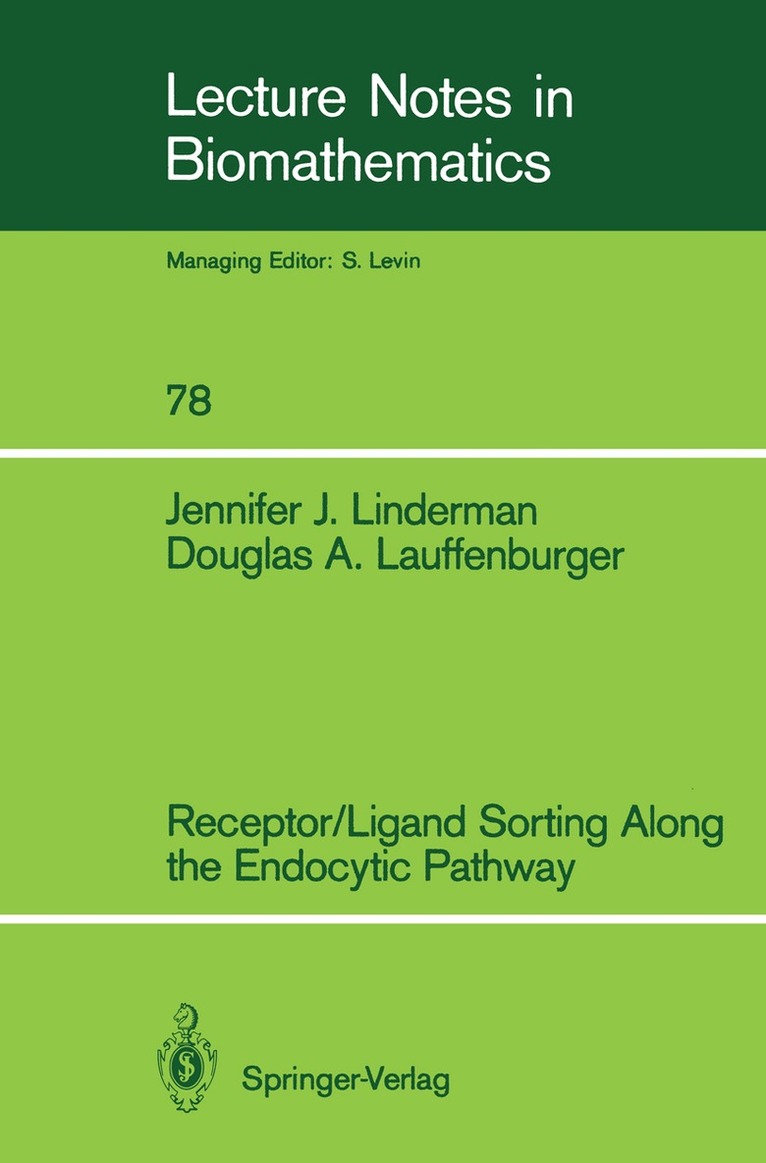
This research monograph focuses on a biomolecular separation process that occurs within most cells. Two types of molecules, receptors and ligands, are separated and routed along different intracellular pathways; this is a critical step in the process of receptor-mediated endocytosis. The development of an understanding of the basic mechanisms of this separation process is presented, with an emphasis on discovering the fundamental and measurable parameters that influence the event. Mathematical models of sorting are evaluated to predict the range of possible outcomes. These are compared with a variety of experimental data on different receptor/ligand systems. In addition, the influence of the separation on overall receptor/ligand processing dynamics is discussed. The book is intended for both biomathematicians and biologists. It is not necessary to understand the details of the model equations and their solution in order to test the models experimentally. The analysis suggests experiments that might be done to further investigate the sorting process and the text details methods for analyzing these experimental results.
E-bok
PDF, Engelska, 2013687 kr
Läs direkt efter köp
This research monograph focuses on a biomolecular separation process that occurs within most cells. Two types of molecules, receptors and ligands, are separated and routed along different intracellular pathways; this is a critical step in the process of receptor-mediated endocytosis. The development of an understanding of the basic mechanisms of this separation process is presented, with an emphasis on discovering the fundamental and measurable parameters that influence the event. Mathematical models of sorting are evaluated to predict the range of possible outcomes. These are compared with a variety of experimental data on different receptor/ligand systems. In addition, the influence of the separation on overall receptor/ligand processing dynamics is discussed. The book is intended for both biomathematicians and biologists. It is not necessary to understand the details of the model equations and their solution in order to test the models experimentally. The analysis suggests experiments that might be done to further investigate the sorting process and the text details methods for analyzing these experimental results.