Douglas B. Fuller - Böcker
Visar alla böcker från författaren Douglas B. Fuller. Handla med fri frakt och snabb leverans.
6 produkter
6 produkter
Paper Tigers, Hidden Dragons
Firms and the Political Economy of China's Technological Development
Inbunden, Engelska, 2016
1 379 kr
Skickas inom 5-8 vardagar
China presents us with a conundrum. How has a developing country with a spectacularly inefficient financial system, coupled with asset-destroying state-owned firms, managed to create a number of vibrant high-tech firms? China's domestic financial system fails most private firms by neglecting to give them sufficient support to pursue technological upgrading, even while smothering state-favoured firms by providing them with too much support. Due to their foreign financing, multinational corporations suffer from neither insufficient funds nor soft budget constraints, but they are insufficiently committed to China's development. Hybrid firms that combine ethnic Chinese management and foreign financing are the hidden dragons driving China's technological development. They avoid the maladies of China's domestic financial system while remaining committed to enhancing China's domestic technological capabilities. In sad contrast, China's domestic firms are technological paper tigers. State efforts to build local innovation clusters and create national champions have not managed to transform these firms into drivers of technological development. These findings upend fundamental debates about China's political economy. Rather than a choice between state capitalism and building domestic market institutions, China has fostered state capitalism even while tolerating the importing of foreign market institutions. While the book's findings suggest that China's state and domestic market institutions are ineffective, the hybrids promise an alternative way to avoid the middle-income trap. By documenting how variation in China's institutional terrain impacts technological development, the book also provides much needed nuance to widespread yet mutually irreconcilable claims that China is either an emerging innovation power or a technological backwater.Looking beyond China, hybrid-led development has implications for new alternative economic development models and new ways to conceptualize contemporary capitalism that go beyond current domestic institution-centric approaches.
Paper Tigers, Hidden Dragons
Firms and the Political Economy of China's Technological Development
Häftad, Engelska, 2019
769 kr
Skickas inom 3-6 vardagar
China presents us with a conundrum. How has a developing country with a spectacularly inefficient financial system, coupled with asset-destroying state-owned firms, managed to create a number of vibrant high-tech firms? China's domestic financial system fails most private firms by neglecting to give them sufficient support to pursue technological upgrading, even while smothering state-favoured firms by providing them with too much support. Due to their foreign financing, multinational corporations suffer from neither insufficient funds nor soft budget constraints, but they are insufficiently committed to China's development. Hybrid firms that combine ethnic Chinese management and foreign financing are the hidden dragons driving China's technological development. They avoid the maladies of China's domestic financial system while remaining committed to enhancing China's domestic technological capabilities. In sad contrast, China's domestic firms are technological paper tigers. State efforts to build local innovation clusters and create national champions have not managed to transform these firms into drivers of technological development. These findings upend fundamental debates about China's political economy. Rather than a choice between state capitalism and building domestic market institutions, China has fostered state capitalism even while tolerating the importing of foreign market institutions. While the book's findings suggest that China's state and domestic market institutions are ineffective, the hybrids promise an alternative way to avoid the middle-income trap. By documenting how variation in China's institutional terrain impacts technological development, the book also provides much needed nuance to widespread yet mutually irreconcilable claims that China is either an emerging innovation power or a technological backwater.Looking beyond China, hybrid-led development has implications for new alternative economic development models and new ways to conceptualize contemporary capitalism that go beyond current domestic institution-centric approaches.
2 357 kr
Skickas inom 10-15 vardagar
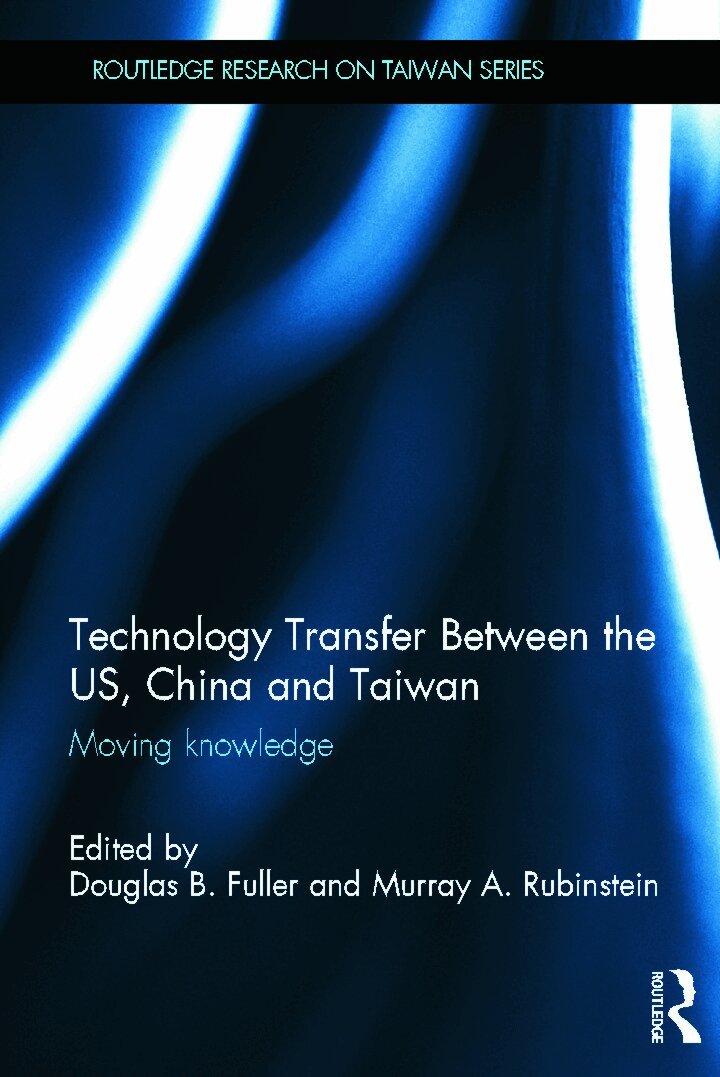
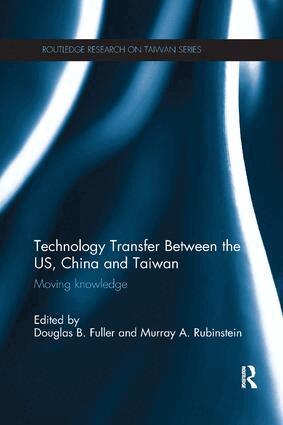
Examining the flow of technical knowledge between the US, Taiwan and Mainland China over the last sixty-five years, this book shows that the technical knowledge that has moved between these states is vast and varied. It includes the invention and production of industrial goods, as well as knowledge of the patterns of corporate organization and management. Indeed, this diversity is reflected in the process itself, which is driven both by returning expatriates with knowledge acquired overseas and by successful government intervention in acquiring technology from multinational firms. Technology Transfer Between the US, China and Taiwan engages with the evolving debates on the merits, importance and feasibility of technology transfer in the process of economic development globally, and uses the example of Taiwan to show that multinational corporations can indeed play a positive role in economic development. Further, it reveals the underlying tension between international cooperation and nationalism which inevitably accompanies international exchanges, as well as the delicate balancing act required between knowledge acquisition and dangerous levels of dependency, and the beneficial role of the US in East Asia’s technological development.With contributors from disciplines ranging from history, geography, urban planning, sociology, political science and electrical engineering, this multi-disciplinary book will be of great interest to students and scholars working across a broad range of subjects including Taiwan studies, Chinese studies, economics, business studies and development studies.
State-Owned Enterprises as Institutional Actors in Contemporary Capitalism and Beyond
Inbunden, Engelska, 2025
775 kr
Skickas inom 7-10 vardagar
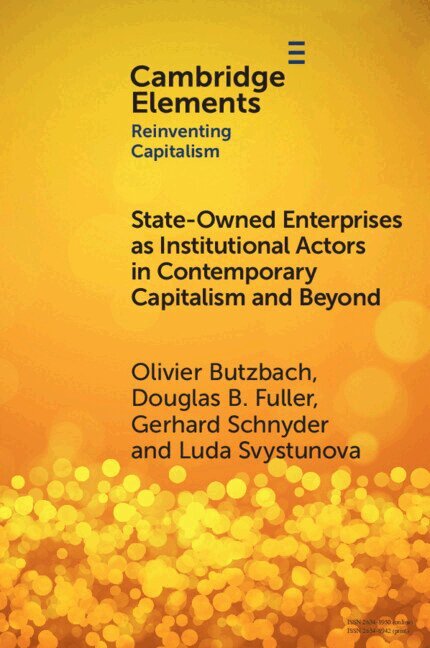
This Element qualifies the common understanding of State-Owned Enterprises (SOEs) as mere instruments of the state and instead conceive of them as economic actors in their own right. Specifically, SOE top management teams have leeway to diverge from goals that the state they are owned by pursues. Through 'institutional work' they can even actively shape the institutional framework in which they are embedded. However, the extent of SOE top management teams' leeway for agency is determined by macro- (country), meso- (State-SOE governance system), and industry-level factors. These factors, in turn, vary from country to country and over time. In other words, SOE agency is 'embedded agency.' Combining institutional work and historical institutionalism analytic lenses, this Element presents a multilevel model to understand embedded agency of top management teams of SOEs in contemporary capitalism. The model adds an important element to our understanding of the 'new state capitalism.'
State-Owned Enterprises as Institutional Actors in Contemporary Capitalism and Beyond
Häftad, Engelska, 2025
241 kr
Skickas inom 7-10 vardagar
This Element qualifies the common understanding of State-Owned Enterprises (SOEs) as mere instruments of the state and instead conceive of them as economic actors in their own right. Specifically, SOE top management teams have leeway to diverge from goals that the state they are owned by pursues. Through 'institutional work' they can even actively shape the institutional framework in which they are embedded. However, the extent of SOE top management teams' leeway for agency is determined by macro- (country), meso- (State–SOE governance system), and industry-level factors. These factors, in turn, vary from country to country and over time. In other words, SOE agency is 'embedded agency.' Combining institutional work and historical institutionalism analytic lenses, this Element presents a multilevel model to understand embedded agency of top management teams of SOEs in contemporary capitalism. The model adds an important element to our understanding of the 'new state capitalism.'
775 kr
Skickas inom 10-15 vardagar
Examining the flow of technical knowledge between the US, Taiwan and Mainland China over the last sixty-five years, this book shows that the technical knowledge that has moved between these states is vast and varied. It includes the invention and production of industrial goods, as well as knowledge of the patterns of corporate organization and management. Indeed, this diversity is reflected in the process itself, which is driven both by returning expatriates with knowledge acquired overseas and by successful government intervention in acquiring technology from multinational firms. Technology Transfer Between the US, China and Taiwan engages with the evolving debates on the merits, importance and feasibility of technology transfer in the process of economic development globally, and uses the example of Taiwan to show that multinational corporations can indeed play a positive role in economic development. Further, it reveals the underlying tension between international cooperation and nationalism which inevitably accompanies international exchanges, as well as the delicate balancing act required between knowledge acquisition and dangerous levels of dependency, and the beneficial role of the US in East Asia’s technological development.With contributors from disciplines ranging from history, geography, urban planning, sociology, political science and electrical engineering, this multi-disciplinary book will be of great interest to students and scholars working across a broad range of subjects including Taiwan studies, Chinese studies, economics, business studies and development studies.